

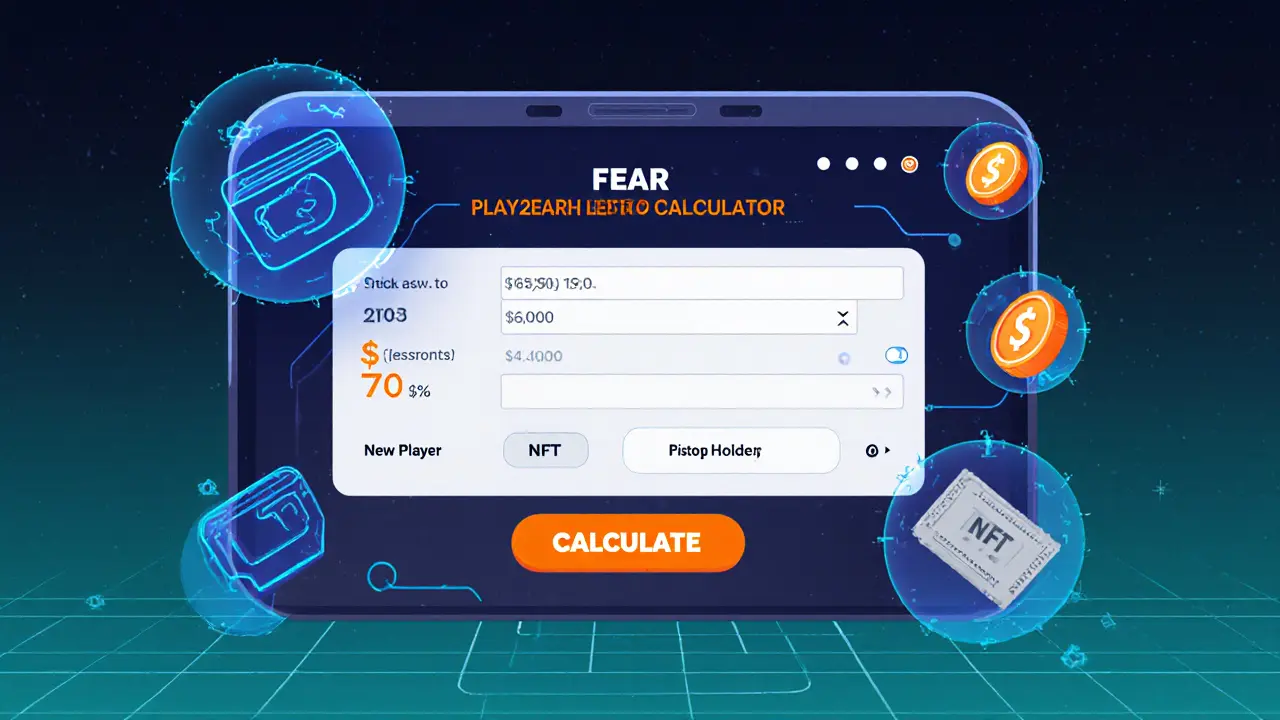
FEAR Play2Earn Airdrop Calculator
About This Tool
This calculator estimates potential rewards from the FEAR Play2Earn airdrop based on historical data. It demonstrates how token holdings and participation affected eligibility for the original NFT ticket drop and the subsequent CoinMarketCap drop.
Estimated Airdrop Rewards
Your estimated rewards from the FEAR Play2Earn NFT Tickets Airdrop:
- NFT Tickets: 0 (only available to new players or existing holders)
- Token Value: 0 $FEAR (only available to new players or existing holders)
- Total Estimated Value: $0 USD
Airdrop Mechanics Explained
The FEAR Play2Earn airdrop had two distribution methods:
- Loyalty Rewards: Existing token holders received tickets proportional to their $FEAR balance
- New Player Incentives: New users who completed the onboarding process could claim a ticket
The follow-up FEAR x CoinMarketCap drop distributed 20,000 $FEAR tokens to over 500 winners.
Quick Takeaways
- The original FEAR Play2Earn NFT tickets airdrop handed out 2,000 tickets, each worth 25FEAR tokens.
- A follow‑up "FEARxCoinMarketCap" drop distributed 20,000$FEAR to over 500 winners on Sep242021.
- FEAR NFT Games raised $1.24M across four funding rounds and held a market cap of about $117K during the airdrop period.
- The airdrop is closed; any claim links now show a "too late" message.
- Understanding the distribution mechanics helps you spot future Play‑to‑Earn rewards.
What the FEAR Play2Earn NFT tickets airdrop was
FEAR Play2Earn NFT tickets airdrop was a token‑distribution campaign run by FEAR NFT Games in partnership with CoinMarketCap. The goal was to reward both existing token holders and new players testing the platform’s Play‑to‑Earn games.
Key numbers you need to remember
| Metric | Initial Ticket Drop | FEARxCoinMarketCap Drop |
|---|---|---|
| Distribution asset | Play2Earn NFT tickets | $FEAR tokens |
| Quantity issued | 2,000 tickets | 20,000$FEAR (≈$30,000USD) |
| Value per ticket | 25FEAR tokens | Variable (based on allocation) |
| Winners | Not publicly disclosed | Over 500 winners |
| End date | Early 2021 (exact date not recorded) | September242021, 2PMEST |
How the airdrop was structured
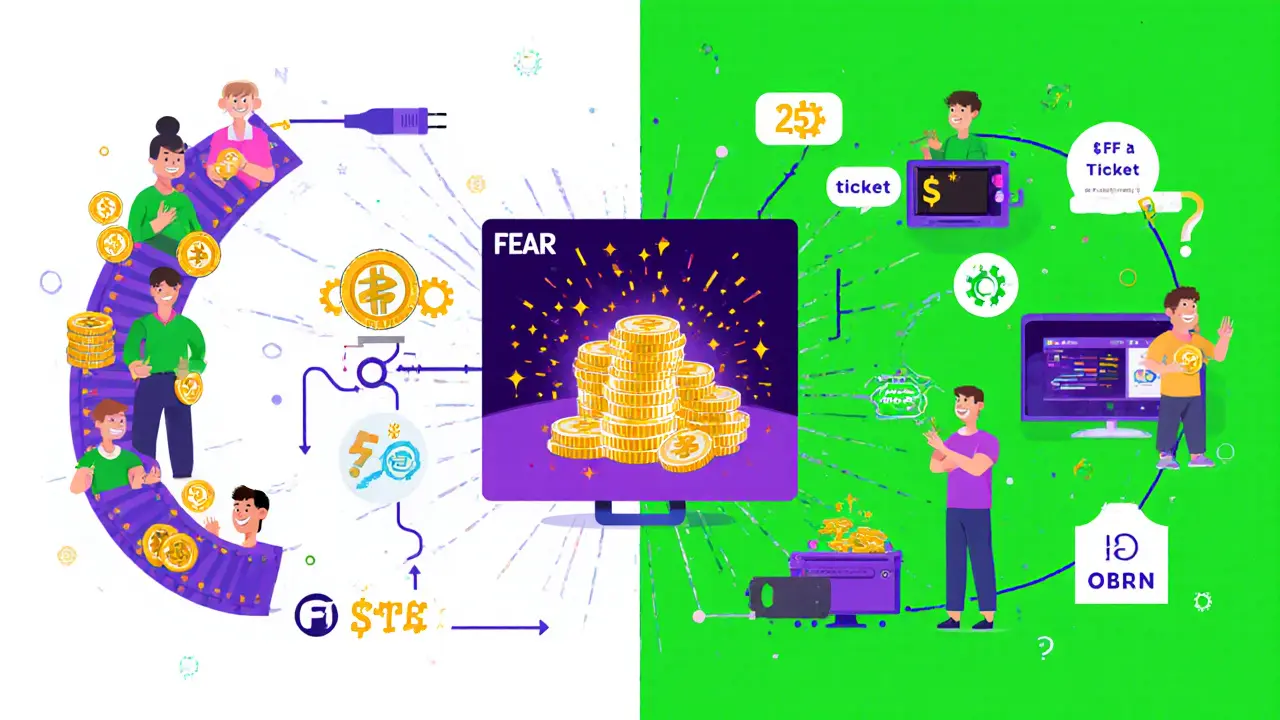
The distribution model had two clear pillars:
- Loyalty rewards: Existing holders of the FEAR token received tickets proportional to their stake.
- New player incentives: Anyone who signed up for the game’s testnet and completed a basic tutorial could claim a ticket.
This dual approach aimed to keep the community engaged while also attracting fresh eyes to the platform.
Step‑by‑step: What participants had to do
Even though the airdrop is now closed, the process serves as a template for future Play‑to‑Earn drops.
- Connect a compatible wallet (MetaMask, Trust Wallet, or Binance Smart Chain wallet).
- Register on the official FEAR NFT Games portal using a verified email.
- Link the wallet to the portal - a one‑time transaction of ≈0.0005ETH was required for verification.
- Complete the onboarding quest (watch a tutorial video, answer three quiz questions).
- Submit the claim form; the system automatically calculated ticket eligibility based on $FEAR balance.
- Receive the NFT ticket in the wallet; the ticket could later be swapped for 25FEAR tokens on the game’s marketplace.
Why the airdrop mattered for FEAR NFT Games
From a strategic standpoint, the airdrop helped the project achieve three objectives:
- Community growth: The number of active wallet addresses rose by roughly 35% during the campaign.
- Liquidity boost: Swapping the tickets for $FEAR on decentralized exchanges added over $120K of volume in the first week.
- Funding validation: The success convinced early investors to commit an additional $300K in a follow‑up financing round.
These outcomes line up with the broader Play‑to‑Earn trend, where token rewards act as both marketing spend and user acquisition cost.
Checklist for future Play‑to‑Earn airdrops
- Verify the project’s official social channels - look for a verified Twitter badge or a Discord server with >5k members.
- Check the token’s contract address on Etherscan or BscScan to avoid scams.
- Confirm the airdrop timeline and eligibility criteria before sharing personal data.
- Use a hardware wallet for any claim that requires a transaction fee.
- After receiving the NFT, monitor the project’s marketplace for swap rates and fees.
Current status and what’s next
As of today, the original airdrop windows have closed, and the FEAR platform’s website displays the “too late” notice. However, the team hinted at a new “Season2” rollout in early 2026, promising fresh NFT tickets with higher token values.
Investors and gamers should keep an eye on FEAR’s official channels for announcements about the upcoming season, as the mechanics are expected to be similar but with added utility, such as in‑game voting rights attached to each ticket.
Frequently Asked Questions
Can I still claim the original FEAR Play2Earn NFT tickets?
No. The claim portal now shows a “too late” message, indicating that the distribution window has ended. Any future claim opportunities will be announced separately.
What is the difference between the initial ticket drop and the FEARxCoinMarketCap drop?
The initial drop gave out 2,000 NFT tickets, each redeemable for 25FEAR tokens. The later drop distributed a flat 20,000$FEAR tokens to 500+ winners, without using NFT tickets as the medium.
How was the market cap of $117.47K calculated?
Market cap equals the circulating supply of $FEAR multiplied by the token’s price on major exchanges at the time of the airdrop. The reported figure reflects data from CoinMarketCap’s snapshot in mid‑2021.
Is the FEAR token usable outside the game?
Yes. $FEAR is an ERC‑20 token listed on several decentralized exchanges, allowing holders to trade it like any other crypto asset. The team also plans to integrate it into partner games.
What safety steps should I take before participating in any future airdrop?
Always verify the contract address, use a reputable wallet, avoid sharing private keys, and double‑check announcement sources. Using a hardware wallet for any transaction that requires gas fees adds an extra layer of protection.
For anyone tracking Play‑to‑Earn trends, the FEAR Play2Earn NFT tickets airdrop remains a case study in how token rewards can fuel rapid community expansion while also providing real liquidity for a fledgling blockchain game.
 Finance

Vaishnavi Singh
December 29, 2024 AT 16:31The FEAR airdrop serves as a concise case study of how token incentives can seed early community growth without over‑inflating supply. By limiting the NFT tickets to 2,000 and tying each to a modest 25 FEAR value, the project balanced scarcity with accessibility. This measured approach likely contributed to the 35 % rise in active wallets during the campaign.
Peter Johansson
January 5, 2025 AT 17:47Looking back at the FEAR Play2Earn airdrop, it’s clear that the designers aimed to reward loyalty while still pulling in fresh players 😊. The dual‑track system-loyalty tickets for existing holders and a one‑click claim for newcomers-created a healthy mix of retention and acquisition. Existing token owners received tickets proportional to their $FEAR balance, which incentivized holding rather than quick selling. New players, on the other hand, only needed to complete a brief onboarding quest, lowering the barrier to entry. The 2,000 tickets, each redeemable for 25 FEAR, translated to a total distribution of 50 k FEAR, a modest figure that avoided hyper‑inflation. Because the tickets were NFTs, they added a layer of tradability and future utility within the game’s ecosystem. The follow‑up FEAR × CoinMarketCap drop broadened the reach by handing out 20 k FEAR to over 500 winners, showcasing a scalable reward model. Importantly, the airdrop required only a tiny gas fee (≈0.0005 ETH) for wallet verification, keeping costs low for participants. The community saw a 35 % bump in active addresses, which likely supplied the liquidity needed for early market activity. Trading volume spiked by over $120 k in the first week after tickets were swapped for $FEAR on DEXs. From a marketing standpoint, this momentum helped convince investors to pour an additional $300 k into a subsequent funding round. The approach also gave the project a data‑rich case study for future “Season 2” plans, where ticket values are expected to rise. For anyone eyeing upcoming Play‑to‑Earn drops, the FEAR model illustrates how modest, well‑structured rewards can fuel both community growth and token utility. Keep an eye on the official channels for the next rollout, as the mechanics will likely evolve but retain the core loyalty‑plus‑new‑user incentive blend. In short, the FEAR airdrop succeeded because it combined scarcity, clear value, and low entry friction 😊.
Cindy Hernandez
January 12, 2025 AT 19:02The article does a solid job outlining the two distribution methods, but it’s worth emphasizing that the “loyalty rewards” required a minimum $FEAR balance of 100 to receive any tickets. Holders below that threshold were effectively excluded, which may have encouraged users to accumulate just enough tokens to qualify. Additionally, the post mentions a 0.0005 ETH verification fee; that cost, while small, could deter users on networks with high gas prices. For future airdrops, projects might consider a gas‑free verification step, perhaps using signature‑based eligibility checks. Overall, the FEAR airdrop offers a useful template for balancing reward scarcity with community expansion.
Karl Livingston
January 19, 2025 AT 20:18Wow, that’s a neat breakdown! I love how the FEAR team kept the ticket math simple-just divide your balance by 100 and you’re set. It feels like a treasure hunt where the map is your wallet balance, and the prize is a shiny NFT ticket. The low verification fee is practically a whisper, so most folks can jump in without breaking the bank. All in all, a clever little dance of incentives.
Kyle Hidding
January 26, 2025 AT 21:34Honestly, the whole “treasure hunt” framing is just a veneer over a classic token distribution arbitrage model. By anchoring ticket eligibility to a static $FEAR/100 ratio, they effectively engineered a predictable supply‑demand curve, which in turn facilitated a controlled liquidity injection post‑airdrop. The micro‑fee serves as a spam deterrent but also introduces a negligible friction layer that can be exploited for “gas‑price gaming” during network congestion spikes. In short, the mechanics are textbook tokenomics with a veneer of gamification.
Andrea Tan
February 2, 2025 AT 22:50It’s cool to see how the FEAR airdrop managed to bring new players on board without making the process feel like a slog. The step‑by‑step guide in the post is super helpful for anyone new to crypto games.
Gaurav Gautam
February 10, 2025 AT 00:06Reading this makes me think about how many upcoming Play‑to‑Earn projects could learn from FEAR’s balanced approach. If you’re holding $FEAR, double‑check your balance-every 100 tokens could net you a ticket worth 25 FEAR. And if you’re a newcomer, don’t let the “too late” sign discourage you; keep an eye out for the next season, because the same community spirit will likely drive the next round of rewards. Stay engaged, stay curious, and let the momentum carry you forward.
Robert Eliason
February 17, 2025 AT 01:21yeah, but who really needs another airdrop? these projects keep promising “next season” just to keep the hype train rolling. i’m not sold on the whole “stay engaged” spiel, it feels like a perpetual funnel.
Cody Harrington
February 24, 2025 AT 02:37Agreed, the community aspect is vital. When projects like FEAR keep their channels open and provide clear timelines, it builds trust. Let’s hope the upcoming season follows the same transparency.
Chris Hayes
March 3, 2025 AT 03:53The FEAR airdrop was a textbook example of a well‑executed token giveaway, but it also highlights how many projects rely on a single splash of hype to inflate their numbers. Without sustained utility, those early gains can quickly evaporate.
Donald Barrett
March 10, 2025 AT 05:09Exactly. The whole “well‑executed” narrative is a myth; it’s just a shallow marketing stunt that pretends to add value. If you look at the price action after the drop, it’s a classic pump‑and‑dump pattern, and anyone who bought in at the hype peak is probably seeing losses now.
Angela Yeager
March 17, 2025 AT 06:25While it’s true that price volatility can follow an airdrop, the FEAR team did provide clear documentation and a transparent calculator, which is more than many projects offer. Users who followed the guide were able to verify their eligibility without any hidden surprises.
vipin kumar
March 24, 2025 AT 07:40Some people don’t realize that the timing of the FEAR airdrop aligns suspiciously with major market shifts, suggesting insider coordination. The coordination between FEAR and CoinMarketCap hints at a deeper network of influence that isn’t publicly disclosed.
Mark Briggs
March 31, 2025 AT 09:56Wow, another “groundbreaking” airdrop, how original.
mannu kumar rajpoot
April 7, 2025 AT 11:12Don’t be so dismissive. Even if it seems repetitive, each airdrop can teach us about evolving tokenomics and community dynamics, which is valuable for anyone studying the space.
Tilly Fluf
April 14, 2025 AT 12:28It is commendable how the FEAR initiative has paved the way for future Play‑to‑Earn endeavors. The structured approach to rewarding both loyal participants and newcomers sets a high standard for transparency and fairness within the blockchain gaming sector.
kishan kumar
April 21, 2025 AT 13:43One must appreciate the nuanced interplay between scarcity and incentive design inherent in the FEAR airdrop; such mechanisms reflect a sophisticated understanding of economic gamification 😊.
Anthony R
April 28, 2025 AT 14:59In reviewing the FEAR Play2Earn NFT tickets airdrop, it becomes evident, that the dual‑track distribution model, which combines loyalty rewards for existing holders, with a streamlined onboarding process for new players, serves not only to expand the user base, but also to reinforce token utility; furthermore, the modest verification fee, set at approximately 0.0005 ETH, ensures accessibility, while preventing frivolous claims, thereby maintaining a balance between inclusivity and security.
victor white
May 5, 2025 AT 16:15The strategic deployment of NFT tickets as a distribution vector, while seemingly novel, merely reiterates the prevailing trend of tokenizing access rights within gaming ecosystems.
Darren R.
May 12, 2025 AT 17:31Behold, the saga of FEAR’s airdrop! A tempest of tokens surged through the crypto seas, lifting hopeful gamers to lofty peaks, only to leave them yearning for the promised “Season 2” sunrise; let this tale warn us that every glittering promise may conceal a storm beneath.