

ERC-20 Token Standard: What It Is and Why It Matters
When working with ERC-20, a token standard that defines how fungible tokens behave on the Ethereum blockchain. Also known as ERC20, it lets developers create interchangeable assets that can be transferred, approved, and queried by any compatible wallet or dApp. Ethereum, the open‑source blockchain that supports smart contracts and decentralized applications provides the underlying network, while smart contracts, self‑executing code that enforces token rules without a middleman enforce the ERC-20 rules. The standard also shapes tokenomics, the economic design behind supply, distribution and utility of crypto tokens, making it a cornerstone of most initial coin offerings, DeFi projects and NFT marketplaces.
Why ERC-20 Still Rules the Crypto Landscape
ERC-20 enables interoperability: because every token follows the same interface, wallets, exchanges and DeFi protocols can list new assets with just a few lines of code. This reduces friction for users and speeds up adoption. Developers also benefit from a proven security model; the standard has been battle‑tested across thousands of contracts, revealing common pitfalls and best practices. In practice, the standard dictates six core functions—totalSupply, balanceOf, transfer, transferFrom, approve, and allowance—plus two events (Transfer and Approval). These functions create a predictable contract surface that auditors and tools can scan automatically.
Beyond pure technicalities, ERC-20 influences market dynamics. Projects that launch an ERC-20 token can tap into Ethereum's massive liquidity pools, access decentralized exchanges like Uniswap, and integrate with lending platforms such as Aave. This network effect often translates into higher visibility and faster price discovery. At the same time, the standard’s simplicity has prompted extensions (ERC‑721 for NFTs, ERC‑1155 for multi‑token bundles) that build on the same concepts while adding new capabilities. Understanding ERC-20 therefore gives you a solid foundation for exploring the broader token ecosystem.
For traders, investors, and developers, the ERC-20 landscape is constantly evolving. New token airdrops, yield farms, and governance models rely on the same core functions but layer additional smart‑contract logic to create novel incentives. Keeping an eye on updates—like proposed improvements to gas efficiency or compatibility with Ethereum's upcoming upgrades—helps you stay ahead of the curve. Below, you’ll find a curated collection of articles that dive deeper into signature algorithms, exchange reviews, airdrop mechanics, regulatory insights, and more—all tied back to the ERC-20 world.
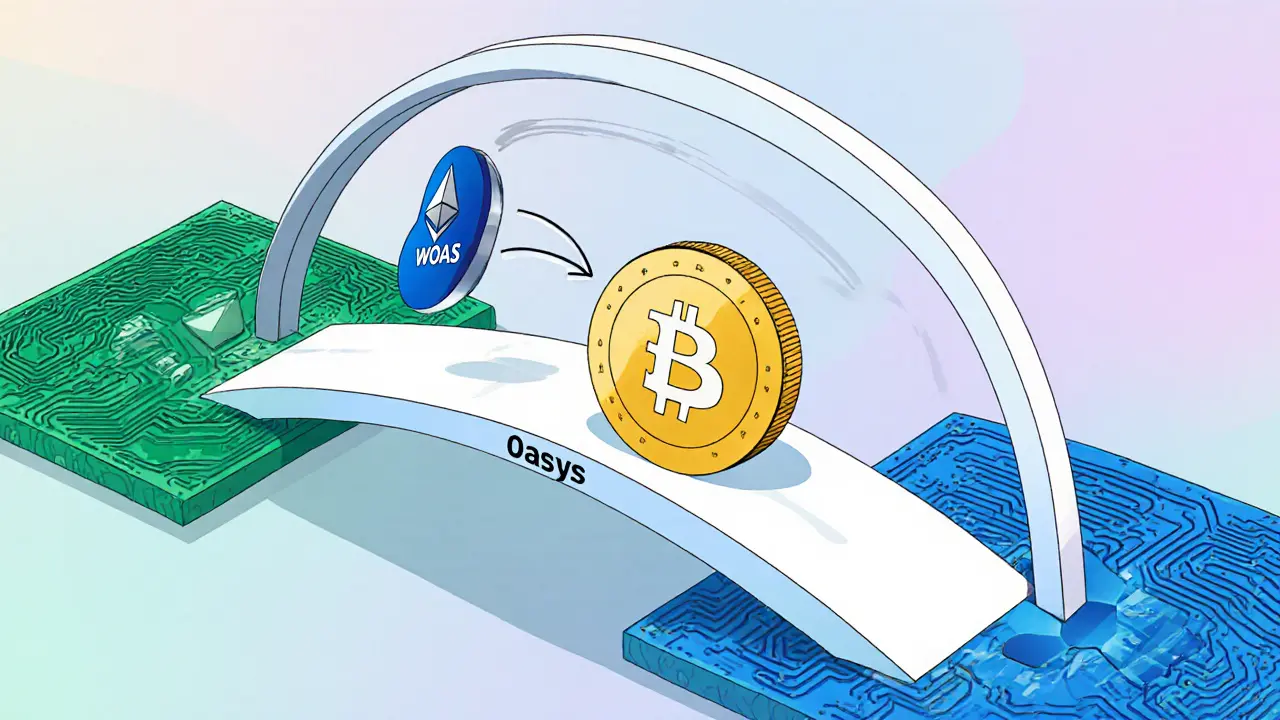
Learn what Wrapped Oasys (WOAS) is, how it works as an ERC‑20 bridge token, its benefits for gaming DeFi, risks, and future roadmap in a clear, friendly guide.
Categories
 Finance
Archives
Recent-posts

Homomorphic Encryption for Privacy: How Encrypted Data Can Be Computed Without Being Seen
Feb, 10 2026
How Liquidation Works in Leveraged Trading: A Complete Guide
Jun, 14 2026
Anypad (APAD) Airdrop: What We Know, How to Prepare, and Safety Tips
Jun, 12 2026
Elemon (ELMON) x CoinMarketCap Airdrop: What Happened and Where ELMON Stands Today
Nov, 15 2025
LMT (Lympo Market Token) Airdrop: What’s Really Happening in 2026
Jan, 8 2026