

Crypto Bridge: Connecting Blockchains Seamlessly
When working with crypto bridge, a system that lets assets move between different blockchain networks while preserving security and functionality. Also known as cross‑chain bridge, it plays a crucial role in today’s multi‑chain ecosystem.
Key pieces that make a bridge operate include cross‑chain swap, a trust‑less exchange that moves tokens from one chain to another in a single step, wrapped token, a representation of an external asset that lives on the destination chain, and the underlying interoperability protocol, the set of rules that enable different ledgers to talk to each other. Together they form a bridge that is both fast and secure.
Why does a crypto bridge matter? First, it unlocks liquidity that would otherwise sit idle on isolated chains. Second, it lets developers build DeFi products that pull together assets from several networks, creating richer user experiences. Finally, it reduces the need for centralized exchanges to act as custodians, cutting costs and regulatory friction.
How bridges work: a quick technical walk‑through
A typical bridge follows three steps. Step one locks the original token on the source chain. Step two creates a wrapped version on the target chain using the interoperability protocol. Step three allows users to redeem the wrapped token for the original by unlocking it on the source side. This lock‑mint‑burn cycle preserves the total supply and guarantees that the wrapped token is always backed 1:1.
Security hinges on three attributes. Custody method can be custodial (managed by a trusted entity) or non‑custodial (using smart contracts). Validation mechanism can be multi‑signature, proof‑of‑authority, or federated. Finally, audit frequency ensures that the bridge code stays bug‑free. Platforms that score high on all three are generally safer for everyday traders.
If you’re looking to use a crypto bridge safely, start with those that publish audit reports, have a clear governance model, and support a reputable wrapped token standard such as ERC‑20 on Ethereum or BEP‑20 on BSC. This checklist helps you avoid bridges that have been exploited in the past.
Bridge choice also depends on the assets you want to move. For high‑value tokens like Bitcoin or Ethereum, bridges that employ multi‑sig custodians and have insurance funds are preferred. For gaming or NFT assets, speed and low gas fees often take priority, so Layer‑2 or side‑chain bridges become attractive.
Beyond moving tokens, bridges enable innovative use‑cases. Cross‑chain liquidity pools let users earn yield on assets that sit on multiple chains simultaneously. Bridged NFTs can appear in virtual worlds that run on different blockchains, expanding their audience. Even governance tokens can be bridged, allowing a DAO to vote across ecosystems.
Regulators are paying close attention to bridge activity because it can be a conduit for illicit flows. Many jurisdictions now require bridge operators to register as Virtual Asset Service Providers (VASPs) and implement AML/KYC checks. Understanding the legal landscape helps you stay compliant while enjoying seamless transfers.
Looking ahead, the next wave of bridges will likely adopt zero‑knowledge proofs to verify transfers without exposing data, and quantum‑resistant signatures to future‑proof security. Projects that experiment with these technologies are already publishing testnets, signaling where the industry is headed.
In practice, choosing a bridge is a trade‑off between speed, cost, and security. The articles below break down real‑world bridge reviews, compare token‑wrap standards, and explain how to assess bridge risk. Whether you’re a casual trader, a DeFi developer, or an NFT collector, the curated posts will give you the tools to navigate the multi‑chain world with confidence.
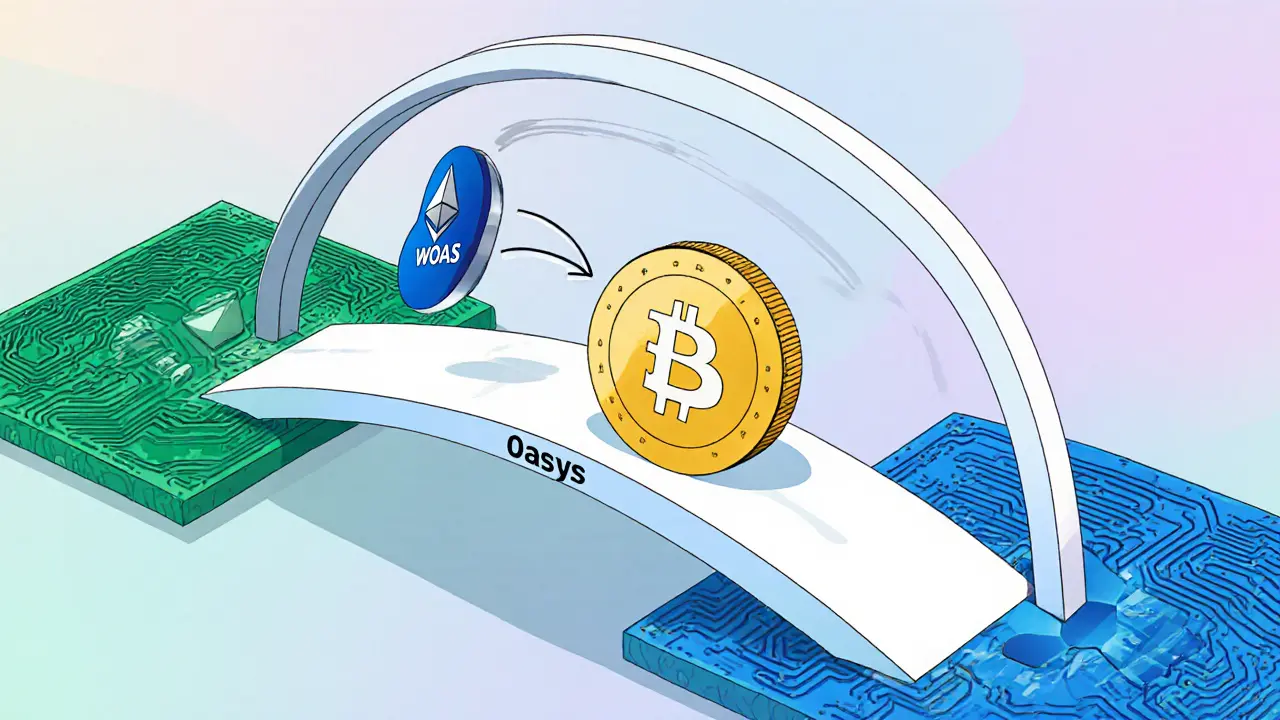
Learn what Wrapped Oasys (WOAS) is, how it works as an ERC‑20 bridge token, its benefits for gaming DeFi, risks, and future roadmap in a clear, friendly guide.
Categories
 Finance
Archives
Recent-posts
BICC Exchange Crypto Exchange Review: Is It Safe for Japanese Traders?
Feb, 17 2026
Ecuador’s Underground Crypto Market: Risks, Reality, and Regulations
Oct, 20 2025
Privacy Technology vs Surveillance Technology Arms Race in Crypto
Feb, 11 2026
Merkle Trees Explained: How Blockchain Uses Hash Trees for Secure Verification
Nov, 11 2024

Seascape Crowns (CWS) Airdrop: How It Worked and Why It’s Hard to Get Tokens Today
Jan, 10 2026