

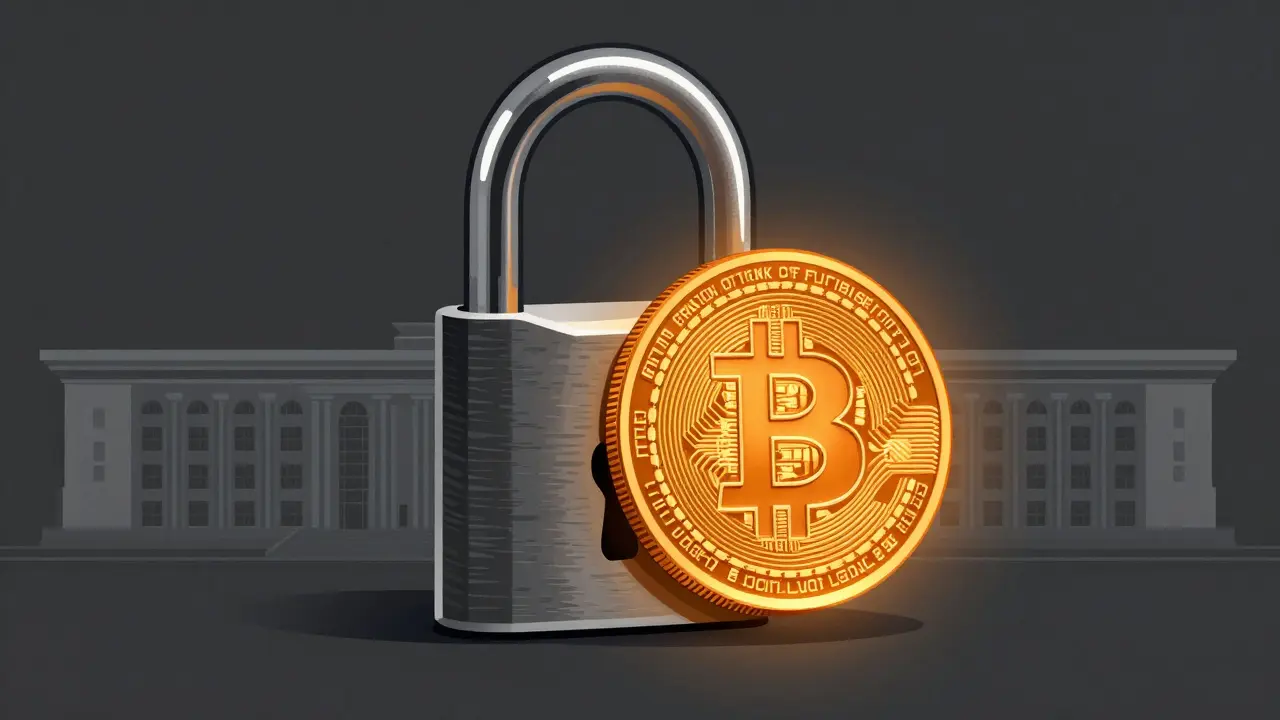
Imagine waking up to find that owning a digital wallet or trading a few coins could land you in a prison cell for five years. For people in Tunisia, this isn't a dystopian movie plot-it's the legal reality. While the rest of the world argues over whether to treat Bitcoin as a currency or a commodity, Tunisia has taken a hard line: a comprehensive, state-mandated ban on almost everything related to cryptocurrency.
If you're trying to figure out why the Tunisian government is so against digital assets or wondering if there's any way to legally use blockchain in the country, you've come to the right place. The situation is a complex mix of strict currency controls, fear of financial instability, and a surprising willingness to experiment with the tech behind the coins.
Quick Summary: The State of Crypto in Tunisia
- Legal Status: Total ban on trading, mining, and payments.
- Primary Authority: The Central Bank of Tunisia (BCT) oversees enforcement.
- Main Risks: Heavy fines and potential imprisonment up to five years.
- The Loophole: A government-run "regulatory sandbox" allows some fintech companies to test blockchain tech under strict supervision.
- Trend: Moving toward potential decriminalization of possession as of 2025.
The 2018 Directive: Where the Ban Started
The crackdown didn't happen overnight, but it became official in May 2018. The Central Bank of Tunisia the primary monetary authority of the Tunisian state issued a directive that essentially wiped out the legal crypto market. This wasn't just a "suggestion" to be careful; it was a blanket prohibition on all virtual currency transactions without explicit state authorization.
This directive puts Tunisia in a very small, restrictive club. While most countries now focus on how to tax or regulate crypto, Tunisia remains one of only eight nations-alongside places like China and Egypt-that maintain a total ban. This means that operating an exchange, marketing a new token, or even accepting crypto as payment for a coffee at a local cafe is strictly illegal.
But why such extreme measures? The BCT isn't just being stubborn. They are fighting a battle against capital flight. In an economy already struggling with balance of payments and a fluctuating currency, the government views Cryptocurrency as a massive leak in the system. If citizens can move wealth into digital assets and send them abroad instantly, the state loses its grip on the Tunisian Dinar and its ability to manage monetary policy.
The Legal Risks: Fines and Prison
If you're thinking of "just trying it out," you should know that the Tunisian government doesn't treat crypto trading as a minor administrative error. It is handled under strict currency-control regulations. Breaking these rules can lead to severe penalties, including fines and prison sentences of up to five years.
The ban targets several specific activities:
- Mining: Customs authorities are authorized to seize ASIC mining rigs at the border. Converting mined coins into local currency is a direct violation of the 2018 law.
- Exchanges: Running a platform that swaps crypto for fiat is a high-risk criminal activity.
- Banking: Local banks are required to block card purchases at foreign crypto exchanges. If you try to buy Bitcoin on a global platform using a Tunisian bank card, the transaction will likely be flagged or denied.
The human cost of these laws became a national talking point in 2021 when a teenager was jailed for exchanging a small amount of cryptocurrency. This specific case sparked a huge debate across the country and even reached cabinet-level discussions, as many felt the punishment didn't fit the "crime" of a young person experimenting with technology.
The Blockchain Paradox: Banning Coins but Loving the Tech
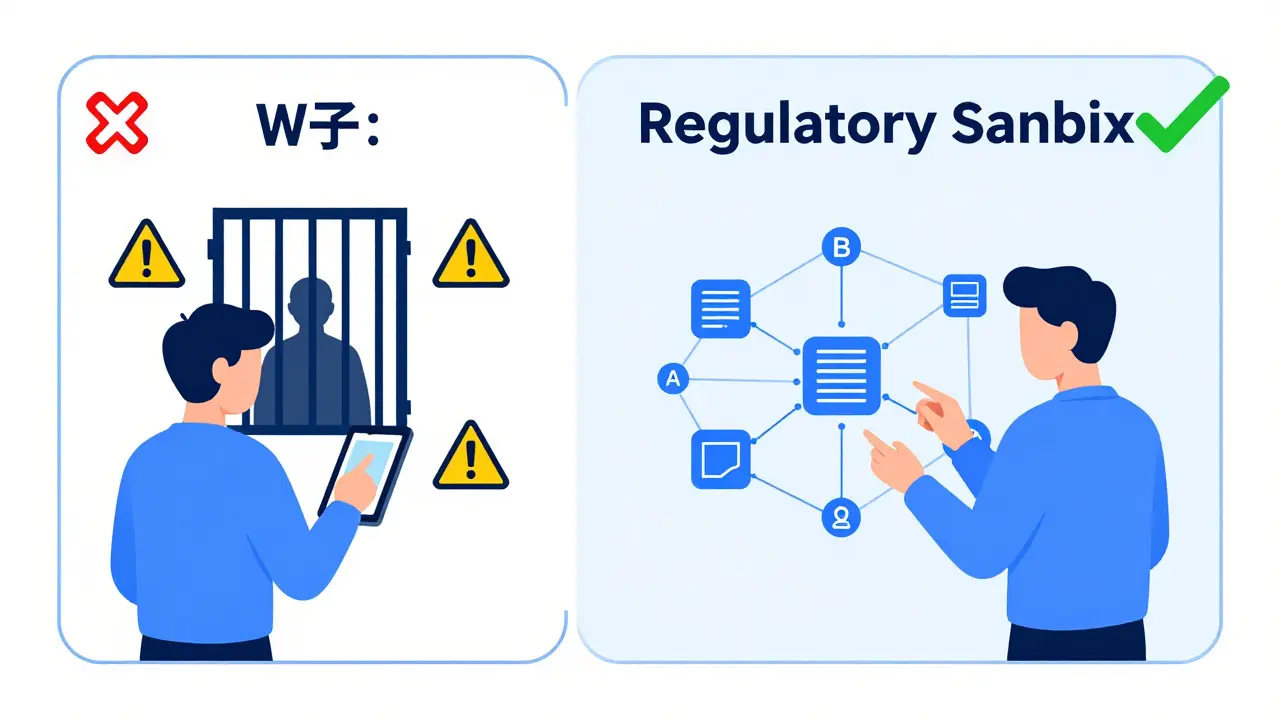
Here is where things get interesting. While the government hates the coins, they are actually quite curious about the plumbing. In 2020, the BCT launched a Regulatory Sandbox a controlled environment where fintech startups can test new technologies without full regulatory burdens. This is a safe space where the government allows specific companies to experiment with blockchain for a limited time-usually six to twelve months.
This creates a strange paradox. You can't legally trade Bitcoin, but a startup might be testing a blockchain-based system for carbon tracking or crowdfunding. For example, companies like VFunder and Hydro E-Blocks have participated in these programs. To stay legal, these companies often keep their actual server infrastructure outside of Tunisia while presenting the results to the BCT.
| Feature | Cryptocurrencies (Coins) | Blockchain (Technology) |
|---|---|---|
| Legal Status | Strictly Prohibited | Selectively Permitted |
| Primary Use Case | Trading/Investment | Supply Chain/Land Registry |
| Government Stance | Seen as a risk to stability | Seen as a tool for efficiency |
| Access Point | Underground/P2P Markets | BCT Regulatory Sandbox |
How the Underground Market Survives
Laws on paper are one thing; reality on the street is another. Even with the threat of jail, a shadow economy exists. Before the 2018 ban, Tunisians were already using P2P chat rooms to swap Bitcoin. That instinct hasn't gone away.
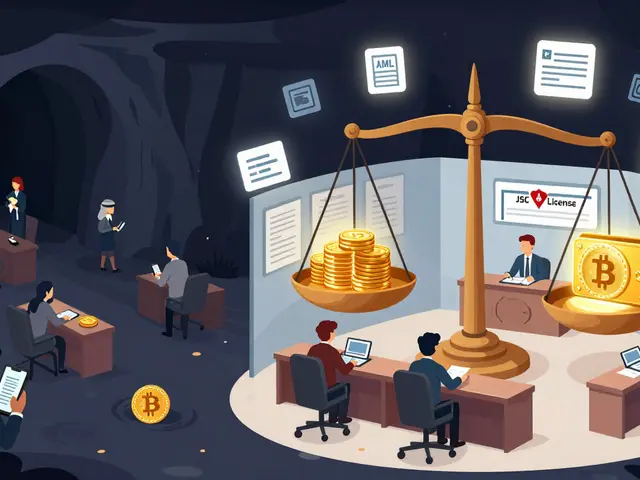
Most a-legal activity happens through peer-to-peer (P2P) trades. Instead of using an exchange, two people agree on a price, meet or use a private transfer, and swap assets. However, because banks block exchange access, the "on-ramp" (getting money from a bank into crypto) is the hardest part. This is why mainstream adoption is nearly impossible-most people simply cannot get their money into the ecosystem without risking a bank flag.
For businesses that aren't crypto-focused but operate in Tunisia, the pressure comes from Anti-Money Laundering (AML) compliance. The Tunisian Financial Analysis Committee (CTAF) requires companies to perform rigorous KYC (Know Your Customer) checks. If a business sees a suspicious transaction that looks like a crypto-to-fiat conversion, they must report it within 10 days or face their own legal troubles.
Will the Ban Ever End?
As of 2025, the wind seems to be shifting. Tunisia is becoming an outlier. With global giants like PayPal and Tesla having engaged with digital assets, the government is feeling the pressure to modernize. There are currently parliamentary committees discussing a draft bill that could decriminalize the possession of cryptocurrency. This would be a massive shift-it wouldn't make trading legal, but it would mean you wouldn't go to jail just for having a private key on your laptop.
The "Digital Tunisia 2025" project is another sign of thaw. This initiative specifically mentions using blockchain for supply chain transparency and record keeping. The government is effectively trying to separate the utility of the ledger from the volatility of the coin.
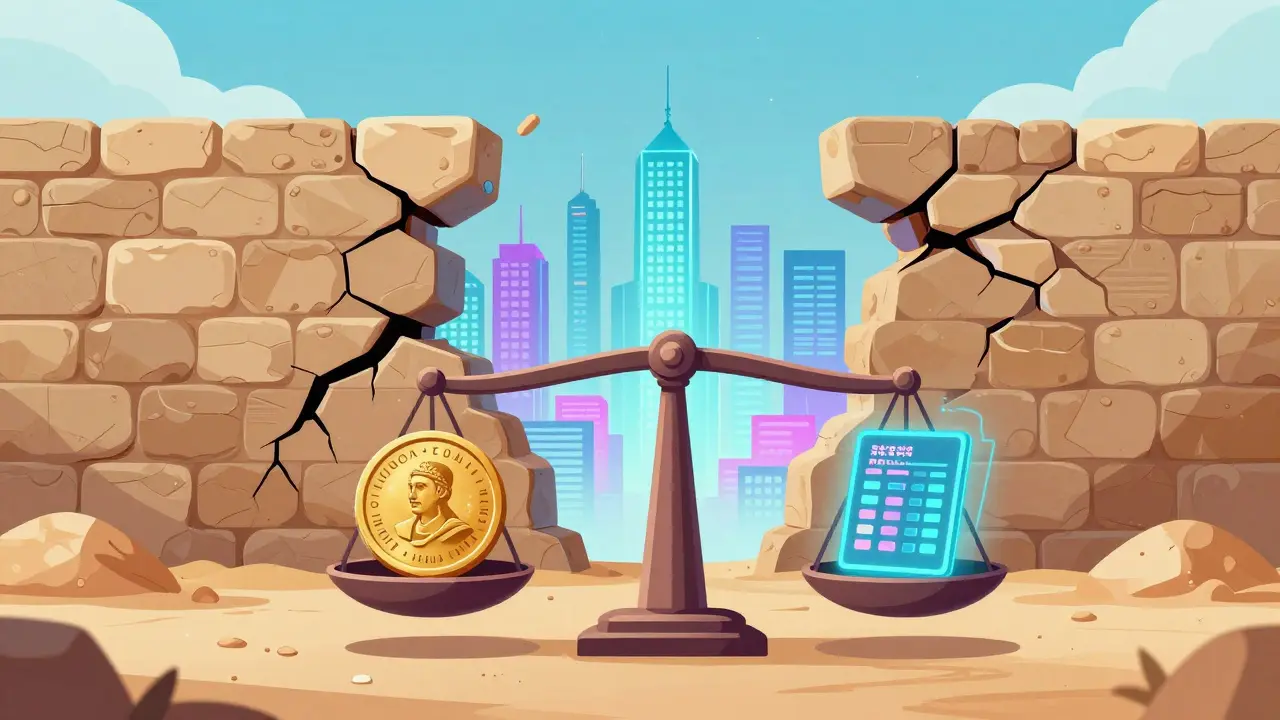
However, don't expect a total reversal tomorrow. Tunisia's economic challenges-specifically currency devaluation and low foreign exchange reserves-make the BCT very nervous. Until they find a way to ensure that crypto doesn't lead to a mass exodus of the Dinar, the restrictive walls will likely stay up, even if they get a few more windows.
Can I buy Bitcoin in Tunisia?
Legally, no. The 2018 Central Bank of Tunisia (BCT) directive prohibits all virtual currency transactions. While some people use P2P methods, doing so is illegal and carries risks of heavy fines or imprisonment.
Will I go to jail for owning crypto in Tunisia?
Under current laws, cryptocurrency-related activities are criminalized. While the government is discussing decriminalizing the mere possession of assets as of 2025, it is currently a high-risk activity that can lead to penalties under currency-control regulations.
Do Tunisian banks allow crypto transfers?
No. Tunisian financial institutions are barred from facilitating these transactions. Most banks actively block payments to known cryptocurrency exchanges to comply with BCT mandates.
Is blockchain technology legal in Tunisia?
Yes, but with conditions. While cryptocurrencies are banned, the underlying blockchain technology is permitted for specific uses. The BCT Regulatory Sandbox allows fintechs to test blockchain for remittances and traceability.
What is the BCT Regulatory Sandbox?
It is a controlled environment launched in 2020 that allows selected startups to test blockchain-based solutions for a period of 6 to 12 months under strict government supervision, without violating the broader crypto ban.
Next Steps and Troubleshooting
For Fintech Founders: If you want to build a blockchain product in Tunisia, do not launch a public token. Instead, focus on "permissioned ledgers" (private blockchains) and apply for the BCT Regulatory Sandbox. This is the only legal path to innovation currently available.
For Foreign Investors: Be aware that any business operating within Tunisia must adhere to strict KYC and AML protocols. Ensure your compliance team is reporting suspicious activities to the CTAF to avoid being caught in the dragnet of currency-control enforcement.
For Residents: Keep a close eye on the Tunisian Parliament's discussions regarding the decriminalization bill. Until a law is officially passed and published in the official gazette, the 2018 ban remains the governing rule of the land.
 Finance



Deepak Prusty
April 4, 2026 AT 22:55The Central Bank's focus on capital flight is standard macroeconomic preservation. When a currency is volatile, the government can't risk the liquidity draining into non-custodial wallets that they can't monitor or tax.
Emma Pease-Byron
April 6, 2026 AT 12:28Oh, how quaint. A country thinking it can actually stop the flow of digital assets in the 21st century. It's almost adorable that they think a "regulatory sandbox" is anything other than a way for the government to scout for tech they can eventually seize or co-opt.
Earnest Mudzengi
April 6, 2026 AT 22:43This is exactly what the globalists want!! First they ban the coins, then they give you a "sandbox" to track your every move via a permissioned ledger. It's a total honey-pot for the BCT to map out the P2P networks before they execute a full-scale crackdown on all non-fiat assets. They're probably using AI-driven chain analysis to flag every single Tunisian IP hitting a foreign node right now. Wake up people, the fiat system is a dying beast and they're just trying to keep the shackles tight before the collapse!
Trish Swanson
April 7, 2026 AT 15:55Five years in prison is a bit much...!!
Suzanne Robitaille
April 9, 2026 AT 14:15It is truly heartbreaking to think of a teenager facing such a grim fate for simply exploring the digital frontier. We must consider the ethical weight of treating technological curiosity as a criminal offense; it stifles the very soul of innovation in a young generation.
Arwyn Keast
April 10, 2026 AT 08:46Typical state overreach. The BCT is just playing the typical protectionist game to keep the Dinar from becoming a complete joke on the global stage. Absolute rubbish that they think a sandbox solves the systemic failure of their monetary policy.
Matthew Wright
April 12, 2026 AT 00:04The distinction between the ledger and the coin is actually a really smart move... if they can pull it off... It's basically admitting the tech is superior while the asset is too risky for the general public to hold without crashing the local economy!!
Siddharth Bhandari
April 13, 2026 AT 23:38For those looking at the sandbox, remember that permissioned chains aren't really blockchain in the decentralized sense. They're just distributed databases. It's a safe way to get the efficiency without the volatility.
sekhar reddy
April 14, 2026 AT 10:14OMG five years in jail for some coins?? That is absolutly insane!! I cannot even imagine the panic that kid felt... just heartbreaking honestly!!!
Susan Payne
April 14, 2026 AT 22:44The sheer lack of discipline in the youth today, attempting to bypass national laws for a fleeting digital trend, is lamentable. One must adhere to the laws of the land regardless of the perceived obsolescence of those laws.
Krystal Moore
April 15, 2026 AT 19:18Seriously, why is everyone acting like this is a tragedy? If you break the law, you go to jail. Period. I don't care if it's Bitcoin or stolen handbags; the law is the law!
Diana Martín Prieto
April 16, 2026 AT 04:14If anyone is trying to navigate this, just focus on the BCT's specific guidelines for the sandbox. It's the only way to innovate without risking everything. I'd suggest looking into private ledger setups if you're a founder-stay far away from any public tokens if you want to keep your business operational in Tunisia.
Evan Borisoff
April 18, 2026 AT 00:01The blatant disregard for the sovereignty of the Tunisian Dinar through the use of shadow-banking mechanisms and decentralized protocols is an affront to national stability. These P2P markets are essentially unregulated black markets that undermine the very fabric of state-managed monetary conduits and facilitate a leakage of capital that no developing nation can afford in the current geopolitical climate.
Erica Mahmood
April 18, 2026 AT 01:10p2p onramps are usually the bottleneck in these regimes. once you solve the fiat-to-crypto bridge via non-custodial means the ban becomes mostly symbolic since the BCT can't see the internal movements of a cold wallet
akash temgire
April 18, 2026 AT 04:42The 2025 decriminalization bill is the only relevant point here. Until the possession of a private key is legal, all other discussions on utility are moot.
Susan Wright
April 20, 2026 AT 04:31Just a heads up for anyone reading this-if you're an expat in Tunisia, be super careful with your banking apps. Some banks have automated flags for keywords related to exchanges, and you don't want to deal with the BCT's bureaucracy over a small trade. Use a VPN and keep your assets on hardware wallets to be safe.