

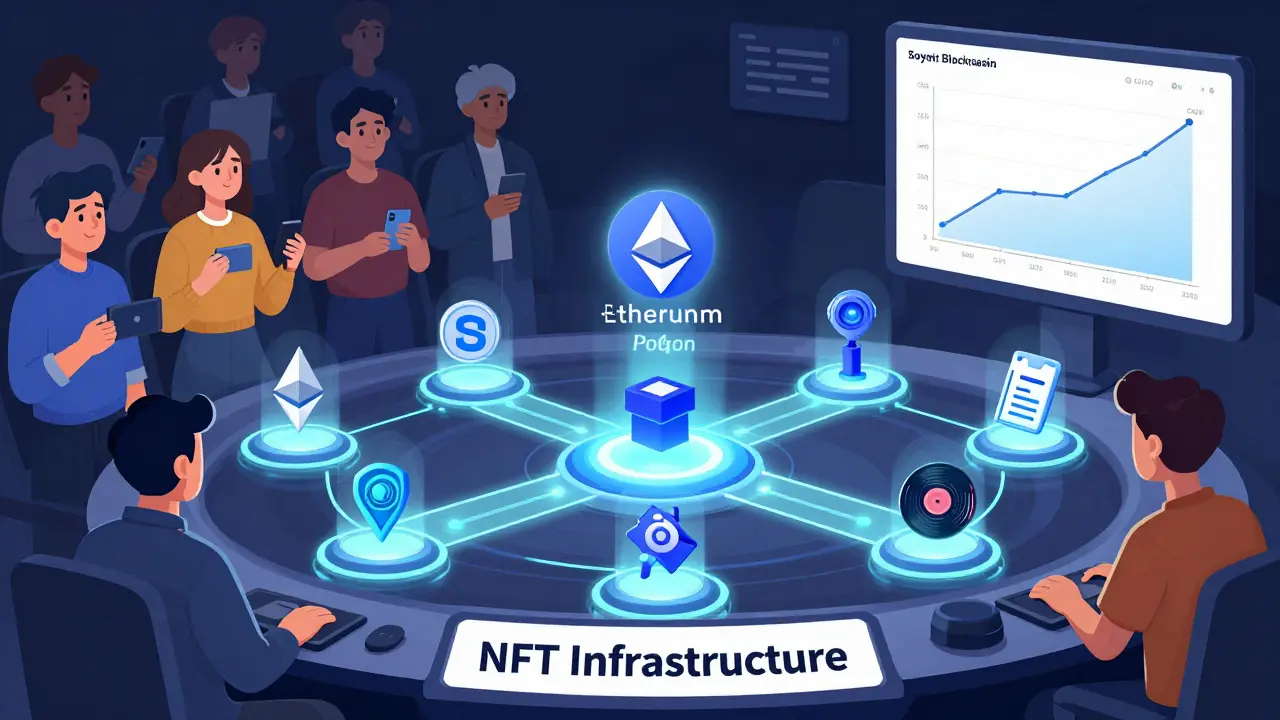
By 2026, NFTs aren’t about buying pixelated apes or paying $10 million for a JPEG. They’ve become a quiet but powerful tool for creators who want to own their audience, not rent it. If you’re an artist, musician, writer, or video maker struggling with platform algorithms, shrinking ad payouts, or brand deals that vanish overnight, NFTs are no longer a buzzword - they’re infrastructure.
Why Creators Need NFTs Now More Than Ever
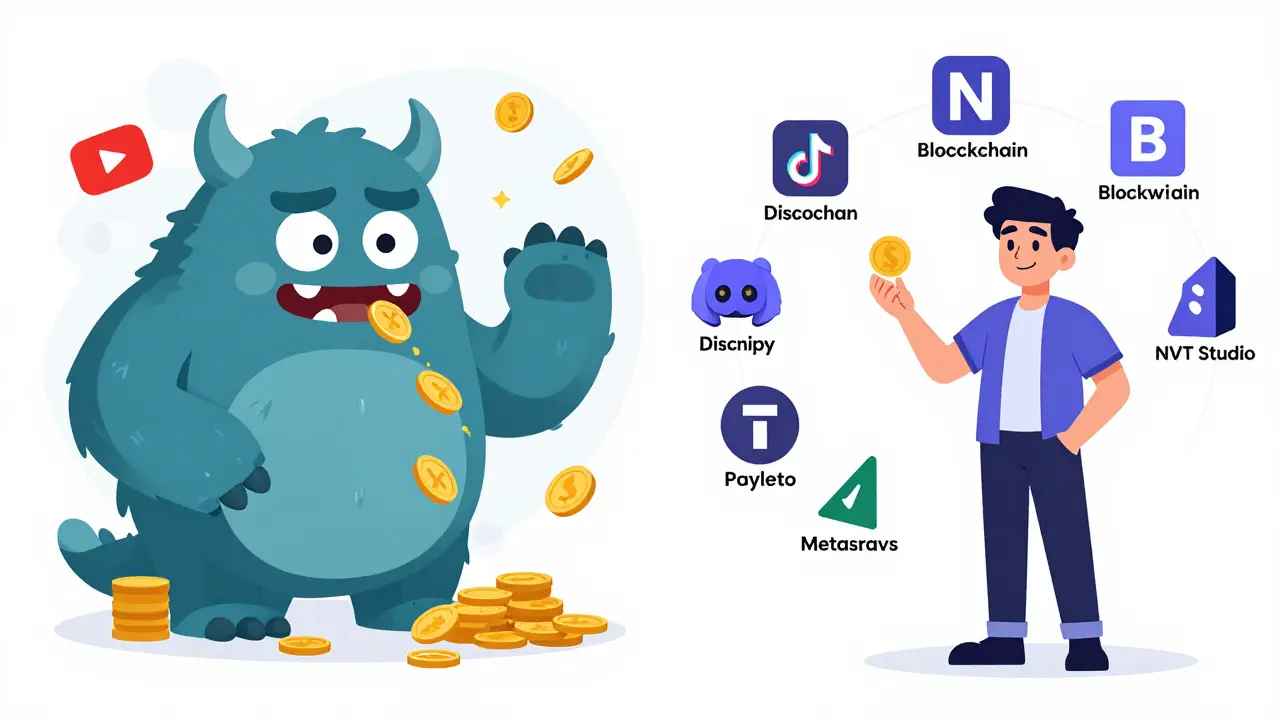
Think about your favorite YouTuber or TikTok creator. They spend hours making content, only to see their reach drop because of an algorithm update. Or worse - they get paid pennies per view while platforms take 45% of ad revenue. In 2025, the average YouTube creator earned $2.47 per 1,000 views. TikTok? $0.10. Meanwhile, Instagram and Facebook changed their monetization rules so often that creators had to rebuild their income streams every six months.
NFTs solve this by cutting out the middleman. Instead of relying on TikTok’s ad fund or Patreon’s subscription fees, creators issue digital tokens tied to their work. These aren’t just collectibles - they’re keys. Keys to exclusive content, voting rights in future projects, early access to releases, or even physical merchandise. And here’s the game-changer: every time one of those tokens sells again, the original creator gets paid. That’s called a royalty. By 2026, successful creators earn 68% of their NFT income from these secondary sales, not the initial drop.
How NFTs Actually Make Money for Creators in 2026
It’s not magic. It’s mechanics. Here’s how it works in practice:
- Utility-first NFTs: 78% of successful projects in 2025 gave holders access to private Discord servers, early song releases, or behind-the-scenes videos. No art needed.
- Community governance: 42% of top NFT-using creators let their holders vote on the next project - album cover, video theme, even pricing. This turns fans into stakeholders.
- Physical redemption: 37% of NFTs now unlock real-world items - signed vinyl, limited prints, or VIP concert tickets. The digital token is the receipt.
- Dynamic royalties: In 2021, most NFTs paid 5-10% royalties. Today, smart contracts adjust based on demand. If a fan resells your NFT for $500, you might get 5%. If they sell it for $2,000? You get 7%. Platforms like OpenSea and Shopify’s NFT Studio now automate this.
Take digital artist Beeple. In 2021, he made headlines for selling a $69 million NFT. But today, 42% of his monthly income comes from royalties on NFTs he sold years ago - even when he’s not posting new work. That’s the power of building a digital asset that keeps paying.
Which Blockchains Are Actually Used Today?
You don’t need to mine crypto or understand gas fees. Most creators use simple tools. The tech behind NFTs in 2026 is mostly on three blockchains:
- Ethereum - 68% of creator NFTs. Most secure, highest royalty support. Costs more to mint, but worth it for long-term trust.
- Polygon - 20%. Almost zero gas fees. Perfect for creators launching large drops (10,000+ NFTs) without breaking the bank.
- Solana - 8%. Fast and cheap, but less reliable for royalty enforcement. Used mostly by music and gaming creators.
Protocols matter too. ERC-721 (72% of NFTs) is the standard for unique items. ERC-1155 (22%) lets you bundle multiple NFTs - like a music album with 10 tracks, each as its own token. And soulbound tokens (5%)? Those are non-transferable. They’re used to prove you’re a longtime supporter - think “10-year fan” badges that unlock lifelong perks.
Who Actually Succeeds With NFTs? (And Who Doesn’t)
Not every creator should launch an NFT project. The data is clear:
- Best fit: Creators with 5,000+ highly engaged followers who make collectible content - art, music, photography, niche tutorials, or exclusive experiences.
- High success rate: 73% of creators using NFTs in 2025 integrated them with community platforms like Discord or Substack. They didn’t sell art - they sold access.
- Biggest failure: Lifestyle influencers with under 10,000 followers trying to sell “digital selfies.” 62% of these projects flopped. Why? No utility. No community. Just a JPEG.
Here’s the truth: NFTs don’t create fans. They reward them. If your audience already buys your merch, joins your Patreon, or comments on every post - they’re ready. If they only scroll past your content? NFTs won’t fix that.
How to Get Started (Without Coding)
You don’t need to be a developer. The tools are built now:
- Validate your audience - Ask your followers: “Would you pay for early access to my next project?” Use polls on Instagram, Discord, or email. If less than 30% say yes, pause.
- Design the utility - What do holders get? A private video? A voice note? A real-life meet-up? Make it valuable, not just “cool.”
- Use no-code tools - Shopify’s NFT Studio (launched 2024) lets you mint NFTs, set royalties, and connect to your store in 15 minutes. Instagram’s NFT integration (beta 2025) lets you post your NFTs directly from your wallet.
- Start small - Launch 100 NFTs for free to your top 50 supporters. Let them feel ownership before asking for money.
- Set royalties - Always set them between 3.5% and 5.5%. Too high? Buyers won’t resell. Too low? You lose future income.
Most creators spend 8.7 hours on their first NFT project. That’s less time than setting up a sponsored Instagram post. The payoff? A revenue stream that keeps working while you sleep.
The Real Risks - And How to Avoid Them
Yes, there are pitfalls:
- Gas fees - Ethereum can cost $10-$50 to mint. Use Polygon to avoid this.
- Audience confusion - 63% of people still don’t understand NFTs. Explain it simply: “This token gives you access. It’s like a VIP pass, but digital.”
- Wallet issues - 48% of creators had trouble connecting wallets in their first month. Use MetaMask or Phantom. They’re easy.
- Market swings - Bitcoin’s 18% drop in Q1 2025 hurt NFT sales. But creators with strong communities saw only 4% revenue loss. Focus on utility, not price.
The biggest risk? Thinking NFTs are a get-rich-quick scheme. They’re not. They’re a long-term business tool. Treat them like a subscription service - not a lottery ticket.
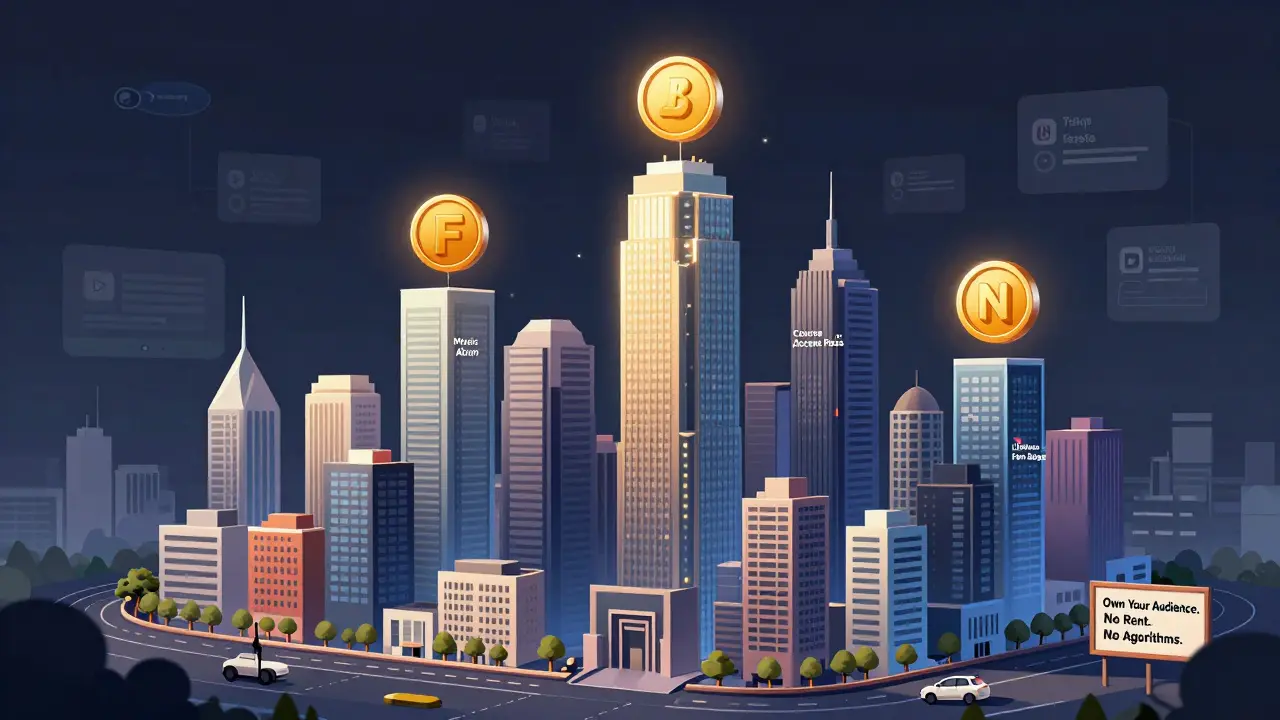
The Bigger Picture: NFTs as Digital Real Estate
In 2026, the creator economy is worth over $200 billion. NFTs make up 4.3% of that today - but by 2027, they’ll hit $54 billion. Why? Because creators are tired of being renters.
YouTube owns your channel. TikTok owns your audience. Instagram owns your followers. But an NFT? That’s yours. It lives on the blockchain. No one can delete it. No algorithm can bury it. If you build a community around it, it grows - even if you stop posting.
Brands are noticing too. Nike, Disney, and Warner Music have launched creator NFT programs. They’re not chasing hype. They’re investing in ownership. And if you’re a creator who wants to build something that lasts - not just for a viral trend - NFTs are the quietest, smartest move you can make.
Do I need to know how to code to use NFTs as a creator?
No. Over 83% of creators in 2026 use no-code platforms like Shopify’s NFT Studio, OpenSea, or Instagram’s NFT tools. You just need to understand basic concepts like wallets, royalties, and utility. You don’t write smart contracts - the platforms do it for you.
Are NFTs still too risky because of crypto crashes?
The risk isn’t in NFTs - it’s in treating them like stocks. If you focus on utility - like access to content or community perks - your NFTs hold value even if Bitcoin drops. In fact, creators who built real communities saw only 4% revenue loss during Bitcoin’s Q1 2025 crash. Those who sold NFTs as “investment opportunities” lost 35%.
What’s the difference between an NFT and a Patreon subscription?
Patreon gives you access while you pay. An NFT gives you ownership - even if you stop paying. If you sell your NFT later, you might still earn royalties. Plus, NFTs work across platforms. A Patreon membership dies if you leave the site. An NFT lives on the blockchain forever.
Can I sell NFTs if I’m not an artist or musician?
Absolutely. NFTs aren’t just for art. A podcast host can issue NFTs for exclusive episode access. A fitness coach can offer NFTs that unlock personalized workout plans. A teacher can sell NFTs that grant lifetime access to their course library. The key is offering something valuable - not just a digital image.
How much money can I realistically make from NFTs?
Top creators earn $20,000-$50,000/month from NFT royalties alone. But most start small: $500-$2,000/month after 6-12 months. Success comes from consistency, not one big drop. The average creator earns 68% of their NFT income from secondary sales - meaning you keep earning every time someone resells your NFT.
 Finance
Charrie VanVleet
February 19, 2026 AT 00:57Also, Shopify's NFT Studio? Game changer. I helped a local musician set up a drop last month - zero coding, 15 minutes, and now she's got 300 fans with lifetime access to her demos. It's not magic. It's just smart.
AJITH AERO
February 20, 2026 AT 10:49Tarun Krishnakumar
February 21, 2026 AT 12:20The blockchain doesn't own you - the smart contract does. And guess who controls the smart contract? Not you. Not the fan. The platform. They're not removing middlemen. They're just replacing them with code that can be changed at will. The real power move? Quitting the internet entirely and selling paintings at flea markets. At least there, no one can de-list your work.
andy donnachie
February 22, 2026 AT 19:23Jeremy Fisher
February 23, 2026 AT 22:43And yeah, most of the early NFT stuff was trash. But now? We're past the circus. The tools are baked. The utility is real. If you're still calling it 'crypto nonsense', you're not looking at what it does - you're stuck on what it used to be.
Anandaraj Br
February 24, 2026 AT 20:51Beth Erickson
February 25, 2026 AT 16:20jennifer jean
February 25, 2026 AT 23:30sruthi magesh
February 27, 2026 AT 01:58Lisa Parker
February 27, 2026 AT 19:40yogesh negi
February 28, 2026 AT 21:21James Breithaupt
March 1, 2026 AT 02:01Paul David Rillorta
March 2, 2026 AT 07:50Nikki Howard
March 4, 2026 AT 03:23Geet Kulkarni
March 5, 2026 AT 03:14Rajib Hossaim
March 5, 2026 AT 22:51Angela Henderson
March 6, 2026 AT 11:16