


Imagine trying to sell a rare collectible in a town where only two people are buying. You'd either have to drop your price significantly or wait forever for a fair offer. That's exactly what happens in a Decentralized Exchange (DEX) with poor liquidity. When there aren't enough assets in the pools, traders face massive slippage-the gap between the expected price and the actual price they get. For a DEX to actually work, it needs deep liquidity, meaning assets can move in and out without shaking the market price.
The Quick Take on Boosting Liquidity
- Incentives: Use yield farming and governance tokens to attract liquidity providers (LPs).
- Capital Efficiency: Implement concentrated liquidity to let LPs pick specific price ranges.
- Routing: Use Smart Order Routing (SOR) to find the best prices across multiple pools.
- Professionalism: Onboard institutional market makers and a wide variety of trading pairs.
Moving Beyond Simple Pools: The Evolution of Liquidity Provision
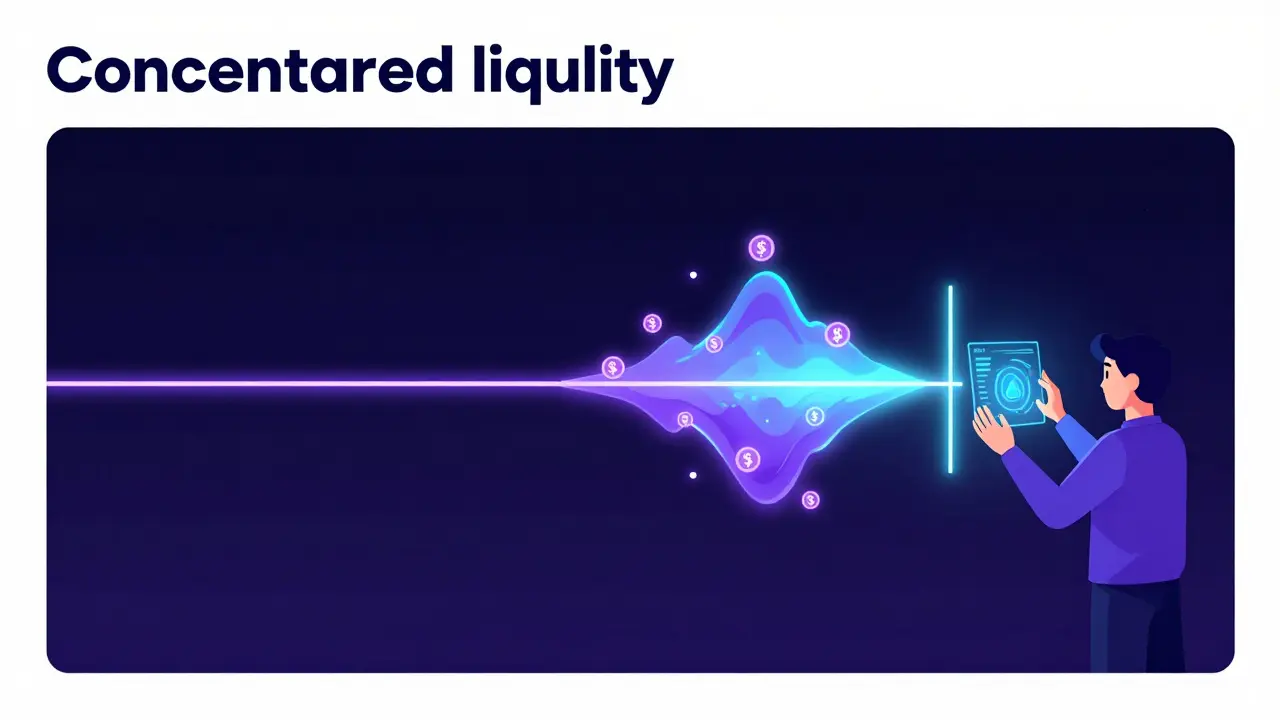
In the early days, most DEXs used a simple Automated Market Maker (AMM) model. You put in two tokens, and the pool handled the rest. But that's inefficient because most of your capital sits idle, far away from the actual trading price. Enter Concentrated Liquidity.
Instead of spreading liquidity from zero to infinity, this method allows LPs to provide assets within a narrow price window. For example, if you think Ethereum will trade between $2,200 and $2,600, you can put your funds exactly there. This makes the pool much deeper in that specific range, which drastically reduces slippage for traders. The trade-off? If the price swings outside your chosen range, your position becomes inactive and converts entirely into the less valuable asset. It's a high-stakes game of precision that rewards those who can predict market movements.
The Engine of Growth: Incentives and Yield Farming
Why would someone lock up their money in a pool and risk losses? The answer is usually Yield Farming. This is essentially a reward system where the platform pays users in native tokens for providing liquidity. It's a powerful bootstrapping tool, but it can be a double-edged sword. If the rewards are too high, you attract "mercenary capital"-users who dump the reward tokens and leave the moment the incentives drop.
To stop this churn, smart platforms use tiered reward systems. Instead of a flat rate, they offer bonuses for those who time-lock their assets for 30 or 60 days. By rewarding loyalty over volume, a DEX can build a stable foundation of liquidity that doesn't vanish overnight. Adding a wide variety of currency pairs, especially stablecoins like USDC or USDT, also helps. These act as the "bridge" assets that make it easier for users to jump between different tokens without leaving the platform.
Technical Optimization: Smart Routing and Aggregation
Sometimes the liquidity exists, but it's scattered across different pools or different blockchains. This is where Smart Order Routing (SOR) comes in. Think of it like a GPS for your trade. Instead of just checking one pool, SOR scans multiple liquidity sources and splits a large order into smaller pieces to get the best possible price.
| Strategy | Primary Benefit | Main Risk | Target User |
|---|---|---|---|
| Standard AMM | Simple to manage | High capital inefficiency | Passive LPs |
| Concentrated Liquidity | Extreme capital efficiency | Impermanent Loss / Range Risk | Active Traders |
| Yield Farming | Rapid pool growth | Token inflation / Volatility | Speculators |
| Liquidity Aggregation | Lowest slippage | Technical complexity | Whales / Institutions |
Bringing in the Big Players: Institutional Liquidity
Retail traders are great for activity, but Institutional Investors bring the real depth. To attract them, a DEX can't just be a website with a "swap" button. Institutions need professional-grade infrastructure. This means high-speed API access for algorithmic trading and robust custody solutions, like cold storage wallets with multi-signature security.
Compliance is the biggest hurdle here. Many institutions won't touch a platform unless it meets AML (Anti-Money Laundering) and KYC (Know Your Customer) standards. By implementing these guardrails and offering OTC (Over-the-Counter) desks for massive trades, DEXs can attract the kind of volume that makes a market truly liquid. When a hedge fund provides liquidity, the order book becomes a fortress, meaning even a million-dollar trade won't move the price by more than a fraction of a percent.
Cutting-Edge Research: AI and Dynamic Rebalancing
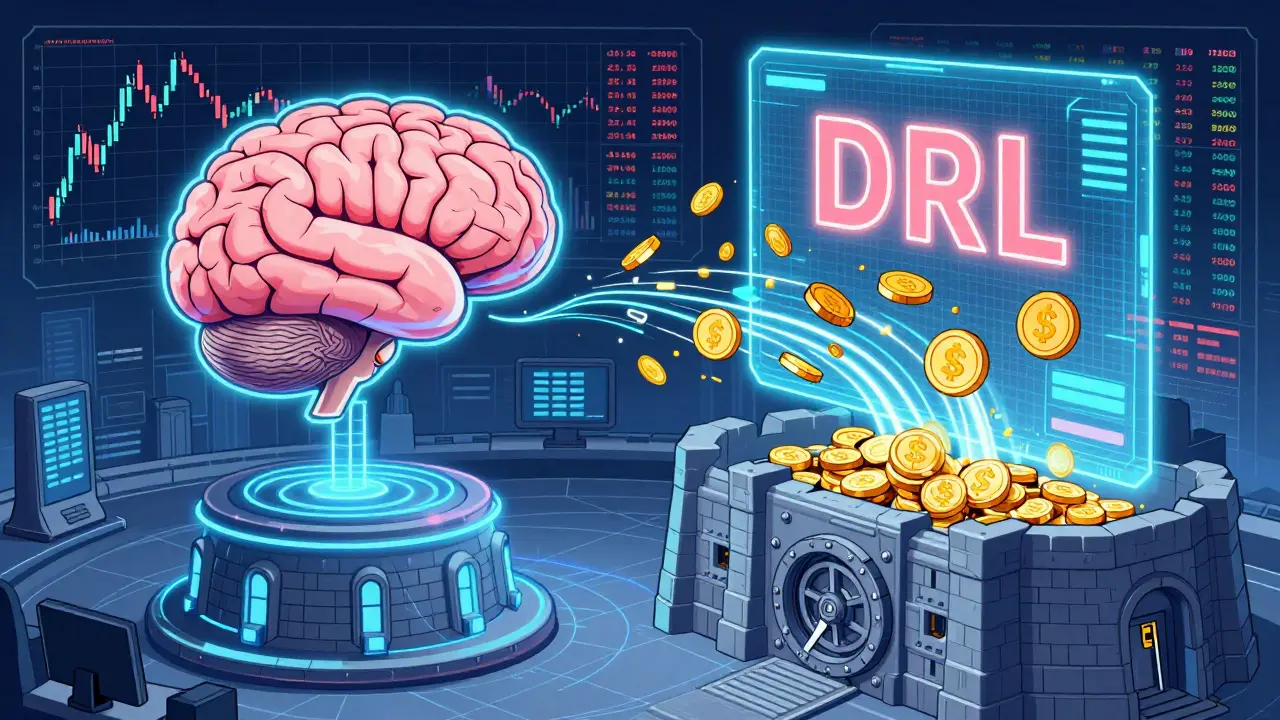
We're now seeing the rise of "active' liquidity management. New schemes like LiqBoost are designed to dynamically shift where liquidity is placed based on real-time market data. Instead of a human manually adjusting their price range in a concentrated liquidity pool, an algorithm does it automatically.
Some developers are even using Deep Reinforcement Learning (DRL) to train agents that rebalance positions. These AI agents use algorithms like Proximal Policy Optimization (PPO) to minimize what's known as Loss versus Rebalancing (LVR). Essentially, the AI learns how to stay in the "money zone" where trading fees are highest while avoiding the traps that lead to permanent capital loss. This turns liquidity provision from a guessing game into a data-driven science.
What is the difference between liquidity and volume?
Volume is the total amount of trading that happens over a period of time. Liquidity is the *depth* of the market-how much can be traded without moving the price. You can have high volume but low liquidity if the trades are small and frequent, but a single large trade still causes a massive price swing.
Does concentrated liquidity increase the risk of loss?
Yes. While it increases the fees you earn per dollar invested, it also increases the risk of "impermanent loss." If the asset price moves outside your chosen range, you are left holding 100% of the asset that is performing poorly, and your position stops earning fees entirely.
How does Smart Order Routing actually work?
SOR acts as a layer on top of multiple DEXs. When you want to swap Token A for Token B, the SOR checks various pools (e.g., Uniswap, Curve, PancakeSwap). If the best price is split-half in one pool and half in another-the SOR automatically executes multiple smaller trades across those venues to give you the best overall rate.
Why are stablecoins important for DEX liquidity?
Stablecoins provide a reliable anchor. Most traders prefer to move from a volatile asset to a stable one (like USDC) before moving into another volatile asset. By having deep liquidity in stablecoin pairs, a DEX reduces the "friction" of trading and makes the entire platform more attractive.
Can AI really manage liquidity better than a human?
In many cases, yes. AI can process tick-by-tick market data and execute rebalancing trades in milliseconds. Humans cannot monitor 24/7 charts with that level of precision. However, AI is still subject to "black swan" events where the market behaves in ways the model wasn't trained for.
Next Steps for Platform Growth
If you're building or managing a platform, don't rely on a single trick. Start by securing a few high-volume pairs and offering a fair reward for LPs. Once the base is there, implement smart routing to capture liquidity from other chains. Finally, focus on the boring stuff: KYC, security audits, and professional APIs. That's how you move from a niche project to a market-leading exchange.
 Finance




Swati Sharma
April 9, 2026 AT 19:57Concentrated liquidity is definitely a game changer for capital efficiency, though the impermanent loss risk remains a huge hurdle for retail LPs. Most people don't realize that the Delta-neutral strategies used by pro market makers are what actually stabilize these pools. We need more middleware that abstracts this complexity for the average user so they don't get wrecked by a sudden price swing.
7stargee Emmanuel Obani
April 11, 2026 AT 11:04Typical hype post. Most of these DEXs are just ponzis with fancy names 🙄
James Bone
April 13, 2026 AT 07:00It's funny how everyone talks about 'institutional liquidity' as the holy grail. In reality, institutions are just the new landlords of the digital age, bringing the same extractive habits from Wall Street to the blockchain. We're just trading one set of masters for another under the guise of 'depth' and 'stability'.
Heather Warren
April 13, 2026 AT 21:38The point about stablecoins acting as a bridge is so important. It really makes the whole experience smoother for new traders who are scared of volatility.
Lane Montgomery
April 14, 2026 AT 13:32LVR is the real killer here.
daniella davis
April 15, 2026 AT 22:45Ugh, please. Like anyone actually cares about PPO algorithms when the whole market is just a giant gambling den lol. Its so basic to think AI is the magic fix for bad tokenomics. I've seen better liquidity strategies in a lemonade stand.
Emily H
April 16, 2026 AT 20:05The implementation of Smart Order Routing represents a significant advancement in user experience. By optimizing the path of a transaction, platforms can effectively minimize slippage and maximize the value received by the end-user. This systemic approach to liquidity aggregation is essential for the maturation of the decentralized finance ecosystem.
Stanly Hayes
April 18, 2026 AT 13:38Listen, if we want real depth, we need to stop relying on these globalist protocols and build something that actually supports local liquidity hubs. The current model is too fragmented and weak!
Rebecca Violette
April 19, 2026 AT 20:49i tried concentrated liquidity and lost like 200 bucks in one day... why is this so hard 😭 everything is just a scam anyway i bet
Surender Kumar
April 21, 2026 AT 14:45really nice breakdown of the tech... i think AI rebalancing will b the way forward for most of us who cant stare at screens all day
Aaliyah BROTHERS
April 22, 2026 AT 02:47SURE, just let the "institutions" in!!! That is exactly what the shadow banks want!!! More control, more surveillance, more KYC chains to bind us all!!! They want to kill the anonymity of crypto and turn it into a digital prison for our assets!!! WAKE UP!!!!
Terrance Hausmann
April 22, 2026 AT 03:26Don't let the technical jargon scare you; just focus on the basics of how your money moves. It's like learning to drive-once you understand the pedals, the rest is just navigation. If you're worried about the risks, maybe start with a small amount in a stable pool to get the hang of it before jumping into the deep end of concentrated liquidity where things get wild.
Scott Fenton
April 23, 2026 AT 09:26The distinction between volume and liquidity is a critical nuance that many participants overlook. High volume without depth merely creates a facade of activity, which can lead to catastrophic price impacts for larger trades. Ensuring a robust liquidity floor is the only way to facilitate sustainable institutional adoption.
Lela Singh
April 24, 2026 AT 12:58Dynamic rebalancing is the secret sauce! Totally transforms the game for LPs!
Will Dixon
April 26, 2026 AT 06:26just keep it simple folks, dont overthink the ai stuff too much
Jonathan Chamma
April 27, 2026 AT 01:16It's kind of like a digital garden; you've gotta water the pools with the right incentives to make them bloom. If you just throw money at it without a plan, the weeds of mercenary capital take over and eat everything in sight. Just keep it friendly and a bit patient, and the ecosystem usually finds its balance over time.
Mikayla Murphy
April 27, 2026 AT 10:52I appreciate the detailed table comparing the strategies. It makes it much easier to understand who each method is actually for.
Kelly Cantrell
April 28, 2026 AT 07:29The KYC requirements are just a front for the government to track every single satoshi we move. They'll say it's for "institutional depth" but it's really just a leash. I'll stick to the old-school pools where you don't have to hand over your passport to a corporation.
logan bates
April 29, 2026 AT 15:18As long as the liquidity is hosted on US-based servers, I'm on board. Keep it domestic.
7stargee Emmanuel Obani
May 1, 2026 AT 05:11LMAO look at all these people pretending to understand the math 🤡