
Imagine you find a new cryptocurrency that promises insane returns. The charts look green, the social media hype is real, and everyone seems to be talking about it. You buy in. Then, overnight, the price crashes to zero. You can’t sell. The developers have vanished with your money. This isn't bad luck; it’s a rug pull, defined as a fraudulent exit scam where crypto project creators abandon their project and steal investor funds. It is the single most common crime in the cryptocurrency space.
If you are navigating decentralized finance (DeFi), understanding this threat is not optional-it is survival. In 2022 alone, rug pulls caused over $2.8 billion in losses, accounting for more than one-third of all crypto fraud. Unlike a market crash where value drops but still exists, a rug pull leaves you with worthless tokens and no recourse. Let's break down exactly how these scams work, the specific red flags you need to spot, and the concrete steps you can take to protect your capital.
How a Rug Pull Actually Works
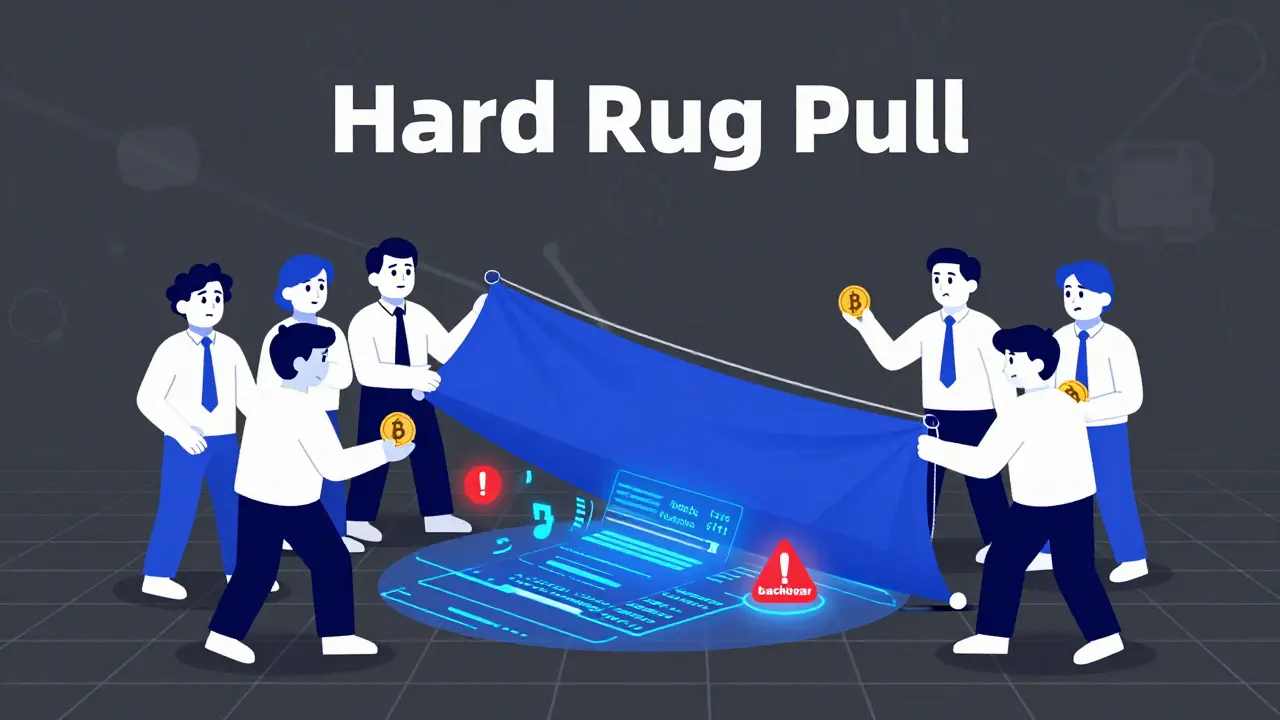
The term comes from the idiom "pulling the rug out from under someone." In crypto, it describes a sudden, malicious withdrawal of support that destabilizes investors. There are two main ways scammers execute this: hard rugs and soft rugs. Knowing the difference helps you understand what you are looking at.
Hard Rug Pulls involve technical manipulation. The developers write malicious code into the smart contract before anyone buys in. They might include a backdoor that allows them to drain the liquidity pool-the reserve of assets that lets you trade the token-or a function that prevents anyone else from selling while they dump their holdings. These are often called "honeypots" because you can buy in, but you cannot get out.
Soft Rug Pulls are psychological traps. The code might be fine, but the team uses aggressive marketing, fake influencers, and paid ads to create artificial demand. Once the token price spikes and retail investors pile in, the anonymous developers quietly sell off their massive initial allocations. The project dies not because of a hack, but because the team abandoned it after cashing out.
| Feature | Hard Rug Pull | Soft Rug Pull |
|---|---|---|
| Method | Malicious Smart Contract Code | Marketing Hype & Team Exit |
| Sell Ability | Often technically blocked (Honeypot) | Possible, but price crashes instantly |
| Detection Difficulty | High (Requires code audit) | Medium (Requires team research) |
| Common Platform | Decentralized Exchanges (DEXs) | Social Media / Telegram Groups |
Red Flags: How to Spot a Scam Before You Buy
You don't need to be a programmer to spot a rug pull. Most scams leave obvious warning signs if you know where to look. According to data from Solidus Labs and CertiK, nearly 90% of rug pull projects share specific characteristics. If you see these, walk away.
- Anonymous Teams: Legitimate projects usually have public founders with LinkedIn profiles or Twitter histories. If the team is completely hidden behind pseudonyms, the risk skyrockets. In 92% of documented rug pulls, the development team was anonymous.
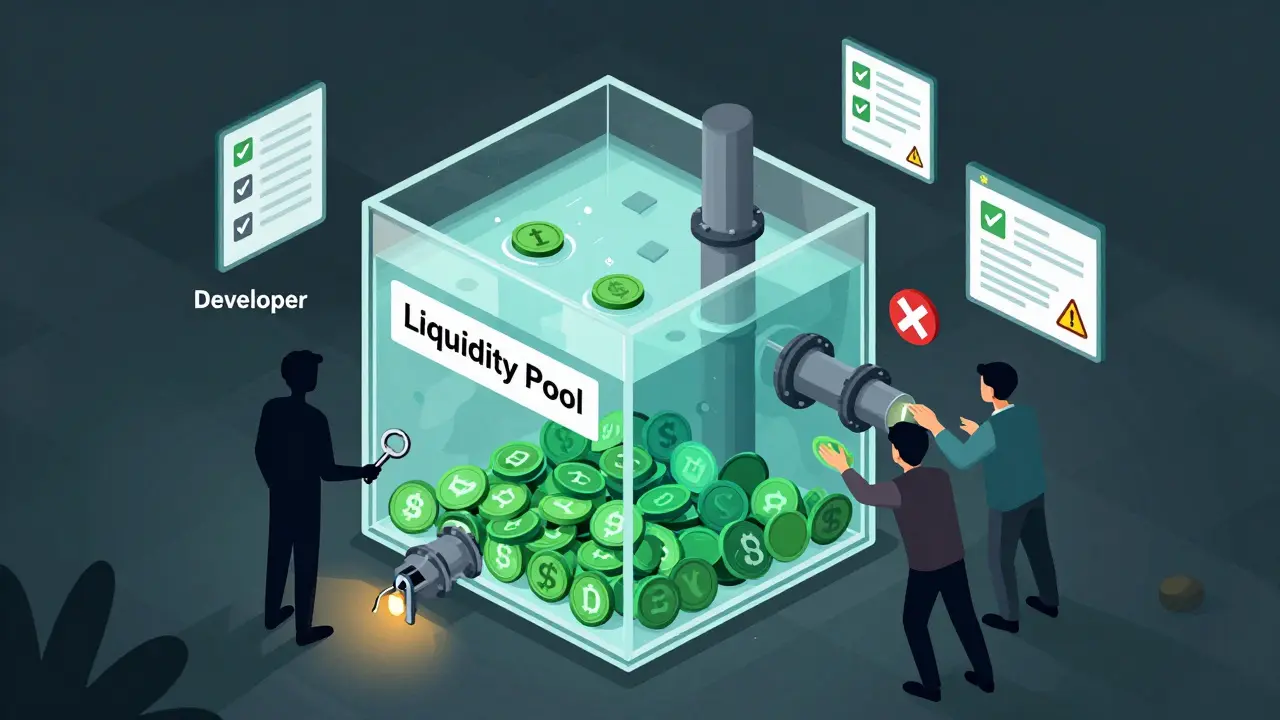
- Unlocked Liquidity: Liquidity is the pool of money that allows you to trade the token. If the developer holds the keys to this pool, they can withdraw it at any time, wiping out the token's value. Always check if liquidity is "locked" using tools like BscScan or Etherscan.
- No Security Audit: Professional firms like CertiK or OpenZeppelin review code for vulnerabilities. If a project claims to be safe but has no third-party audit report, treat it as unsafe. 83% of rug pull projects lacked an audit.
- Unrealistic Promises: Be skeptical of guaranteed high yields. If a project promises 10,000% APY (Annual Percentage Yield) or "guaranteed profits," it is likely a Ponzi scheme disguised as a DeFi project.
- Excessive Developer Tokens: Check the tokenomics. If the developers hold more than 15-20% of the total supply, they have enough power to crash the price whenever they decide to sell.
The Role of Smart Contracts and Audits
In DeFi, trust is replaced by code. A smart contract is self-executing code on the blockchain that automatically enforces the terms of an agreement. However, code can contain bugs-or intentional backdoors. This is why audits are critical.
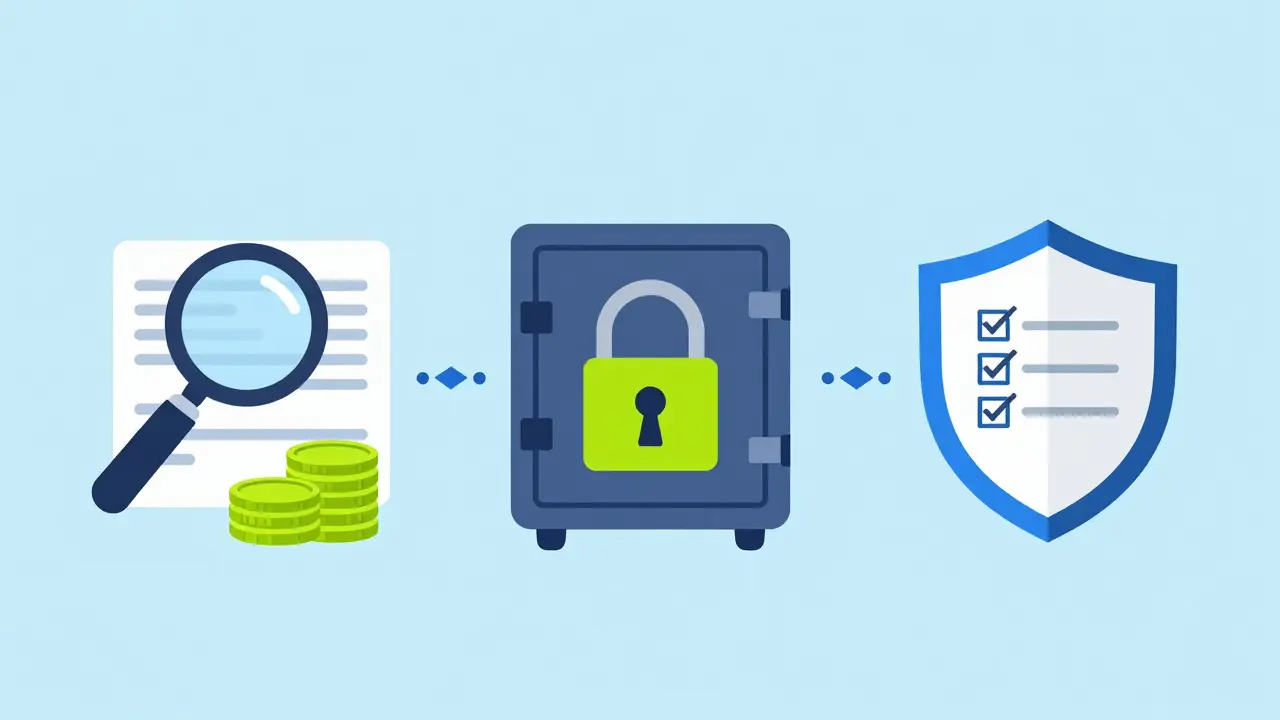
An audit is essentially a security inspection. Independent experts review the code to ensure there are no functions that allow the owner to mint unlimited tokens, change fees arbitrarily, or pause trading. Just because a project says "Audited" doesn't mean it's safe. Some scammers pay for cheap, superficial audits or use fake certificates. Always verify the auditor's reputation. Look for reports from established firms like OpenZeppelin, Trail of Bits, or CertiK. If the audit link leads to a generic PDF with no detailed findings, ignore it.
Furthermore, understand that even audited contracts can be risky if the team is anonymous. An audit checks the code, not the character of the people deploying it. A combination of a reputable audit AND a doxxed (public identity) team provides the highest level of safety.
Liquidity Locking: Your Best Defense
Liquidity locking is the most effective technical safeguard against rug pulls. When a project launches on a decentralized exchange like Uniswap or PancakeSwap, the creator adds pairs of tokens (e.g., USDT and the new token) to a pool. This pool enables trading. Without it, the token is illiquid and worthless.
If the creator keeps the ownership of this liquidity pool, they can withdraw the funds at any moment. To prevent this, responsible teams send the liquidity provider tokens to a locking service like Unicrypt or Team.Finance. These services lock the tokens for a set period-often 6 months to several years. During this time, even the developers cannot access the funds.
Before buying any new token, verify the liquidity lock status. You can do this by checking the transaction history on a block explorer like Etherscan (for Ethereum) or BscScan (for BNB Chain). Look for a transaction sending LP tokens to a known locker contract. If you cannot find this proof, assume the liquidity is unlocked and the project is high-risk.
Tools for Verification and Safety
You don't have to do all this research manually. Several tools exist to help you analyze projects quickly. Using these can save you hours of due diligence and potentially thousands of dollars.
- RugDoc.io: A community-driven platform that rates DeFi projects based on their security features. It highlights risks like unlimited minting or missing audits.
- Honeypot.is: A simple tool where you paste a token address to check if it is a honeypot. It simulates a buy and sell transaction to see if the code blocks selling.
- TokenSniffer: An automated scanner that analyzes token contracts for common scam indicators, such as hidden taxes or ownership privileges.
- Etherscan/BscScan: Essential for verifying liquidity locks and checking who holds the largest token balances. Look for wallets labeled "Team" or "Dev" holding disproportionate amounts.
Remember, these tools are aids, not guarantees. Sophisticated scammers sometimes bypass automated detectors. Always combine tool results with your own judgment and basic research.
Real-World Examples: Lessons from History
Looking at past incidents helps illustrate how these scams unfold. One of the most famous cases was the $SQUID token in late 2021. Inspired by the TV show *Squid Game*, the token surged in popularity. Developers promised high staking rewards. However, the smart contract contained a hidden function that prevented users from selling or unstaking their tokens. While the price appeared to rise, investors were trapped. The developers then sold their own holdings, netting millions, leaving holders with worthless assets.
Another example is the Flokinomics case, which involved a celebrity-endorsed NFT project. The SEC charged the creators with conducting an unregistered securities offering. The project collapsed after raising $11 million, highlighting that even high-profile endorsements do not guarantee safety. In both cases, the lack of transparent team identities and unchecked smart contract permissions were key factors.
Regulatory Landscape and Future Trends
The regulatory environment is evolving. In the European Union, the Markets in Crypto-Assets (MiCA) regulation, effective in 2024, imposes stricter disclosure requirements on crypto issuers. This aims to reduce anonymity and force projects to prove their legitimacy. In the US, the SEC has increased enforcement actions against rug pull schemes, treating many as unregistered securities offerings.
Technologically, we are seeing the rise of mandatory liquidity lock standards and better detection algorithms. Platforms like Binance Launchpad now require minimum 12-month liquidity locks for listed projects, drastically reducing risk for users on those platforms. However, the decentralized nature of crypto means that new chains and platforms will always emerge, providing fertile ground for scammers. Vigilance remains the user's primary responsibility.
What To Do If You Are Victimized
If you suspect you have been part of a rug pull, act quickly, though recovery is difficult.
- Document Everything: Save screenshots of the website, social media posts, whitepapers, and transaction hashes. Record dates and times.
- Report to Authorities: File a complaint with your local financial regulator (like the FCA in the UK or SEC in the US) and cybercrime units. While individual cases are hard to prosecute, aggregated data helps identify patterns.
- Alert the Community: Post warnings on Reddit, Twitter, and Telegram groups associated with the project. This may prevent others from falling victim.
- Contact the Exchange: If you bought through a centralized exchange, contact their support immediately. While they may not reverse transactions, they might freeze associated accounts if identified.
Unfortunately, blockchain transactions are irreversible. Law enforcement agencies rarely recover funds unless they can trace and seize the perpetrators' wallets, which is complex and time-consuming. Prevention is far more effective than reaction.
Can I get my money back after a rug pull?
In most cases, no. Cryptocurrency transactions are irreversible on the blockchain. Unless law enforcement successfully tracks down the scammers and seizes their assets (which is rare and takes years), the funds are likely lost forever. This is why prevention through due diligence is critical.
Is a rug pull illegal?
Yes, rug pulls are considered fraud and wire fraud in many jurisdictions, including the US and UK. Regulators like the SEC and FCA actively pursue these cases. However, because crypto operates globally and often anonymously, enforcement is challenging. Being illegal does not make it easy to stop or reverse.
How do I check if a token is a honeypot?
You can use online tools like Honeypot.is or TokenSniffer. Paste the token's contract address into these sites. They will simulate a buy and sell transaction. If the simulation shows you can buy but cannot sell, or if the sell tax is excessively high (e.g., 100%), it is likely a honeypot designed to trap your funds.
What is the difference between a rug pull and a pump-and-dump?
A pump-and-dump involves artificially inflating a price through hype and then selling, often without altering the code. A rug pull typically involves a more abrupt abandonment, often with technical tricks like draining liquidity or blocking sales. All rug pulls are a form of exit scam, but not all pump-and-dumps involve the same level of technical deception.
Are all anonymous crypto projects scams?
Not necessarily, but anonymity significantly increases risk. Some legitimate privacy-focused projects have anonymous teams. However, for new DeFi tokens promising high yields, an anonymous team is a major red flag. Always combine team transparency checks with code audits and liquidity lock verification.
 Finance