

ECDSA: The backbone of crypto signatures
When working with ECDSA, Elliptic Curve Digital Signature Algorithm, the cryptographic method that lets you prove ownership of a transaction without revealing the secret key. Also known as Elliptic Curve Signature, it Elliptic Curve Cryptography, a family of algorithms that use the algebraic structure of elliptic curves over finite fields to create short, fast signatures. A private key, a random 256‑bit number that only the owner knows and a corresponding public key, derived from the private key through elliptic curve multiplication are the only ingredients you need.
Why ECDSA matters for every blockchain
ECDSA enables three core actions: generate a signature, verify a signature, and protect the private key from exposure. In practice, a user signs a transaction hash with their private key; the network then uses the public key to confirm the signature matches the hash. This simple chain – *ECDSA uses elliptic curve mathematics* – *ECDSA requires a private key to generate a signature* – *Blockchain platforms rely on ECDSA for transaction verification* – is the security foundation behind Bitcoin, Ethereum, and most newer Layer‑1s. Without it, anyone could alter a transaction, and the ledger would lose its trustless nature.
Most of the articles you’ll see on UpdatePool, from airdrop guides to exchange reviews, assume ECDSA is working silently in the background. When a new token launch mentions “secure signing” or an exchange touts “advanced encryption,” they are really referring to the same algorithm that powers your wallet’s keypair. Understanding ECDSA helps you spot fake wallets, avoid phishing, and choose platforms that implement proper key management.
ECDSA doesn’t work alone; it pairs with hash functions like SHA‑256 to turn any message into a fixed‑size digest before signing. The digest ensures that the signature size stays tiny while preserving security. Additionally, smart‑contract platforms often expose ECDSA verification as a built‑in function, letting developers confirm off‑chain signatures inside on‑chain code. This synergy between hashing, signing, and on‑chain verification is why developers can build multi‑signature wallets, decentralized identity solutions, and trust‑less bridges.
If you’re new to crypto, start by generating a keypair in a reputable wallet, inspect the public key, and try signing a test message. For seasoned traders, check whether an exchange stores private keys in hardware security modules – a practical sign they respect ECDSA’s security model. For developers, experiment with the ECDSA libraries available in JavaScript, Python, or Rust to see how a few lines of code can lock down a transaction. Ready to dive deeper? Below you’ll find a curated list of posts that walk through real‑world uses of ECDSA, from exchange security analyses to token launch mechanics. Each article builds on the concepts introduced here, giving you actionable insight into how digital signatures keep the crypto world moving forward.
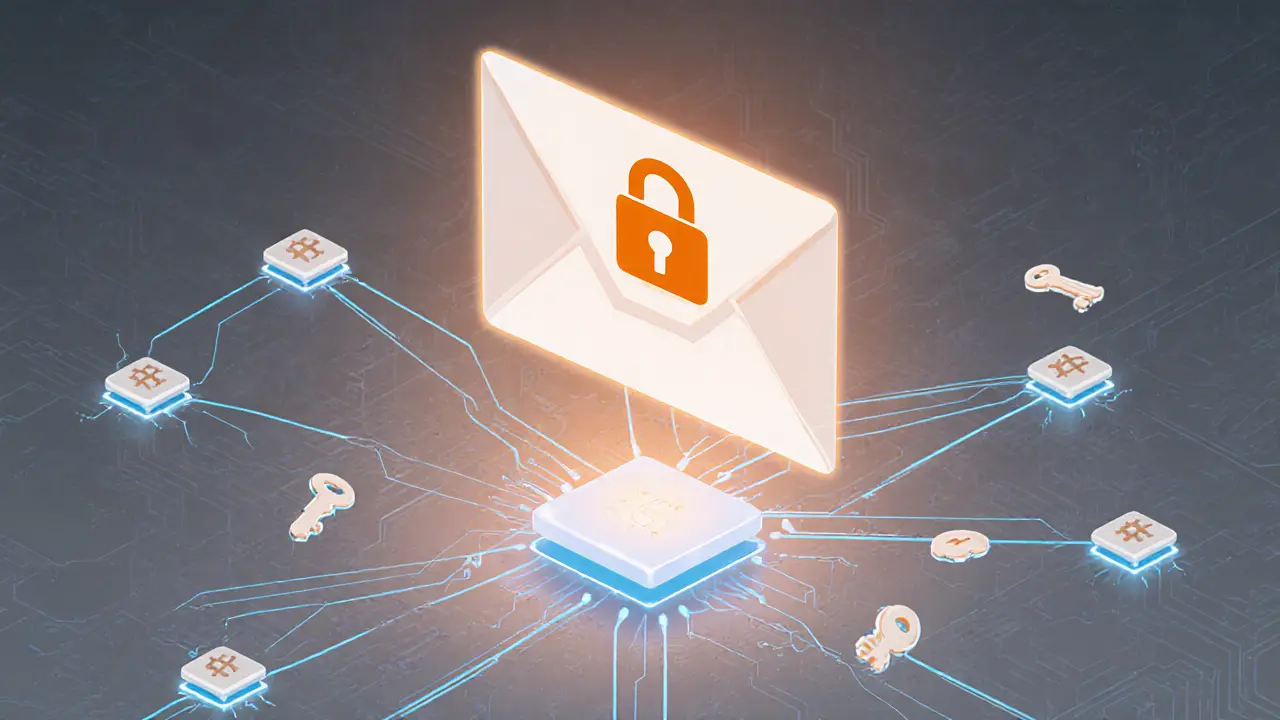
Explore the main digital signature algorithms behind blockchain-ECDSA, EdDSA, Schnorr and more. Learn how they work, compare security, performance, and future quantum‑ready options.

Explore how digital signatures outshine handwritten ones in crypto. Learn about ECDSA, Schnorr, BLS, security benefits, and real‑world blockchain use cases.
Categories
 Finance
Archives
Recent-posts

What is a Nonce in Blockchain? A Simple Guide to Mining and Security
Aug, 8 2026

Asian Fintech (AFIN) Airdrop: Details, Eligibility, and Risk Analysis
Jul, 24 2026
FIWA Airdrop Details: What You Need to Know About DeFi Warrior's Token Distribution
Mar, 3 2026
FlairDex Crypto Exchange Review: Low Fees, ve(3,3) Governance, and What’s Missing
Mar, 1 2026
Crypto Bank Coin (CKN) Airdrop: Details, Risks, and How to Verify
Jul, 23 2026