

Is the Asian Fintech (AFIN) Airdrop Real?
You’ve probably seen headlines or social media posts promising free tokens from Asian Fintech, also known as AFIN. The promise is simple: join the project, get rewarded with tokens that support environmental sustainability. But here is the hard truth you need to know before you spend hours completing tasks or connecting your wallet.
As of mid-2026, there is no verified, official information regarding an active Asian Fintech airdrop program on major cryptocurrency tracking platforms like CoinMarketCap or CoinGecko. While rumors circulate in Telegram groups and Discord servers, authoritative sources show conflicting data about the token’s very existence in the open market. If you are looking for a guaranteed payout, you might be chasing a ghost-or worse, falling for a scam designed to drain your wallet.
This article breaks down exactly what Asian Fintech claims to be, why the data is so messy, how to check if an airdrop is legitimate, and what risks you face if you decide to participate anyway. We will look at the tokenomics, the sustainability angle, and the red flags that every savvy investor should spot immediately.
What Is Asian Fintech (AFIN)?
To understand whether an airdrop makes sense, you first need to understand the asset itself. Asian Fintech (AFIN) is a cryptocurrency project that positions itself as a sustainable and environmentally conscious digital asset. Its core value proposition isn't just financial gain; it’s about bridging the gap between traditional crypto investing and social responsibility.
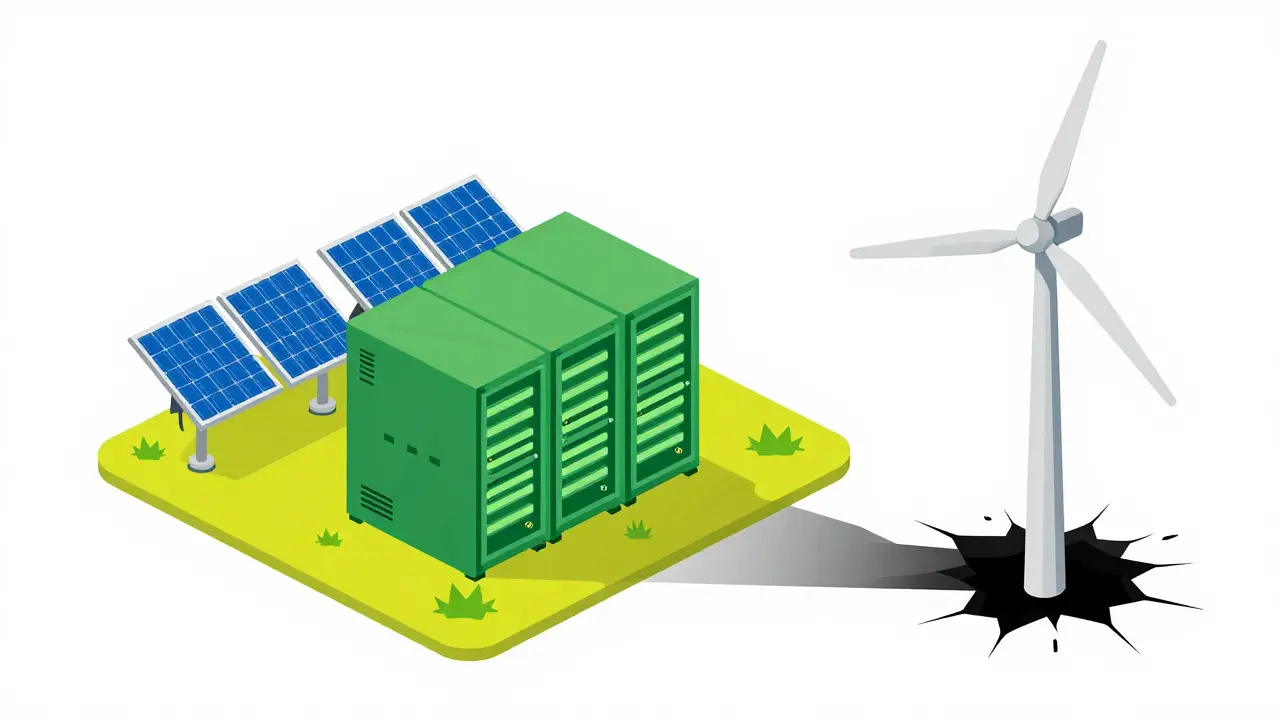
The project claims to own "Green Bitcoin" operations. This means they utilize clean energy sources-such as solar, wind, and hydro power-for their mining activities. In a world where Bitcoin’s carbon footprint is under constant scrutiny, this ESG (Environmental, Social, and Governance) angle is a powerful marketing tool. It appeals to investors who want to hold crypto without feeling guilty about contributing to climate change.
| Attribute | Value / Detail |
|---|---|
| Total Supply | 500 Million AFIN |
| Max Supply | 500 Million AFIN |
| Circulating Supply | 135 Million AFIN (Self-reported) |
| Mission | Sustainable crypto via clean energy mining |
| Smart Contract | 0xee9e...f67a72 (Requires verification) |
However, a mission statement doesn’t equal liquidity. The numbers above look structured, but when you dig into the actual market performance, things get murky. The self-reported circulating supply of 135 million tokens suggests some distribution has happened, but who holds them? And can you actually sell them?
The Data Discrepancy: Why Trust Is Low
If you have ever traded crypto, you know that price consistency across exchanges is normal. For Asian Fintech, it is non-existent. This is the biggest red flag for anyone considering an airdrop claim.
On one hand, platforms like CoinCodex list a current price of around $0.0012 USD. They even provide technical analysis, showing a 14-day RSI of 54.91 and predicting potential growth. Their model suggests a $1,000 investment could yield a 60% return over a few months. That sounds attractive, right?
Now, look at Binance or CryptoRank. These massive, reliable aggregators often show the price as $0 USD with zero trading volume. Binance explicitly states that Asian Fintech is not available for purchase or trade on their platform. When a major exchange lists a token as having no market cap, no all-time high, and no volume, it usually means one of two things:
- Liquidity Crisis: There are no buyers. The token exists on a blockchain, but nobody is willing to trade it at any significant volume.
- Data Error or Delisting: The token was delisted from major venues due to low activity or compliance issues, leaving only small, obscure decentralized exchanges (DEXs) where prices are manipulated easily.
Historical data adds another layer of confusion. CryptoRank indicates that AFIN reached its highest price in Indian Rupees back in January 2019. Since then, the token has largely vanished from mainstream radar. An airdrop for a token that hasn't had meaningful liquidity in years is highly suspect. Are you being given worthless paper, or is there a hidden gem? The lack of transparency makes it nearly impossible to tell.

How to Verify an AFIN Airdrop Claim
Let’s assume someone sends you a link claiming you qualify for an AFIN airdrop. Before you click "Connect Wallet," run through this checklist. Scammers love projects with confusing data because victims can’t easily verify the token’s real value.
- Check the Official Website: Does the primary Asian Fintech website mention the airdrop? If it’s only on a third-party blog or a Twitter DM, it’s likely fake.
- Verify the Smart Contract: The contract address starts with
0xee9e...f67a72. Copy the full address and paste it into Etherscan (or the relevant blockchain explorer). Look at the holders. If one wallet holds 90% of the supply, the project is centralized and risky. - Look for Audit Reports: Legitimate fintech projects, especially those touting security and sustainability, undergo smart contract audits by firms like CertiK or OpenZeppelin. If you can’t find an audit, assume the code is vulnerable.
- Community Presence: Check their official Discord or Telegram. Are real people discussing the tech, or is it just bots spamming "To the moon!"? A healthy community asks tough questions about the green mining claims.
If the source of the airdrop info cannot answer these basic questions, walk away. The cost of losing access to your main wallet far outweighs the potential value of a few cents worth of AFIN tokens.
Trading AFIN: Centralized vs. Decentralized
Suppose you do manage to get tokens, either through a legit airdrop or a direct purchase. How do you move them? This is where the friction becomes apparent.
Since Binance does not list AFIN, you are forced into the decentralized finance (DeFi) ecosystem. You would need to use a Web3 wallet (like MetaMask or Trust Wallet) and connect to a DEX. Binance actually provides guidance on this, suggesting users connect to DEXs via their Web3 Wallet feature.
Here is the catch: Trading on DEXs for low-cap tokens comes with high risks.
- Slippage: Because volume is low, selling even a small amount of AFIN could crash the price significantly. You might expect to sell for $0.0012, but end up getting $0.0008.
- Gas Fees: If the token is on Ethereum, transaction fees could cost more than the tokens themselves. If it’s on a cheaper chain like BSC or Polygon, fees are lower, but liquidity is often thinner.
- Honeypot Risk: Some malicious contracts allow you to buy tokens but prevent you from selling them. Always test with a tiny amount first.
This accessibility barrier is a double-edged sword. It keeps casual speculators out, which might benefit long-term holders. But for most retail investors, it means your money (or free airdropped tokens) is stuck until someone else decides to buy.
The Sustainability Angle: Marketing or Reality?
Asian Fintech’s claim to fame is its "Green Bitcoin" initiative. In 2026, sustainability is no longer a nice-to-have; it’s a regulatory requirement in many jurisdictions. Projects that can prove their carbon neutrality have a distinct advantage.
However, "greenwashing" is rampant in crypto. Many projects claim to use renewable energy without providing proof. To validate AFIN’s claims, you would need to see:
- Energy Source Certificates: Documentation proving the electricity used for mining comes from solar, wind, or hydro plants.
- Third-Party Verification: An independent audit of their mining facilities’ carbon footprint.
- Transparency Reports: Regular updates on energy consumption and offset initiatives.
Without these concrete proofs, the sustainability narrative remains just marketing. If the airdrop is tied to promoting this eco-friendly image, ask yourself: Are they rewarding genuine advocates, or just generating hype to pump the token price before a dump?
Investment Outlook and Risks
Let’s talk numbers. CoinCodex predicts a bullish trend, citing a Fear & Greed Index of 26 (indicating fear, which can be a buying opportunity) and a 50-day moving average of $0.001096. They suggest a potential 16% increase in the short term.
But predictions are not guarantees. The fact that other major trackers show $0 volume contradicts this optimism. If you invest $1,000 based on a prediction, and the token has no liquid market, you cannot exit your position. Your profit is theoretical, not real.
The risk profile of Asian Fintech is extremely high. It fits the category of "micro-cap" or "nano-cap" assets. These tokens can go up 100x overnight, or to zero just as fast. For an airdrop participant, the upside is limited to the value of the free tokens. The downside includes wasted time, gas fees for claiming, and potential security breaches if you interact with a malicious contract.
Final Thoughts on the AFIN Airdrop
So, should you chase the Asian Fintech airdrop? Proceed with extreme caution. The lack of official confirmation, combined with contradictory market data and limited exchange availability, paints a picture of a project struggling for relevance.
If you are passionate about sustainable crypto, there are larger, more established projects with verified green credentials and deep liquidity. If you are a degenerate trader looking for high-risk gems, ensure you do your due diligence on the smart contract and never connect your main wallet to unverified sites.
In the crypto world, if something seems too good to be true-and especially if the data doesn’t add up-it probably is. Keep your funds safe, verify everything, and remember that free tokens often come with hidden costs.
Is there an official Asian Fintech (AFIN) airdrop in 2026?
As of mid-2026, there is no verified announcement of an official Asian Fintech airdrop on major cryptocurrency platforms like CoinMarketCap or CoinGecko. Any claims found on social media should be treated with skepticism until confirmed by the project's official channels.
Why is the price of AFIN different on different websites?
The discrepancy arises because AFIN has very low liquidity and is not listed on major centralized exchanges like Binance. Some smaller aggregators may show stale or manipulated prices, while others correctly report zero volume and price. This indicates a lack of active trading markets.
Can I buy Asian Fintech tokens on Binance?
No, Binance does not currently list AFIN for direct trading. However, you may be able to access it through decentralized exchanges (DEXs) using the Binance Web3 Wallet feature, though this carries higher risks and complexity.
What is the total supply of AFIN tokens?
The total and maximum supply of Asian Fintech (AFIN) tokens is capped at 500 million. The self-reported circulating supply is approximately 135 million tokens, though actual liquid supply may be lower due to illiquidity.
Is Asian Fintech really eco-friendly?
The project claims to use clean energy sources like solar, wind, and hydro for its "Green Bitcoin" mining operations. However, independent third-party verification of these sustainability claims is not widely available in public reports, so investors should exercise caution regarding greenwashing.
 Finance