


If you live in Argentina, Brazil, Mexico, or another Latin American country and want to buy your first Bitcoin without needing a U.S. bank account, Ripio might be the easiest option you’ll find. It’s not the cheapest, and it doesn’t work everywhere - but for millions of people in the region, it’s the only exchange that lets you deposit cash at a local convenience store and trade crypto the same day.
What Ripio Actually Offers
Ripio isn’t just a crypto exchange. It’s a full financial ecosystem built for Latin America. You can buy Bitcoin with pesos, reais, or pesos. You can spend it with a Visa card that gives you cashback in crypto. You can earn interest on your Ethereum or USDC. You can even swap tokens without paying any trading fees. All of this runs on their own blockchain, LaChain, which they say keeps things faster and cheaper for local users.
They offer 54 core cryptocurrencies on their exchange, but claim access to over 1,200 tokens - including memecoins like Dogecoin and Shiba Inu. That’s more than most regional platforms, though still less than Binance or Coinbase. What matters more is what you can do with them. Want to buy $5 worth of Bitcoin? You can. The minimum order is ARS 1,400 (about $1.50 USD). That’s lower than most global exchanges, which often require $10 or $25 minimums.
Fees: High, But Justified for Some
Ripio’s fees are not low. For buying or selling crypto directly, you pay a flat 0.5% fee. That’s higher than Binance (as low as 0.016% for makers) or Coinbase (0.5% for card buys, but lower for bank transfers). But here’s the catch: you’re not paying in USD. You’re paying in your local currency, and the price you see includes the conversion. No hidden forex charges. No surprise bank fees. No waiting days for a wire to clear.
Trading fees (maker/taker) range from 0% to 0.5%, which is average for a regional exchange. The real win? Swapping between tokens - like trading USDT for ETH - is completely free. That’s rare. Most exchanges charge 0.1% to 0.3% just to swap. If you’re active in DeFi or stablecoin arbitrage, that adds up fast.
How You Deposit and Withdraw
This is where Ripio beats global exchanges hands down. In Argentina, you can deposit cash at Rapipago or Pagofacil - stores you walk into every week. In Brazil, you use PIX, the instant bank transfer system used by over 120 million people. In Mexico, you can send money via Mercado Pago. These aren’t just options - they’re the only practical ways most people buy crypto in those countries.
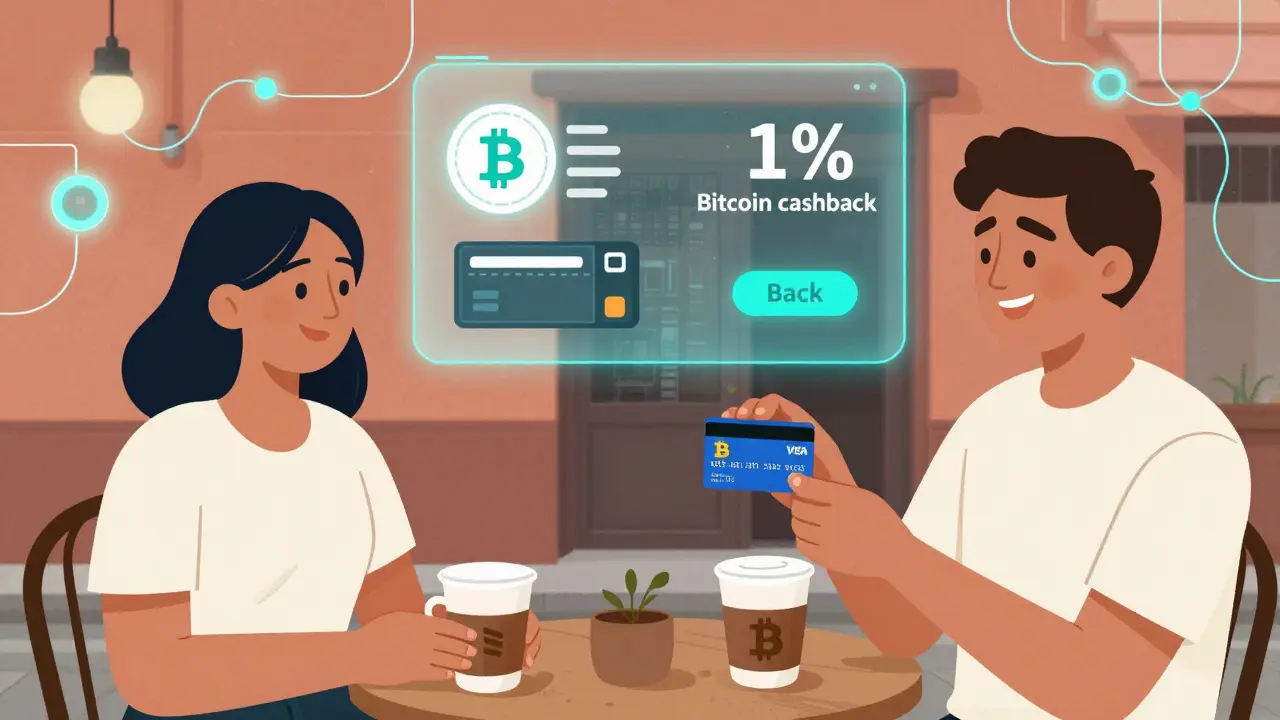
Withdrawals are just as simple. You can send crypto out to any wallet. You can cash out to your local bank account. You can even use the Ripio Visa card to spend your crypto at any store that takes Visa. The card gives you 1% cashback in Bitcoin, USDT, or ETH - which you can then reinvest. It’s a closed loop that works for everyday users, not just traders.
Security: Solid, But Not Perfect
Ripio says it holds 100% of user funds in cold storage. They publish Proof of Reserves on-chain so anyone can verify their holdings. They use two-factor authentication, SSL encryption, and Cloudflare protection. That’s standard for any reputable exchange. But here’s what’s missing: insurance. Unlike Coinbase, which insures 95% of hot wallet assets, Ripio doesn’t publicly offer any insurance policy. If something goes wrong - a hack, a system failure - your money isn’t protected by a third party.
That’s a risk. But for many users, it’s a calculated one. They trust Ripio because it’s regulated in Argentina, Brazil, and Mexico. It’s registered with local financial authorities. That’s more than most crypto platforms in the region can say. In countries where banks freeze accounts for crypto activity, having a regulated exchange matters more than insurance.
Interface and Experience
The app is clean. Simple. Designed for people who’ve never touched crypto before. You open it, tap “Buy,” pick Bitcoin, enter how much you want to spend in pesos, and confirm. Done. No confusing charts. No margin trading. No futures. It’s like using a mobile banking app - if your bank let you buy crypto.
But there’s one big problem: it’s all in Spanish. Not just the app - the help center, the blog, the email support. No English toggle. No Portuguese option. If you don’t speak Spanish, you’re stuck. There are unofficial English translations on GitHub, but they’re outdated and not supported by Ripio. For non-Spanish speakers, this is a dealbreaker.
Customer Support: Slow, But Available
Ripio doesn’t offer live chat. No phone number. No 24/7 human support. You get a chatbot and email. Most users report replies within 24 to 48 hours. That’s acceptable if you’re buying Bitcoin and not in a panic. But during a market crash, when you need to sell fast and your transaction is stuck? Waiting two days is frustrating. One Reddit user in Argentina waited 72 hours for help with a failed withdrawal during a Bitcoin dip. That’s not unusual.
On Trustpilot, Ripio has a 3.9/5 rating based on over 1,200 reviews. Most positive reviews mention the local payment options. Most negative ones complain about slow support or app glitches during high-volume periods. It’s not perfect - but it’s reliable enough for daily use.
Who Is Ripio For?
Ripio isn’t for everyone. If you live in the U.S., Canada, Europe, or Asia - skip it. You can’t even sign up. If you’re a high-frequency trader chasing the lowest fees - look at Binance or Kraken. If you want English support and insurance - go with Coinbase.
But if you’re in Latin America and you want to buy crypto with cash, pay with your local bank, or use a crypto card without jumping through hoops - Ripio is the most practical choice. It’s the only exchange built from the ground up for your reality. It doesn’t try to be global. It doesn’t pretend to compete with Binance. It just makes crypto work for people who’ve been left out of the system.
What’s Next for Ripio?
Ripio is expanding. They’ve integrated Brazil’s PIX system. They’re testing new DeFi tools on LaChain. They’re adding more altcoins and earning programs. Analysts expect their user base to grow 15-20% per year through 2027. But they’re not without challenges. Binance is now offering Spanish-language support and lower fees. Bitso, their biggest regional rival, has more market share in Mexico.
Still, Ripio has something Binance can’t replicate: deep roots. They’ve spent a decade building relationships with local banks, payment processors, and regulators. They’ve trained thousands of people in person at community workshops. They’ve made crypto feel normal - not risky, not foreign, not for tech bros.
That’s why, despite higher fees and slow support, millions keep using it. Because for them, it’s not about being the cheapest. It’s about being the only one that works.
Is Ripio safe to use?
Yes, Ripio is considered safe for users in Latin America. It uses cold storage for funds, offers two-factor authentication, and publishes Proof of Reserves on the blockchain so you can verify holdings. It’s also regulated in Argentina, Brazil, Mexico, and other countries. However, it doesn’t offer insurance on deposits like Coinbase does, so there’s no third-party protection if something goes wrong.
Can I use Ripio outside Latin America?
No. Ripio is only available in Argentina, Brazil, Mexico, Colombia, Chile, and Uruguay. You can’t sign up from the U.S., Europe, Canada, or Asia. Even if you try to use a VPN, your payment methods won’t work - the platform only accepts local currencies and regional payment systems like PIX or Mercado Pago.
Does Ripio support English?
No. The entire platform - app, website, help center, and customer support - is in Spanish only. There’s no official English option. Some community members have created unofficial translations on GitHub, but these aren’t maintained by Ripio and may be outdated or incomplete.
What are the fees on Ripio?
Ripio charges a flat 0.5% fee for buying or selling crypto with local currency. Trading fees (maker/taker) range from 0% to 0.5%. Swapping between tokens - like USDT to ETH - is free. This is higher than global exchanges, but it includes local currency conversion with no hidden charges. For users who deposit cash or use local bank transfers, the convenience often outweighs the fee.
How long does verification take on Ripio?
Verification usually takes 24 to 48 hours. You need to upload a government ID and sometimes a selfie. Once approved, you can start trading. Most users report getting verified within a day if their documents are clear. During holidays or high traffic, it can take longer.
Can I earn interest on my crypto with Ripio?
Yes. Ripio offers an "Earn" program where you can lock up certain cryptocurrencies like USDC, ETH, or DOT and earn daily yields. Rates vary between 0.02% and 0.08% per day, depending on the asset. These are not guaranteed and can change based on market conditions, but they’re a popular way for users to grow their holdings passively.
Is the Ripio Visa card worth it?
For users in supported countries, yes. The card lets you spend crypto anywhere Visa is accepted. You get 1% cashback in Bitcoin, USDT, or ETH on every purchase. There’s no monthly fee. You can withdraw cash from ATMs (with a small fee). It’s one of the few crypto cards that actually works well with local payment systems and doesn’t require a U.S. address or credit check.
 Finance


Gavin Francis
February 1, 2026 AT 11:51Dylan Morrison
February 2, 2026 AT 00:00josh gander
February 2, 2026 AT 06:31Sunil Srivastva
February 3, 2026 AT 06:24Devyn Ranere-Carleton
February 5, 2026 AT 03:42Nickole Fennell
February 5, 2026 AT 23:02Edward Drawde
February 7, 2026 AT 05:55Richard Kemp
February 8, 2026 AT 21:28Gurpreet Singh
February 9, 2026 AT 11:44Christopher Michael
February 9, 2026 AT 21:35Parth Makwana
February 11, 2026 AT 00:57Elle M
February 12, 2026 AT 14:20Crystal Underwood
February 13, 2026 AT 08:04Raymond Pute
February 13, 2026 AT 17:16Jack Petty
February 14, 2026 AT 20:28