

Blockchain Real Estate: How Blockchain Is Changing Property Ownership and Transactions
When you think of blockchain real estate, the use of blockchain technology to record, transfer, or tokenize real property ownership. Also known as property tokenization, it turns houses, land, and commercial buildings into digital assets that can be bought, sold, or divided like crypto tokens. This isn’t science fiction—it’s happening right now in places like Georgia, Switzerland, and even parts of the U.S., where governments and startups are testing digital land registries that can’t be altered or lost.
At its core, blockchain real estate replaces paper deeds and slow government offices with smart contracts, self-executing agreements stored on a blockchain that automatically trigger actions like transfers or payments when conditions are met. No more waiting weeks for a title search. No more forged documents. If you buy a tokenized apartment in Stockholm, the deed updates on the blockchain the moment payment clears—no lawyer, no notary, no middleman. And because every transaction is public and permanent, fraud becomes nearly impossible.
This also opens up new possibilities. Imagine owning 10% of a Manhattan office building through a single token, or splitting a vacation home with 20 friends using fractional ownership. digital land titles, secure, tamper-proof records of property ownership stored on a blockchain make this possible. Countries like Sweden and Ukraine have already piloted blockchain-based land registries to cut corruption and speed up sales. Even big names like Propy and RealT are letting people invest in U.S. rental properties with as little as $50.
But it’s not all smooth sailing. Many projects fail because they try to force blockchain into old systems. A tokenized house in Miami means nothing if local courts don’t recognize it. And while blockchain keeps records safe, it doesn’t fix bad properties or shady developers. That’s why most real blockchain real estate projects today focus on small-scale pilots, not mass adoption.
What you’ll find below are real examples—some successful, others cautionary tales—of how blockchain is being used in property markets. You’ll see tokens tied to actual buildings, scams disguised as real estate investments, and the quiet tech quietly rewriting how ownership works. No hype. No fluff. Just what’s real, what’s broken, and what’s coming next.
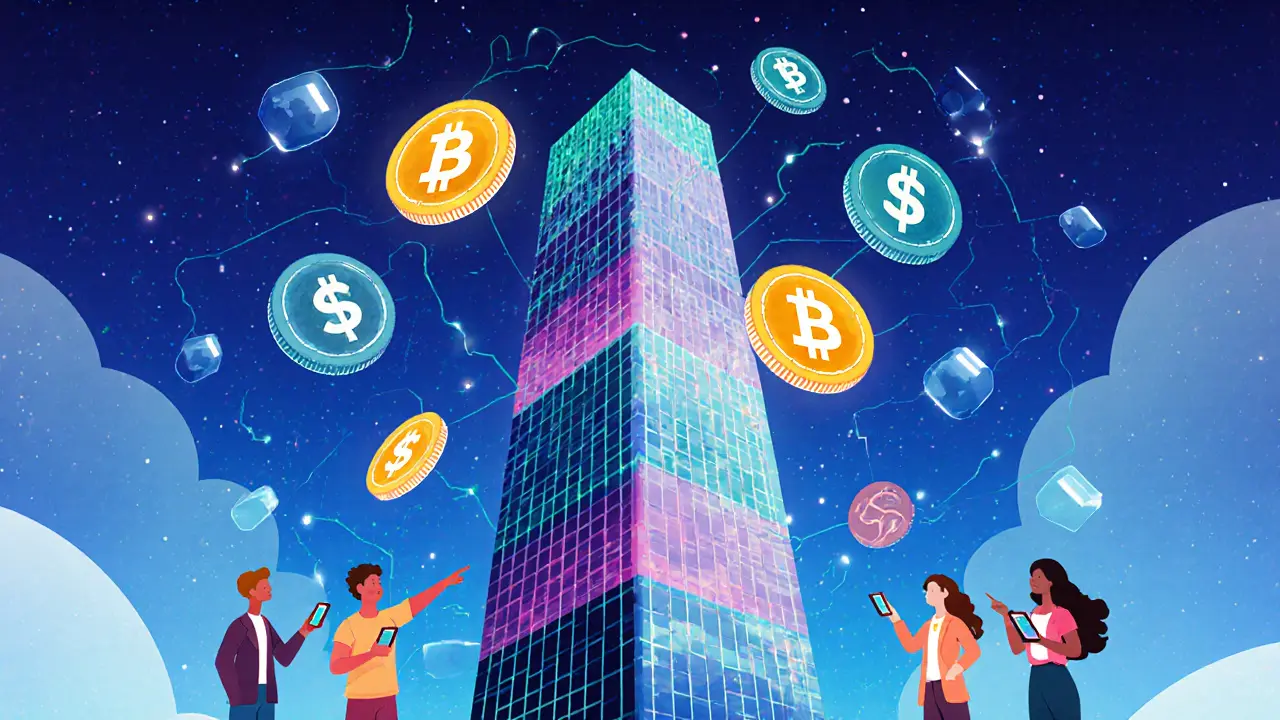
Blockchain tokenization turns real estate into digital shares, letting anyone invest from $100. Learn how it works, where it's legal, and why it's changing property ownership forever.
Categories
 Finance
Archives
Recent-posts

Crypto Portfolio Diversification Strategies for 2026: A Practical Guide
Jun, 8 2026
Nirvana ANA (ANA) Crypto Coin Explained - How It Works, Risks & Market Snapshot
Oct, 12 2025
State Control of Crypto Mining in Venezuela: How the Government Manages and Restricts Digital Mining
Jan, 30 2026

Understanding Bitcoin Network Hash Rate: How Computational Power Secures the Blockchain
Dec, 22 2025
AST Unifarm Airdrop by AST.finance: What You Need to Know
Oct, 4 2025