

How Venezuela Took Over Crypto Mining
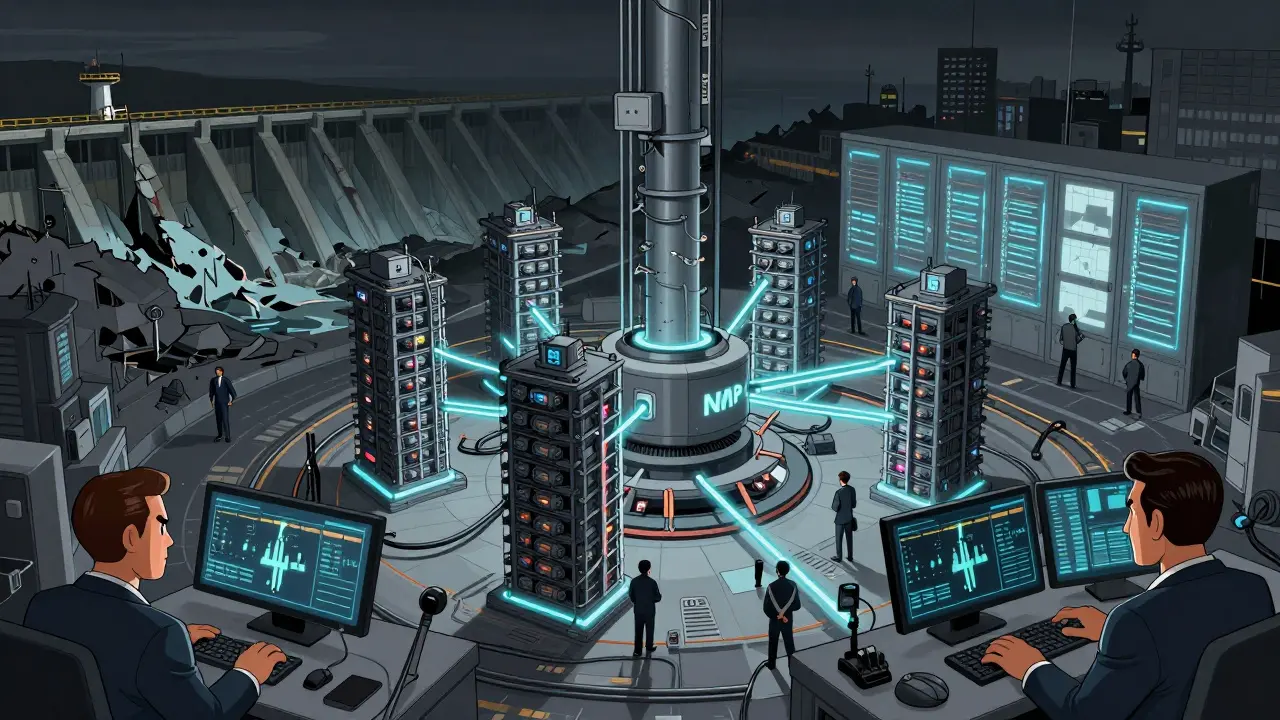
In 2018, Venezuela didn’t just allow cryptocurrency mining-it claimed it as a state resource. The government didn’t wait for miners to organize. It created a new agency, SUNACRIP, and made every mining operation legally bound to its rules. This wasn’t about innovation. It was about control. With electricity costs as low as $0.03 per kWh-far below the global average of $0.08 to $0.12-the country had a natural advantage. But instead of letting private miners profit, the state demanded ownership of the process.
The Rules No One Could Ignore
If you wanted to mine Bitcoin or any other cryptocurrency in Venezuela after 2020, you had to register. Not just sign up, but submit proof of electrical capacity (at least 500kW), detailed equipment lists, and personal identification to SUNACRIP. You had to join one of two registries: RIM for miners or RISEC for crypto service providers. The process took three to four months. Most small operators couldn’t afford the wait or the paperwork. Only those with government connections or corporate backing made it through.
And once approved? You weren’t free to mine anywhere. You had to connect to the National Mining Pool (NMP), a government-run system that distributed rewards and tracked every hash. Miners reported delays in payouts, lost blocks, and frequent system crashes. One miner in Maracaibo told analysts his efficiency dropped by 18% after switching to the NMP. Independent mining wasn’t illegal-but it was practically impossible. The state made sure no one could operate without its approval.
Energy, Corruption, and Power Outages
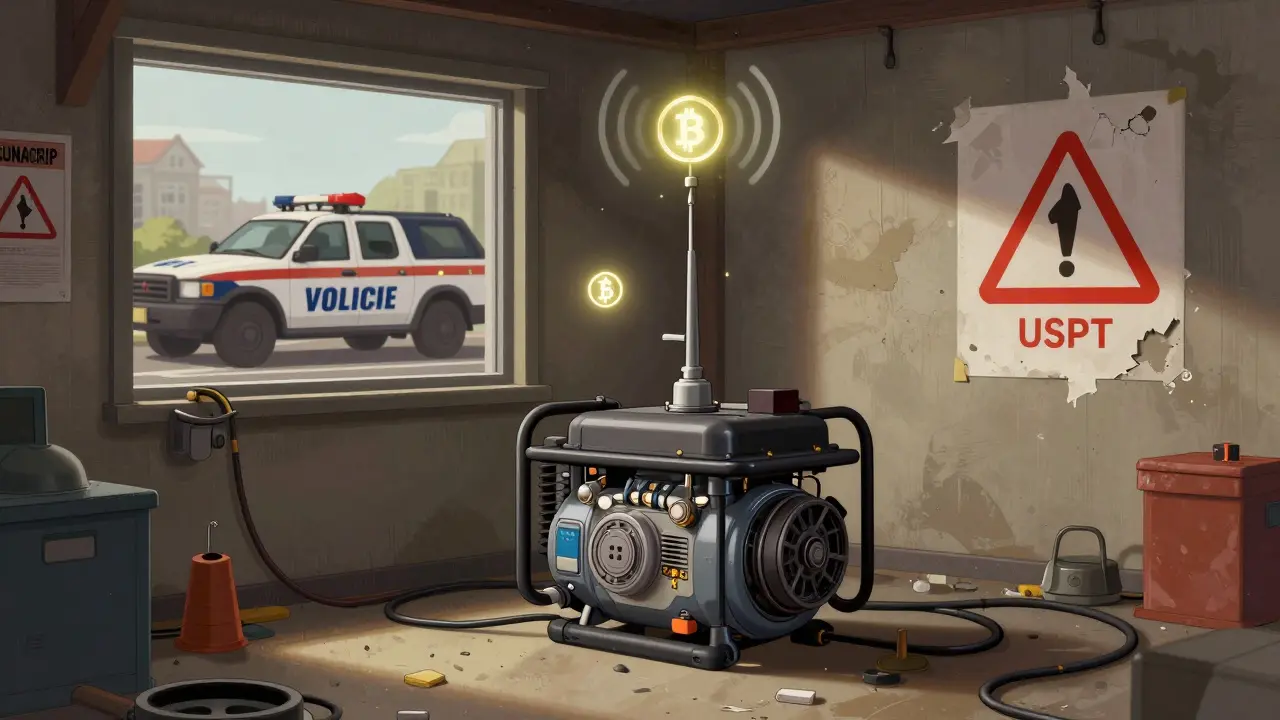
Venezuela’s hydroelectric dams could power millions of mining rigs. But the grid was crumbling. In 2023, miners faced 40 to 60 hours of blackouts each month. To keep machines running, many bought diesel generators. That doubled their operating costs. Even with free electricity, mining became expensive.
Then came the crackdown. In early 2023, a corruption probe tied to the oil ministry led to the sudden shutdown of over 300 licensed mining centers. No warning. No appeal. Just locked doors and severed connections. SUNACRIP, the agency meant to regulate mining, was suspended. Its leadership vanished. For a year, the system froze. No new licenses. No updates. No answers.
By March 2024, the government reorganized SUNACRIP and brought in private sector representatives through CAVEMCRIP. But trust was gone. Miners didn’t know if their licenses were still valid. Banks didn’t know if crypto transactions were legal. The rules existed on paper-but enforcement was random.
Why the Government Wanted Control
Venezuela’s economy had collapsed. Inflation hit over one million percent. People stopped using bolivars. They started using USDT, Bitcoin, and other stablecoins to buy food, pay rent, and send money home. By 2025, 70% of Venezuelans used crypto daily. The government couldn’t stop that. So it tried to redirect it.
The Petro, Venezuela’s own cryptocurrency launched in 2017, failed. But the state didn’t give up. It shifted focus. Instead of pushing its own coin, it started using mining to generate hard currency. Licensed operations were required to sell a portion of their Bitcoin to the central bank at fixed rates. That money went straight into government coffers. It was a quiet tax on digital labor.
By 2025, official reports claimed mining contributed 4% to Venezuela’s GDP. But independent analysts doubted the numbers. With SUNACRIP paralyzed, how could they track it? The real value wasn’t in the numbers-it was in the control. The state turned mining into a political tool.
What’s Happening Now?
As of early 2026, Venezuela’s crypto mining scene is stuck between two worlds. Legally, it’s still regulated. Technically, it’s broken. The government announced plans to let banks offer Bitcoin and stablecoin services by December 2025. The Conexus platform, which already handles 40% of electronic payments, was supposed to become the backbone of a national crypto banking network. But the rollout stalled.
Why? Because the people running the system don’t have the power-or the legitimacy-to make it work. The International Criminal Court is investigating Maduro’s security forces. The U.S. has bounties on top officials. Domestic anger is rising. No one trusts the state to manage anything fairly, let alone a decentralized technology like Bitcoin.
Yet, mining hasn’t stopped. It’s just gone underground. Some miners still operate through shell companies. Others trade directly with foreign buyers. Blockchain transactions in Venezuela grew 35% in 2024, even as official mining licenses dried up. People aren’t waiting for permission. They’re using crypto because they have to.

The Bigger Picture
Venezuela’s experiment with state-controlled crypto mining was never about technology. It was about survival. When a country’s currency is worthless, and its institutions are corrupt, the only thing left to control is the flow of value. The government tried to monopolize that flow. But crypto doesn’t obey borders or decrees. It flows around them.
Other nations have tried to regulate mining. China banned it. Russia restricted it. The U.S. taxed it. But Venezuela is the only country that tried to own it. And it failed-not because the idea was bad, but because the state couldn’t deliver on its own rules.
Today, the miners who remain aren’t following the law. They’re ignoring it. And that’s the real story. In a country where the government can shut down your rig with a phone call, the only thing stronger than regulation is necessity.
What Comes Next?
There’s no clear path forward. If Maduro’s government falls, the mining rules could vanish overnight. If it holds on, the system might tighten further-requiring biometric IDs, GPS-tracked rigs, or even mandatory mining quotas. But the trend is clear: Venezuelans are using crypto more than ever, regardless of what the state says.
The real question isn’t whether the state can control mining. It’s whether it can control the people who rely on it to survive.
Is crypto mining legal in Venezuela?
Yes, but only under strict government control. All mining must be licensed through SUNACRIP and connected to the National Mining Pool. Unauthorized mining is technically illegal, though enforcement is inconsistent. Many miners operate outside the system due to bureaucracy and distrust.
Why did Venezuela create SUNACRIP?
SUNACRIP was created in 2019 to centralize control over cryptocurrency mining and transactions. The goal was to capture the value of mining for the state, using Venezuela’s cheap electricity to generate foreign currency, especially Bitcoin, which could be sold to the central bank. It was less about regulation and more about revenue.
How much electricity does crypto mining use in Venezuela?
Licensed mining operations accounted for about 10% of Venezuela’s total electricity usage in 2025. That’s a huge share for a country with frequent blackouts. The government has tried to limit mining to protect the grid, but enforcement is weak. Many miners use backup generators, which adds to fuel costs and pollution.
Can I mine crypto in Venezuela today?
You can, but it’s risky. The official licensing system is dysfunctional. SUNACRIP has been paralyzed since 2023, and new applications aren’t being processed reliably. Most active miners either operate informally or through intermediaries. The government hasn’t shut down mining entirely-but it doesn’t protect you if you’re caught outside its system.
Why are Venezuelans using crypto if the government controls it?
Because they have no choice. Hyperinflation made the bolivar worthless. People need a way to save money, pay bills, and send remittances. Crypto-especially stablecoins like USDT-is the only reliable option. Even with state restrictions, Venezuelans use it daily. The government can control mining, but it can’t stop people from using digital money to survive.
 Finance

Robert Mills
January 31, 2026 AT 21:57Dahlia Nurcahya
February 1, 2026 AT 21:44Akhil Mathew
February 2, 2026 AT 10:01Ramona Langthaler
February 3, 2026 AT 18:00Sunil Srivastva
February 4, 2026 AT 20:07Kevin Thomas
February 6, 2026 AT 00:48Gavin Francis
February 7, 2026 AT 18:40Brandon Vaidyanathan
February 9, 2026 AT 06:24Steven Dilla
February 9, 2026 AT 19:50Jack Petty
February 11, 2026 AT 13:55Brianne Hurley
February 13, 2026 AT 06:24christal Rodriguez
February 14, 2026 AT 09:43Calvin Tucker
February 14, 2026 AT 12:15Gustavo Gonzalez
February 14, 2026 AT 17:42Aaron Poole
February 14, 2026 AT 18:42Joseph Pietrasik
February 16, 2026 AT 06:57