

Remember when buying a random meme coin was considered a solid investment plan? Those days are largely behind us. In 2026, treating your digital assets like a lottery ticket is a fast track to losing money. The market has matured significantly. Institutional players have entered the arena, regulations are clearer, and the 'wild west' era of crypto is officially over. Now, success depends on structure, discipline, and a clear understanding of how different blockchain assets behave.
Diversification isn't just a buzzword anymore; it's your primary defense against volatility. But spreading your money across ten different tokens doesn't automatically make you safe if they all crash at the same time. True diversification requires looking beyond simple token counts. It means balancing market caps, sectors, technologies, and liquidity profiles. This guide breaks down exactly how to build a resilient crypto portfolio in the current landscape.
The Core Allocation Framework
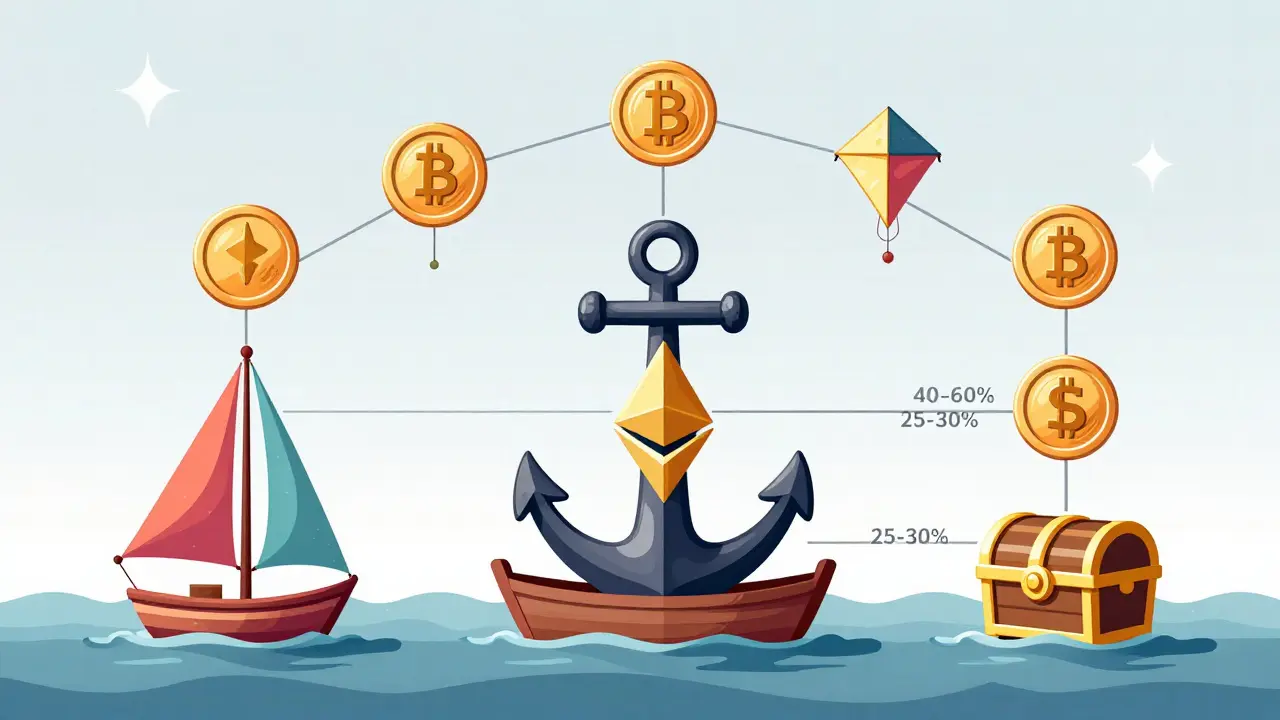
Before picking specific coins, you need a foundation. Most professional asset managers in 2026 use a tiered approach similar to traditional finance's "60/40" rule, but adapted for the unique risks of blockchain. The goal is to balance stability with growth potential.
A standard benchmark for a diversified crypto portfolio looks like this:
- Large-Cap Cryptocurrencies (40-60%): Primarily Bitcoin and Ethereum, the two most established networks with highest liquidity and institutional adoption. These act as your portfolio's anchor.
- Mid-Cap Altcoins (25-35%): Established projects with proven ecosystems, such as Solana, XRP, or Cardano. They offer higher growth potential than large caps but come with moderate volatility.
- Small-Cap & Emerging Projects (10-20%): High-risk, high-reward bets on new technologies or niche applications. This is where you might find 10x gains, but also total losses.
- Stablecoins (5-10%): Cash equivalents like USDC or USDT. Crucial for liquidity, rebalancing, and capturing yield during downturns.
This framework ensures that even if the speculative parts of your portfolio drop, your core holdings provide stability. Adjust these percentages based on your personal risk tolerance, which we’ll detail next.
Matching Strategy to Your Risk Profile
Not every investor is built for the same level of volatility. Your age, financial goals, and ability to handle sleepless nights during a bear market should dictate your mix. Here are three distinct profiles common in 2026.
| Risk Profile | Bitcoin (BTC) | Ethereum (ETH) | Altcoins (Mid/Small Cap) | Stablecoins | Best For |
|---|---|---|---|---|---|
| Conservative | 50-60% | 20-25% | 10-15% | 10% | New investors, near-term goals, low risk tolerance |
| Balanced | 35-45% | 20-25% | 20-25% | 5-10% | 3-5 year horizon, moderate volatility comfort |
| Aggressive | 25-35% | 15-20% | 30-40% | 5% | Long-term horizon, high risk tolerance, experienced traders |
If you are conservative, focus heavily on Bitcoin and Ethereum. You’re betting on the network effect and store-of-value narrative. If you’re aggressive, you’re willing to sacrifice some safety for exposure to emerging sectors like AI-blockchain hybrids or decentralized physical infrastructure. There is no right answer, only the one that fits your psychology.
Sector Diversification: Beyond Market Cap
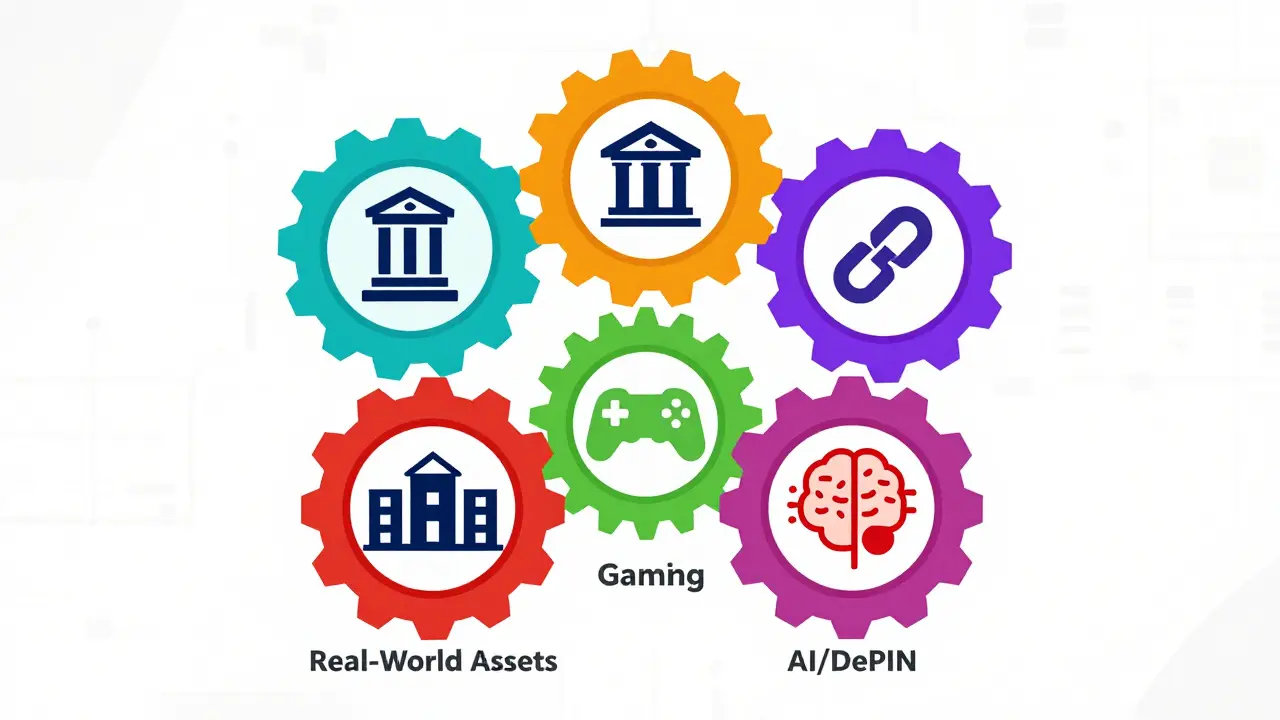
Owning five different Layer 1 blockchains isn’t true diversification if they all rely on the same user base and market sentiment. To reduce correlation risk, you must diversify by sector. Each sector reacts differently to macroeconomic events and technological shifts.
Consider allocating across these functional categories:
- Decentralized Finance (DeFi): Protocols like Uniswap or MakerDAO that replace traditional banks. They thrive on transaction volume and lending activity.
- Real-World Assets (RWAs): Tokenized versions of real estate, bonds, or commodities. This sector is growing rapidly in 2026 as institutions seek on-chain exposure to traditional assets.
- Infrastructure & Oracles: Projects like Chainlink that provide data to smart contracts. They are essential utilities regardless of which blockchain wins.
- Gaming & Metaverse: Driven by consumer engagement and cultural trends. Often less correlated with broader crypto markets.
- AI & DePIN: Decentralized Physical Infrastructure Networks and AI-integrated protocols. High growth potential but highly speculative.
By mixing sectors, you ensure that a slump in DeFi doesn’t wipe out your entire portfolio if your RWA or Gaming holdings remain stable. This structural diversity is what separates amateur holders from strategic investors.
The Role of Stablecoins and Liquidity
Many investors treat stablecoins as an afterthought, parking them only when they’re scared. In 2026, stablecoins are active tools. Holding 5-10% in stablecoins like USDC or USDT serves three critical purposes.
First, it provides dry powder. When the market dips, you need cash ready to buy quality assets without selling other positions at a loss. Second, it reduces slippage. Having liquid assets allows you to rebalance quickly without waiting for bank transfers. Third, it generates yield. Through decentralized lending protocols or institutional services, stablecoins can earn interest, offsetting some of the opportunity cost of not being fully invested in volatile assets.
Liquidity management is often overlooked. Ensure that the majority of your portfolio consists of assets with high trading volumes. If you hold a small-cap coin with low liquidity, you might not be able to sell it when you need to, leading to significant losses during execution. Stick to top-tier exchanges and well-established tokens for your core holdings.
ETFs and Regulated Exposure
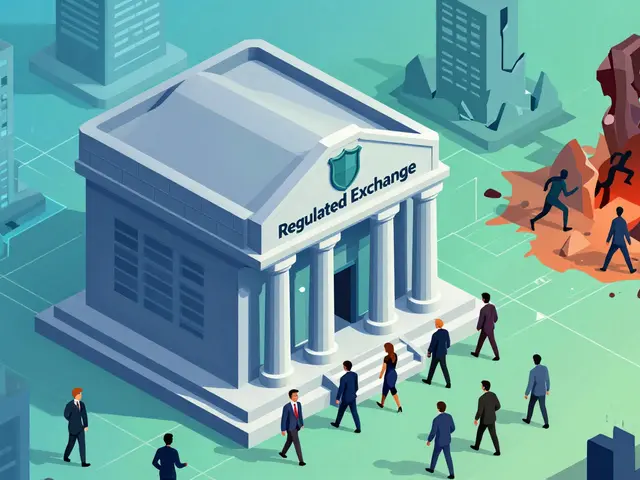
A major shift in 2026 is the rise of cryptocurrency Exchange-Traded Funds (ETFs). With over 50 spot altcoin ETFs anticipated, including those tracking Solana, XRP, and Litecoin, accessing crypto has become simpler and safer for many investors.
ETFs eliminate custody risk. You don’t need to manage private keys, worry about hardware wallet failures, or fear phishing attacks. For investors uncomfortable with self-custody, ETFs offer a regulated, tax-efficient way to gain exposure. They are particularly useful for the "core" portion of your portfolio. However, remember that ETFs charge management fees and may not allow you to participate in staking rewards or governance voting, which direct ownership does.
Institutional guidance, such as that from Morgan Stanley, suggests limiting crypto exposure to 2-4% of a total investment portfolio for moderate-to-aggressive strategies. Using ETFs helps enforce this discipline, preventing emotional over-allocation during bull runs.
Implementation and Rebalancing
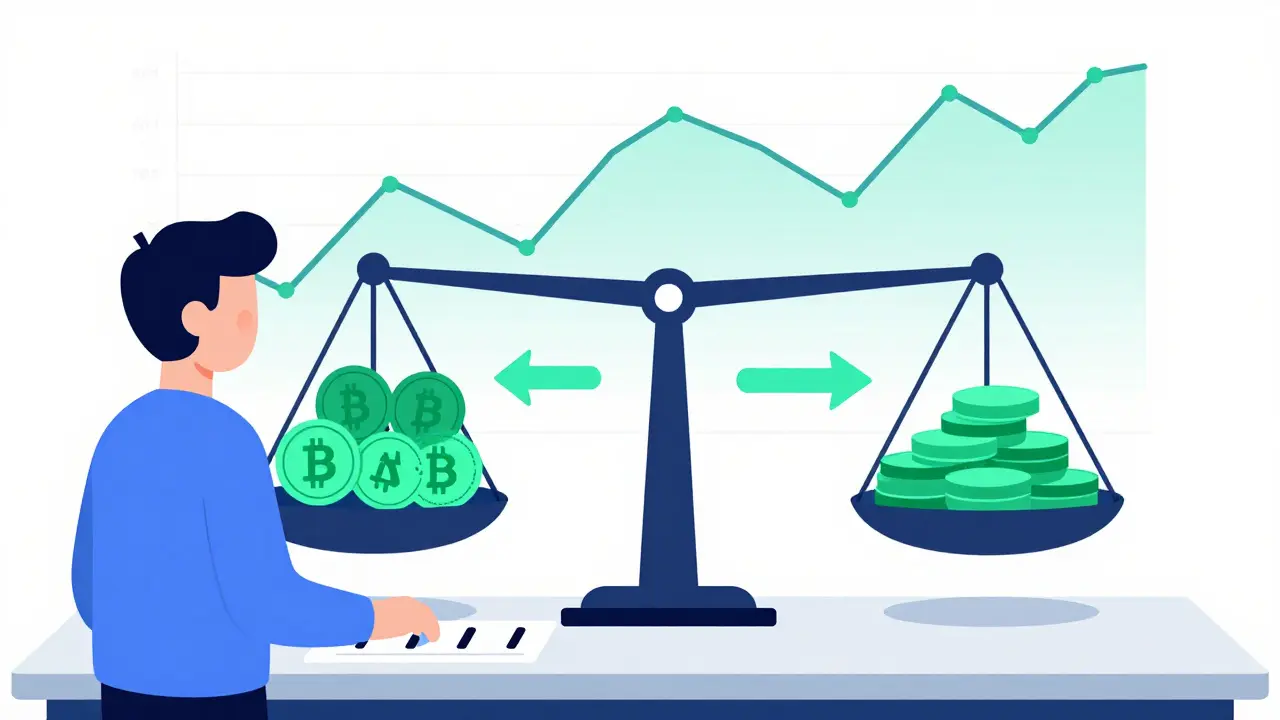
Building the portfolio is step one. Maintaining it is step two. Markets move, and allocations drift. A portfolio that starts at 50% Bitcoin might drop to 40% if altcoins surge. Without action, your risk profile changes unintentionally.
Adopt a disciplined rebalancing strategy. Instead of checking daily, review quarterly or set triggers. For example, if any single asset deviates more than 5-10% from its target weight, rebalance. Sell winners to buy losers. This forces you to "buy low and sell high" systematically, removing emotion from the equation.
Use Dollar-Cost Averaging (DCA) for entry. Rather than dumping all your capital at once, invest fixed amounts over 6-12 months. This smooths out purchase prices and reduces the risk of buying at a local peak. Combine DCA with periodic rebalancing for a robust, long-term strategy.
Common Pitfalls to Avoid
Even with a good plan, behavioral errors can derail results. Watch out for these traps:
- False Diversification: Holding ten altcoins that all correlate closely with Bitcoin. If BTC drops, they all drop. Check correlation coefficients before adding assets.
- Neglecting Correlation Dynamics: Understanding which assets move together is crucial. Many mid-cap coins follow Bitcoin’s lead. True diversification requires assets with dissimilar price drivers.
- Overconcentration in Narratives: Betting everything on AI or Gaming because it’s trendy. Trends fade; fundamentals endure.
- Ignoring Regulatory Risk: Geographic factors matter. Ensure your assets are accessible and compliant in your jurisdiction. Regulatory crackdowns can freeze access to certain platforms or tokens.
Remember, diversification does not guarantee profit or protect against losses in declining markets. It simply manages risk. Stay informed, stay adaptable, and stick to your plan.
What is the ideal percentage of my total net worth to put into crypto?
Most financial advisors recommend between 2% and 10% of your total net worth. Conservative investors should aim for 3-5%, while those with higher risk tolerance and longer time horizons may go up to 10%. Never invest money you cannot afford to lose entirely.
Is Bitcoin alone enough for a diversified crypto portfolio?
For extremely conservative investors, yes. Bitcoin offers the safest single-asset exposure due to its dominance and liquidity. However, adding Ethereum and select altcoins can enhance returns without drastically increasing risk if managed properly within a structured allocation.
How often should I rebalance my crypto portfolio?
Quarterly reviews are standard. Alternatively, use threshold-based rebalancing, adjusting when an asset deviates by 5-10% from its target weight. This prevents frequent trading costs while maintaining your intended risk profile.
Are crypto ETFs better than holding coins directly?
ETFs offer convenience, security, and regulatory oversight, eliminating custody risks. Direct ownership allows for staking rewards, governance participation, and lower fees. Choose based on your technical comfort level and desire for passive vs. active management.
What role do stablecoins play in a 2026 portfolio?
Stablecoins provide liquidity for rebalancing, serve as a safe haven during volatility, and generate yield through lending protocols. Allocating 5-10% to stablecoins enhances flexibility and reduces overall portfolio risk.
 Finance
JEVON HALL
June 8, 2026 AT 12:11Look, I’ve been in this game since the early days and let me tell you something. This guide is basically common sense wrapped up in a bow for people who just got here. The ETF stuff is huge though. 📈 People are scared of private keys because they lost everything on Mt Gox or whatever. Using an ETF for the core 40% is smart if you’re not tech-savvy. Just don’t expect to get rich quick with fees eating your gains. 🤷♂️
Lee Paige
June 10, 2026 AT 08:58This entire framework is a trap designed by the Federal Reserve to keep you poor. They want you in ETFs so they can freeze your assets when the next 'emergency' happens. Bitcoin was meant to be untraceable and outside their control. By putting it in a regulated fund, you are handing them the keys to your financial freedom. Do not trust institutions. Ever.
Caitlin Donahue
June 10, 2026 AT 16:19i think its pretty good advice tbh. i was always confused about how much stablecoins to hold but the 5-10% makes sense. keeps u from panicking selling when things go red. also the part about correlation risk is spot on. holding 5 different layer 1s doesnt help if they all move with btc. simple stuff really.
Karthikeyan S
June 11, 2026 AT 17:19lol another generic finance bro post pretending to know anything. real alpha is in the dark pools where the whales play. you guys are looking at charts while we are moving markets. stop listening to these 'guides' and start paying attention to order flow. but sure, keep your little diversified portfolio while we drain it dry. 🤡📉
Dinesh Pattigilli
June 13, 2026 AT 05:36The author clearly lacks understanding of true market dynamics. Diversification is for those who cannot pick winners. If you had any intellect, you would concentrate your capital in high-conviction plays rather than spreading it across mediocre altcoins. This is amateur hour. Real investors know that correlation breaks down only in extreme scenarios which amateurs miss entirely.
Madhu Menon
June 14, 2026 AT 18:04One must consider the philosophical underpinning of value itself. Is money merely a tool for exchange or a store of belief? In 2026, as we see the integration of AI and blockchain, the definition of 'asset' becomes fluid. Perhaps the greatest diversification is not in tokens, but in one's own cognitive flexibility. To cling too tightly to percentages is to misunderstand the chaos of nature. 🌿
Narendra Kulkarni
June 16, 2026 AT 04:15hey thanks for sharing this. i found the table with risk profiles very helpful. i am probably balanced so the 35-45% btc allocation seems right for me. glad to see someone explaining rebalancing simply. will try to stick to quarterly reviews instead of checking every day like i used to do. cheers!
verna kennedy
June 17, 2026 AT 06:55You are all missing the point. It is not about the coins. It is about discipline. Most of you will fail because you lack the emotional fortitude to sit on your hands during a crash. Reading a guide does not make you an investor. Action does. And most of you are consumers, not investors. Stop pretending otherwise.
Kelly Tenney
June 19, 2026 AT 03:35I appreciate the emphasis on mental health and sleepless nights mentioned in the risk profile section. Investing should enhance life, not destroy it. Taking a step back to assess your personal comfort level before diving into aggressive altcoins is such a healthy approach. Let’s support each other in building sustainable habits rather than chasing hype.
Caralee Robertson
June 19, 2026 AT 07:27im still learning but this helps alot. the part about false diversification hit home for me. i thought i was safe because i had so many coins but yeah they all went down together last time. gonna read up more on sector diversification. thanks for writing this out so clearly even if i dont get all the tech jargon yet.
Greg Lewis
June 20, 2026 AT 17:37why do you need a guide to manage your own money. it is obvious that you should buy what goes up and sell what goes down. the rest is noise. stop overcomplicating it with tables and percentages. just follow the trend. if you cant handle volatility then maybe crypto isnt for you. simple as that.
Dr Lynea LaVoy
June 21, 2026 AT 03:50As a financial advisor, I can confirm that the 2-4% recommendation aligns with current institutional standards for moderate-risk portfolios. However, I would add that tax implications vary significantly by jurisdiction. Ensure you are consulting local experts before implementing this strategy. The ETF angle is particularly relevant for retirement accounts where custody risk is a major concern.
Matthew Malone
June 21, 2026 AT 14:52Typical globalist nonsense trying to regulate our financial sovereignty. Who gave these bureaucrats the right to decide what we invest in? American innovation built this industry, not some EU regulation. Keep your crypto off centralized exchanges if you value your freedom. Buy hardware wallets and stay hidden. The government wants to track every satoshi you own.
aaliyah zahid
June 23, 2026 AT 03:28Sarcasm aside, the point about regulatory clarity is valid. Different countries have different rules. As someone living in a region with strict controls, I find the ETF option interesting but limited. We need more global cooperation on crypto standards rather than fragmented approaches. But yes, keeping some assets in stablecoins is wise regardless of location.
Erik Kirana
June 24, 2026 AT 21:29This article is lazy journalism disguised as financial advice. You are telling people to put their life savings into volatile assets managed by banks that caused the 2008 crisis. Pathetic. Real wealth comes from hard work and tangible assets. Crypto is a casino for the desperate. 🙄
dan kaffeman
June 25, 2026 AT 17:45Listen to me closely. If you are not patriotic enough to understand that national security trumps individual investment whims, you are already losing. These foreign entities are using crypto to launder money and destabilize our economy. Support domestic industries. Dump the altcoins. Stick to what is proven and safe for our nation's future.
Meg Gran
June 26, 2026 AT 16:15Oh please. Another elitist take on 'proper' investing. Like following these rigid percentages guarantees success. Spoiler alert: it doesn't. Markets are irrational and human behavior is unpredictable. Your precious rebalancing strategy will fail when black swan events happen. Relax and enjoy the ride or don't bother playing at all. 🚀💥
Alexander DeVries
June 27, 2026 AT 07:03Let's cut through the noise. Discipline wins. Emotion loses. If you can't execute a simple rebalancing plan without panic selling, you have no business in this market. The data supports the tiered approach. Use it or lose it. No excuses. Get your act together and treat your portfolio like a business, not a hobby.
Mark Corpuz
June 28, 2026 AT 07:10The correlation analysis section is particularly insightful. Many investors mistakenly believe that owning multiple cryptocurrencies provides sufficient diversification. However, empirical evidence suggests that most altcoins exhibit high beta relative to Bitcoin. True risk mitigation requires exposure to uncorrelated asset classes, which this guide appropriately addresses.
Steven Jacobowitz
June 30, 2026 AT 07:00So basically you're saying I need to study macroeconomics and blockchain tech just to buy some coins? Sounds exhausting. Why not just give me a list of top 5 coins to buy and call it a day? All this talk about liquidity profiles and yield generation is overkill for someone who just wants to grow their savings. Simplify it.
Yogendra Dwivedi
July 1, 2026 AT 04:47This is a very thoughtful piece. I agree that understanding one's risk tolerance is crucial. For many beginners, starting with a conservative approach allows them to learn the mechanics of the market without suffering catastrophic losses. The suggestion to use Dollar-Cost Averaging is excellent for smoothing out entry points. Well written.
Sylvia Mossman
July 2, 2026 AT 07:41I disagree with every single point here. Diversification is a hedge against ignorance. If you truly understood the technology, you wouldn't need to spread your bets. Concentrated positions in high-quality projects yield superior returns. This guide is designed for the masses who prefer mediocrity over excellence. Don't be sheep.