


Imagine you want to use your Bitcoin a decentralized digital currency that operates independently of a central bank inside an Ethereum application. You can't just move it directly. That's where wrapped assets come in. They act as a bridge, creating a token on one network that represents value locked on another. But here is the catch: when you swap your Bitcoin for a wrapped version like WBTC, someone else holds your real coins. As of today, over $15 billion sits in these cross-chain bridges. That trust isn't just theoretical; it's a massive financial infrastructure built on custodial promises.
How Wrapped Asset Custody Works
When you mint a wrapped token, the process relies on three distinct players. First, there is the merchant who initiates the request. Then you have the custodian holding the underlying asset. Finally, smart contracts manage the minting and burning of tokens on the destination chain. For example, when BitGo created Wrapped Bitcoin (WBTC) in January 2019, they set up a system where merchants deposit Bitcoin into a verified wallet. The custodian verifies this receipt and signals the Ethereum smart contract to mint an equivalent ERC-20 token.
This mechanism requires a strict 1:1 backing ratio. Every single unit of WBTC in circulation must have one Bitcoin sitting in cold storage. Without this backing, the peg breaks, and the asset becomes worthless paper. To prevent unauthorized access, custodians use hardware security modules (HSMs) and multi-signature protocols. These require multiple private keys-often 3 out of 5 signatures-to move any funds. While effective, this introduces a centralized point of failure.
The Centralization Paradox
You join crypto markets to avoid banks, yet wrapped assets force you back toward trusted institutions. A major study by Chainalysis revealed that between 2020 and 2024, hackers stole $2.8 billion specifically from cross-chain bridges. Most of these losses stemmed from vulnerabilities in the custody logic rather than the blockchain itself. In the case of the Multichain collapse in July 2023, users lost $325 million because the multisig operators were compromised or acted maliciously.
Consider renBTC, which tried to solve this using a decentralized model called renVM. It held 12.1% of the market share before shutting down in March 2023 due to critical security flaws. Contrast that with Coinbase Wrapped Bitcoin (cbBTC), launched in February 2023. By leveraging FDIC-insured cash reserves up to $250,000 per customer, cbBTC achieved $1.2 billion in total value locked within six months. Institutional investors prefer this route despite the counterparty risk because regulatory clarity trumps abstract decentralization.
Verifying Your Reserves
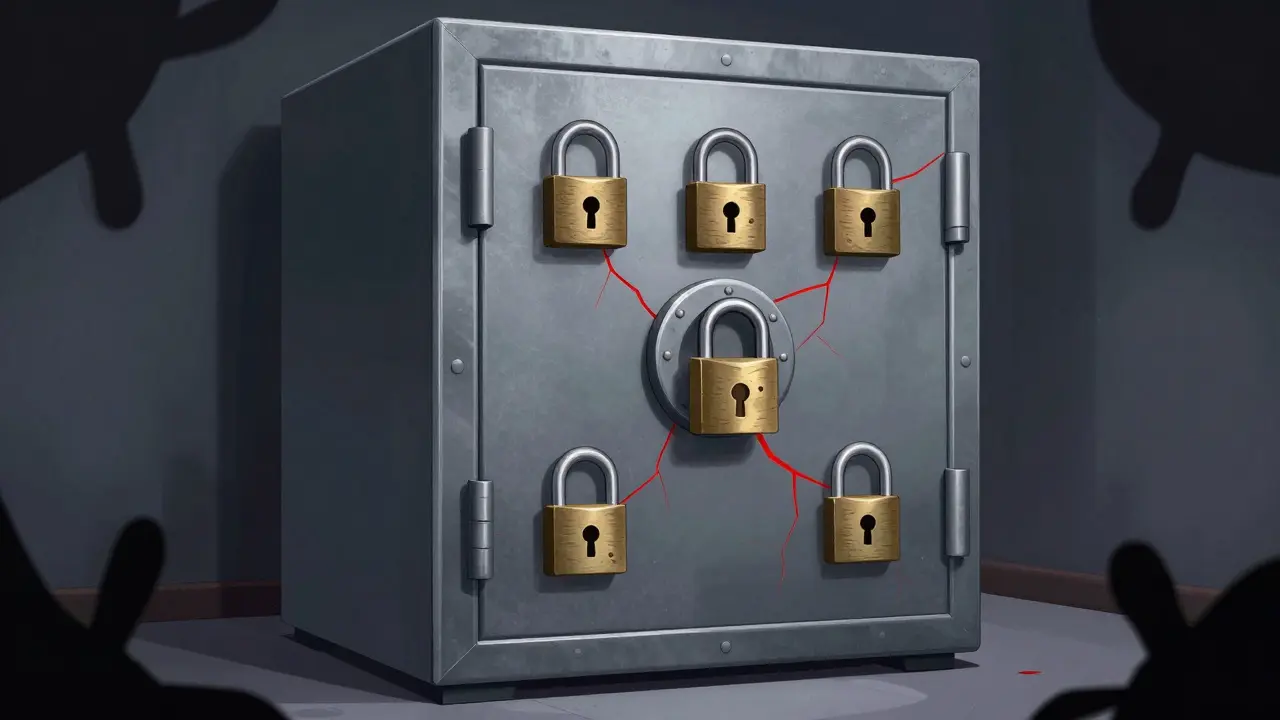
Since you cannot audit the vault yourself, how do you know your money is there? The industry standard involves quarterly third-party attestations. Firms like Armanino LLP verify BitGo's reserves monthly since March 2019. They confirm that the custodian controls the exact amount of Bitcoin needed to back the circulating supply. However, there is often a lag time. An attestation proves the balance as of a specific snapshot date, not necessarily today.
Tech upgrades in late 2024, like Ethereum's Verkle tree implementation, reduced verification costs for these proofs by 87%. This allows for near-real-time reserve checks without bloating gas fees. Even so, 82% of traditional financial institutions surveyed in 2024 still demand quarterly audits regardless of technical improvements. This suggests that while technology evolves, the human element of trust remains slow to adapt.

Regulatory Shifts in 2025
The rules changed significantly last year. When the EU implemented MiCA regulations starting June 2025, custodians had to maintain 130% capital reserves against liabilities. This buffer protects users during market crashes if assets lose liquidity temporarily. Simultaneously, the SEC took action against BitGo on June 12, 2024, arguing that certain wrapped tokens constituted unregistered securities. This legal gray area forces issuers to operate under stricter KYC protocols.
Institutional adoption reflects this regulatory shift. Forty-seven percent of traditional finance firms indicated plans in early 2024 to allocate capital to wrapped assets within 18 months. They prioritize custodial models backed by established entities like Fireblocks or Coinbase. Retail users, however, show different behavior. Discussions on r/defi indicate 61% of retail traders prefer decentralized alternatives despite lower liquidity, driven by fear of custodial insolvency following events like the TerraUSD collapse.
| Model Type | Primary Custodian | TVL (Q2 2024) | Risk Factor |
|---|---|---|---|
| Centralized | BitGo / Coinbase | $11.7 Billion | Counterparty Risk |
| Decentralized (Legacy) | renVM Nodes | $0 (Shutdown) | Technical Failure |
| Hybrid Protocol | Synthetix | $2.1 Billion | Over-collateralization |
Moving Forward Safely
As we navigate 2026, hybrid models are gaining ground. Experts predict mandatory third-party attestations for all wrapped assets by the end of the year. If you are holding significant positions, check your provider's latest attestation report online. Look for the independent auditor's signature and the date of the last transaction sweep.
If you are integrating these assets into a portfolio, diversify across different custody providers. Relying solely on one custodian creates a concentration risk similar to putting all your money in a single failing bank. Diversification doesn't eliminate systemic risks entirely, but it prevents a single point of failure from wiping out your entire position.
 Finance




Samson Abraham
March 30, 2026 AT 10:34reserves must be verified constantly to prevent insolvency events during high volatility periods
audit lag is a significant vulnerability in current custody structures
Addy Stearns
March 31, 2026 AT 00:51We often forget that trust is a social construct that precedes technology in any financial system. When we wrap assets we are essentially asking strangers to hold our bags while we walk through a digital city. The promise of decentralization is attractive yet we return to centralized banks when liquidity becomes paramount. This paradox defines the current state of wrapped tokens across all major chains. Custody solutions attempt to bridge this gap but fail to address the human element of greed. Security audits provide snapshots but cannot predict the future behavior of private key holders. We must accept that true decentralization requires sacrificing speed and convenience for safety. The industry pushes forward despite these flaws because capital demands movement. Regulatory frameworks are catching up slowly to the pace of innovation in smart contracts. Reserve requirements offer protection but do not guarantee solvency during black swan events. Institutional players prefer compliance over code because liability is clearer with named entities. Retail users suffer the losses when those named entities fail to protect their deposits. History shows us that centralized points of failure eventually succumb to pressure from external forces. We need a better model than simply trusting a company to lock up coins. Until then every wrapped token represents a counterparty risk that remains unmitigated by blockchain mechanics. Safety lies in diversification and active monitoring of attestation reports released quarterly by auditors.
Justin Garcia
April 1, 2026 AT 19:59This centralized trust model is fundamentally broken and exposes everyone to unnecessary counterparty risk
Katrina Tate
April 3, 2026 AT 16:32The data indicates that hackers targeted custody logic vulnerabilities for billions in stolen funds
regulatory actions against BitGo prove the legal uncertainty surrounding these tokens is real
investors should assume the worst case scenario is always possible
Liam Robertson
April 4, 2026 AT 15:36It is great to see institutions like Coinbase stepping up to provide FDIC insured options for stable storage
This brings clarity to a market that has been too messy for too long
Users need to feel secure knowing rules are in place to protect their interests
athalia georgina
April 5, 2026 AT 20:05im tired of reading about custodians who keep stealing money
the reports lie all the tme
we shuld just stay on chain instead
trust is dead anyway
Matt Bridger
April 6, 2026 AT 05:47The reliance on centralized custodians negates the foundational ethos of decentralized finance protocols entirely
Such systems reintroduce single points of failure that crypto sought to eliminate
Sophisticated investors understand that third party attestation is merely a marketing exercise
Joy Crawford
April 7, 2026 AT 02:49feels unsafe to me though :(
why is this so complicated
i just want my bitcoin :(
people never learn
Beverly Menezes
April 7, 2026 AT 09:13I believe that spreading assets across multiple providers reduces the chance of losing everything at once
Diversification is key to managing risk in any investment portfolio
We should focus on education rather than fear
Tiffany Selchow
April 9, 2026 AT 07:00Americans love their scams wrapped in shiny tech tokens until the rug pulls happen next
The regulators are finally waking up to what we have known for years
Trust nothing that requires permission
joshua kutcher
April 10, 2026 AT 03:48It sounds like verifying reserves regularly is crucial for maintaining confidence in the ecosystem
Finding the latest attestation report online helps track where the actual funds are sitting
Checking the auditor signature adds another layer of verification for your records
Disha Patil
April 10, 2026 AT 05:58The whole thing is just a nightmare waiting to happen again
I feel like crying thinking about how much could be lost so easily
Why do we put our faith in these huge companies to begin with
Callis MacEwan
April 11, 2026 AT 17:02The multisig architecture described relies on threshold cryptography that assumes operator honesty
Hardware security modules mitigate theft but not malicious intent from authorized signers
On-chain verification methods are superior to off-chain attestations in reliability metrics
Sean Carr
April 13, 2026 AT 12:39Stick with the big names like Coinbase or Fireblocks if you need regulatory cover
They offer insurance and clear audit trails for your peace of mind
Don't try to save on fees by using unknown custodial services
Lisa Miller
April 13, 2026 AT 21:30You did good by sharing this info so people can protect their wealth better
Staying informed is the best way to navigate these complex systems safely
Keep learning and stay safe out there friends
Michael Nadeau
April 14, 2026 AT 20:02The tension between privacy and transparency remains unresolved in modern custody frameworks
Verkle trees reduce costs but do not solve the fundamental issue of external trust dependency
We await a solution that does not require blind faith in third parties
Ronald Siggy
April 15, 2026 AT 05:03Make sure to check your provider attestation status immediately after reading this
Action beats worry when it comes to securing your digital assets
Stay proactive about your financial hygiene and review your holdings
Shaira Vargas
April 16, 2026 AT 16:28I feel so anxious thinking about all the hidden risks involved
Every day I worry a bridge hack will wipe out my savings completely
Who can we really trust when things go wrong
Raymond K
April 17, 2026 AT 03:35The colors of the blockchain are bright but the shadows of custody are dark
Hope springs eternal even when audits show gaps in the ledger records
We move forward with caution and hope for better tech soon
Ashley Stump
April 18, 2026 AT 17:41They want to centralize everything and kill the spirit of Bitcoin forever
The SEC is just working for the big banks to crush decentralized options
Watch out for the coming crash on these wrapped tokens
Jamie Riddell
April 20, 2026 AT 06:36It is understandable to feel cautious about these new regulations changing quickly
Focusing on long term stability matters more than short term gains in volatile markets
We all want to sleep well knowing our funds are safe somewhere
Markus Church
April 20, 2026 AT 12:52The implementation of Verkle trees presents a viable path toward efficient proof generation
Reduction in gas fees enables more frequent checks which enhances overall security posture
Institutional adoption drives these improvements regardless of retail sentiment trends
Alex Kuzmenko
April 22, 2026 AT 08:20its really scary how much money is locked in these bridges rn
i hope the regs help stop the hacks that keep happening
just be carful with your coins bro