


When you send money through a bank, the government can track it. That’s normal. But what happens when you send cryptocurrency - and someone uses a tool to hide where it came from? That’s where crypto mixers come in. And Tornado Cash was the most famous one. Until it got hit with sanctions. And then, just when everyone thought it was over, things got even more complicated.
What is a crypto mixer?
A crypto mixer, sometimes called a tumbler, is a tool that blends your cryptocurrency with other people’s to break the trail. Think of it like putting your cash into a big pile with others’, then taking out the same amount but from a different spot. No one can easily tell which dollar was yours. Most crypto transactions are public. If you send 5 ETH from Address A to Address B, anyone can see that. Mixers change that. You deposit your coins into a smart contract. The mixer waits, combines your coins with dozens or hundreds of others, then sends you back clean coins from a different address. The link between your original wallet and the new one? Gone. It sounds like privacy. And for many, it is. People use mixers to protect their financial data from hackers, stalkers, or overzealous advertisers. But there’s a dark side. Criminals use them too. That’s what got Tornado Cash into trouble.What was Tornado Cash?
Tornado Cash launched in 2019 on the Ethereum blockchain. It wasn’t run by a company. No CEO. No office. Just code - smart contracts that ran automatically. Anyone could use it. You didn’t need to sign up. You didn’t need to give your name. You just sent ETH or ERC-20 tokens in, waited a bit, and got them back from a new address. It worked. Over $7.6 billion flowed through it. That’s more than most banks process in a year. And here’s the kicker: about 30% of that money came from stolen or hacked funds. That includes $455 million stolen by North Korea’s Lazarus Group from Axie Infinity. $96 million from the Harmony Bridge hack. $7.8 million from Nomad. And dozens more. The U.S. Treasury didn’t care about the privacy use cases. They saw a tool that made it easy for criminals to disappear with stolen money. So on August 8, 2022, they did something unprecedented: they sanctioned Tornado Cash itself.The OFAC sanctions - and why they shocked the world
The Office of Foreign Assets Control (OFAC) added Tornado Cash’s Ethereum addresses to its Specially Designated Nationals (SDN) list. That meant U.S. citizens and companies couldn’t interact with those addresses. Not even by accident. If your wallet held even a tiny amount of Tornado Cash ETH, you could be breaking U.S. law. The reaction was immediate. Crypto exchanges froze wallets. Wallet apps blocked access. Developers scrambled. Some deleted their code. Others shut down projects entirely. But here’s the problem: Tornado Cash wasn’t a company. It was code. The smart contracts kept running. Even after the website went down, people could still use it by writing scripts. The protocol didn’t need anyone to run it. It was autonomous. Critics called it like trying to ban a book because someone used it to write a threat. You can’t sanction a piece of software the same way you sanction a person. Privacy advocates warned this set a dangerous precedent. If the government can sanction code, what’s next? Can they ban a programming language? A type of encryption?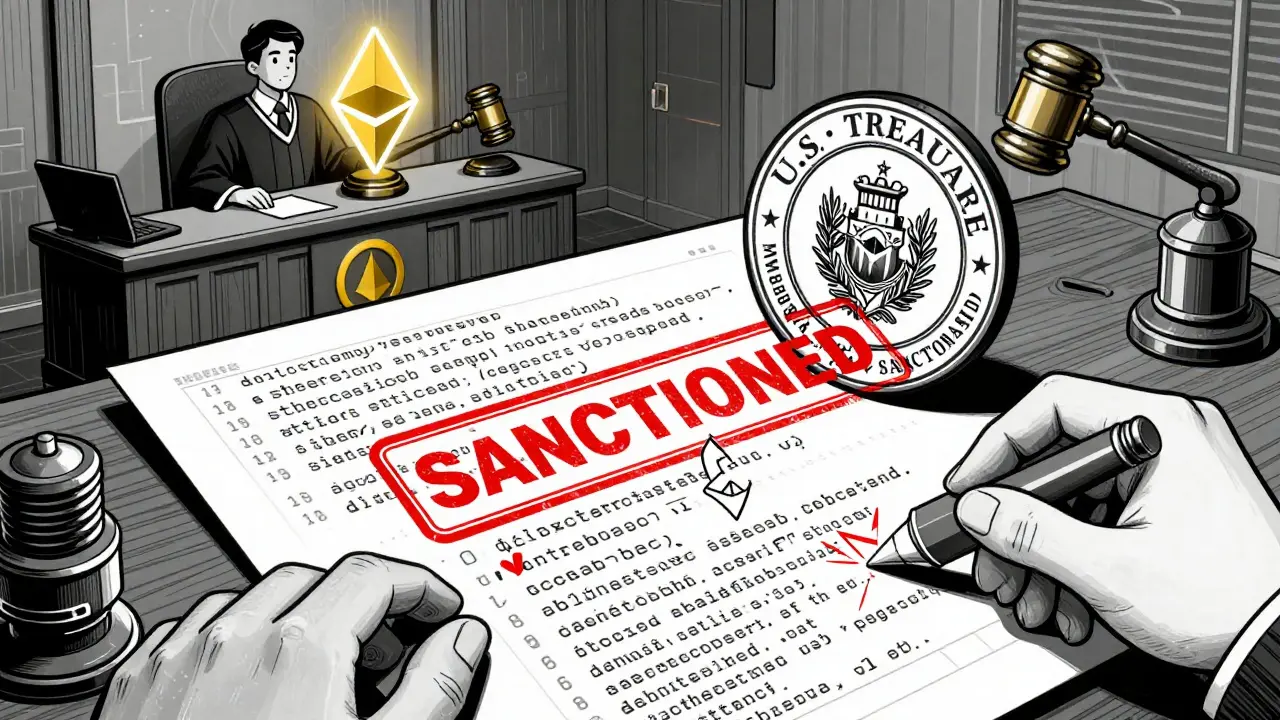
The court fight - and the surprising twist
One user, Van Loon, sued. He wasn’t a criminal. He was just a developer who used Tornado Cash to protect his own funds. He argued OFAC had no legal power to sanction non-custodial smart contracts. They weren’t property. They didn’t belong to anyone. They just existed on the blockchain. In November 2024, the U.S. Fifth Circuit Court of Appeals agreed. The court ruled OFAC had overstepped its authority under the International Emergency Economic Powers Act (IEEPA). Smart contracts aren’t “property” you can freeze. You can’t sanction a program the way you sanction a bank account. The court ordered the Treasury to reverse the sanctions. And on March 21, 2025, they did. But here’s where it gets messy. The Treasury didn’t remove sanctions from everyone. They only removed them from the smart contracts. Roman Semenov, one of Tornado Cash’s creators, is still on the SDN list. The Department of Justice is still prosecuting him - on charges of money laundering, operating an unlicensed money transmitter, and violating IEEPA. So now you can legally use Tornado Cash again - but if you built it, you’re still a criminal.What does this mean for you?
If you’re a regular crypto user in the U.S., you can now interact with Tornado Cash’s smart contracts without breaking the law. Your wallet won’t get flagged. Your exchange won’t freeze your funds. But here’s the catch: the legal gray zone is still huge. - Can you still get in trouble if you use it after it’s been used to launder stolen funds? The Treasury says no - but they haven’t written it in stone. - What if you’re outside the U.S.? Does this ruling apply to you? Not necessarily. - What about other mixers? Are they next on the chopping block? The Treasury hasn’t said. - And what if you’re a developer? If you build a similar tool, are you risking jail? The case has set a new standard: the government can’t sanction code. But it can still punish the people who write it.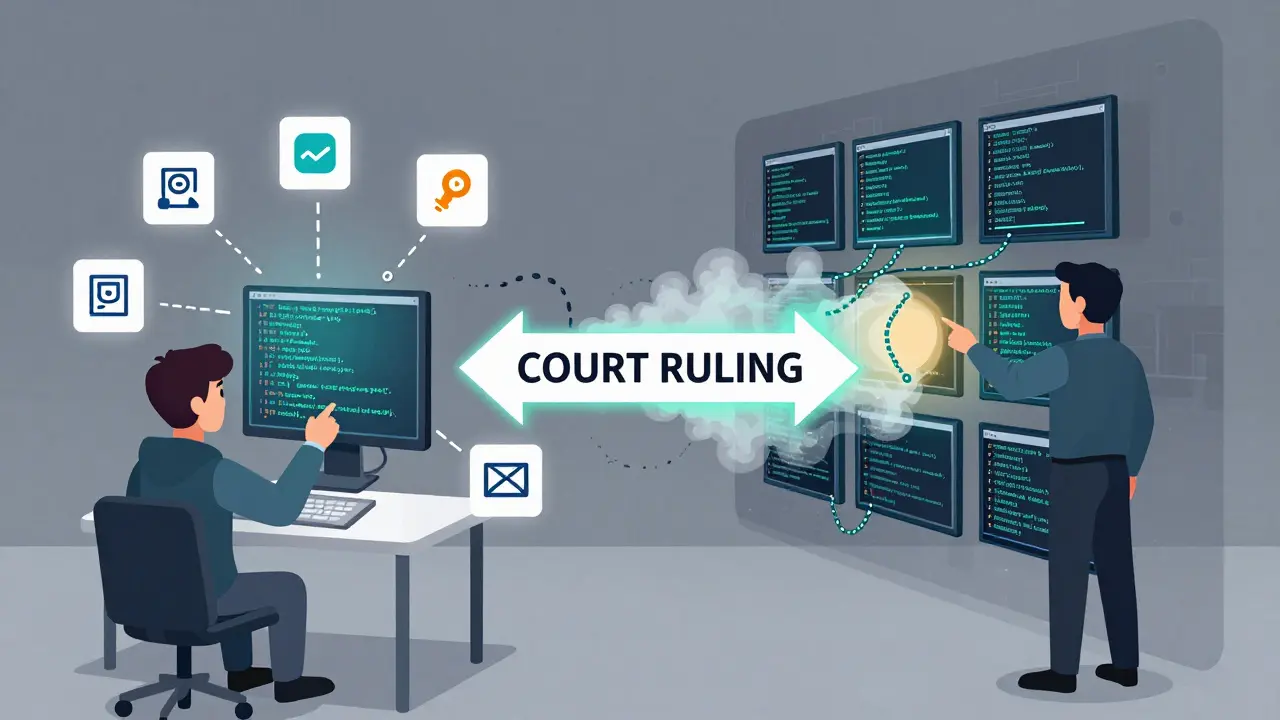
 Finance



Madhavi Shyam
December 18, 2025 AT 19:41Tornado Cash is a non-custodial mixer - it’s not a legal entity, so OFAC’s sanction was a jurisdictional overreach from day one.
Cheyenne Cotter
December 19, 2025 AT 13:29Look, I get that privacy matters, but when 30% of the funds flowing through a tool are stolen by state-sponsored hackers, you can’t just shrug and say ‘it’s for privacy’. The system was being weaponized at scale - and now we’re pretending the solution is to un-sanction the code while leaving the devs in prison? That’s not justice, that’s legal theater. The Treasury didn’t ban the idea of mixing, they banned a specific, heavily abused implementation. If you want to build a better mixer, do it with audit trails, KYC opt-ins, or zero-knowledge proofs that don’t hide the source - but don’t act like this was a pure privacy win. It wasn’t. It was a laundering superhighway with a pretty UI.
Greg Knapp
December 21, 2025 AT 11:26so like… if i use tornado cash and then someone else used it to wash dirty money am i guilty by association because the contract is public and immutable and everyone can see the path but i didnt know and i just wanted to hide my crypto from advertisers and data brokers and now my wallet is flagged and i have to prove i didnt do anything wrong but the system doesnt care about intent only outcome and its all just so broken
Shruti Sinha
December 21, 2025 AT 21:57The Fifth Circuit’s ruling was technically correct: smart contracts are not property under IEEPA. However, the moral ambiguity remains. Privacy is a right, but enabling large-scale theft under the banner of decentralization is not a principled stand - it’s negligence dressed up as ideology.
Terrance Alan
December 22, 2025 AT 03:01They sanctioned the code but not the people who built it? That’s like banning a printing press because someone printed fake money - then arresting the guy who invented the ink. The whole thing is a mess. Crypto was supposed to be ungovernable. Now the government’s just picking winners and losers based on who they don’t like. This isn’t regulation. It’s vengeance with a law degree.
Abby Daguindal
December 23, 2025 AT 23:20If you’re using a mixer, you’re already choosing to be part of the problem. No one needs this level of anonymity unless they’re hiding something. Just say it.
Sean Kerr
December 25, 2025 AT 07:23man i just wanted to keep my crypto private from my ex and now im scared to touch eth at all 😭 i didnt steal anything i just dont want my landlord knowing how much i have!!!
Heather Turnbow
December 26, 2025 AT 07:30While the court’s interpretation of IEEPA was legally sound, one must acknowledge the broader implications for financial compliance infrastructure. The absence of custodial control does not absolve the architects of a system from accountability when its primary use-case becomes illicit capital transit. Regulatory frameworks must evolve to distinguish between intent and architecture - but not at the cost of systemic integrity.
Jonny Cena
December 26, 2025 AT 12:30Hey, I get that this is confusing. You’re not alone in feeling like the rules keep changing. The fact that you care about privacy is valid - but so is the need to stop criminals. Maybe the answer isn’t banning tools, but building better ones that let you stay private without helping bad actors. That’s the real challenge.
Jack Daniels
December 27, 2025 AT 20:51so… if i use it and then the feds come after me… am i gonna be the one in jail while the guy who coded it is still chilling in a european villa??
Donna Goines
December 28, 2025 AT 07:47THIS IS THE NEW WORLD ORDER. THEY SANCTION CODE BECAUSE THEY CAN’T CONTROL THE PEOPLE WHO USE IT. THEY KNOW IF THEY LET MIXERS LIVE, THE ENTIRE FINANCIAL SYSTEM WILL BE OUT OF THEIR HANDS. THIS ISN’T ABOUT LAUNDERING - IT’S ABOUT POWER. THEY WANT YOU TO BE TRACEABLE. EVERY TRANSACTION. EVERY DOLLAR. EVERY BREATH. THEY’RE SCARED OF ANONYMITY. THEY’RE SCARED OF YOU.
Jesse Messiah
December 29, 2025 AT 16:49you know what? i think the real win here is that the courts said you cant sanction code. that’s huge. now if someone builds a better mixer with zk-proofs and optional compliance layers, maybe we can actually have privacy without the stigma. the devs got punished, but the tool? it’s free. and that’s where the future is.
Rebecca Kotnik
December 31, 2025 AT 05:20The distinction between sanctioning a protocol and prosecuting its creators is philosophically coherent but practically incoherent. If the tool is autonomous, and the creators are prosecuted for its existence, then the state is effectively criminalizing innovation through retroactive application of liability. This sets a precedent where the mere act of designing a decentralized system - without intent to facilitate crime - becomes a prosecutable offense. The rule of law must not become a tool for chilling technological progress under the guise of enforcement.
Sally Valdez
January 2, 2026 AT 01:28AMERICA IS DEAD. THEY SANCTIONED A COMPUTER PROGRAM. WHAT NEXT? BANNING PYTHON BECAUSE HACKERS USE IT? BANNING THE LETTER 'E' BECAUSE 'EMBEZZLEMENT' STARTS WITH IT? THIS IS FASCISM WITH A TECH SUPPORT TICKET.
George Cheetham
January 2, 2026 AT 22:30This case is not about crypto. It’s about the soul of law in the digital age. Can a society that prides itself on freedom permit the state to freeze abstract mathematical constructs? If yes, then we have surrendered the idea that law must bind persons, not abstractions. The court’s decision, however narrow, was a quiet rebellion against the tyranny of control. The real victory isn’t in the reversal of sanctions - it’s in the refusal to let code become a crime.