

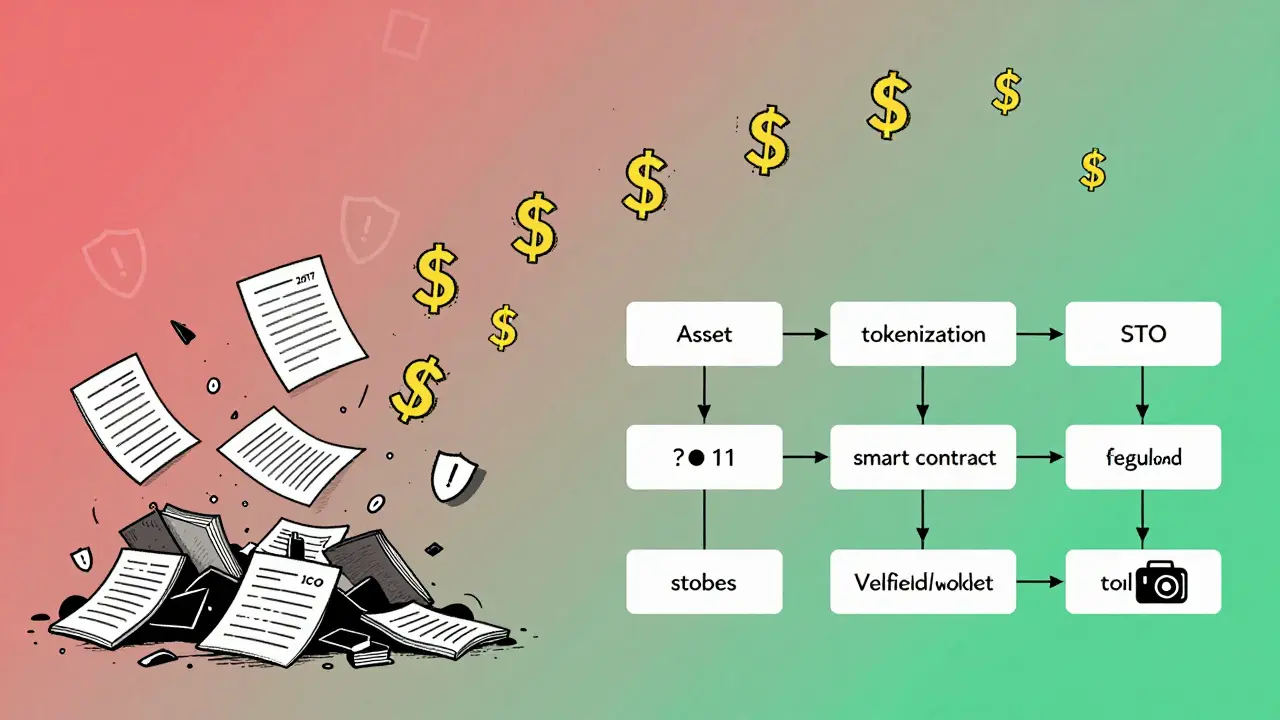
Back in 2017, anyone could launch a cryptocurrency project and raise millions with just a whitepaper and a Twitter account. Then came the crash. Over $750 billion vanished from the crypto market in less than a year. Investors got burned. Regulators stepped in. And out of that chaos came something more serious: Security Token Offerings (STOs).
Unlike the wild west of ICOs, STOs aren’t gambling. They’re legal. They’re regulated. And they’re backed by real assets - real estate, company shares, art, even music royalties. If you’ve ever wondered how blockchain could actually be useful for everyday investors, STOs are the answer.
What Exactly Is a Security Token?
A security token is a digital representation of ownership in something real. Think of it like a stock certificate, but instead of paper, it lives on a blockchain. It doesn’t give you access to an app or a game (like utility tokens). It gives you a stake - in a company, a building, a fund, or a piece of a luxury car collection.
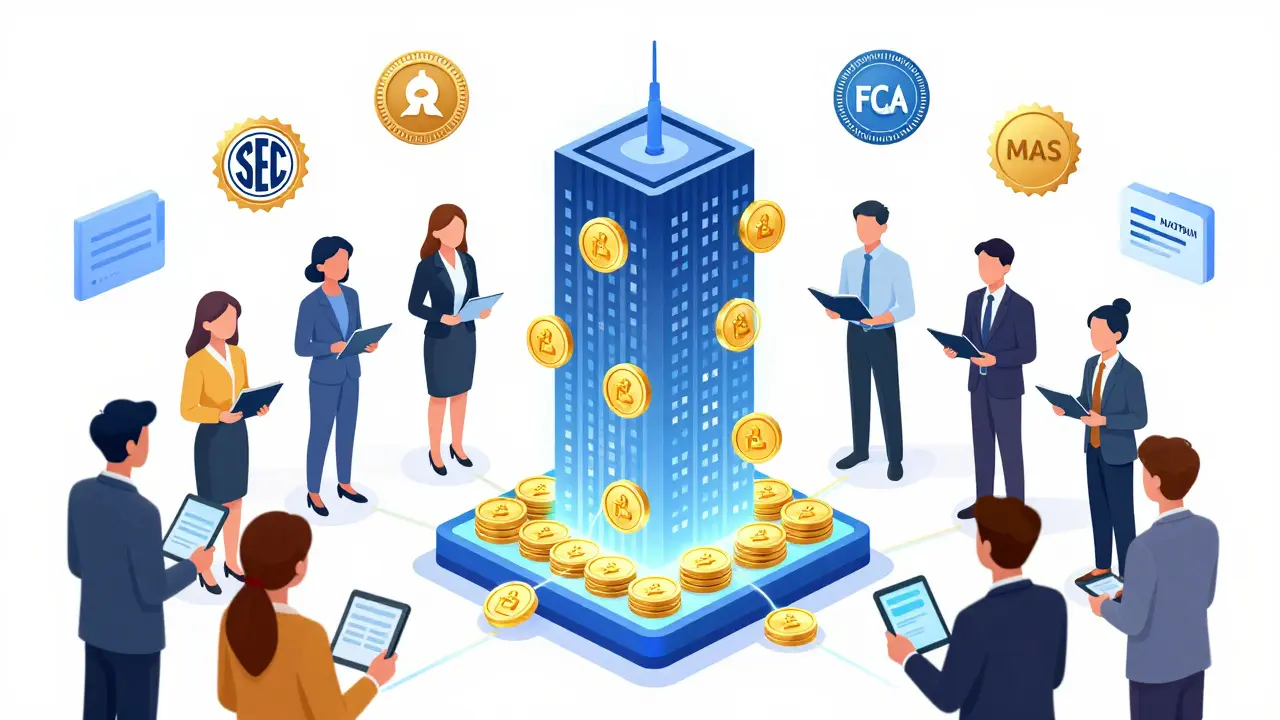
These tokens are treated the same way as traditional securities under the law. That means they fall under the jurisdiction of financial regulators like the SEC in the U.S., MAS in Singapore, or the FCA in the UK. If you buy a security token, you’re protected by the same rules that apply to buying shares on the NYSE. You have rights to dividends, voting, or repayment - depending on how the token is structured.
There are four main types of security tokens:
- Equity tokens - Represent ownership in a company, like shares.
- Debt tokens - Act like bonds. You lend money and get paid back with interest.
- Revenue-share tokens - You get a percentage of the company’s income, not profits.
- Asset-backed tokens - Backed by physical assets like real estate, gold, or fine art.
Each type has its own legal structure, tax implications, and investor protections. That’s what makes STOs different from the ICOs of the past - there’s no guessing game. You know exactly what you’re buying.
How STOs Work: The 7 Core Pieces
Launching an STO isn’t just pressing a button on a website. It’s a multi-step process involving technology, law, and finance. Here’s how it all fits together:
- Underlying asset - This is the real-world thing being tokenized. Could be a 10-story office building in London, a patent portfolio, or 50% of a film’s future earnings.
- Security tokens - Digital tokens created to represent fractional ownership of that asset. Each token is unique and traceable on the blockchain.
- Tokenization platform - Software that turns the asset into tokens. Platforms like tZERO, INX, and IX Swap handle the technical side.
- Smart contracts - Self-executing code that automates everything: who gets paid, when dividends are distributed, who can buy or sell tokens. No middlemen needed.
- Regulated marketplace - You can’t trade STOs on Binance or Coinbase spot markets. They must be listed on licensed platforms like InvestaX (Singapore) or tZERO (U.S.).
- Blockchain network - Most STOs run on Ethereum, Polygon, Stellar, or Kaia. These networks offer speed, low fees, and smart contract support.
- Digital wallets - You store your tokens in compliant wallets like Metamask or Coinbase Web3 Wallet. These aren’t just storage tools - they’re identity gatekeepers. Only verified investors can hold them.
Put it all together: A company owns a warehouse in Leeds worth £5 million. They tokenize it into 5,000 tokens, each worth £1,000. Investors buy tokens through a licensed platform. Every quarter, profits from renting the warehouse are automatically sent to token holders via smart contract. No paperwork. No delays. No fraud.
Why STOs Beat Traditional IPOs and Crowdfunding
Let’s say you want to raise capital for your startup. Your options? Go through a traditional IPO - a process that takes 12-18 months, costs millions, and only works for big companies. Or use Kickstarter - where you get small donations but no ownership or returns.
STOs fix both problems.
Compared to IPOs:
- Speed - STOs can launch in 3-6 months, not years.
- Cost - Legal and listing fees are 70-90% lower than IPOs.
- Access - You can raise money from global investors, not just institutional ones.
- Liquidity - Tokens trade 24/7 on regulated exchanges, unlike stocks that only move during market hours.
Compared to crowdfunding:
- Investor returns - You’re not just donating. You’re investing. You get a share of profits.
- Legal protection - Crowdfunding has almost no oversight. STOs are fully regulated.
- Fractional ownership - You can own 0.1% of a £100 million real estate portfolio. In traditional investing, that’s impossible unless you’re a billionaire.
Real example: INX raised $100 million in 2020 through the first SEC-registered STO. Investors bought tokens representing equity in the company. Within months, those tokens were trading on a licensed exchange. People who bought in early saw returns before many IPOs even went public.
Who’s Doing STOs Right?
Some companies aren’t just talking about STOs - they’re building them.
- tZERO - The first U.S. platform to list a security token. Raised $130 million in 2019. Now trades tokens for real estate, private equity, and even sports franchises.
- INX - First company to get full SEC registration for a security token IPO. Their token (INX) is traded on regulated exchanges.
- InvestaX - Based in Singapore, licensed by MAS. Lets investors buy tokens tied to real estate, private funds, and venture capital deals - all compliant with Asian regulations.
- SPiCE VC - A tokenized venture capital fund. Instead of investing $1 million to join a VC fund, you can buy $500 worth of tokens and get exposure to 50+ startups.
- IX Swap - Not an issuer, but a SaaS platform that helps companies launch their own STOs. Used by startups across Europe and Asia.
These aren’t startups with hype. They’re regulated entities with audited financials, legal opinions, and compliance teams. They’re playing by the rules - and that’s why they’re growing.
The Real Market Potential: Trillions in Assets Waiting to Be Tokenized
Here’s the big picture: The world’s real estate market is worth $326.5 trillion. The global stock market? Around $91 trillion. Almost all of that is locked up - hard to buy, hard to sell, hard to divide.
STOs unlock that. Imagine being able to buy 0.01% of the Empire State Building. Or own a slice of a Formula 1 team. Or invest in a portfolio of vintage wine bottles - all with a few clicks.
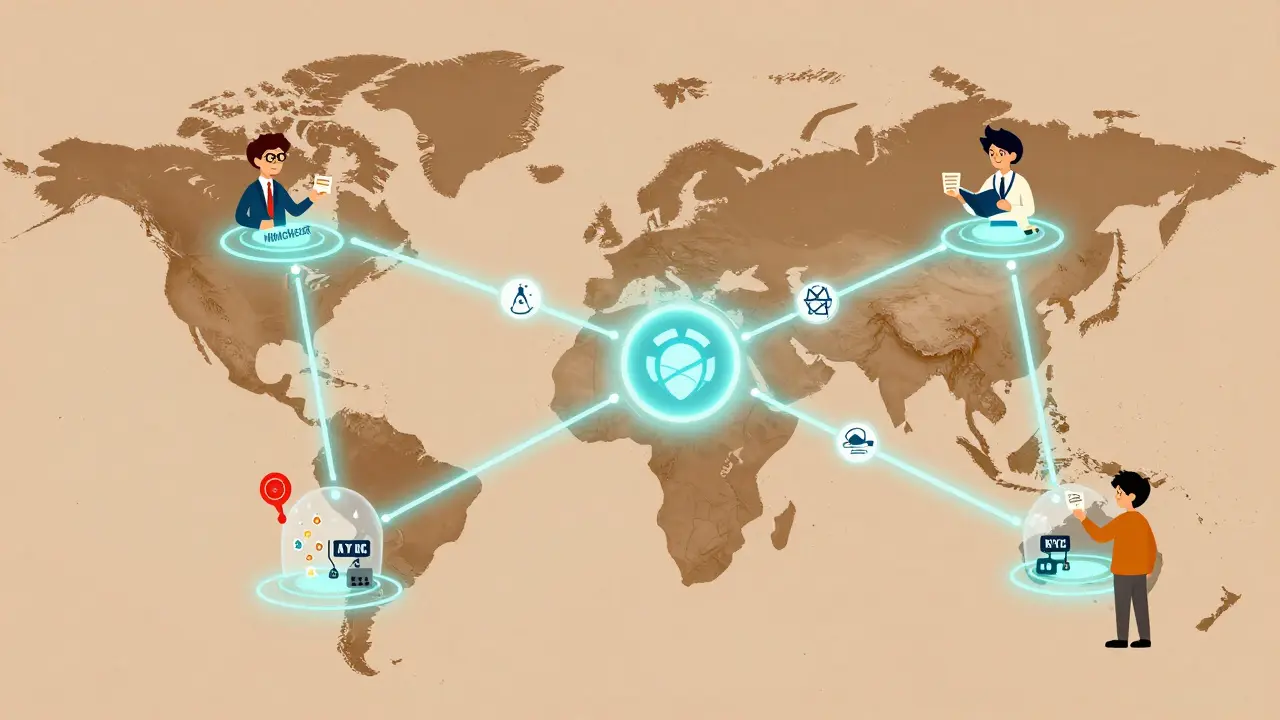
Tokenization doesn’t just make investing easier. It makes it fairer. You don’t need to be rich to get into high-value assets. A teacher in Manchester can now own part of a commercial property in Birmingham. A student in Lisbon can earn dividends from a startup in Toronto.
And it’s not just real estate. Art, music rights, intellectual property, even carbon credits are being tokenized. The technology is ready. The demand is rising. The regulators? They’re catching up.
The Catch: It’s Not Easy to Launch an STO
Don’t get fooled - STOs aren’t a magic bullet. They’re harder than ICOs. Much harder.
To launch one, you need:
- A legal team that understands securities law in at least one major jurisdiction (U.S., EU, Singapore).
- A tokenization platform that can handle compliance (KYC/AML, investor accreditation, transfer restrictions).
- A regulated marketplace willing to list your tokens.
- Smart contracts audited by top blockchain security firms.
- Clear documentation - prospectus, whitepaper, risk disclosures - written to regulatory standards.
Most startups can’t do this alone. They partner with firms like CoinFirm, Securitize, or Polymarket. The cost? Usually $200,000 to $1 million just to get started. That’s why STOs are still mostly used by established companies, not solo founders.
And compliance isn’t one-time. You need ongoing reporting. Investor updates. Audit trails. Token transfers must be restricted to accredited or verified buyers. If you mess up, you’re not just risking your reputation - you’re risking criminal charges.
Is an STO Right for You?
If you’re an investor:
- Look for platforms with clear regulatory licenses (SEC, MAS, FCA).
- Check if the asset is independently valued - don’t trust the issuer’s numbers.
- Read the token’s terms: What rights do you actually get? Dividends? Voting? Exit options?
- Only invest what you can afford to lose. Even regulated tokens are illiquid and volatile.
If you’re a business:
- Ask: Do you have a real, valuable asset to tokenize? Not just an idea.
- Can you afford the legal and tech costs? Don’t skip compliance - it’s not optional.
- Are you ready for transparency? Every transaction is public on the blockchain.
- Do you want global investors? STOs open doors - but also bring more scrutiny.
STOs aren’t for everyone. But for those who play by the rules, they’re the most powerful fundraising tool to emerge since the internet.
What’s Next for STOs?
The next five years will be critical. Regulators are starting to harmonize rules across borders. The EU’s MiCA framework is already in effect. The U.S. is slowly clarifying its stance. Singapore and Switzerland are leading the way in practical implementation.
More banks are getting involved. JP Morgan, HSBC, and Deutsche Bank are testing tokenized bonds. BlackRock is exploring tokenized ETFs. Traditional finance isn’t resisting blockchain - it’s adopting it.
Smart contracts are getting smarter. Tokens can now be programmed to auto-sell if a company misses earnings, or freeze if a holder violates rules. Compliance isn’t just a burden anymore - it’s built into the code.
STOs won’t replace IPOs. But they’ll carve out a massive new space - especially for mid-sized companies, real estate funds, and niche asset classes. The future isn’t about replacing Wall Street. It’s about upgrading it.
Security Token Offerings are here to stay. They’re not hype. They’re infrastructure. And if you’re looking to invest or raise capital in 2026, you need to understand them - or get left behind.
Are STOs legal?
Yes, STOs are legal when they comply with securities laws in the jurisdiction where they’re offered. In the U.S., they must be registered with the SEC or qualify for an exemption like Regulation D or Regulation A+. In the UK, they fall under FCA rules. In Singapore, they require MAS approval. If a platform or issuer claims an STO is "unregulated," it’s likely a scam.
Can anyone buy security tokens?
Not always. Many STOs are only open to accredited investors - people with high income or net worth. Some platforms allow retail investors under Regulation A+ or similar rules, but they often have investment caps. Always check the offering’s terms before investing. Wallets used for STOs require identity verification (KYC), so you can’t just connect a random crypto wallet.
How are STOs different from NFTs?
NFTs represent unique, non-fungible items - like a one-of-a-kind digital artwork. STOs represent divisible ownership in assets - like shares in a company or a fraction of a building. NFTs rarely have financial rights. STOs always do. NFTs trade on open marketplaces. STOs trade only on regulated platforms. Confusing the two is like mixing up a concert ticket with a stock certificate.
Do I pay taxes on STO investments?
Yes. Dividends, capital gains, and interest from STOs are taxable in most countries. In the UK, you pay Capital Gains Tax when you sell tokens for a profit. In the U.S., dividends are taxed as income. You must report STO transactions to tax authorities. Many platforms provide annual tax reports, but it’s your responsibility to file correctly.
Can I sell my security tokens anytime?
Only if they’re listed on a regulated exchange. Most STOs have lock-up periods - you might not be able to sell for 6 months to 2 years. Even after that, sales are restricted to verified investors. Unlike Bitcoin, you can’t just dump your STO tokens on Binance. Liquidity depends on the platform and the asset.
What happens if the company behind the STO fails?
If the company goes bankrupt, your tokens may lose value or become worthless - just like stocks. But because STOs are backed by real assets, there’s a chance those assets can be sold to repay investors. For example, if a real estate STO fails, the property might be auctioned off. Your claim is legally recognized, unlike with utility tokens where there’s no underlying asset to recover.
 Finance

Rob Duber
January 26, 2026 AT 09:01Okay but imagine owning 0.001% of the Empire State Building and getting a quarterly check like it’s a Netflix subscription. I’m not even mad, I’m impressed. This is what crypto was supposed to be - not monkey pics and rug pulls, but actual wealth redistribution with blockchain magic.
Gary Gately
January 26, 2026 AT 14:31sto’s are legit tho. i mean yeah its a lot of legalese and stuff but at least ur not getting rug pulled by some dude named ‘crypto king’ with a discord server and a canva whitepaper. this feels like the real deal.
Joshua Clark
January 27, 2026 AT 06:14Let me just say - the structural elegance here is staggering. We’re talking about the digitization of asset ownership at a systemic level, not just tokenizing a JPEG or a meme coin. The smart contracts enforce compliance, the regulated platforms ensure investor protection, and the blockchain provides immutable transparency. It’s not just an upgrade to traditional finance - it’s a paradigm shift where liquidity meets legality, and fractional ownership becomes accessible to anyone with a verified wallet and a few hundred bucks. This is the quiet revolution that Wall Street didn’t see coming because they were too busy arguing about Bitcoin’s energy use.
Katie Teresi
January 27, 2026 AT 14:10US regulators are the only ones doing it right. Europe’s MiCA? Too soft. Singapore? Too cozy. If you’re not SEC-compliant, you’re a criminal waiting to get caught.
Moray Wallace
January 29, 2026 AT 01:01Interesting piece. I’ve seen STOs discussed in finance circles, but never with such clarity. The real estate example really made it click for me - tokenizing physical assets feels like the most natural application. Still, the compliance burden seems immense for smaller players.
Joseph Pietrasik
January 30, 2026 AT 17:10sto's are just ipo's with blockchain buzzwords. same old gatekeeping, just with more tech jargon. dont fall for it.
Raju Bhagat
January 31, 2026 AT 22:39bro this is the future man i just bought a slice of a coffee farm in Colombia through an STO and now i get paid every month like its my side hustle. life is good. blockchain is love
laurence watson
February 2, 2026 AT 01:11I love how this breaks down the complexity without dumbing it down. For anyone scared of crypto but curious about real ownership - this is your entry point. You don’t need to be a genius, just careful. And maybe read the terms twice.
Elizabeth Jones
February 2, 2026 AT 19:59The deeper implication here isn’t just financial access - it’s epistemological. We’re shifting from trust in institutions to trust in code, from opaque hierarchies to transparent ledgers. This isn’t merely a new asset class; it’s a redefinition of what ownership means in the digital age. The real question isn’t whether STOs will survive - it’s whether our legal systems can evolve fast enough to keep pace.
Pamela Mainama
February 3, 2026 AT 14:51This gives ordinary people real power. No more waiting for the rich to let you in. Hope more platforms follow this path.
Rachel Stone
February 5, 2026 AT 08:40So you’re telling me the next big thing is… regulated crypto? Wow. Groundbreaking.
Nickole Fennell
February 5, 2026 AT 19:51Wait, so you’re saying I can invest in a Formula 1 team? I HAVE TO DO THIS. I’m selling my car. I’m moving to Monaco. I’m buying 0.0001% of Red Bull. I don’t care if I lose everything - I NEED TO BE PART OF THIS.
Edward Drawde
February 6, 2026 AT 16:34STOs are just the SEC’s way of sucking the soul out of crypto. Now it’s just Wall Street with a blockchain logo. Congrats, you killed the revolution.