

Key Takeaways
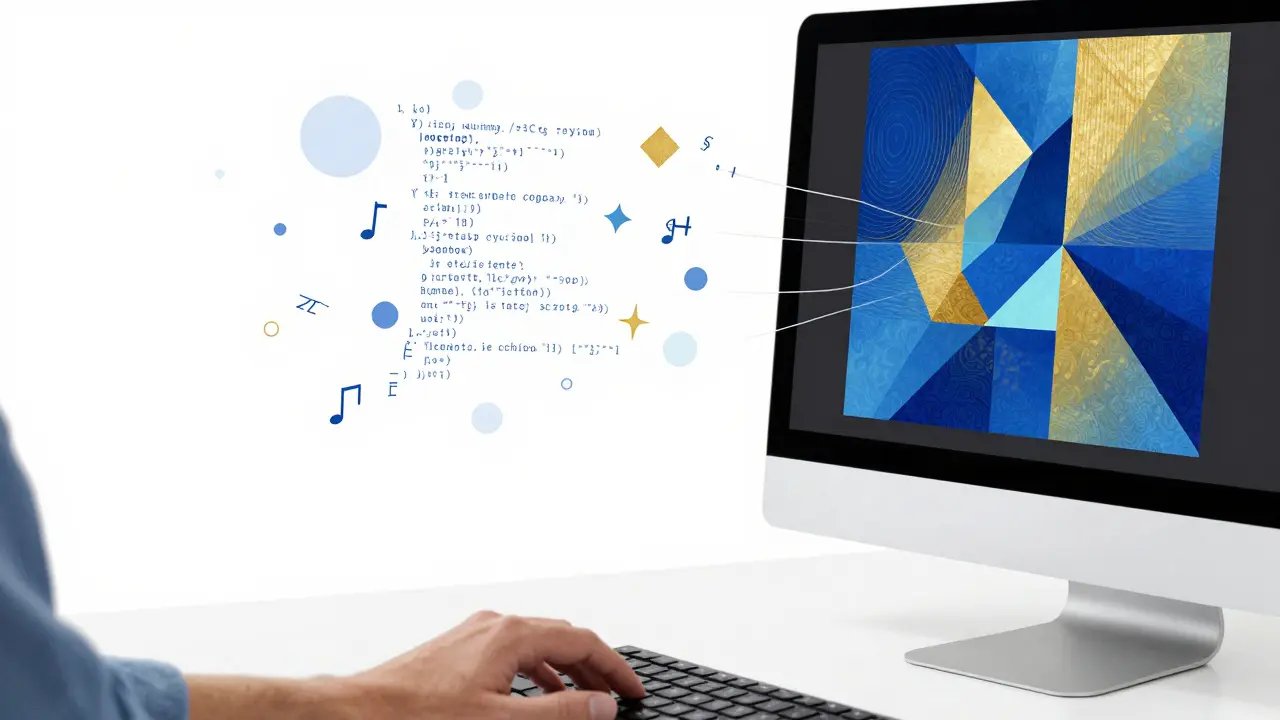
- The Process: Artists write a script (the algorithm), and the computer generates the final visual output.
- On-Chain vs. Off-Chain: Some NFTs are pre-made, while "true" generative art is created in real-time during the minting process.
- Scarcity: Blockchain technology proves that a specific variation of a generative piece is rare and authentic.
- Tools: Creators typically use languages like JavaScript and libraries like p5.js to build their systems.
The DNA of Generative Art: How It Actually Works
To understand these NFTs, you have to stop thinking about "digital paintings" and start thinking about "systems." In traditional digital art, an artist draws a character. In generative art, the artist builds a blueprint. Most collections use a method called "layer stacking." Imagine a 10,000-piece collection. The artist creates several transparent PNG layers for different traits. For example, they might draw 20 different hats, 20 different eyes, and 20 different backgrounds. The algorithm then picks one item from each category at random to assemble the final image. But it's not always equal randomness. Artists assign rarity values. If you're looking at a collection and find a piece with "gold sandals" that only appear in 0.5% of the total supply, that piece becomes exponentially more valuable than one with "blue sandals" that appear in 45% of the set. This mathematical approach to rarity is what drives the secondary market for NFTs .The Magic of On-Chain Minting
There is a massive difference between a project like CryptoPunks and a project on Art Blocks . CryptoPunks were generated off-chain; the images already existed before they were turned into tokens. Art Blocks changed the game by introducing on-chain generation. When you mint a piece on a platform like Art Blocks, the algorithm is stored directly in the smart contract . The moment you send your Ethereum, the contract executes the code and generates a unique piece of art right then and there. You don't know what you're getting until the transaction is complete. It's like buying a mystery box where the contents are decided by math. Because this requires more computing power on the network, it usually costs more in gas fees-roughly 15% to 25% higher than a standard NFT mint. However, collectors pay this premium because the art is truly "born" on the blockchain, making it more authentic and permanent.| Feature | Off-Chain Generative (Static) | On-Chain Generative (Dynamic) |
|---|---|---|
| Creation Timing | Pre-rendered before sale | Generated at moment of minting |
| Predictability | Artist knows all outputs | Outputs are a surprise to everyone |
| Gas Cost | Standard | Higher (due to computation) |
| Example | CryptoPunks | Fidenza (Art Blocks) |
Tools of the Trade: How Artists Code Art
Creating these systems isn't as simple as using a filter. It requires a mix of creative vision and technical skill. Most artists spend six months to a year learning the necessary tools before they launch a collection. For those who can code, p5.js is the gold standard. It's a JavaScript library specifically designed for creative coding, making it easier to draw shapes and handle randomness. Other pros use openFrameworks for high-performance C++ work or Unity if they want to incorporate 3D environments. If you can't code, there are "no-code" shortcuts. Platforms like fxhash or Async Art allow you to upload your layers and set the rarity percentages through a simple web interface. This lowers the barrier to entry, but it means you have less control over the "soul" of the algorithm compared to someone writing their own logic from scratch.The Risk and Reward of the 'Digital Lottery'
Collecting generative art is a bit like gambling. Because the output is random, you can end up with a "god-tier" piece or a "dud." Take the Fidenza collection by Tyler Hobbs. Some pieces are masterpieces of flow and color that have sold for millions, while others are simpler. For a collector, the thrill is in the reveal. You might spend 1 ETH and get a piece with a rare trait combination that suddenly makes it worth 10 ETH. However, there's a downside. Many projects flood the market with aesthetically shallow works that rely on technical novelty rather than artistic depth. Data shows that about 32% of generative NFTs from less established projects eventually trade below their original mint price. The secret for seasoned collectors is to study the "trait distribution sheet" before buying. If you know which traits are rare and visually appealing, you can make a calculated bet rather than a blind guess.From Niche Experiment to Museum Walls
For a long time, the traditional art world ignored NFTs. That changed when the logic of generative art began to align with institutional tastes. The MoMA (Museum of Modern Art) acquiring a Fidenza piece in 2022 was a turning point. It proved that the art world views these not just as speculative assets, but as a legitimate evolution of art history. We are also seeing a massive shift in the environmental impact. After Ethereum moved to proof-of-stake in late 2022, the carbon footprint of minting these artworks dropped by over 99%. This removed one of the biggest criticisms against the medium, allowing more corporate and institutional players to enter the space without the "eco-guilt."What's Next for Algorithmic Art?
We are moving past simple layer-stacking. The next frontier is "dynamic generative art." Instead of a static image that is generated once, these NFTs change based on real-world data. Imagine a piece of art that changes color based on the current temperature in London or shifts its shape based on the price of Bitcoin. AI is also playing a bigger role. While early generative art was about strict mathematical rules, newer projects are integrating machine learning models like DALL·E or Midjourney. This allows for a level of complexity and organic feeling that was impossible with basic JavaScript. As these tools mature, the line between "human-made" and "machine-made" will continue to blur, turning the artist into a curator of possibilities rather than a creator of a single image.Do I need to know how to code to create generative NFTs?
No, you don't strictly need to code. While professional artists use p5.js or openFrameworks for maximum control, no-code platforms like fxhash let you upload image layers and set rarity percentages through a visual interface. However, learning basic JavaScript will give you significantly more power over how your art is generated.
What is the difference between an NFT and a Generative NFT?
A standard NFT is usually a token representing a single, pre-existing file (like a JPEG of a photo). A generative NFT is created by an algorithm. The "art" isn't just the final image, but the code that creates it. In many cases, the final image isn't even decided until the moment the buyer mints the token.
Why are some generative NFTs more expensive than others?
Value is driven by three things: the reputation of the artist, the rarity of the specific traits in your piece, and the platform's prestige (e.g., Art Blocks). A piece with a trait that only appears in 0.1% of the collection will almost always be more valuable than a common variant.
What is 'on-chain' art?
On-chain art means the actual code or image data is stored directly on the blockchain. Most NFTs just store a link to a file hosted on a server. If that server goes down, the art disappears. On-chain art lives as long as the blockchain exists, making it far more permanent and desirable for high-end collectors.
Can I lose money on generative art NFTs?
Yes. Because of the randomness, you might mint a "dud"-a piece that is visually unappealing or lacks rare traits. Additionally, the market is volatile; many projects from smaller artists lose value after the initial hype fades. Always research the trait distribution before minting.
 Finance
Michelle Stanish
April 18, 2026 AT 10:32Not really art.
Shantal Sanjur
April 18, 2026 AT 16:14Oh sure, let's just pretend that calling a random number generator "art" isn't just a massive scam to fleece people of their money. It's all just a giant bubble designed by the elites to shift their bags onto retail investors who think they're buying the next Picasso. The "on-chain" part is just a fancy way of saying you're paying more to have your receipt stored in a place that's harder to delete. Totally revolutionary, if you ignore the part where the actual image is often just a derivative of something else anyway. Honestly, the whole thing reeks of a coordinated effort to redefine value so they can print money out of thin air. Just wait until the whole infrastructure collapses and everyone realizes they spent thousands on a link to a dead server.
Joshua Salwen
April 19, 2026 AT 04:52OMG the audacity to call this a "digital lottery"!! its literally just gambling for hipsters who think they're too smart for casinos!! I cant even deal with how mediocre most of these collections are anyway... like seriously, a gold sandal? how revolutionary!! its honestly such a travesty that this is what passes for innovation these days!!
John and Lauren Busch
April 19, 2026 AT 18:00Cool, so we just let math do the work now. Love that for us.
Shannon Kelly Smith
April 21, 2026 AT 08:09This is such a great entry point for people wanting to get into creative coding! 🚀 If you're just starting, definitely check out p5.js, it's a total game changer for visualizing data. Don't be intimidated by the code part, anyone can learn the basics with a bit of patience! Keep exploring and creating! 🎨✨
Adedamola Oyebo
April 21, 2026 AT 15:53p5.js is indeed the industry standard!! Very versatile!!
Chintu Parikh
April 21, 2026 AT 21:26I find the integration of blockchain technology with generative processes to be an exceptionally fascinating development. It is truly inspiring to witness how these algorithmic systems can foster such a unique form of digital ownership. I believe that this synergy between mathematics and aesthetics will open numerous doors for artists globally, allowing for a democratization of art that was previously unimaginable. Let us all embrace this technological evolution with an open mind and a spirit of collaboration!
Saurav Bhattarai
April 22, 2026 AT 22:27Imagine thinking the MoMA acquiring one piece makes this a legitimate art movement. How quaint. Only a Westerner would be so easily impressed by a museum's desperate attempt to stay relevant. This "art" is a joke, but I suppose it suits the mindless consumerism of the current era perfectly.
Gillian Kent
April 24, 2026 AT 08:19its amazing how the envirnmental side of things improved so fast. i didnt even know about the proof of stake switch until now but it makes a huge diference for the art comunity
Kevin Lư
April 25, 2026 AT 19:10I mean, it's cool and all, but maybe we should think about whether we're actually creating anything of value here or just making fancy receipts for pixels. Just a thought, but like, is it actually moral to treat art as a speculative asset? Anyway, hope everyone's doing good!
Jeff Barlett
April 27, 2026 AT 03:59Who cares about the "soul" of the algorithm? It's all just code! The idea that a human-written script has more "soul" than a no-code interface is just pretentious nonsense to make some people feel superior because they know how to write a for-loop. It's all the same output in the end, let's stop pretending it's deeper than it is.
Kaitlyn Wu
April 28, 2026 AT 11:26If you're looking to start, focus on the logic first and the visuals second. Understanding the underlying system is what actually separates a professional collection from a low-effort mint. Set clear boundaries for your algorithm so the results remain cohesive regardless of the randomness.
Mike Kempenich
April 29, 2026 AT 22:24The move towards dynamic generative art sounds like the real future here. The idea that art can breathe and change with real-world data is actually exciting and gives the medium a purpose beyond just being a rare collectible. I'm sure we'll see some incredible projects that blend AI and live data feeds soon. It's a great time to be a collector if you're willing to take the risk.