


Crypto Exit Tax Calculator
Exit Tax Calculator for Crypto Holders
Calculate your potential tax liability under the U.S. Exit Tax rules (Section 877A) for cryptocurrency assets. The 2025 exclusion amount is $890,000.
Results
When you decide to give up U.S. citizenship or end long‑term residency, the IRS doesn’t just wait for you to leave - it treats every asset as if you sold it the day before you walk out the door. That “deemed sale” is the heart of the U.S. Exit Tax a tax imposed under Internal Revenue Code Section 877A on covered expatriates, calculated as if all worldwide assets were sold at fair market value on the day before expatriation. From 2025 onward the exclusion amount sits at $890,000, but the rules get especially tricky when you own Cryptocurrency digital tokens such as Bitcoin, Ethereum, stablecoins, NFTs, and other blockchain‑based assets that the IRS classifies as property rather than currency.
Who Is a Covered Expatriate?
The exit tax only hits "covered" expatriates. You fall into that bucket if any of these three tests are met on the day you renounce:
- Net worth of $2 million or more.
- Average annual net income tax > $206,000 for the five years prior.
- Failure to certify full compliance with all U.S. tax filings for the past five years.
Most high‑net‑worth crypto holders hit the net‑worth threshold, so they should start planning well before the actual renunciation date.
How the Deemed Sale Works for Crypto
For a covered expatriate, the IRS pretends you sold every crypto holding at its fair market value (FMV) on the day before expatriation. The FMV comes from the U.S. dollar price listed on a major exchange at the exact timestamp the deemed‑sale rule requires. After you have the FMV, you subtract the cost basis - the original purchase price plus any transaction fees - to arrive at a gain or loss.
All crypto gains and losses are netted together with gains and losses from stocks, real estate, and other assets. The $890,000 exclusion applies to the net gain across the entire portfolio, not just the crypto portion.
Step‑By‑Step Calculation
- Compile a complete list of every crypto address you own, including wallets, exchanges, and custodial services.
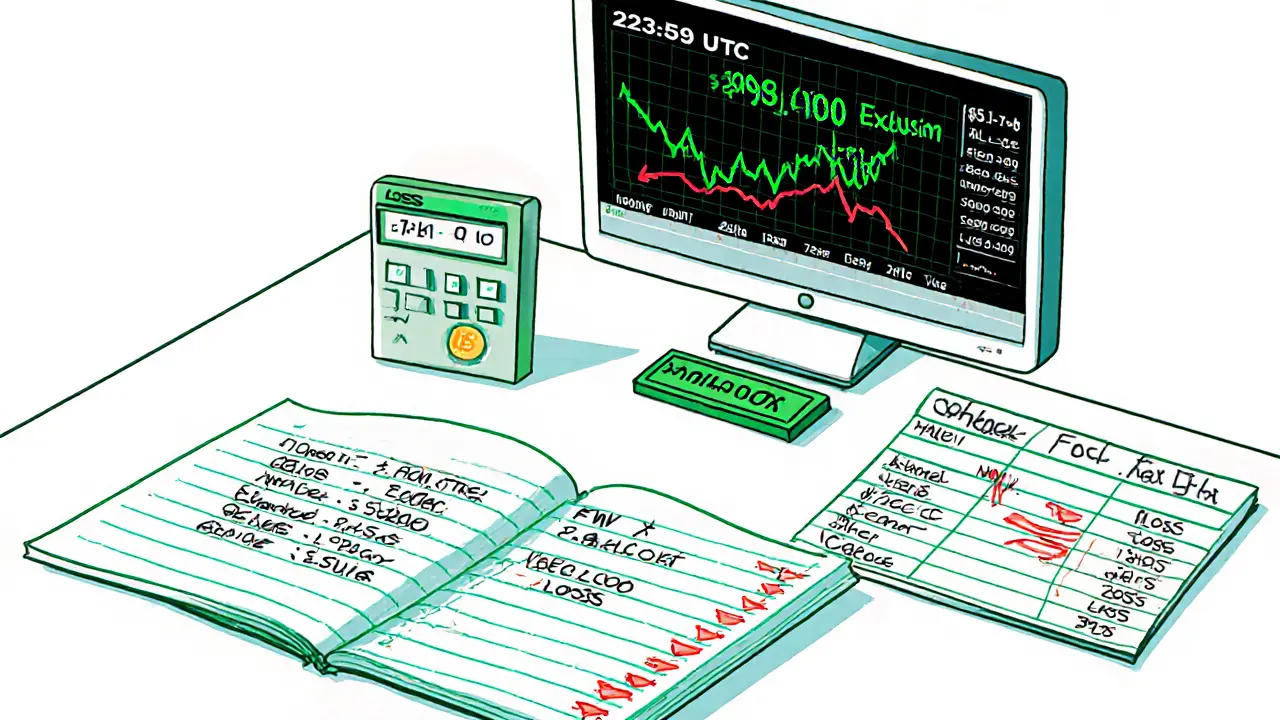
- Pull the historical price for each token at the exact 23:59 UTC moment before your expatriation date. Use exchange‑specific trade data rather than daily averages.
- Calculate cost basis for each token. If you lack records, use a reasonable method such as the average purchase price from the first exchange you used, documenting the approach.
- Compute individual gains/losses: FMV - cost basis.
- Sum all crypto gains and losses, then add gains/losses from non‑crypto assets.
- Subtract the $890,000 exclusion. If the result is positive, apply the applicable capital‑gains rate (0 %, 15 %, 20 %) plus the 3.8 % Net Investment Income Tax if your income exceeds the NIIT threshold.
- Report the net figure on Form 8854, attached to your final 2025 U.S. tax return.
Because crypto prices can swing 10‑20 % in a single day, the exact timestamp you choose can change the tax bill by tens of thousands of dollars.
Reporting Requirements Beyond Form 8854
Crypto held on foreign exchanges triggers additional reporting:
- FBAR (FinCEN Form 114): Required if the aggregate value of all foreign financial accounts exceeds $10,000 at any point during the year.
- FATCA (Form 8938): Must be filed when the value on the last day of the tax year exceeds $50,000 (or $75,000 at any time) for non‑resident aliens.
- All transaction histories, wallet addresses, and exchange statements must be retained for at least six years (Treasury Reg. §1.6001‑1(e)).
Failure to file these forms can add penalties that dwarf the exit‑tax liability itself.
Valuation Challenges and Practical Solutions
Early adopters often lack proper cost‑basis records. The IRS expects you to provide "reasonable" documentation, which can be satisfied with blockchain‑analysis reports from firms like Chainalysis Reactor or CoinMetrics. For obscure tokens without a reliable market, a qualified appraiser can issue a valuation report - usually costing $500‑$2,000 per asset.
Many taxpayers mitigate volatility by timing their renunciation to coincide with a market dip. One Reddit user saved $0 in exit tax by selling a portion of his holdings a week before a 12 % market correction and applying prior‑year crypto losses to offset gains.
Comparison: Crypto vs. Traditional Assets Under the Exit Tax
| Aspect | Cryptocurrency | Traditional Assets (stocks, real estate, etc.) |
|---|---|---|
| Valuation method | Exact timestamp price on major exchange (high volatility) | Closing price on a recognized market or appraisal (lower volatility) |
| Cost‑basis documentation | Often missing; requires blockchain analysis | Usually well‑documented via brokerage statements |
| Reporting forms | Form 8854 + FBAR + FATCA + possible Form 8949 for each token | Form 8854 + standard Schedule D reporting |
| Exclusion impact | Highly sensitive - a single BTC gain can wipe out $890k exclusion | Gain spread across many assets makes exclusion more useful |
| Common pitfalls | Price‑snapshot errors, missing basis, exchange‑reporting gaps | Incorrect fair‑market appraisal, under‑reporting of rental income |
Strategic Ways to Reduce or Eliminate the Exit Tax on Crypto
Here are the tactics most successful expatriates employ:
- Gift before leaving: Transfer up to $17,000 per recipient per year (2025 limit) to family members who remain U.S. taxpayers. The gift is exempt from the deemed‑sale calculation.
- Use losses: Harvest crypto losses from the prior tax year and apply them against crypto gains in the deemed‑sale net.
- Time the renunciation: Align the exit date with a market dip. Even a 5 % price drop can save tens of thousands.
- Early‑year planning: Begin documentation 12 months ahead, secure blockchain analytics, and request a private letter ruling if you anticipate a dispute.
Professional help matters. A 2025 Greenback Tax Services survey showed that 89.7 % of users who hired a crypto‑savvy tax adviser reported a smooth exit, versus a 57 % satisfaction rate for DIY filers.

Future Outlook and Legislative Risks
Congress is already eyeing changes. The Expatriation Tax Modernization Act of 2025 (H.R. 3892) would raise the exclusion to $1.2 million for 2026 and introduce a special cost‑basis rule for crypto acquired before 2014. If passed, early miners could see a substantial reduction in their liability.
Meanwhile, IRS Notice 2025‑41 mandates that DeFi tokens be valued at the “most liquid market” on the deemed‑sale date, adding another layer of compliance. The Treasury’s priority‑guidance list flags crypto‑cost‑basis rules as a Tier 1 item, meaning you can expect formal guidance within the next 12 months.
In short, the framework is stable for now, but the rapid growth of crypto holdings means the rules will keep evolving. Keeping an eye on legislative updates is essential for anyone who plans to walk away from the United States with a crypto portfolio.
Quick Checklist for U.S. Expatriates Holding Crypto
- Confirm you are a covered expatriate (net‑worth, tax‑pay, compliance tests).
- Gather full transaction history for every wallet and exchange.
- Determine FMV at the exact timestamp before expatriation (use exchange data).
- Calculate cost basis - if missing, obtain a blockchain‑analysis report.
- Net all gains/losses, apply the $890,000 exclusion, compute taxable amount.
- Complete Form 8854 and attach to your final 2025 tax return.
- File FBAR (FinCEN 114) and FATCA (Form 8938) if thresholds are met.
- Consider gifting, loss harvesting, or timing strategies to lower the bill.
- Engage a tax professional with crypto and international‑tax expertise.
Frequently Asked Questions
Does the $890,000 exclusion apply separately to crypto?
No. The exclusion is across the entire net gain from all assets. Crypto gains are added to stock or real‑estate gains, then the $890,000 is subtracted once.
What if I don’t have cost‑basis records for early Bitcoin purchases?
The IRS expects a "reasonable" method. A blockchain‑analysis report that shows the earliest on‑chain transaction, combined with documented electricity costs, often satisfies the requirement. Be prepared to defend the methodology if audited.
Do stablecoins count as crypto for the exit tax?
Yes. The IRS treats any token classified as property, including stablecoins, under the same deemed‑sale rules.
Can I claim a loss on a crypto token I held on a foreign exchange?
Losses are allowed and can offset gains from other assets. Make sure the loss is documented with the exchange’s closing balance and price at the deemed‑sale timestamp.
Will future legislation change the $890,000 exclusion?
The Expatriation Tax Modernization Act proposes raising the exclusion to $1.2 million for 2026. Keep an eye on congressional progress; until it becomes law, the $890,000 figure remains the baseline.
 Finance





Stephanie Alya
October 26, 2025 AT 07:11Oh joy, another $890k tax loophole to wrestle with 😒.
Gabrielle Loeser
November 2, 2025 AT 06:11Understanding the $890,000 exclusion is essential for anyone contemplating expatriation. The exclusion applies to the net gain across all asset classes, not exclusively to cryptocurrency holdings. Consequently, accurate aggregation of gains and losses from stocks, real estate, and digital tokens is required. Taxpayers should maintain meticulous records of acquisition dates, cost basis, and fair market values at the deemed‑sale timestamp. Seeking professional guidance is advisable to ensure compliance with Form 8854 and related reporting obligations.
Abby Gonzales Hoffman
November 9, 2025 AT 05:11When you line up all your crypto wallets, the first step is a comprehensive inventory, and that foundation cannot be skimped on. Pull the exact 23:59 UTC price from a major exchange for each token you own, because the IRS uses that precise snapshot. Next, tally up the cost basis for every purchase, including fees, even those made years ago on obscure platforms. If any basis is missing, a reasonable method such as averaging early trades or using a blockchain‑analysis report will satisfy the rules. After you compute individual gains and losses, roll them into a single net figure together with other asset classes. Subtract the $890 k exclusion and apply the appropriate capital‑gains rate plus the NIIT if applicable. Finally, attach the net result to Form 8854 and file all required FBAR and FATCA disclosures.
Rampraveen Rani
November 16, 2025 AT 04:11List every address grab the timestamp price 🚀 calculate gains subtract basis file the forms 📑
ashish ramani
November 23, 2025 AT 03:11Accurate documentation of wallet addresses and transaction histories is a cornerstone of compliance. The IRS expects a clear audit trail that links each token to its acquisition cost. When records are incomplete, a documented methodology should be adopted and retained. This approach demonstrates good‑faith effort and may mitigate penalty exposure. Coordination with a qualified tax professional can streamline the reporting process.
Richard Williams
November 30, 2025 AT 02:11The exit tax framework treats the day before expatriation as a taxable event for every asset, and cryptocurrency is no exception. First, create a master list that includes every personal wallet, exchange account, and custodial service you have ever used. Second, for each token, retrieve the exact price on the major exchange at 23:59 UTC on the day before you renounce citizenship. Third, determine the cost basis by aggregating the purchase price, transaction fees, and any associated costs such as mining electricity for early Bitcoin. Fourth, compute the gain or loss for each token by subtracting the cost basis from the fair market value. Fifth, aggregate all crypto gains and losses together with gains and losses from stocks, real estate, and other investments. Sixth, apply the $890,000 exclusion to the combined net gain. Seventh, calculate the capital‑gains tax rate, remembering that long‑term gains may be taxed at 0, 15, or 20 percent depending on your income level. Eighth, add the 3.8 percent Net Investment Income Tax if your modified adjusted gross income exceeds the NIIT threshold. Ninth, complete Form 8854 and attach the net taxable amount to your final 2025 U.S. tax return. Tenth, file FBAR if the aggregate value of foreign accounts topped $10,000 at any point during the year. Eleventh, file FATCA Form 8938 if the value of foreign assets exceeded $50,000 on the last day of the tax year. Twelfth, retain all supporting documentation, including blockchain analysis reports and exchange statements, for at least six years. Thirteenth, consider leveraging gifting strategies to family members who remain U.S. taxpayers to reduce the taxable base. Fourteenth, harvest any capital losses from the prior year to offset gains in the deemed‑sale calculation. Fifteenth, time your renunciation to coincide with a market dip if possible, as even a modest price drop can lower the tax bill dramatically. Sixteenth, engage a tax adviser who specializes in both international tax and cryptocurrency to navigate the complexities and avoid costly mistakes.
adam pop
December 7, 2025 AT 01:11The IRS has quietly partnered with major exchanges to harvest crypto data and monetize expatriate departures, and that hidden agenda fuels the aggressive enforcement of the exit tax.
Dimitri Breiner
December 14, 2025 AT 00:11Let’s be clear, the combination of gifting, loss harvesting, and precise timestamp selection forms a powerful toolkit for reducing the exit tax burden, and anyone willing to follow a disciplined plan can benefit.
LeAnn Dolly-Powell
December 20, 2025 AT 23:11Keeping a positive outlook while you sort through the paperwork makes the process much smoother 😊 remember that proper documentation can turn a daunting tax bill into a manageable step forward.
Rohit Sreenath
December 27, 2025 AT 22:11When you contemplate the tax code, you see a mirror reflecting how society values ownership and departure, and the exit tax becomes a philosophical statement about ties to the nation.
Sam Kessler
January 3, 2026 AT 21:11From a fiduciary perspective, the intersection of Section 877A and the emergent classification of decentralized finance tokens engenders a nuanced tax nexus that necessitates a bespoke valuation matrix and bespoke compliance protocol.
Steve Roberts
January 10, 2026 AT 20:11Many expats assume the exclusion automatically shields them from any tax liability, yet the reality is that high‑value crypto gains can eclipse the $890 k threshold, resulting in a substantial bill despite the exemption.
Patrick Rocillo
January 17, 2026 AT 19:11Teamwork makes the tax dream work, so share your crypto inventory spreadsheet with a trusted adviser and watch the stress melt away 🌟 collaboration beats isolation any day.
Aniket Sable
January 24, 2026 AT 18:11its realy helpful to start packin all ur transaction logs early so u dont get stuck later.
Will Atkinson
January 31, 2026 AT 17:11Hello there, dear community, I hope you’re all navigating the exit tax maze with confidence,; the key takeaway is that meticulous record‑keeping paired with strategic timing can dramatically reduce your tax exposure,; don’t forget to consult a specialist who understands both crypto volatility and expatriate rules,; and always keep an eye on legislative updates that could alter the exclusion amount in the future,; stay proactive and stay calm!
monica thomas
February 7, 2026 AT 16:11I note that the Expatriation Tax Modernization Act of 2025 has been formally introduced in the Congressional record, and the specific amendment to Section 877A proposes raising the exclusion threshold to $1.2 million.
Edwin Davis
February 14, 2026 AT 15:11Patriots must recognize that the United States imposes the exit tax to protect its fiscal integrity; therefore, those who abandon citizenship should be prepared for rigorous enforcement and substantial financial obligations; the government’s stance is unequivocal and must be respected;
emma bullivant
February 21, 2026 AT 14:11In my view the tax dets about to leave thier homeland reflect deeper ties between identity and economic duty, and the crypto exit tax concept pushes this dialogue into the digital realm where ownership is both intangible and profoundly personal.
Michael Hagerman
February 28, 2026 AT 13:11Oh wow, the moment you realize every Bitcoin you own is about to be stamped with a tax bill feels like the sky is falling, and the paperwork that follows could rival a Shakespearean tragedy, yet somehow the process must be endured.
Laura Herrelop
March 7, 2026 AT 12:11The IRS quietly monitors every blockchain transaction, and their algorithms are tuned to flag expatriates the moment they move assets offshore. Their surveillance infrastructure has been upgraded with AI-driven analytics that can trace even the most obscure tokens across multiple mixers. This hidden oversight means that failing to disclose crypto holdings is not just a mistake but a provable breach of law. Consequently, meticulous reporting becomes a defensive shield against unseen enforcement.
Nisha Sharmal
March 14, 2026 AT 11:11Sure, the exit tax is just a friendly reminder from the government that it still loves you, even as you try to leave.
Karla Alcantara
March 21, 2026 AT 10:11Sharing experiences about navigating the exit tax can empower others, and the community’s collective knowledge often uncovers practical solutions that tax professionals might overlook.
Jessica Smith
March 28, 2026 AT 09:11Honestly the tax code is a circus and the exit tax is the main act.
Petrina Baldwin
April 4, 2026 AT 09:11Stop ignoring the filing deadlines.
Ralph Nicolay
April 11, 2026 AT 08:11It is imperative to acknowledge that failure to submit required forms within the statutory timeframe may result in penalties that exceed the nominal tax liability.