

Blockchain Congestion: What It Is, Why It Happens, and How to Handle It
When you send a crypto transaction and it takes minutes—or hours—to confirm, you’re likely dealing with blockchain congestion, a situation where too many transactions are trying to get into a block at once, overwhelming the network’s capacity. Also known as network congestion, it’s what turns a simple token swap into a waiting game.
It happens because blockchains like Ethereum or Solana have hard limits on how many transactions they can process per second. When demand spikes—say, during a big NFT drop or a new DeFi launch—users compete by raising their gas fees, the price paid to miners or validators to prioritize their transaction. The result? Small transactions get buried, wallets show pending status, and traders miss opportunities. This isn’t just annoying—it’s costly. In 2021, Ethereum gas fees hit over $700 per transaction during peak NFT sales. Even today, during major token launches, fees regularly spike above $50.
It’s not just about fees. blockchain scalability, the ability of a network to handle growing demand without slowing down is the root issue. Some chains solve this with layer-2 solutions like Arbitrum or Optimism, others with faster consensus like Solana’s proof-of-history. But when congestion hits the base layer, even the best layer-2s feel the pressure. You’ll see it in delayed airdrop claims, failed IDO participations, and stalled NFT mints—all tied back to one thing: too many users, not enough space.
What’s interesting is that congestion isn’t random. It often follows predictable patterns: right before major token launches, during DeFi yield farming seasons, or after big exchange listings. The posts below show real cases—from the blockchain congestion that delayed the BRW airdrop on Base to the gas fee spikes during the GZONE IDO. You’ll also find guides on how to avoid getting stuck during the next surge, tools to monitor network load in real time, and strategies to time your trades when fees are low.
Whether you’re claiming an airdrop, swapping tokens, or just trying to send ETH, understanding congestion helps you save money and time. The next time your transaction hangs, you won’t just panic—you’ll know why, and what to do next.
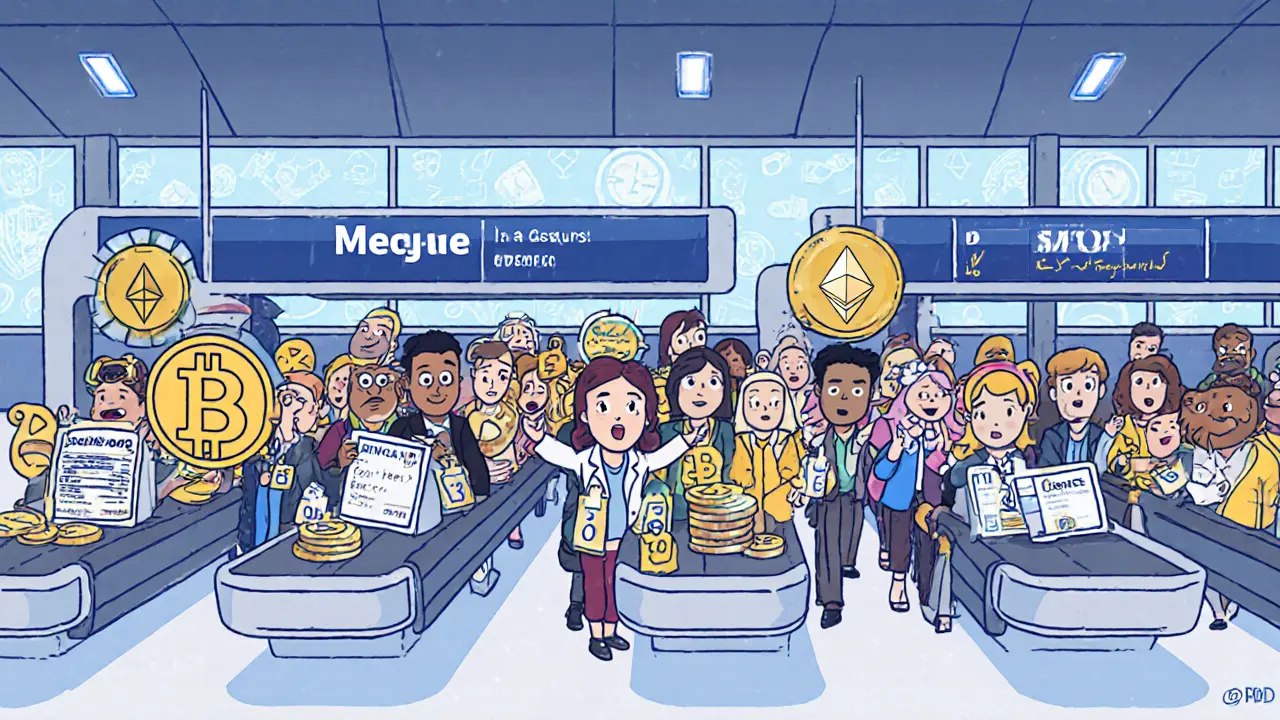
Mempools are the invisible queues where crypto transactions wait to be confirmed. Bitcoin, Ethereum, Solana, and others handle them differently-knowing how they work helps you avoid delays and save on fees.
Categories
 Finance
Archives
Recent-posts

Legal Status of Cryptocurrencies in India: Taxes, Rules & Restrictions
Aug, 27 2026
What is Summer (SUMMER) crypto coin? Price, supply, and real-world status in 2026
Jan, 17 2026
Indian Crypto Exchanges to Avoid in 2025
Oct, 9 2024

Costa Rica Crypto Law: Navigating the Legal Gray Area in 2026
Jun, 27 2026
HeroesTD (HTD) Airdrop 2025: What We Know About the Coinmarketcap Event and Token Details
Dec, 11 2025