


You spend hours creating content. You build a community. Then you hit the wall: algorithms change, fees rise, and you realize you don't truly own your audience. That is exactly why social token platforms have moved from niche experiments to essential tools for serious creators in 2026.
Social tokens are not just another crypto trend. They are digital assets that represent value within your specific fan ecosystem. Unlike Bitcoin or Ethereum, which are general-purpose currencies, social tokens are tied directly to you-your music, your art, your brand. When fans hold your token, they are buying into your success. In return, you gain direct revenue, deeper engagement, and a community that has skin in the game.
The numbers back this up. According to Coinbase’s 2023 Creator Economy report, over 25,000 creators generated $450 million in direct revenue through social tokens, a 320% jump from the previous year. But here is the real kicker: tokenized creators see 73% higher engagement rates than those relying solely on traditional social media. This isn’t about speculation; it’s about restructuring the relationship between creator and fan.
How Social Token Platforms Actually Work
To understand these tools, you need to look under the hood. Social token platforms operate on two main layers: the blockchain protocol and the application interface.
The blockchain layer handles the security and transaction processing. Most platforms today rely on three major networks:
- Ethereum is the dominant network for social tokens, supporting 68% of all issuances using the ERC-20 standard. It offers deep liquidity and integration with 127 decentralized exchanges like Uniswap. However, gas fees average around $1.20 per transaction as of mid-2024, which can eat into microtransactions.
- Solana is a high-speed alternative favored by 22% of issuers, processing transactions in 0.4 seconds with fees of just $0.00025. It is ideal for high-volume interactions but has faced stability issues, including four network outages in 2023.
- Polygon is an Ethereum scaling solution serving 10% of the market, offering near-instant finality and sub-cent costs.
The application layer is what you actually interact with. These are the no-code interfaces that let you create, distribute, and manage tokens without writing a single line of Solidity code. They handle wallet creation, KYC (Know Your Customer) compliance, and distribution mechanics. Without these user-friendly front ends, social tokens would remain locked away for developers only.
Top Platforms Compared: Rally, Roll, Kanga, and Torum
Not all platforms are built the same. Your choice depends on your technical skill, budget, and long-term goals. Here is how the leading contenders stack up in 2026.
| Platform | Best For | Cost Structure | Key Feature | Learning Curve |
|---|---|---|---|---|
| Rally | Mainstream creators, musicians | Free basic setup; 15% fee on premium features | No-code interface, Shopify integration | Low (8-12 hours) |
| Roll Protocol | Community-driven projects, DAOs | $299 setup + 3% secondary sales | Multi-sig wallets, advanced governance | Medium-High |
| Kanga Exchange | High-holder capacity, NFT bundles | $499 flat fee per launch | Unlimited holder capacity, community modules | Medium |
| Torum | Content creators seeking engagement | Freemium (earns $XTM via activity) | AI-powered engagement scoring | Low |
Rally, founded in 2019 by Kevin Chou, is the most accessible option. It requires only email verification and KYC compliance. Ninety-two percent of users report successful launches within 48 hours. Its partnership with Shopify allows for token-gated e-commerce, meaning fans can buy exclusive merch only if they hold your token. However, the 15% platform fee on premium features can add up quickly for high-volume creators.
Roll Protocol, launched by Jed McCaleb and Connor Boyle, takes a different approach. It charges a flat $299 setup fee but only 3% on secondary market transactions. Roll shines in governance, allowing creators to set up multi-signature wallets that require, for example, 3-of-5 approvals for treasury movements. This is powerful for community-owned projects but comes with a steeper learning curve. Trustpilot reviews show 78% praise its governance features, while 63% complain about the technical complexity.
Kanga Exchange offers a middle ground with a $499 one-time fee and unlimited holder capacity. It is particularly strong for creators who want to bundle tokens with NFTs. One digital artist reported recovering her $499 cost in just 11 days through NFT bundles, though she noted needing a developer to fix wallet integration issues.
Torum operates differently by integrating tokens directly into a social media experience. Users earn $XTM tokens based on engagement metrics-0.5 to 2.5 tokens per post for creators, and 15-30 daily for moderators. This drives exceptional time-on-site (47 minutes daily vs. 22 on traditional platforms), but the tokens have limited utility outside the Torum ecosystem.
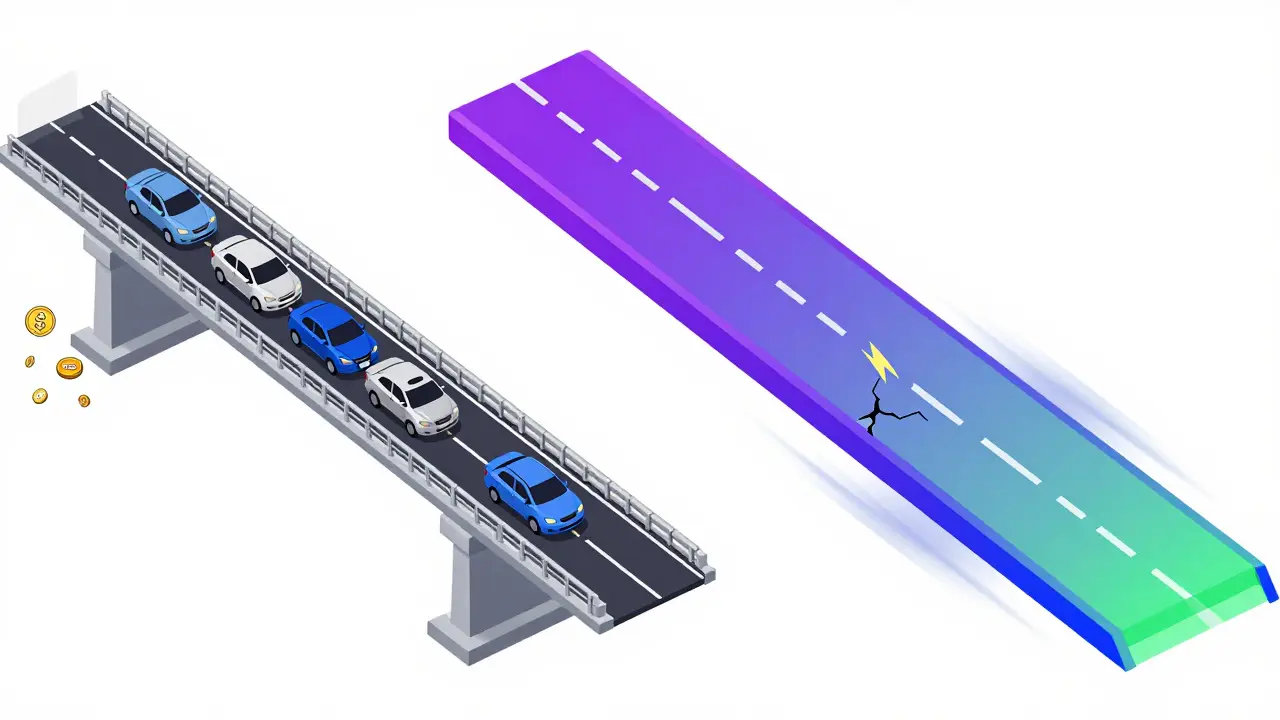
Choosing the Right Blockchain: Ethereum vs. Solana
Your platform choice often dictates your blockchain. This is a critical decision because it affects speed, cost, and audience reach.
Ethereum remains the king of liquidity. If your goal is to have your token traded on major decentralized exchanges like Uniswap or Sushiswap, Ethereum is the default. It holds 58% market share among professional creators earning over $50,000 annually from tokens. The trade-off is cost. During peak times, gas fees can spike, consuming 15-20% of microtransactions under $5. However, EIP-1559 upgrades have stabilized average fees around $1.20 in Q2 2024, making it more manageable than in 2021.
Solana is the challenger. With 65,000 transactions per second compared to Ethereum’s 15-30, it is vastly superior for high-frequency interactions like tipping or voting. It leads among emerging creators with under $10,000 annual revenue at 41% adoption. The risk? Stability. Solana experienced 17 hours of downtime across four outages in 2023. For a live event or time-sensitive drop, that downtime can be catastrophic.
If you are unsure, look at cross-chain solutions. Rally’s “Token 2.0” upgrade, launched in January 2025, allows tokens to operate simultaneously on Ethereum, Solana, and Polygon with automatic liquidity aggregation. This reduces the friction of choosing one chain over another.
Monetization Strategies Beyond Selling Tokens
Selling tokens is just the entry point. The real value lies in what those tokens unlock. Successful creators focus on utility, not speculation.
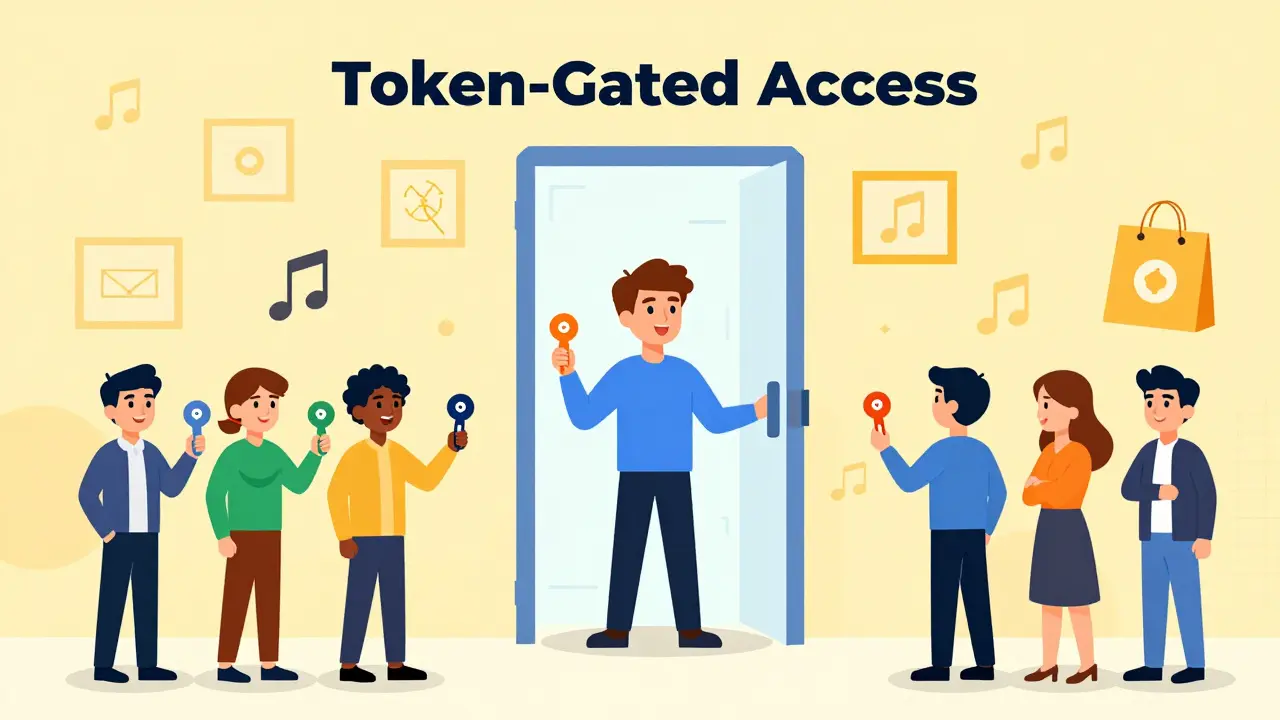
- Token-Gated Access: Use tokens to gate Discord channels, unreleased tracks, or private newsletters. Musicians report 20-35% revenue increases in the first six months by gating exclusive content.
- Voting Rights: Let holders vote on future creative decisions. Roll Protocol’s integration with Snapshot.org enables gasless voting, giving fans a say in album covers, tour dates, or product designs.
- Revenue Sharing: Some platforms allow creators to share a percentage of royalties with token holders. The World Economic Forum found that platforms enabling revenue sharing demonstrate 3.2x higher creator retention than pure access-token models.
- E-commerce Discounts: Integrate with Shopify to offer discounts to token holders. Rally’s 1,200+ storefronts use this model to drive repeat purchases.
Avoid promising financial returns. As legal guidance from OSL Academy’s 2024 Creator Compliance Guide warns, promising profits triggers securities regulations. Focus on promotional benefits, access, and community perks instead.
Implementation Pitfalls and How to Avoid Them
Launching a social token is easy. Keeping it alive is hard. Fifty-seven percent of token projects that failed within one year lacked consistent engagement mechanics beyond the initial sale (TokenMinds post-mortem analysis).
Here are the most common mistakes:
- Ignoring Wallet Onboarding: Sixty-five percent of creators report fan confusion about connecting crypto wallets. Provide clear, step-by-step guides. Consider using platforms with simplified on-ramps like Rally, which reduces setup time from weeks to hours.
- Overcomplicating Governance: Don’t start with complex DAO structures unless you have a technically sophisticated audience. Start simple: token-gated access. Add governance later.
- Neglecting Security: Twenty-three percent of social tokens created on no-code platforms between 2022-2023 contained critical smart contract vulnerabilities. Always choose platforms that mandate third-party audits. Roll Protocol demonstrates strong security practices in this area.
- Underestimating Community Management: Tokens amplify your voice. If you are not engaging daily, the silence will be deafening. Budget time for community interaction, not just content creation.
Documentation quality matters. Rally scores 4.6/5 in user assessments with 127 tutorial videos, while newer platforms like SolSocial score 3.1/5 with minimal support. Choose a platform with robust resources if you are new to Web3.
Regulatory Landscape and Future Outlook
The regulatory environment is tightening. The SEC’s April 2024 guidance clarified that tokens offering predominantly promotional benefits avoid securities classification, while those promising revenue shares face stricter scrutiny. An ongoing investigation into 17 social token platforms announced in February 2025 focuses on potential unregistered securities offerings.
Despite this, the market is growing. The social token platform market reached $1.2 billion in 2024 with 38% year-over-year growth (Grand View Research, January 2025). Enterprise adoption is accelerating, with 29% of Fortune 500 companies experimenting with community tokens for customer loyalty. Starbucks’ Odyssey program processed 1.2 million token transactions in Q4 2024 alone.
Looking ahead, Gartner predicts social token platforms will integrate with 80% of major social media channels by 2027. The Token Standards 2025 initiative, a consortium including the Ethereum Foundation and Solana Labs, aims to establish interoperable standards by Q3 2025. This will reduce fragmentation and make it easier for fans to hold tokens across different ecosystems.
For creators, the message is clear: the window to establish early authority is open. Platforms prioritizing genuine utility over speculation will dominate. Start small, focus on community value, and treat your social token as a tool for connection, not just cash.
What is the best social token platform for beginners?
Rally is widely considered the best starting point due to its no-code interface, comprehensive documentation, and low barrier to entry. Ninety-two percent of users launch successfully within 48 hours. It handles KYC and wallet setup automatically, reducing technical friction.
Are social tokens legal in the US?
Yes, provided they do not promise financial returns. The SEC’s April 2024 guidance states that tokens offering primarily promotional benefits, access, or community perks are not classified as securities. Avoid revenue-sharing models unless you consult legal counsel.
How much does it cost to launch a social token?
Costs vary by platform. Rally offers a free basic tier with a 15% fee on premium features. Roll Protocol charges a $299 setup fee plus 3% on secondary sales. Kanga Exchange charges a flat $499 per launch. Additionally, consider blockchain gas fees, which average $1.20 on Ethereum.
Can I use social tokens for e-commerce?
Yes. Platforms like Rally and Roll integrate with Shopify, enabling token-gated stores. Fans must hold your token to purchase exclusive merchandise. This creates a closed-loop economy that rewards loyal supporters.
Which blockchain is better for social tokens: Ethereum or Solana?
Ethereum offers deeper liquidity and wider exchange integration, making it better for established creators. Solana provides faster speeds and lower fees, ideal for high-volume interactions and emerging creators. Cross-chain platforms like Rally now allow operation on both.
 Finance

Manish Prajapat
June 11, 2026 AT 03:49I have been following the evolution of social tokens since the early days, and it is fascinating to see how the infrastructure has matured. The shift from pure speculation to utility-based engagement is exactly what was needed for long-term sustainability. I agree with the assessment that Rally offers the most accessible entry point for creators who are not technically inclined. However, the reliance on Ethereum gas fees remains a significant barrier for microtransactions, which limits the potential for high-frequency interactions like tipping or voting. Solana’s speed is undeniable, but the network stability issues mentioned in the article are a legitimate concern for professional creators. It seems we are at a pivotal moment where cross-chain solutions will become essential rather than optional.
John Doe
June 11, 2026 AT 05:10THIS IS EXACTLY WHAT WE HAVE BEEN WAITING FOR! The numbers don't lie, and the 320% jump in revenue is absolutely staggering. I am so tired of platforms changing algorithms overnight and destroying our reach. Owning your audience through tokens feels like the only real way forward. We need to stop playing by their rules and start building our own economies. Let's go creators!
Skm Shubham
June 11, 2026 AT 18:37Typical hype piece. You ignore the massive regulatory risks and focus on the shiny new toys. The SEC investigation mentioned is just the tip of the iceberg. Most of these 'utility' tokens are thinly veiled securities, and creators are walking into a legal minefield without even realizing it. The 57% failure rate is not due to lack of engagement mechanics; it is because the fundamental economic model is flawed. Fans do not want to hold volatile assets tied to a creator's ego; they want content. This whole space is a bubble waiting to burst, and those promoting it as an 'essential tool' are either ignorant or malicious.
Rob Aronson
June 12, 2026 AT 20:41From a technical standpoint, the distinction between the blockchain layer and the application interface is crucial. 🧠 Many creators overlook the importance of smart contract audits, especially when using no-code platforms. The mention of Roll Protocol’s multi-sig wallets is spot on for governance, but the learning curve is steep. For those interested in deeper integration, understanding ERC-20 standards and liquidity pools is non-negotiable. The future lies in interoperability, and Token Standards 2025 could be a game-changer if implemented correctly. 🚀
Kwon Bill
June 14, 2026 AT 09:45In many Asian markets, the concept of community ownership is already deeply embedded in fan culture. Social tokens provide a digital framework for this existing behavior. The integration with Shopify is particularly interesting for e-commerce, allowing for seamless token-gated experiences. However, cultural nuances must be considered when designing token utilities. What works for a Western musician may not resonate with a global audience. Cross-cultural engagement strategies will be key to maximizing the potential of these platforms.
Danna Charris
June 15, 2026 AT 23:27Rally is fine for amateurs. If you are serious about building a sustainable ecosystem, you need the governance features of Roll Protocol. The $299 setup fee is negligible compared to the long-term value of having control over your treasury. Don't let the 'ease of use' fool you into choosing a platform that lacks depth.
Fede Faith
June 17, 2026 AT 20:38I have been using Torum for my niche community, and the engagement metrics are impressive. The AI-powered scoring system helps identify true supporters, which allows for more personalized interactions. While the utility outside the ecosystem is limited, the internal dynamics create a strong sense of belonging. For creators focused on community building rather than financial speculation, Torum offers a unique value proposition. Just make sure to engage daily, as silence can quickly erode trust.
Josh Dodson
June 18, 2026 AT 19:21hey guys i think this is really cool stuff! i tried rally and it was super easy to set up. took me like an hour lol. the shopify integration is awesome for selling merch. just wish the fees were lower but its worth it for the access. keep grinding everyone! 💪
Suman Patil
June 20, 2026 AT 13:35The energy around this topic is palpable! 🌟 As someone who bridges traditional media and Web3, I see immense potential in leveraging social tokens for community empowerment. The key is education. Creators must understand that tokens are tools for connection, not just cash grabs. By focusing on utility and genuine engagement, we can build resilient ecosystems that withstand market fluctuations. Let's collaborate and share best practices to elevate the entire creator economy. Together, we can redefine the relationship between artist and audience.
Kumaran sowkarpet
June 20, 2026 AT 19:24Very informative guide. In India, we are seeing a lot of interest in crypto among younger demographics. The low cost of transactions on Polygon makes it attractive for micro-payments. However, regulatory clarity is still lacking here. Creators need to be cautious about compliance. The step-by-step guides mentioned are essential for onboarding fans who are new to crypto. Keep up the good work in simplifying complex concepts. 👍
Mauricio Contreras Loredo
June 21, 2026 AT 07:54Oh great, another 'guide' telling us to give away our money to buy 'community'. Sounds like a pyramid scheme with extra steps. But sure, let's pretend that holding a token means I care more about your art. Spoiler alert: I don't. I just want free content. But hey, if you want to complicate things with wallets and gas fees, be my guest. I'll stick to liking posts for free.
sreeja boora
June 23, 2026 AT 05:21This development raises serious concerns regarding national security and economic sovereignty. The influx of foreign-controlled blockchain protocols poses a threat to domestic financial systems. We must ensure that any adoption of such technologies aligns with our national interests and regulatory frameworks. Unchecked proliferation of decentralized finance instruments can undermine established monetary policies. Caution is advised.
Grace Newman
June 24, 2026 AT 06:39One must consider the broader implications of centralized entities controlling the narrative around decentralization. The SEC's involvement is merely a facade to maintain control over financial innovation. These platforms are likely backdoored, allowing surveillance of user transactions under the guise of KYC compliance. Trust no one. The true path to freedom lies in fully anonymous, unregulated networks. Be vigilant.
Annemarie Fitzgerald
June 24, 2026 AT 17:41The existential dread of algorithmic dependency is profound. Social tokens offer a fleeting illusion of autonomy. Are we truly owning our audience, or merely shifting the locus of control from corporate algorithms to cryptographic ledgers? The philosophical implications are staggering. We are trading one master for another, albeit a more transparent one. Or are we? The nature of value itself is being redefined, leaving us adrift in a sea of speculative meaning. How do we find authenticity in a tokenized world?
Abby Sivertsen
June 25, 2026 AT 17:01I've seen both sides of this coin. On one hand, the direct connection is powerful. On the other, the toxicity that can arise from financialized communities is alarming. When fans feel entitled to influence creative decisions based on token holdings, it can stifle artistic integrity. Balance is key. Use tokens for access and perks, not for dictating creative direction. Protect your vision while nurturing your community.
Benjamin Eisen
June 27, 2026 AT 09:09I'm curious about the long-term retention rates for token holders. Do they stay engaged after the initial novelty wears off? The article mentions 57% failure rate, which is concerning. Maybe the issue isn't the technology but the expectation management. Creators need to set realistic goals and communicate clearly about what tokens unlock. Transparency builds trust. What do others think about this aspect?
Kenneth Riley
June 28, 2026 AT 23:02you people are missing the point entirely. this isnt about tech its about power dynamics. the platforms are extracting value from creators just like social media did but now they call it 'empowerment'. laughable. roll protocol is just as exploitative with its fees. wake up sheeple. the house always wins unless you change the game completely. stop buying into the narrative.
ravi mahla
June 29, 2026 AT 01:07Haha, typical Reddit cynicism. Look, if you want to sit in the dark and complain, be my guest. I'm out here building something real. The sarcasm doesn't change the fact that creators are earning more and engaging better. Try it once before you dismiss it. You might surprise yourself. 😉
Mark Brunschwiler
June 29, 2026 AT 02:27I feel drained just reading all this negativity. Why can't we celebrate progress? Yes, there are challenges, but look at the opportunities. My partner used to say that every new technology brings fear, but those who adapt thrive. I miss the days when we could just enjoy art without worrying about blockchains. But here we are. Let's try to find joy in the journey, not just critique the destination.
Sonya O'Brien
June 30, 2026 AT 19:22I have spent considerable time analyzing the various platforms mentioned, and I find myself leaning towards a hybrid approach. While Rally offers unparalleled ease of use for initial deployment, the limitations imposed by its fee structure on premium features become increasingly burdensome as one scales operations. Conversely, Roll Protocol presents a more robust framework for governance, albeit with a steeper learning curve that may deter less technically proficient users. The critical factor, however, remains the consistency of engagement. Without a dedicated strategy for community interaction, even the most sophisticated tokenomics will fail to sustain momentum. It is imperative that creators view these tools not as panaceas but as components within a broader ecosystem of fan relations. The integration of e-commerce functionalities further enhances the utility, providing tangible benefits that transcend mere speculative value. Ultimately, success hinges on the ability to deliver continuous value to token holders, fostering a sense of ownership and participation that resonates deeply with the community.
Filbert Reeves
July 2, 2026 AT 05:18Everyone is jumping on the bandwagon without considering the underlying instability of these networks. The SEC investigation is just the beginning. Governments will crack down harder, and then what? All those 'valuable' tokens will become worthless digital paper. And don't get me started on the environmental impact of proof-of-work chains, even though Ethereum switched to proof-of-stake. It's still a mess. The whole idea of 'owning your audience' is a myth. You're just renting attention in a different currency. Wake up before you lose everything. The crash is coming, and it will be brutal. Prepare accordingly or perish.
Nick Rice
July 2, 2026 AT 06:53Listen up folks. If you are going to do this, do it right. No half-measures. Pick a platform that aligns with your long-term vision. Don't just follow trends. Research thoroughly. Engage with your community authentically. Provide value. If you treat your fans like ATMs, you will fail. But if you build a genuine connection, the rewards are substantial. Stay disciplined. Stay focused. Success is not given; it is earned. Now get to work.
Amit Thakur
July 3, 2026 AT 00:14The jargon-heavy explanations often alienate potential adopters. We need simpler narratives. Focus on the benefits: direct support, exclusive access, community voice. Avoid overwhelming users with technical details about gas fees and smart contracts unless necessary. Empathy is key. Understand the fears and hesitations of your audience. Address them directly. Motivate them to take the first step. Once they experience the value, they will become advocates. Let's make Web3 accessible to everyone, not just the tech-savvy elite.
Eric Scheinberg
July 4, 2026 AT 15:09The regulatory landscape is evolving rapidly. Creators must remain informed about compliance requirements. The distinction between securities and utility tokens is nuanced. Legal counsel is advisable for larger projects. Documentation should be clear and concise. Ambiguity invites scrutiny. Prioritize transparency. Build trust through adherence to regulations. This ensures longevity and credibility in the marketplace.
pankaj chawla
July 4, 2026 AT 23:25I agree with the points raised about platform selection. Each has its strengths. Collaboration between creators to share insights would be beneficial. We can learn from each other's successes and failures. Let's build a supportive community where knowledge is freely exchanged. Together we can navigate this new landscape effectively.