


Imagine holding Bitcoin in Riyadh today. Are you breaking the law? The answer isn't a simple yes or no, and that ambiguity is exactly where most investors get tripped up. While headlines often scream about bans, the reality on the ground in Saudi Arabia is far more nuanced. You can trade on international platforms, but your local bank might freeze if you try to move money too aggressively. This article cuts through the noise to explain exactly where Saudi crypto regulation stands in 2026, what the new rules mean for your wallet, and how the Kingdom’s push toward digital assets fits into its massive economic overhaul.
The Legal Gray Area: Banned or Just Unregulated?
Let’s clear up the biggest misconception first. Is crypto illegal in Saudi Arabia? Technically, no. But is it fully legal tender? Also no. The confusion stems from a 2018 statement by a government committee declaring virtual currencies "illegal and unlicensed." That sounds scary, right? But fast-forward to 2026, and the picture has shifted. The Saudi Central Bank (SAMA) and the Capital Market Authority (CMA) have moved away from outright prohibition toward a risk-averse framework. They treat cryptocurrencies as assets rather than currency. This means owning Bitcoin or Ethereum isn’t a crime, but using them to buy coffee at the mall still isn’t officially recognized. Individuals legally trade on regulated international platforms like Binance or Coinbase, while banks remain strictly prohibited from facilitating these transactions without explicit SAMA approval. It’s a tightrope walk between innovation and control.
Who Calls the Shots? Understanding SAMA and CMA
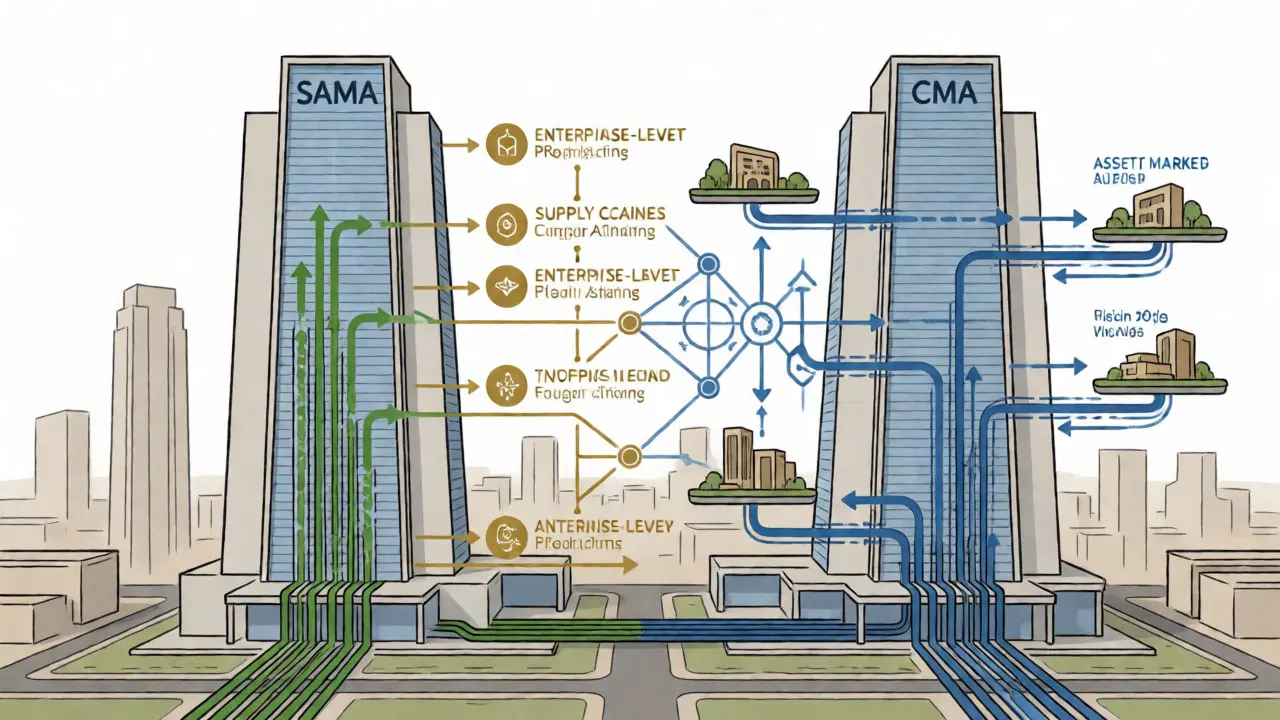
You need to know who holds the keys to this kingdom’s digital vault. Two main bodies dominate the landscape. First, there’s SAMA, which oversees monetary policy and banking stability. If your issue involves moving fiat currency in or out of the country related to crypto, SAMA is your gatekeeper. Second, the CMA handles securities and market conduct. As of late 2025, the CMA signaled plans to issue specific guidelines for crypto asset service providers, aiming to establish licensing requirements. This dual oversight creates a complex compliance environment. Banks must wait 6-9 months for approval to engage in any crypto-related activity, a bottleneck that slows down institutional adoption but protects the traditional financial system from volatility. For you, this means direct bank transfers for crypto purchases are still tricky, pushing many users toward peer-to-peer methods or international exchanges that don’t rely on local banking rails for every transaction.
Vision 2030 and the Blockchain Paradox
Why does a country with strict crypto trading rules invest billions in blockchain technology? The answer lies in Vision 2030. The Kingdom wants to diversify its economy beyond oil, and blockchain is seen as a critical tool for transparency and efficiency in supply chains, real estate, and government services. Notice the distinction: the government loves the underlying tech but remains cautious about the speculative assets. In 2024, Saudi Arabia joined the mBridge project alongside the UAE, China, Thailand, and Hong Kong. This initiative tests cross-border digital currencies using central bank digital currency (CBDC) technology. It’s not about letting everyone mine Bitcoin; it’s about making international trade faster and cheaper. The Ministry of Communications and Information Technology allocated SAR 1.2 billion ($320 million) specifically for blockchain initiatives in the 2025 budget. So, while retail traders face hurdles, enterprise-level blockchain projects are getting the royal green light.
| Entity | Status | Key Restriction/Feature | Regulatory Body |
|---|---|---|---|
| Bitcoin & Altcoins | Legal to own/trade internationally | Not legal tender; banks restricted | SAMA / CMA |
| Central Bank Digital Currency (CBDC) | In pilot/testing phase | Part of mBridge & Project Aber | SAMA |
| Blockchain Infrastructure | Actively encouraged | Funded via Vision 2030 budgets | Ministry of Communications |
| Crypto Mining | Gaining recognition | ~4% of global mining; renewable focus | CST / Energy Sector |
Tax Implications: What Do You Actually Owe?
Money talks, and the taxman listens. Here’s the good news for individuals: Saudi Arabia currently imposes no capital gains tax on cryptocurrency holdings for private individuals. If you bought Bitcoin five years ago and sold it today for a profit, you generally keep that gain. However, businesses operate under different rules. Companies engaging in commercial crypto activities face a 15% capital gains tax, a 20% corporate income tax, and a 2.5% zakat levy. Zakat is an Islamic wealth tax that applies to net worth, adding another layer of complexity for corporate entities. Because there is no standalone crypto tax code yet, businesses must navigate general financial regulations. Misclassifying a transaction can lead to penalties, so accurate record-keeping is non-negotiable. For the average trader, the lack of personal tax liability makes Saudi Arabia one of the more attractive jurisdictions in the Middle East, provided you stay compliant with AML laws.
The Role of Sharia Compliance and Fatwas
In a nation where religious law influences civil life, the stance of Islamic scholars matters. Initially, skepticism surrounded crypto due to its volatility and lack of intrinsic value. However, a significant shift occurred when high-ranking religious leaders issued fatwas confirming that Bitcoin operations align with Sharia principles, provided they avoid excessive speculation (gharar). This endorsement was crucial. It removed a major cultural barrier to adoption. Now, many Saudis feel comfortable participating in the market because their faith doesn’t explicitly forbid it. This religious validation complements the regulatory framework, creating a unique model where Islamic finance principles guide digital asset integration. It’s not just about law; it’s about legitimacy in the eyes of the community.

Market Growth and Demographic Drivers
Don’t let the strict rules fool you into thinking the market is dead. It’s exploding. By 2024, the Saudi crypto-asset market was valued at $23.1 billion, with projections hitting $45.9 billion by 2033. Why such rapid growth? Demographics. Over 63% of the population is under 30. These young Saudis are tech-savvy, financially literate, and eager for alternatives to traditional savings accounts. Approximately 4 million people, or 11.4% of the population, already own cryptocurrency. Transaction volumes surged by 153% year-over-year, driven largely by institutional interest and a growing appetite for altcoins. Unlike global averages, Saudi investors show a higher tolerance for diverse assets, moving beyond just Bitcoin. Platforms like Nuqtah, the first regulated NFT platform approved in late 2024, signal that the ecosystem is maturing beyond simple trading into digital ownership and art.
Future Outlook: What Happens Next?
So, where is this heading? Expect clearer definitions soon. The CMA and SAMA are working toward joint guidelines that will formalize registration for crypto service providers. We’re likely to see a domestic CBDC pilot launch fully integrated into the banking system within the next year. This won’t replace Bitcoin, but it will offer a state-backed digital alternative for payments and settlements. For businesses, obtaining a license will become standard practice, reducing the current uncertainty. The trend is unmistakable: Saudi Arabia is building a bridge between its conservative financial traditions and the future of digital finance. The restrictions aren’t disappearing, but they are becoming structured pathways rather than walls. If you’re planning to enter the market, now is the time to understand the compliance landscape before the formal rules tighten further.
Is Bitcoin legal to hold in Saudi Arabia?
Yes, holding Bitcoin is not illegal. While it is not recognized as legal tender, individuals can legally own and trade cryptocurrencies on international platforms. However, using it for daily payments is not officially supported, and banks cannot facilitate these transactions without special permission.
Do I pay taxes on crypto profits in Saudi Arabia?
Individuals do not pay capital gains tax on cryptocurrency profits. However, businesses engaged in crypto trading are subject to a 15% capital gains tax, 20% corporate income tax, and a 2.5% zakat levy.
Can I use my Saudi bank account to buy crypto?
Directly, it is difficult. Banks are prohibited from engaging in crypto transactions without explicit approval from SAMA. Most users rely on peer-to-peer transfers or international exchanges that support local payment methods without direct bank-crypto integration.
What is the mBridge project?
The mBridge project is a multi-central bank digital currency initiative involving Saudi Arabia, the UAE, China, Thailand, and Hong Kong. It aims to improve cross-border payments using distributed ledger technology, focusing on institutional efficiency rather than public crypto trading.
Is crypto mining allowed in Saudi Arabia?
Yes, mining has gained legal recognition under specific frameworks. Saudi Arabia accounts for approximately 4% of global mining activities, with a strong emphasis on using renewable energy sources to align with sustainability goals.
 Finance