

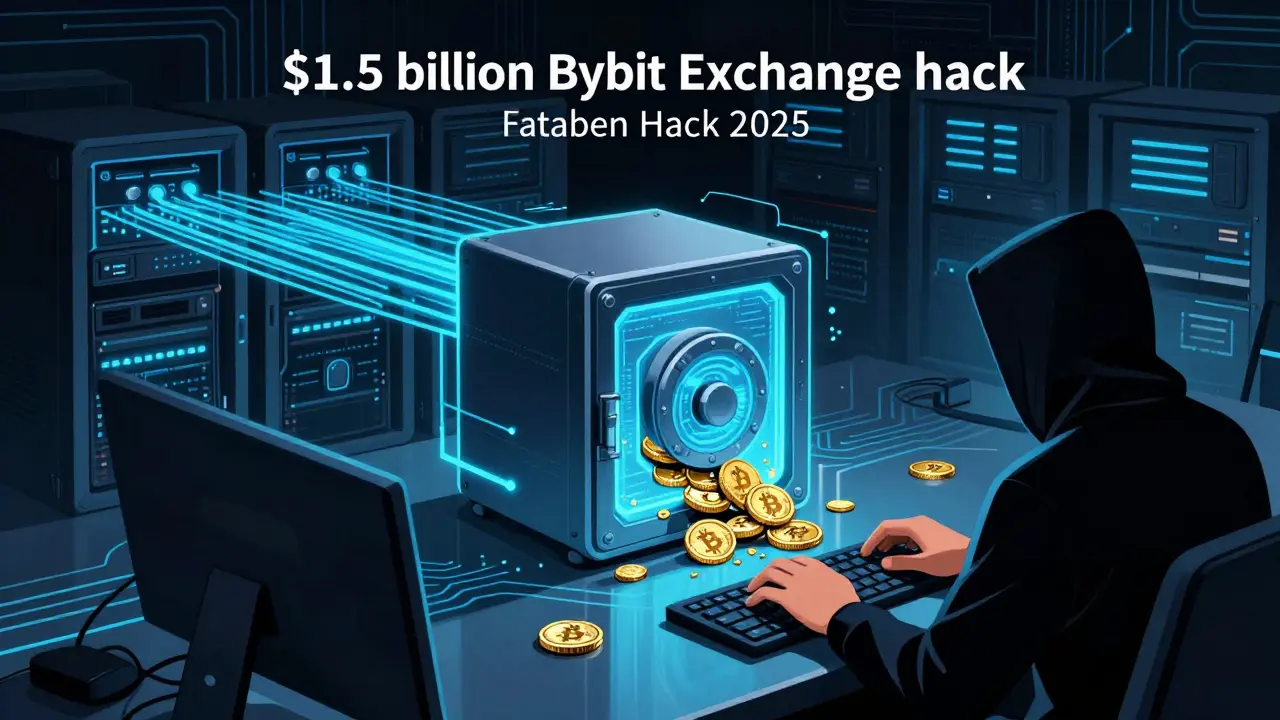
In February 2025, hackers stole $1.5 billion from Bybita cryptocurrency exchange targeted in the largest single theft in history in February 2025. According to TRM Labsa blockchain analytics firm tracking North Korean cryptocurrency operations, North Korean state-sponsored hacking groups have stolen over $3 billion in cryptocurrency between 2017 and 2023 through 58 documented cyberattacks, with 2024 and 2025 seeing accelerated activity including the $1.5 billion Bybit exchange hack in February 2025-the largest single cryptocurrency theft in history as confirmed by Chainalysis on March 3, 2025. The regime's primary cash-out methodology evolved from early direct exchange withdrawals to complex multi-stage laundering processes involving cross-chain bridges, decentralized exchanges, and regional criminal partnerships, as documented in a May 2025 Financial Crimes Enforcement Network (FinCEN) report. The United Nations Security Council estimates that cryptocurrency operations now provide 20-30% of North Korea's foreign currency reserves, with the Harvard Belfer Center reporting that $2.1 billion in stolen cryptocurrency was successfully converted to fiat between 2017-2025, directly funding the Kim regime's weapons programs and evading UN Security Council Resolution 2397 sanctions which cap North Korea's annual oil imports at 500,000 barrels.
The Four-Stage Cash-Out Process
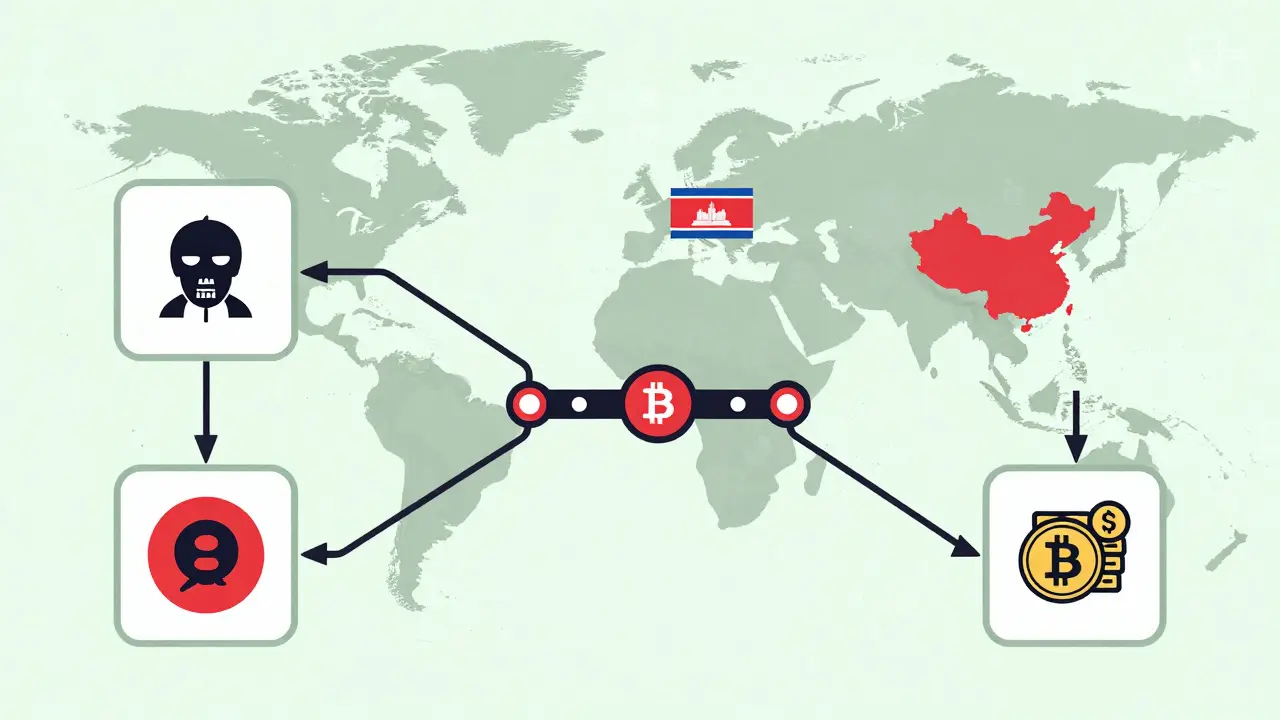
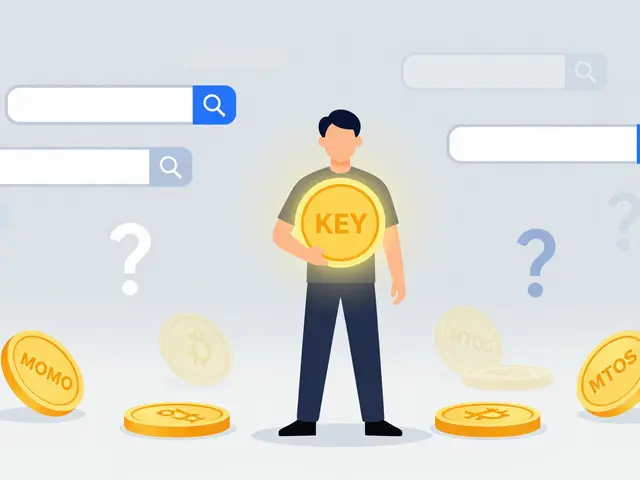
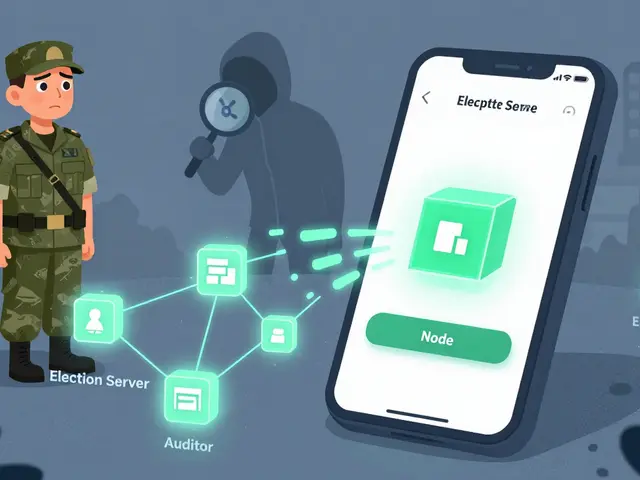
North Korea's cash-out process follows a precise sequence. First, they steal funds through phishing or infrastructure compromises-68% of attacks start this way. Next, they move assets across multiple blockchains to hide the trail. Using bridges like Ren Bridge or Avalanche Bridge, they shift funds between networks. Then, they convert most of the stolen crypto to Bitcoin-82% of final conversions target Bitcoin due to its liquidity. Finally, they convert Bitcoin to fiat through third-party networks with weak KYC checks.
Global Hubs for Fiat Conversion
Cambodia has become North Korea's primary cash-out hub. FinCEN's May 2025 report identified Huione Group as a key player, processing $37.6 million in North Korean-linked crypto between 2021-2025. Huione's subsidiaries handle everything from scams to issuing non-freezable stablecoins. China remains a secondary hub despite scrutiny. The Department of Justice indicted two Chinese nationals in February 2024 for processing $250 million through 37 bank accounts with minimal documentation. Meanwhile, Macau casinos accept crypto with just 5% KYC checks-far below the 95% standard in regulated markets.
IT Workers as Money Laundering Agents
North Korea deploys thousands of IT workers abroad to facilitate cash-outs. The UN Panel of Experts reported they generate $600 million annually. These workers use fake identities-89% claim to be from India or Vietnam-to get jobs at exchanges. Once inside, they create backdoors for fund movement. In 2024 alone, CSIS documented 27 cases where North Korean staff at Chinese exchanges enabled wallet-to-bank transfers in just 12 hours, bypassing standard fraud detection.
How Methods Have Evolved Since 2017
Early operations relied on mixing services like Tornado Cash, which processed $1.2 billion in stolen funds before its 2022 shutdown. Now, North Korea uses 'flood the zone' tactics-executing 400-500 transactions daily across platforms. According to CSIS, 73% of stolen assets pass through three or more blockchains before conversion. The Ronin Bridge hack in March 2022 saw $625 million stolen using compromised validator keys. Today, experts say launderers achieve 92% success rates in converting crypto to fiat within 90 days-up from 65% in 2020.
Current Challenges and Regulatory Pressure
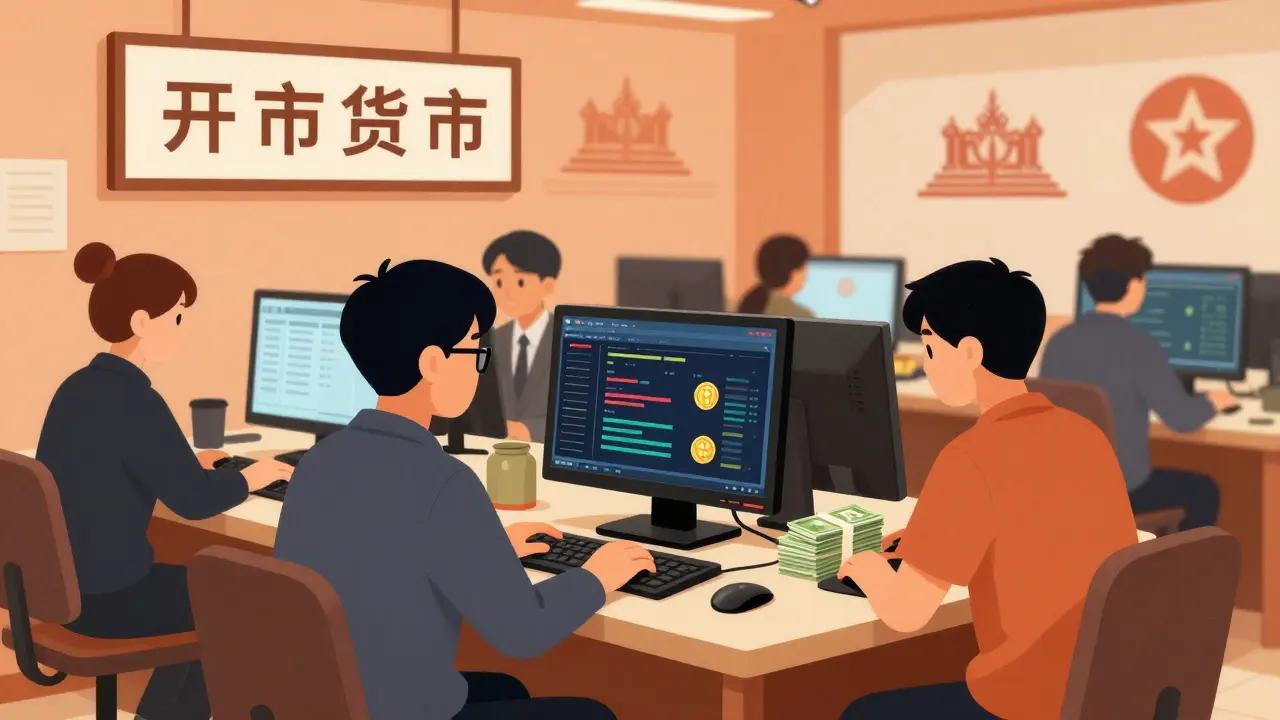
Despite their adaptability, North Korea faces growing hurdles. The Crypto-Asset Reporting Framework now requires exchanges to share beneficiary info across 100+ jurisdictions. OFAC reported a 22% drop in successful cash-outs in Q1 2025. However, the regime is building its own infrastructure-FinCEN identified 14 North Korean-controlled 'crypto cafes' in Cambodia's Sihanoukville, each processing $500,000-$2 million monthly in cash transactions with no ID required.
Future Trends in North Korea's Cash-Out Methods
North Korea is now experimenting with 'stablecoin arbitrage laundering'-converting stolen assets to USDC via decentralized exchanges, then exploiting price gaps between regional markets. The FBI warned in April 2025 that they've recruited 37 blockchain developers to build custom cross-chain protocols capable of processing $500 million+ transactions. But Treasury Secretary Janet Yellen stated in May 2025 that success rates could drop to 40% by 2027 due to coordinated international action.
How does North Korea hide the origin of stolen cryptocurrency?
North Korea uses cross-chain bridges to move stolen assets across multiple blockchains like Binance Smart Chain and Solana. They execute hundreds of transactions daily to overwhelm blockchain analysts, a technique called 'flood the zone.' This makes it extremely difficult to trace the funds back to the original theft.
Why does North Korea prefer Bitcoin for cash-outs?
Bitcoin is the preferred intermediary currency due to its high liquidity and widespread acceptance. Over 82% of stolen crypto is converted to Bitcoin before final fiat conversion because it's easier to exchange for cash without raising red flags compared to other cryptocurrencies.
What role does Cambodia play in North Korea's cash-out operations?
Cambodia has become North Korea's primary fiat conversion hub due to its loosely regulated financial sector. FinCEN identified Huione Group, a key player in processing $37.6 million in North Korean-linked crypto between 2021-2025. Huione's subsidiaries issue non-freezable stablecoins and facilitate scams, while 'crypto cafes' in Sihanoukville process up to $2 million monthly in cash transactions with no identification required.
How do North Korean IT workers assist in money laundering?
North Korea deploys thousands of IT workers abroad who assume false identities to work at cryptocurrency exchanges and fintech firms. These workers create backdoors for fund movement, enabling wallet-to-bank transfers in as little as 12 hours-bypassing standard 72-hour fraud detection windows. The UN reported they generate $600 million annually through these operations.
What challenges does North Korea face in cashing out cryptocurrency?
Global regulatory pressure has made cash-outs harder. The Crypto-Asset Reporting Framework now requires exchanges to share beneficiary information across 100+ jurisdictions. OFAC reported a 22% decrease in successful cash-outs in Q1 2025. However, North Korea continues adapting by building its own infrastructure like 'crypto cafes' in Cambodia, though experts predict success rates will drop to 40% by 2027 due to coordinated international action.
 Finance


Michelle Anderson
February 6, 2026 AT 22:21North Korea's crypto thefts are a clear threat. They need to be stopped immediately. Period.
Joshua Herder
February 8, 2026 AT 21:15While the article focuses on North Korea's crypto thefts, it's important to consider the broader geopolitical context. The United States has a history of sanctions that often hurt civilian populations more than regimes. For instance, the sanctions on Iraq in the 90s led to widespread suffering. Similarly, here, the North Korean people are suffering under these measures while the regime finds ways around them. The real issue isn't just the stolen crypto but the systemic failures in international policy that allow such situations to persist. We need to address the root causes rather than just reacting to symptoms. It's ironic how the same nations pushing for sanctions also engage in their own questionable financial practices. The global financial system is built on hypocrisy. Perhaps if we focused on diplomacy instead of punitive measures, we could find a sustainable solution. But as long as the West continues to act unilaterally, the cycle of conflict will continue. The complexity of this issue demands nuanced understanding, not simplistic narratives. We should be asking why these sanctions are so easily circumvented and how to strengthen international cooperation. The answer isn't more sanctions but smarter ones. But without addressing the underlying issues, we'll just keep having these incidents. It's time to rethink our approach.
Brittany Coleman
February 9, 2026 AT 17:30it's interesting how the methods have evolved. maybe we should focus on understanding the root causes rather than just punishing. the world is complex. there's always more to the story. perhaps cooperation is better than confrontation. we need to think beyond the headlines.
laura mundy
February 9, 2026 AT 20:32This is ridiculous. How can anyone think this is a minor issue? The regime is using stolen funds to fund weapons. We need to act now. Stop being passive.
Mendy H
February 11, 2026 AT 19:25This analysis is superficial. True experts would address the geopolitical nuances. As it stands, this is amateurish. The author clearly lacks depth. I've seen better work from undergrads. The real issue is the lack of critical thinking in mainstream media. This is why we need more informed discourse. But alas, it seems we're stuck with shallow takes. How disappointing.
Molly Andrejko
February 11, 2026 AT 22:20It's important to remember that behind these statistics are real people. Let's approach this with compassion and seek solutions. Let's work together to find a way forward. We must not lose sight of the human element in these discussions. Every action we take should be guided by empathy. It's crucial to foster dialogue rather than division. Together, we can make a difference. Let's stay hopeful and proactive. This issue is complex, but with unity, we can overcome it. Thank you for raising awareness. Let's keep the conversation going.
sabeer ibrahim
February 12, 2026 AT 02:03This is a clear case of Western hypocrisy. The US has it's own issues. Let's not forget the sanctions are hurting innocent civilians. The real problem is the US foreign policy. It's always the same story. The West blames others while ignoring their own actions. This is why the world is so divided. We need to address the root causes. Sanctions are ineffective. The real issue is systemic inequality. The US needs to change its approach. Otherwise, this cycle will continue.
Deeksha Sharma
February 12, 2026 AT 16:24There's hope in international cooperation. Maybe we can find a way to help North Korea transition peacefully. Let's focus on diplomacy. The key is understanding rather than confrontation. We must work together to build bridges. This isn't just about crypto; it's about human potential. Every solution starts with empathy. Let's not give up on dialogue. Together, we can create a better future. It's time to think outside the box. We have the power to change things. Let's stay positive and proactive.
Udit Pandey
February 14, 2026 AT 02:48The international community must take stronger action. Sanctions must be enforced without exception. This is not a matter of politics but of moral duty. The regime's actions are indefensible. We must not tolerate such behavior. It is imperative that we act decisively. The time for talk is over. Action is required now. This is a clear threat to global security. We must stand firm. There can be no compromise on this issue.
Sharon Lois
February 14, 2026 AT 12:40Of course it's a hoax. The government is hiding the truth. They just want more control. Trust me, I know.
Matt Smith
February 15, 2026 AT 09:24This is so dramatic! 🤦♂️ North Korea is just a bunch of clowns. But seriously, we need to do more. Like, what's the point of all this? 😒
Jesse Pasichnyk
February 16, 2026 AT 00:46North Korea is bad. They steal money. We need to stop them. Simple as that.
Paul Gariepy
February 16, 2026 AT 21:44Hey everyone! Let's talk about this. There's so much to consider here. For example, the use of cross-chain bridges like Ren Bridge to move funds between blockchains. But there are issues with KYC checks in places like Cambodia. The Huione Group is involved, but we need more regulation. It's crucial to track these transactions. Let's work together to find solutions. Also, the IT workers abroad are a big part of this. They create backdoors. We need better international cooperation. Let's stay vigilant!
Brendan Conway
February 17, 2026 AT 05:06Hmm, interesting. I wonder how the tech works. Maybe it's not as complicated as they say. Just a thought.
Katie Haywood
February 17, 2026 AT 06:19Yeah, sure. Another 'deep dive' that's really just the same old stuff. But hey, at least they're trying. 🤷♀️
Jordan Axtell
February 18, 2026 AT 23:36I feel like this is all about power. The real issue is human nature. We're all just trying to survive, right? But North Korea... they're different.
Danica Cheney
February 19, 2026 AT 04:30who cares
Matthew Ryan
February 20, 2026 AT 15:08This is a complex issue. Maybe we need more dialogue. Let's listen to each other.
Taybah Jacobs
February 21, 2026 AT 14:35It is imperative to address this matter with urgency and diligence. We must work together to ensure global security.
Alisha Arora
February 22, 2026 AT 20:22This is so irresponsible. They should be stopped immediately. No excuses.
Mrs. Miller
February 24, 2026 AT 06:59Ah, the usual 'evil regime' narrative. But let's not forget the US has done worse. Hypocrisy much?
Paul Jardetzky
February 25, 2026 AT 21:32Wow! This is huge! 🚀 We need to act fast. Let's get the word out and push for stronger measures. #FightForFreedom
Ryan Chandler
February 27, 2026 AT 00:57The world is watching! This is a critical moment for humanity. We must stand united against this threat. History will judge us.
Ajay Singh
February 27, 2026 AT 01:49We can solve this. International cooperation is key. Let's focus on solutions not blame.