
You probably remember RadioShack as that place where you bought batteries and soldering irons. Fast forward to today, and the brand has reinvented itself in a way few would have predicted: it’s now a decentralized finance protocol on the Polygon network. But don’t let the nostalgia fool you. This isn’t your grandfather’s electronics store. RadioShack is a blockchain-based liquidity protocol designed to solve fragmented trading issues through a unique "Starfish Topology" architecture, not a traditional centralized exchange. If you’re wondering whether this revival has any legs or if it’s just another meme-coin project wearing a familiar jacket, you’re in the right place. We dug into the data, tested the swaps, and looked at what experts are saying to give you the real picture.
What Exactly Is RadioShack on Polygon?
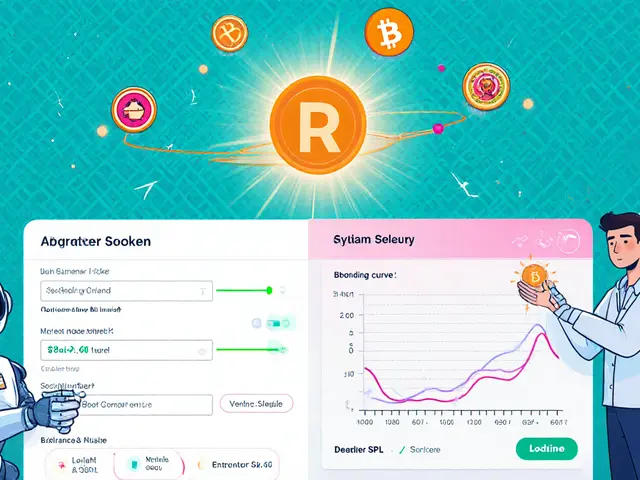
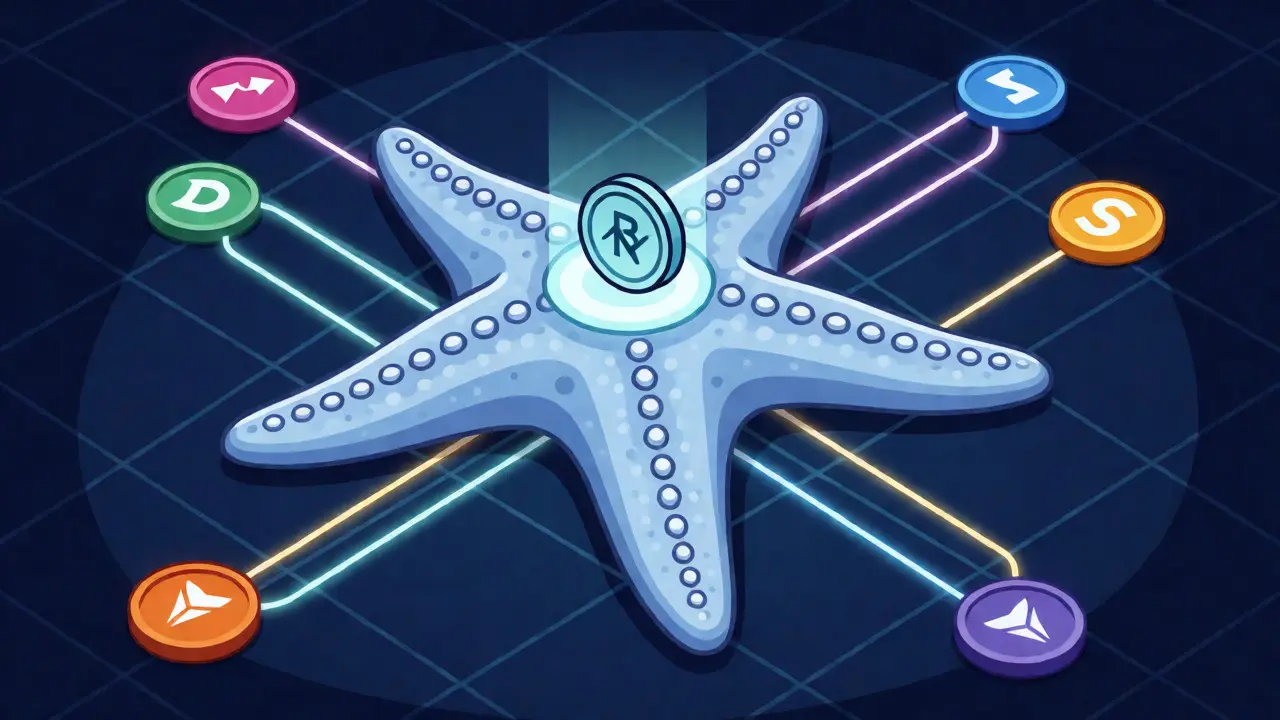
First things first: RadioShack isn’t a standalone exchange like Coinbase or Binance. It’s a Decentralized Exchange (DEX) component called RadioShack Swap, built on the Polygon network. The core idea behind it is addressing a specific pain point in Automated Market Makers (AMMs): liquidity fragmentation. In most DEXs, if you want to trade Token A for Token B, you often have to route through intermediate tokens, which eats up fees and causes slippage. RadioShack tries to fix this with its "Starfish Topology." Imagine a starfish: the center is one big node, and the arms reach out to everything else. In this case, the central node is the RADIO token. Every other token pairs directly with RADIO, creating a hub-and-spoke model that theoretically reduces the number of hops needed for trades.
The RADIO token contract is deployed across multiple chains, including Polygon, Ethereum, Avalanche, and Celo, but its primary activity remains on Polygon. As of late 2025, the token traded around $0.000357, with a market cap hovering near $1 million. That’s tiny compared to giants like Uniswap, but it’s enough to keep the lights on for a niche experiment. The protocol supports standard DeFi features like staking, yield farming, and liquidity pools, aiming to bridge mainstream users into crypto by leveraging the recognizable RadioShack brand name.
The Good, The Bad, and The Slippage
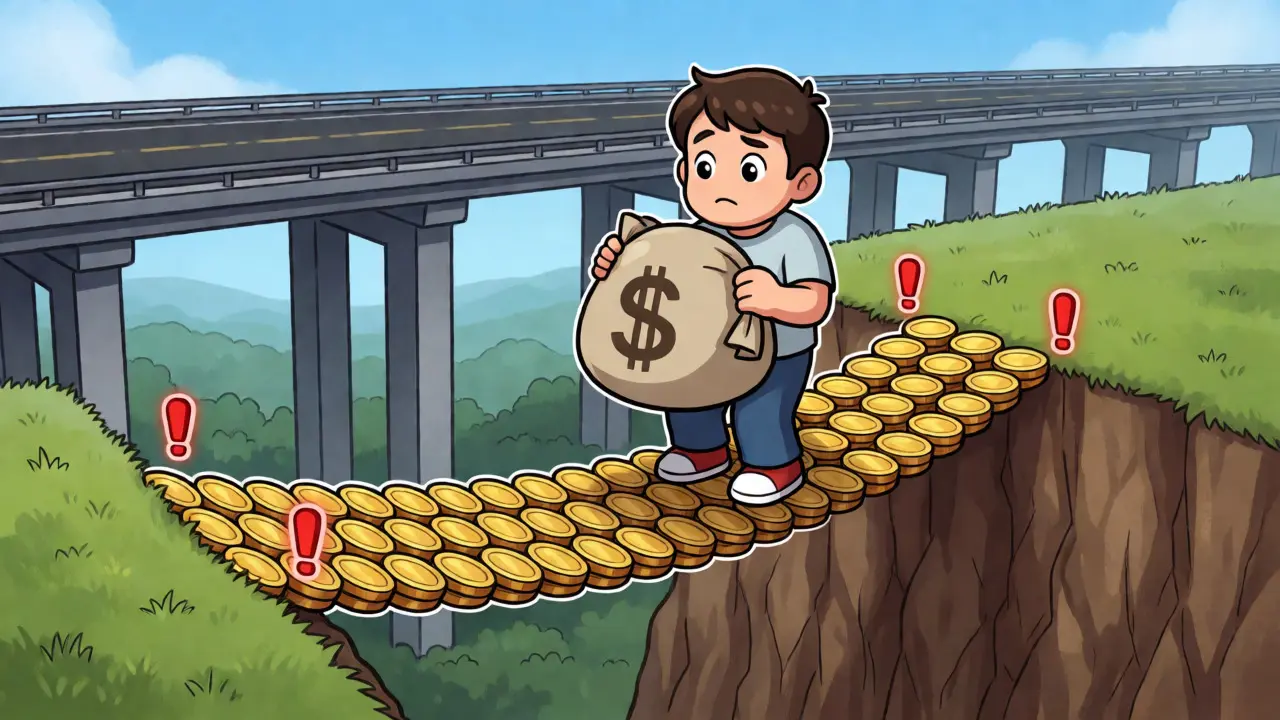
Let’s talk about the user experience because that’s where theory meets reality. If you’re an experienced DeFi user, connecting your wallet-whether it’s MetaMask, Trust Wallet, or Coinbase Wallet-is straightforward. Configuring the Polygon network takes about five to seven minutes if you’ve done it before. The interface is clean, no-frills, and gets the job done. But here’s the catch: liquidity depth is shallow. We’re talking less than $1 million in Total Value Locked (TVL). For small trades under $500, you might barely notice any slippage. But try swapping $2,000 worth of USDC to MATIC, and you could see slippage hit 8% or more. That’s painful.
| Metric | RadioShack Swap | QuickSwap | PancakeSwap (Polygon) |
|---|---|---|---|
| 24h Volume | ~$1.2M (On-chain verified) | $18.3M | $12.7M |
| Total Value Locked (TVL) | $969,800 | Significantly Higher | Significantly Higher |
| Token Pairs Listed | 87 | 1,245+ | Extensive |
| Slippage Risk (> $5k trade) | High | Low | Low |
This lack of depth makes RadioShack impractical for institutional-sized transactions. You’re essentially swimming against the current when you try to move large amounts of capital. Furthermore, the volume reports themselves are confusing. Some sources claim nearly $40 million in trading volume, while on-chain data from CoinMarketCap shows closer to $1.2 million. Always trust the on-chain numbers; they don’t lie. If you see inflated volume claims, be skeptical. It’s likely wash trading or reporting errors.
Is the Starfish Topology Actually Better?
The technical promise of the Starfish Topology is appealing. By forcing all pairs to go through the RADIO token, you simplify routing. No more complex pathfinding algorithms trying to find the cheapest swap between two obscure tokens. However, experts warn that this single-token hub creates systemic risk. Dr. Elena Rodriguez from Messari noted that this approach faces a classic chicken-and-egg problem: you need high liquidity in RADIO to make the topology efficient, but people won’t provide liquidity unless there’s already high trading volume. It’s a tricky loop to break.
Compare this to Uniswap v3 or QuickSwap, which use concentrated liquidity models. Those allow providers to place their funds within specific price ranges, maximizing capital efficiency. RadioShack’s plan to implement a similar concentrated liquidity model by Q4 2025 is crucial. Without it, they remain stuck in a legacy AMM model that struggles with capital efficiency. Until then, you’re paying for convenience rather than optimal pricing.
Community and Support: Where Are They?
If you run into trouble, who do you call? The support infrastructure is minimal. The Telegram community has fewer than 5,000 members, which is a drop in the bucket compared to Uniswap’s 125,000+ Discord members. Documentation is adequate but lacks deep troubleshooting guides. If a transaction fails during network congestion-and they do happen-you’re mostly on your own. Reddit threads from October 2025 highlight mixed experiences: some users praise the simplicity for small trades, while others complain about failed transactions and limited token selection. With only 87 token pairs listed, you won’t find many altcoins here. If you’re looking for the latest memecoin, QuickSwap or SushiSwap will have it long before RadioShack does.
Should You Invest in RADIO Tokens?
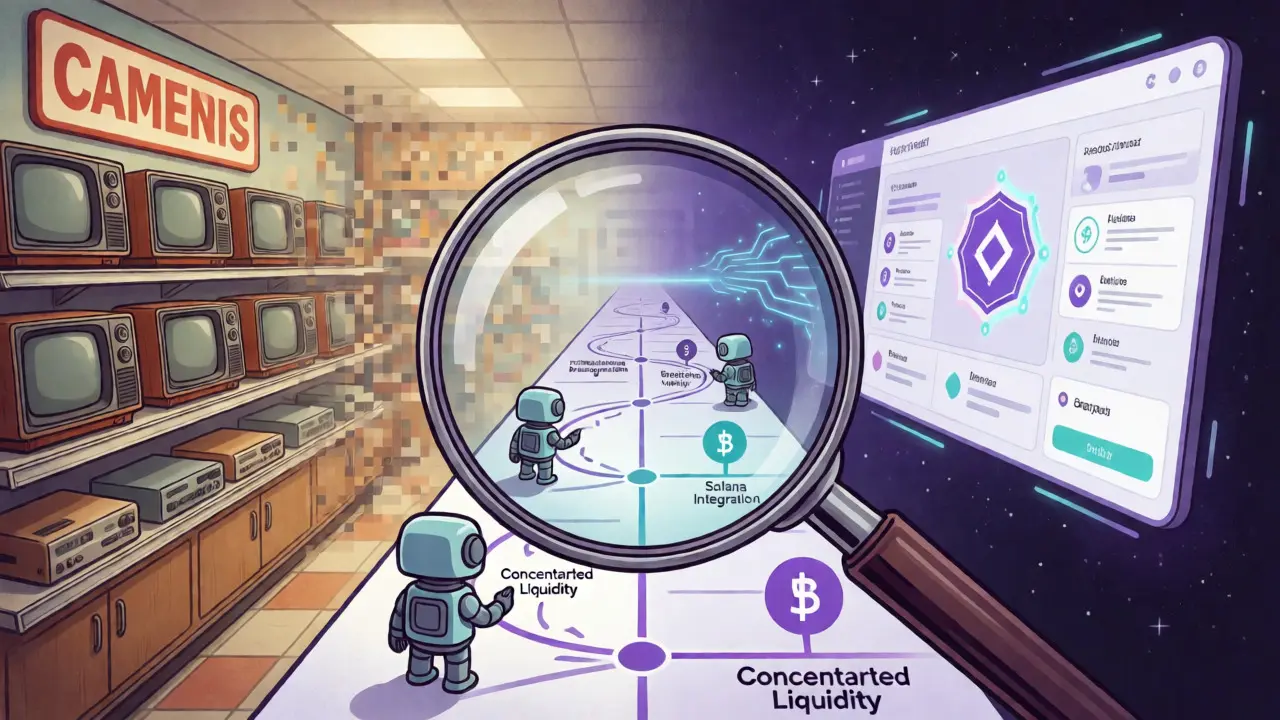
Investing in the RADIO token is a bet on the protocol’s ability to scale. Currently, the market cap is under $1.1 million. That means it’s highly volatile and susceptible to manipulation. One whale moving $50,000 can swing the price significantly. The roadmap includes integrating with Solana and Cosmos by Q2 2026, which could open new doors. But adoption metrics are modest: only about 1,842 unique wallets interacted with the contracts in the last 30 days. Compare that to QuickSwap’s 142,500 active wallets, and you see the gap.
Think of RadioShack as a niche tool. It’s not going to replace your main DEX. Use it if you specifically want to participate in their staking rewards or if you’re betting on the brand recognition helping them attract mainstream users. But for serious trading, especially above $5,000, stick to established platforms with deeper liquidity.
Is RadioShack a safe crypto exchange?
RadioShack operates as a decentralized protocol, meaning you retain custody of your funds via your Web3 wallet. While smart contracts have been audited, the low liquidity and small community mean higher risks compared to established DEXs. Always start with small amounts to test the waters.
Why is the trading volume on RadioShack so inconsistent?
There is a discrepancy between reported marketing volumes (up to $40M) and on-chain data (approx. $1.2M). On-chain data from aggregators like CoinGecko and DEXScreener is generally more reliable. The lower figure reflects actual user activity, while higher figures may include wash trading or cross-chain bridging artifacts.
Can I buy Bitcoin directly on RadioShack Swap?
You typically trade wrapped versions of major assets like WBTC or WETH. Since it is a DEX on Polygon, you cannot deposit native BTC directly. You must bridge your assets to Polygon first, then swap them using the RADIO token as the intermediary hub.
What is the Starfish Topology in simple terms?
It is a liquidity structure where all token pairs connect to a single central token (RADIO), resembling a starfish's shape. Instead of finding a direct path between Token A and Token B, the system routes A -> RADIO -> B. This simplifies routing but requires high liquidity in the central RADIO pool to prevent excessive slippage.
How does RadioShack compare to QuickSwap?
QuickSwap is far superior for general trading due to higher liquidity, more token pairs (1,245+ vs 87), and better volume. RadioShack offers a unique topology and potential staking yields but suffers from low liquidity depth, making it suitable only for small trades or speculative investment in the RADIO token itself.
Final Verdict
RadioShack on Polygon is an interesting experiment in DeFi architecture, but it’s not ready for prime time as a primary exchange. The Starfish Topology solves a real problem, but the execution is hampered by low liquidity and a small user base. If you’re a speculator looking for a low-cap token with brand recognition, RADIO might offer some upside. But if you’re a trader wanting efficient swaps with minimal slippage, look elsewhere. Keep an eye on their upcoming concentrated liquidity update-that’s the make-or-break moment for this project.
 Finance