

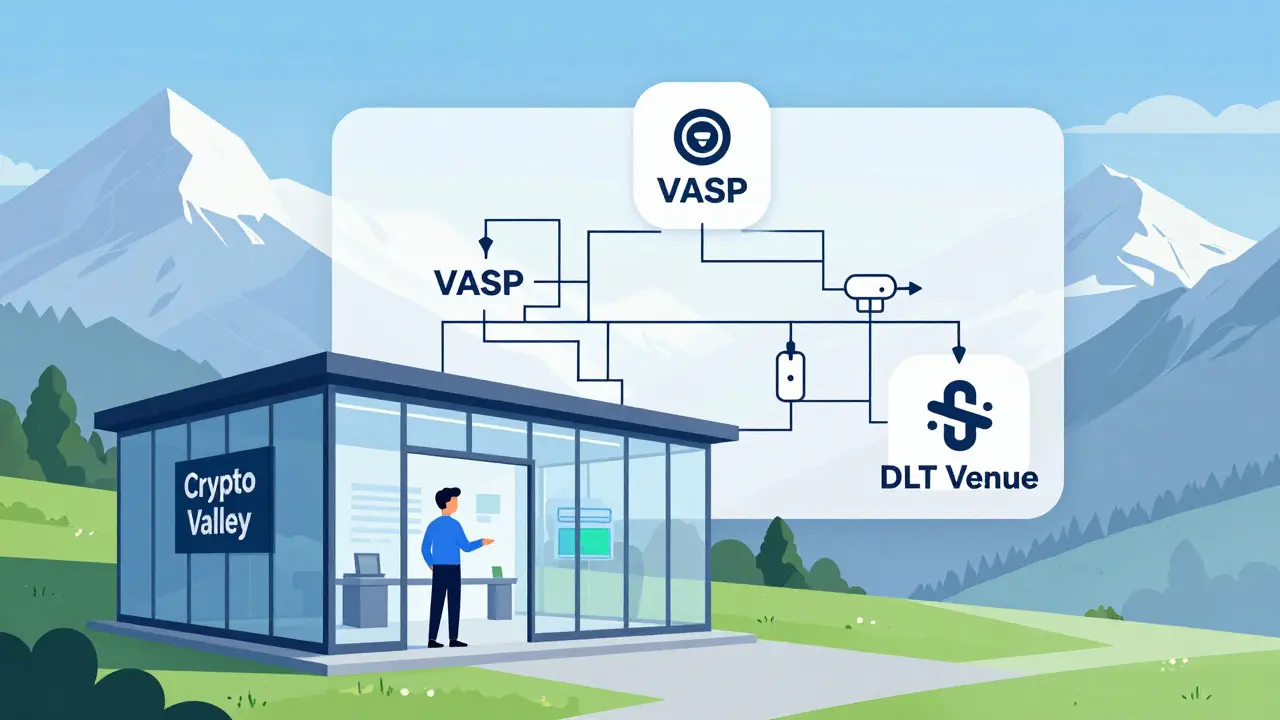
Getting a FINMA crypto license in Switzerland isn't just about filling out forms; it's about proving your business can handle institutional-grade security and strict anti-money laundering rules. If you're planning to launch an exchange or token platform in the "Crypto Valley," you need to understand that the regulatory landscape has tightened significantly since 2023. The Swiss Financial Market Supervisory Authority (FINMA) doesn't treat all crypto businesses the same. Your specific activities determine which license you need, how much capital you must hold, and how long you'll wait for approval.
This guide breaks down the exact requirements for cryptocurrency exchanges operating under FINMA jurisdiction as of 2026. We’ll look at the different license types, the financial hurdles, and the technical standards you must meet to get approved. Whether you are building a centralized exchange (CEX) or exploring decentralized finance (DeFi) structures, knowing these rules upfront saves you from costly rejections and delays.
Key Takeaways
- FINMA regulates crypto via activity-based classification, not asset type. You need a license based on what you do (trade, custody, broker), not just what you sell.
- The primary licenses are the VASP License for traditional exchange functions and the DLT Trading Venue license for integrated trading and settlement platforms.
- Minimum share capital is CHF 100,000 for AGs and CHF 20,000 for GmbHs, but total setup costs often exceed CHF 100,000 due to legal and compliance fees.
- Approval timelines range from 4 to 8 months, with recent streamlining for DLT venues reducing some waits to 6-8 weeks if technical standards are pre-met.
- Security requirements are strict: 95% of client assets must be in cold storage, and systems need a maximum 4-hour recovery time objective (RTO).
Understanding FINMA’s Activity-Based Approach
Unlike some jurisdictions that classify every token as a security or commodity, FINMA looks at the function of your business. This means two companies selling Bitcoin might need different licenses depending on their operational model. If you facilitate peer-to-peer trades between users, you’re likely a Virtual Asset Service Provider (VASP). If you offer an integrated platform where trading, clearing, and settlement happen on a distributed ledger, you might qualify as a DLT Trading Venue.
This distinction matters because the Distributed Ledger Technology Law introduced in 2020 created a new category of licenses that allows for more complex financial products. For example, a standard VASP license covers buying and selling cryptocurrencies for fiat or other cryptos. However, if you want to trade tokenized securities or derivatives without leverage, the DLT Trading Venue license is the correct path. It permits serving both retail and institutional clients, provided the underlying assets meet specific criteria defined by FINMA.
You also need to consider the Anti-Money Laundering Act (AMLA). Even if you don’t fit neatly into a VASP or DLT bucket, AMLA imposes mandatory due diligence and reporting requirements. Ignoring this can lead to fines even if you have another license. The framework is designed to balance innovation with investor protection, ensuring that while Switzerland remains a hub for blockchain tech, it doesn’t become a haven for illicit finance.
License Types: VASP vs. DLT Trading Venue
Choosing the right license is the first critical decision. Here’s how the main options compare:
| Feature | VASP License | DLT Trading Venue |
|---|---|---|
| Primary Function | Crypto-fiat/crypto-crypto trading, custody, brokerage | Integrated trading, clearing, settlement, custody for DLT-Securities |
| Target Assets | Cryptocurrencies, utility tokens | DLT-Securities, tokenized stocks, non-leveraged derivatives |
| Client Base | Retail and Institutional | Retail and Institutional (with specific conditions) |
| Regulatory Basis | AMLA / FMIA | FMIA (DLT Amendments) |
| Processing Time | 4-8 months | 6-8 weeks (if streamlined) to 4 months |
The VASP license is the most common for traditional exchanges like Bitcoin Suisse or Sygnum Bank. It requires you to demonstrate robust Know Your Customer (KYC) processes and secure custody solutions. On the other hand, the DLT Trading Venue license is newer and more specialized. It was designed for platforms like SIX Digital Exchange (SDX), which processed over CHF 1.2 billion in tokenized securities in Q2 2024. If your business model involves complex settlement mechanics or tokenized real-world assets, this is likely your target.
Corporate Structure and Capital Requirements
To apply for any FINMA license, you must incorporate in Switzerland. You have two main options: an AG (Aktiengesellschaft/joint-stock company) or a GmbH (Gesellschaft mit beschränkter Haftung/limited liability company). The choice affects your minimum capital and governance structure.
- AG (Joint-Stock Company): Requires a minimum share capital of CHF 100,000. This is the preferred structure for larger exchanges aiming for institutional credibility. It offers limited liability and easier transfer of shares.
- GmbH (Limited Liability Company): Requires a minimum share capital of CHF 20,000. Suitable for smaller startups or boutique firms, but may face higher scrutiny regarding governance depth.
Beyond the statutory minimum, you should budget for significant additional costs. Legal advice, compliance officer salaries, and technical audits typically push total initial expenses to CHF 100,000 or more. Government fees alone range from CHF 5,000 to CHF 15,000. Remember, these are just entry costs. Ongoing compliance will require dedicated staff. The average licensed exchange employs 3.2 full-time compliance specialists, according to FINMA’s 2023 annual report.
Technical and Security Standards
FINMA takes security seriously. Your application must include detailed documentation of your security architecture. This isn’t just about having firewalls; it’s about specific, measurable standards.
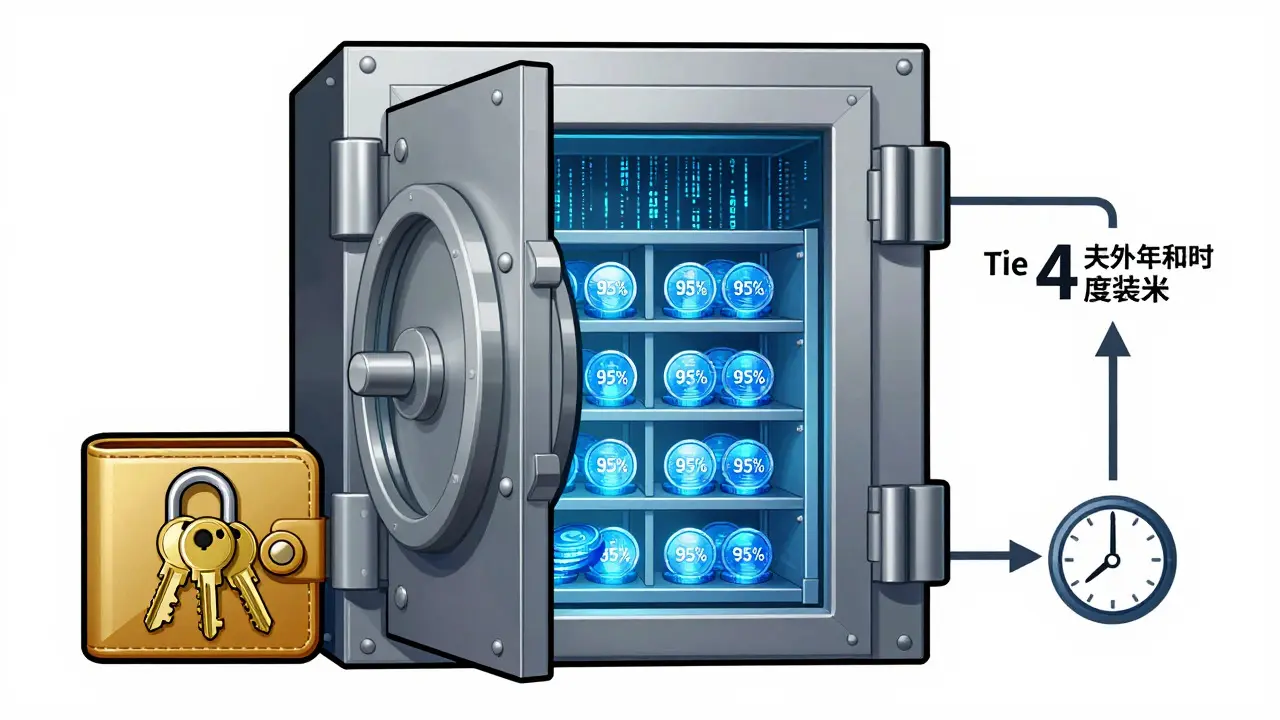
- Cold Storage Mandate: At least 95% of client assets must be held in cold storage wallets. Hot wallets for active trading must use multi-signature technology, typically requiring 3-of-5 signatures for transactions.
- Recovery Objectives: Critical systems must have a Recovery Time Objective (RTO) of no more than 4 hours and a Recovery Point Objective (RPO) of 15 minutes. This ensures minimal downtime and data loss in case of failure.
- Audits: You must undergo penetration testing by FINMA-approved auditors at least annually. These reports are part of your ongoing compliance file.
These requirements mirror those for traditional banks, reflecting FINMA’s view that digital assets carry similar risks to traditional securities. If you’re building a DeFi protocol, be aware that FINMA applies a "substance-over-form" approach. Even if your code is open-source and decentralized, if a central entity controls key functions (like oracle feeds or governance voting), they may still require licensing.
The Application Process: Step-by-Step
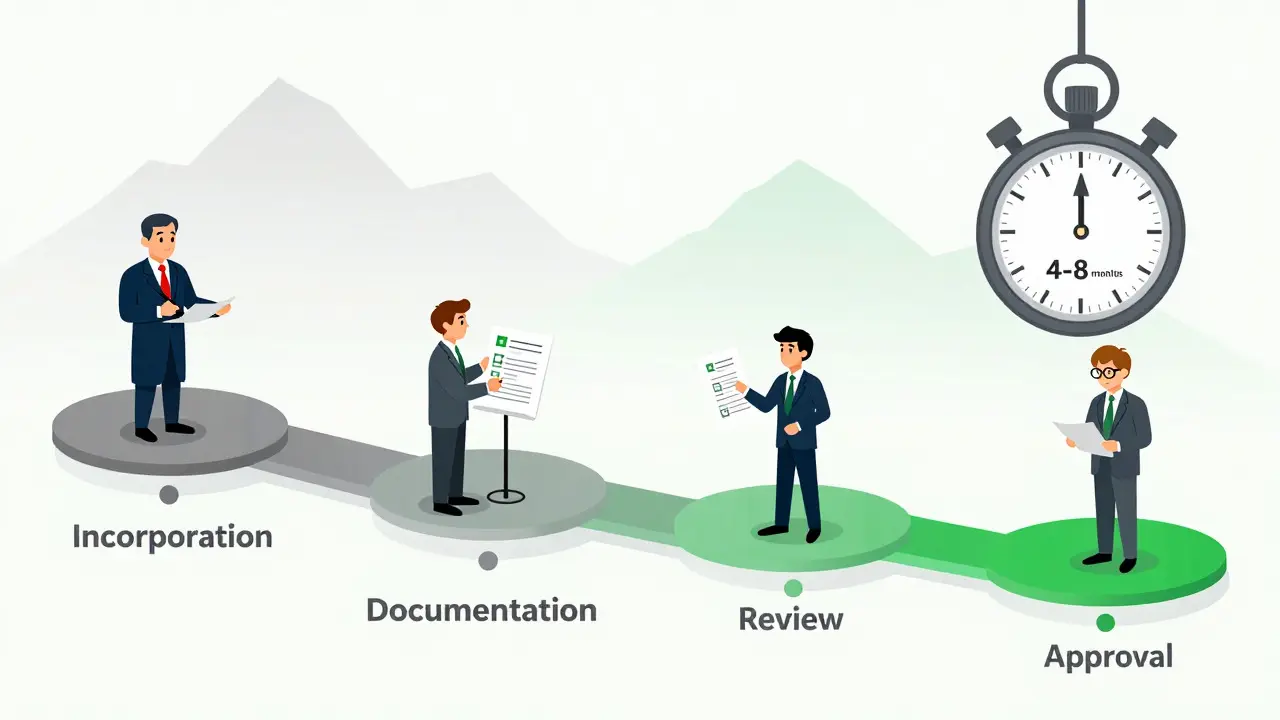
Getting licensed is a marathon, not a sprint. Here’s what the timeline looks like in practice:
- Incorporation (3-4 months): Register your AG or GmbH with the Swiss Commercial Registry. Prepare articles of association and appoint directors who meet FINMA’s fitness-and-properness tests.
- Documentation Package (2-3 months): Compile your business plan, financial projections, AML/KYC policies, and security architecture docs. This is the heaviest lift. Most applicants hire consultants costing CHF 8,000-15,000 monthly during this phase.
- Submission and Review (1-4 months): Submit to FINMA. They will ask questions and request clarifications. Response times from case officers are generally within 10 business days, which helps keep the process moving.
- Approval and Operational Start: Once approved, you receive your license. Total time from start to finish is typically 4-8 months. For streamlined DLT applications, this can drop to 6-8 weeks if you meet predefined technical benchmarks early.
A common pitfall is securing banking relationships. 62% of applicants report difficulties finding a bank willing to service a crypto business. Start this process in parallel with your FINMA application, as banks often require proof of pending or granted licenses before opening accounts.
Market Context and Competitive Landscape
Switzerland handles approximately $48.7 billion in annual crypto trading volume, representing about 2.9% of the global market. There are currently 37 FINMA-licensed crypto exchanges in the country. While the EU’s MiCA regulation has captured some new entrants with its passporting rights, Switzerland retains a strong edge in institutional trust. 83% of European hedge funds use Swiss-licensed custodians for their crypto assets.
If you’re comparing jurisdictions, Singapore offers faster processing (6-8 weeks) but less flexibility for innovative models. Liechtenstein has similar clarity but a much smaller market. Switzerland’s advantage lies in its deep integration with traditional finance and political stability. However, you must be prepared for higher barriers to entry than in offshore havens. The World Bank ranks Switzerland third globally for crypto regulatory quality, citing clear pathways but high capital requirements.
Frequently Asked Questions
How much does it cost to get a FINMA crypto license?
Total costs typically range from CHF 100,000 to CHF 200,000+. This includes government fees (CHF 5,000-15,000), legal counsel, compliance setup, and technical audits. Ongoing annual costs for compliance staff and audits add roughly CHF 150,000-300,000 per year depending on firm size.
Can DeFi protocols get a FINMA license?
Yes, but it depends on centralization. If a protocol has a central team managing keys, oracles, or governance, FINMA may require a VASP license for that entity. Fully decentralized protocols with no identifiable operator may fall outside direct licensing, but interface providers (websites/apps) often still need AML compliance. FINMA launched a sandbox for DeFi in Q2 2025 with relaxed capital requirements for non-custodial models.
What is the difference between a VASP and a DLT Trading Venue?
A VASP license covers standard exchange activities like swapping crypto for fiat. A DLT Trading Venue license is for platforms that integrate trading, clearing, and settlement on a blockchain, specifically for DLT-Securities. DLT venues can trade more complex instruments like tokenized stocks, while VASPs focus on cryptocurrencies and utility tokens.
How long does the FINMA approval process take?
Standard applications take 4 to 8 months. This includes company incorporation (3-4 months) and license review (1-4 months). Streamlined DLT Trading Venue applications can be approved in 6-8 weeks if they meet predefined technical standards at submission.
Do I need a local office in Switzerland?
You need a registered office in Switzerland for incorporation. However, you don’t necessarily need a large physical presence immediately. Many firms operate with a small local team or virtual office initially, scaling up as they gain clients. Key personnel (directors/compliance officers) must be reachable and subject to Swiss jurisdiction.
You need a registered office in Switzerland for incorporation. However, you don’t necessarily need a large physical presence immediately. Many firms operate with a small local team or virtual office initially, scaling up as they gain clients. Key personnel (directors/compliance officers) must be reachable and subject to Swiss jurisdiction.
 Finance


Patrick Pat
August 17, 2026 AT 12:48So we're supposed to believe that a 'streamlined' process takes 6-8 weeks? In Switzerland, where time is money and precision is art, that's practically an eternity. I've seen faster results getting my taxes sorted in Dublin than what they promise here for crypto licensing.
Alexander Scheel
August 18, 2026 AT 20:48One must appreciate the rigor, however tedious it may seem. The alternative is chaos, which history has shown us is far more costly in the long run. Precision is not merely a bureaucratic hurdle; it is the architecture of trust. Without it, we are all just gambling on hope and code snippets.
Shawn Schaerer
August 19, 2026 AT 22:27THE REALITY IS THAT REGULATIONS ARE THE ONLY THING KEEPING THIS INDUSTRY FROM COLLAPSING INTO A PILE OF SCAMS! IF YOU DON'T LIKE THE PAPERWORK, THEN PERHAPS YOU SHOULD BE TRADING IN THE DARK ALONGSIDE THE FRAUDS! FINMA IS DOING GOD'S WORK HERE!
Sarah Hafner
August 20, 2026 AT 06:45I actually worked with a team trying to get their DLT license last year. The 6-8 week claim is true, but only if your tech stack is already perfectly aligned with their benchmarks. If you have even one minor gap in your security docs, they will send it back and the clock resets. It's a very high bar, but worth it for the credibility. :)
Linda Leeuwesteijn
August 22, 2026 AT 03:53This is such a great breakdown! 📊 I was worried about the cold storage requirement being too strict for our current setup, but seeing the specific 95% rule helps us plan better. Thanks for clarifying the difference between VASP and DLT venues, that was always confusing to me! 💡
Walker Perry
August 23, 2026 AT 21:51Switzerland is just another front for the global surveillance state. They call it regulation but it is really control. Why do we need to prove our innocence every time we move money? The banks are in on it too. Just wait until they start taxing every transaction. It is all coming.
Claudio Perrone
August 25, 2026 AT 04:08honestly i think this whole thing is overblown like why cant we just use a simple llc structure everywhere instead of these fancy swiss ags? its so much more complicated than it needs to be and i feel like the government just wants to charge us more fees under the guise of safety. also the typo in the faq section looks bad 😂
manish jha
August 26, 2026 AT 18:51You are looking at the surface level only. The structure dictates the liability. An AG offers a shield that a simple LLC often cannot match in cross-border disputes. You complain about complexity because you fear the responsibility that comes with scale. Embrace the order or remain small and fragile.
Dina Lazarova
August 28, 2026 AT 12:31It is rather tedious reading about capital requirements when one could simply look at the market performance. However, for those who enjoy the finer details of corporate law, the distinction between GmbH and AG is certainly... interesting. One wonders if the average reader truly grasps the implications of a CHF 100,000 minimum share capital. It is quite a sum for a startup, no?
Susan Kiley
August 29, 2026 AT 01:50Oh, how delightful! :D Finally, someone puts some actual substance into the crypto regulatory discourse. Most people just want to 'hack' their way in, but true excellence requires adherence to these rigorous standards. It is the mark of a sophisticated market, isn't it? We should all aspire to such high levels of compliance!
Zothana Pachuau
August 30, 2026 AT 14:55Great guide, but let's be real. The biggest bottleneck isn't FINMA, it's finding a bank. I've been chasing banking partners for 6 months while waiting for the license. If you can't get an account, the license is just expensive paper. Start the bank talk day one, not after approval. Trust me on this one. 😉
Phelan Deihl
August 31, 2026 AT 12:52yeah i agree with the banking point. its the silent killer of most projects. i know a guy who had the license ready but got stuck because no bank would touch him. he ended up moving to estonia just to get a basic account. crazy stuff.
Hicham Mounir
September 1, 2026 AT 09:24It feels like such a heavy lift for smaller teams, doesn't it? I can imagine the stress of hiring three full-time compliance specialists before you've even processed your first trade. It’s a lot of pressure to carry that weight, especially when the market is moving so fast. But I guess if you want the institutional trust, you have to pay the price of admission. It’s a tough balance.
Sarah Campbell
September 2, 2026 AT 07:58Why does everyone keep talking about Europe? America is the real leader in innovation! 🇺🇸 We don't need all this Swiss red tape. We just need freedom. These regulations are killing the spirit of entrepreneurship. Let the market decide! 😤
Ami Elizabeth
September 2, 2026 AT 19:55chill out. different markets have different rules. switzerland is good for custody and serious finance. usa is good for venture capital and new ideas. you dont have to pick one side. both have pros and cons. just figure out what fits your business model best. its not a competition.
Lance Konig
September 4, 2026 AT 19:32The article mentions that 62% of applicants struggle with banking relationships. This is a critical data point that is often overlooked in high-level summaries. It suggests that the regulatory barrier is not just statutory but operational. If you are planning an entry, budget an additional 3-4 months specifically for financial infrastructure setup. Do not underestimate this phase.
michelle aguilar
September 6, 2026 AT 19:31Oh, how utterly fascinating. ; ) ; ) One must admire the sheer audacity of thinking that a few lines of code can bypass centuries of financial prudence. ; ) ; ) It is almost charming, in a naive sort of way, to see people try to outsmart the system. ; ) ; ) But alas, the system always wins, doesn't it? ; ) ; )
Evelyn Kula
September 7, 2026 AT 11:27They say the EU MiCA is taking market share, but that's just propaganda. Switzerland has the deep pockets and the political stability. Look at the hedge funds, they aren't stupid. They stick with Swiss custodians for a reason. Anyone who thinks the EU is going to beat Swiss trust is living in a fantasy world. Wake up!
Ashley Snyder
September 8, 2026 AT 22:18I think the comparison to Singapore is spot on. Faster processing is great, but if you want to deal with complex tokenized securities, Switzerland still has the edge. It depends on what you're building. For a simple exchange, maybe SG is easier. For a DeFi powerhouse, CH is the place to be. Just go with your gut.
Katharina Euteneier
September 8, 2026 AT 23:42Just a quick note: the post says 'Do I need a local office?' but the heading tag is closed incorrectly as
. Small detail, but shows how rushed some of these guides are. Also, the RTO of 4 hours is standard for banks, but for a high-frequency trading platform, that might be too slow. Worth noting that technical specs matter more than general guidelines.
Aaron Morrissey
September 9, 2026 AT 01:35What a magnificent exposition on the intricate dance between innovation and oversight! The juxtaposition of the agile, decentralized ethos of blockchain against the stately, immutable framework of Swiss law is nothing short of poetic. One cannot help but marvel at the resilience required to navigate such a labyrinthine landscape. Truly, it is a testament to human ingenuity that we seek to harmonize these seemingly opposing forces.