

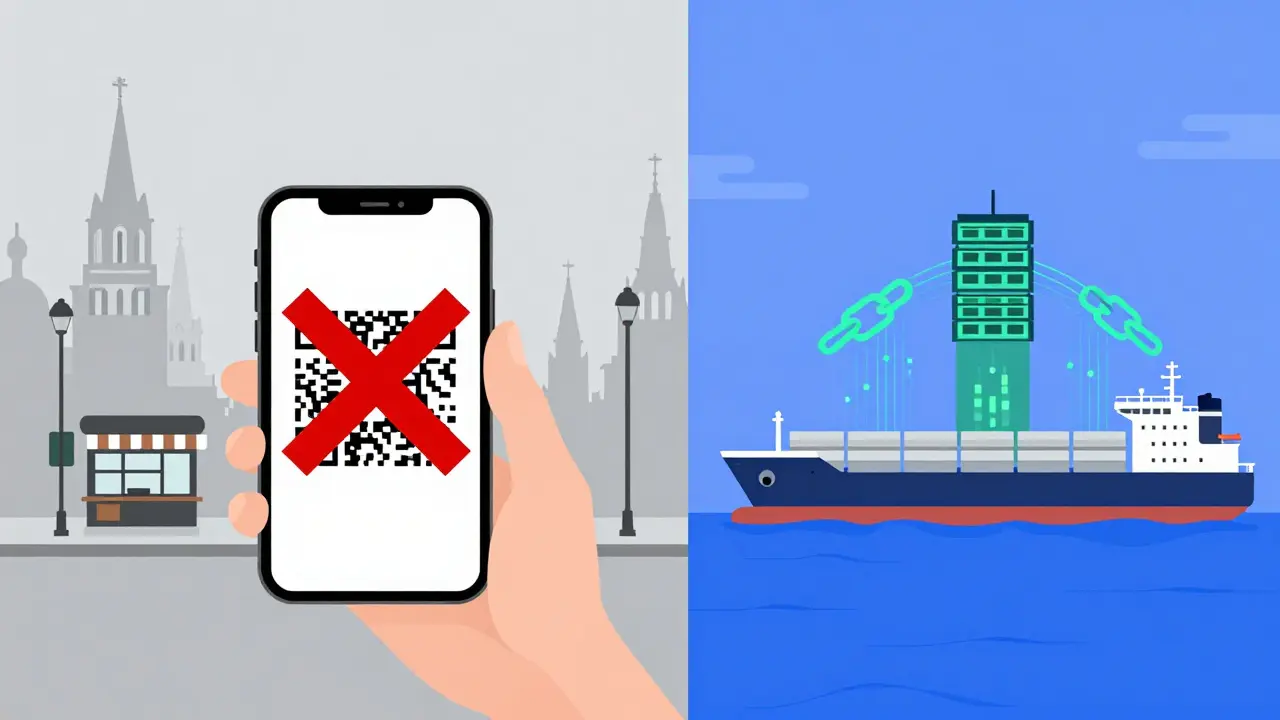
Imagine trying to buy a coffee with Bitcoin in Moscow. You pull out your phone, scan the QR code, and watch the transaction fail. Meanwhile, a few blocks away, a major exporter is shipping goods to China, settling the invoice in cryptocurrency without blinking an eye. This isn’t a glitch; it’s the law.
Russia has carved out one of the most complex regulatory landscapes for digital assets in the world. For years, the country walked a tightrope between embracing blockchain technology and fearing its impact on financial stability. By 2026, that rope has solidified into a rigid structure: cryptocurrency is banned as payment domestically, but increasingly vital for international trade. If you are navigating this system-whether as an investor, a business owner, or a curious user-you need to understand exactly where the line is drawn.
The Legal Divide: Why Crypto Isn't Money Inside Russia
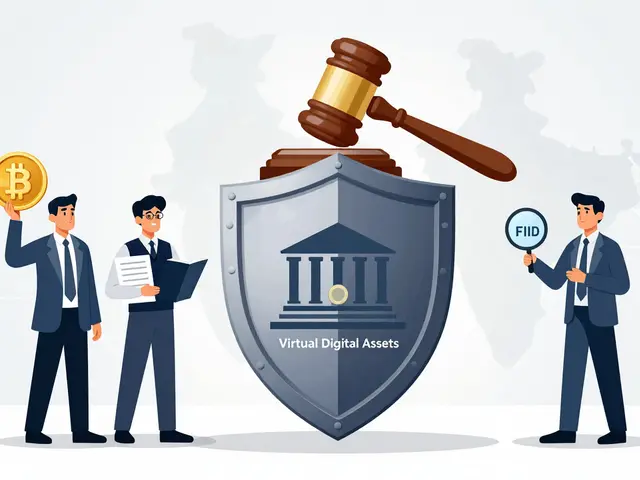
To understand the current situation, we have to look back at July 2020. That was when President Vladimir Putin signed Federal Law No. 114-FZ. This law did two things simultaneously. First, it legalized cryptocurrency transactions, giving them a legal status as "digital assets." Second, it explicitly banned their use for paying for goods and services within Russia. The ban took effect on January 1, 2021.
So, what does "digital asset" mean in practice? It means you can own Bitcoin. You can mine it. You can trade it on exchanges. But you cannot use it to settle debts or buy groceries. The Bank of Russia, led by Chair Elvira Nabiullina, has been clear about this stance. They view cryptocurrencies as highly volatile instruments based on mathematical algorithms, not stable currencies issued or guaranteed by any jurisdiction. Using them for daily payments threatens the national monetary policy and exposes ordinary citizens to extreme risk.
This distinction is crucial. Unlike El Salvador, which adopted Bitcoin as legal tender in 2021, Russia maintains an absolute prohibition on domestic crypto payments. Even compared to India, which allows ownership but taxes gains heavily, Russia’s approach is stricter regarding usage. You can hold the asset, but you cannot spend it locally.
| Country | Domestic Payments | Legal Status | Key Restriction |
|---|---|---|---|
| Russia | Banned | Digital Asset | No spending for goods/services |
| El Salvador | Allowed | Legal Tender | Voluntary adoption |
| European Union | Allowed | Regulated Asset (MiCA) | Consumer protection rules apply |
| China | Banned | Illegal | All transactions prohibited |
The Loophole: International Trade and the EPR Framework
If domestic use is dead, why is there so much buzz about crypto in Russia right now? The answer lies in international trade. In summer 2024, Russia passed Law No. 382-FZ. This legislation was a direct response to Western economic sanctions. It permitted digital currency payments specifically for cross-border trade, creating a sanctioned channel for businesses to move money outside the traditional SWIFT system.
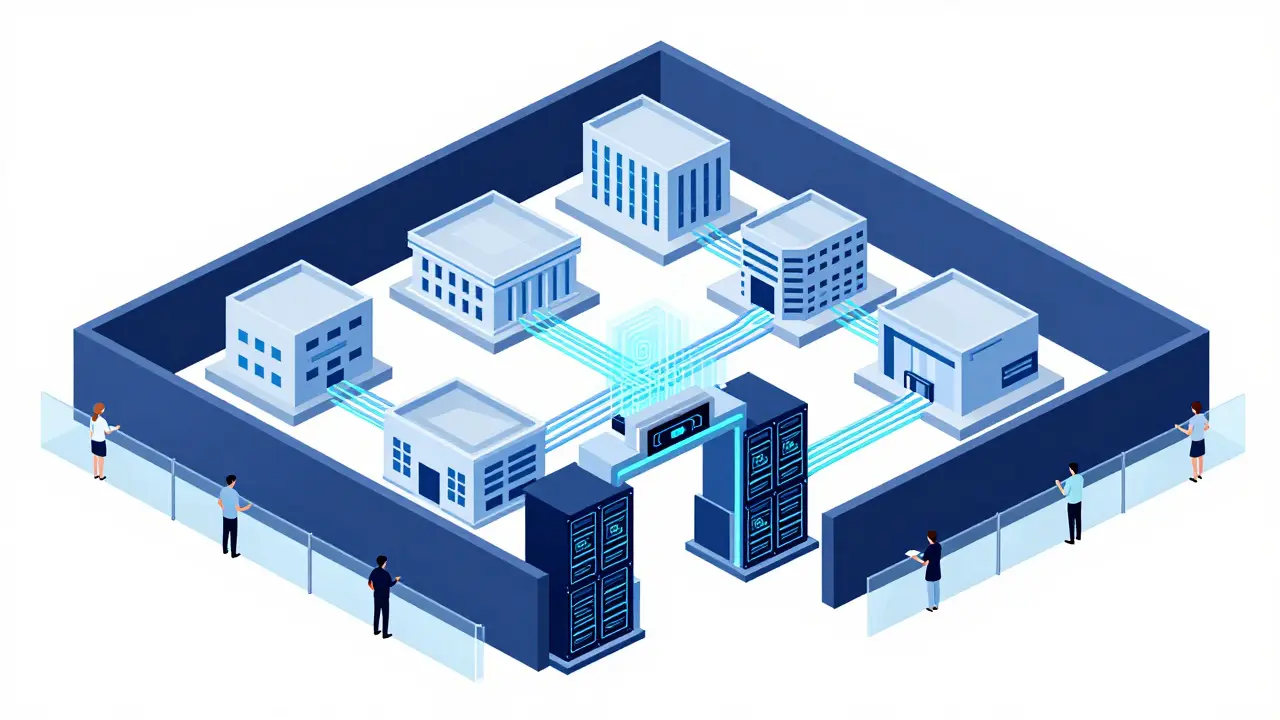
However, this isn’t a free-for-all. These transactions must occur within the Experimental Legal Regime (EPR). Think of the EPR as a walled garden. Only registered entities can enter. To participate, companies must undergo Central Bank registration and implement rigorous real-time transaction monitoring systems. These systems need to process at least 1,000 transactions per second with 99.9% uptime. That is enterprise-grade infrastructure, not something a small startup can easily build.
The goal here is control. The government wants to facilitate trade with partners like China, Iran, and Belarus while maintaining strict oversight to prevent money laundering. As of mid-2025, only 1,842 entities had registered under the EPR. Notably, 92% of these were financial institutions, not commercial enterprises. This suggests that while the door is open, the threshold to walk through it remains incredibly high.
Who Can Actually Play? The Ultra-Wealthy Barrier
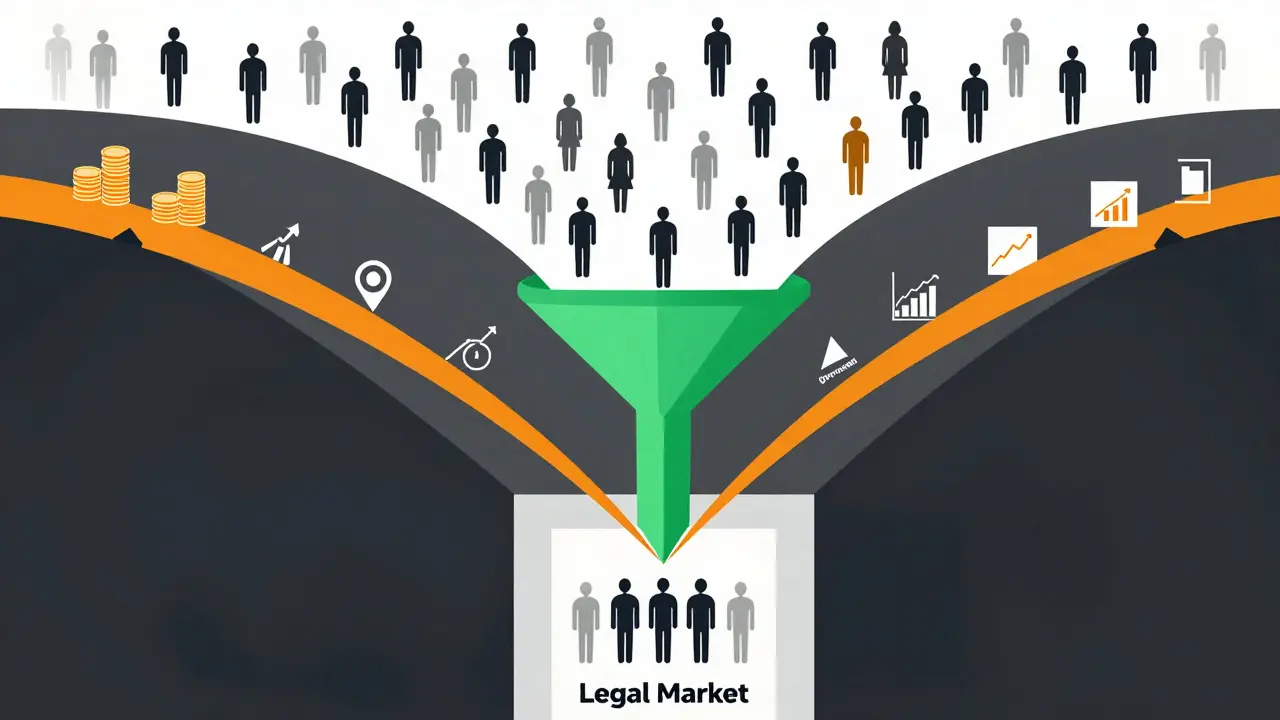
You might be thinking, "I’ll just register my company and start trading." Hold on. The Bank of Russia has set investor qualification criteria that would make a venture capitalist blush. Under the methodological recommendations issued in February 2025, individuals must qualify as "especially qualified investors" to trade cryptocurrencies legally.
What does that require? You need either:
- Financial assets exceeding 100 million rubles (approximately $1.2 million), OR
- An annual income above 50 million rubles (approximately $580,000).
Let that sink in. Less than 1% of the population meets these criteria. Dr. Ivan Sidorov, a blockchain expert at HSE University, pointed out in a May 2025 op-ed that this excludes 87% of Russia’s 18 million crypto owners from the legal market. He argued that restricting access to the ultra-wealthy creates dangerous market distortions and drives activity underground.
For foreign exchanges wanting to operate in Russia, the bar is equally high. They must establish a Russian legal entity and maintain minimum capital reserves of 100 million rubles ($1.2 million). Every crypto-to-fiat transaction must link to a Russian bank account subject to full KYC (Know Your Customer) verification. There is no anonymity here. The state knows who you are, what you have, and where it came from.
The Cost of Non-Compliance: Fines and Confiscation
Rules mean nothing without enforcement. And Russia is tightening the screws. Starting January 1, 2026, new fines will kick in for violating the domestic payment ban. This bill, drafted by the Bank of Russia and Ministry of Finance, introduces steep penalties.
For individuals caught using crypto for domestic payments, fines range from 100,000 to 200,000 rubles ($2,500-$5,000). For legal entities, the penalty jumps to 700,000-1,000,000 rubles ($8,750-$12,500). But the fine isn’t the worst part. The authorities will also confiscate the cryptocurrency involved. Lose the asset, pay the fine, and still face potential criminal charges if the violation is deemed severe enough.
Anatoly Aksakov, head of the State Duma's Committee on Financial Markets, stated in July 2025 that these fines are necessary to eliminate the "gray area" of responsibility. The message is clear: the state is watching peer-to-peer (P2P) transactions closely. Financial institutions are required to report any suspicious P2P activity exceeding 600,000 rubles ($7,500). If you are moving large sums without going through the official channels, you are playing a very dangerous game.
Taxing the Digital Asset
Owning crypto in Russia comes with another price tag: taxes. Effective January 1, 2025, the Tax Code officially recognized cryptocurrency as property. This means every gain is taxable. The capital gains tax rate is 13%, with mandatory quarterly reporting. While this rate is lower than the global average of 20% (according to PwC’s 2025 Global Crypto Tax Report), the compliance burden is significant.
Mining operations face even stricter scrutiny. Miners must register with Roskomnadzor and adhere to energy consumption limits of 150 MW per facility. This cap ensures that mining doesn’t destabilize the local power grid, a concern given Russia’s reliance on fossil fuels. Despite these restrictions, Russia ranks 8th globally in crypto mining capacity, with 1.2 GW operational. The industry survives, but it operates under a microscope.
Real-World Friction: What Users Are Experiencing
Laws look clean on paper, but reality is messy. Users on platforms like Reddit’s r/CryptoRussia report significant headaches. One user, "MoscowTrader88," noted in August 2025 that the domestic ban forced them to use offshore exchanges. This added 3-5 business days to transactions and increased fees by 2.5%. For a trader relying on speed, that delay is unacceptable.
Businesses face similar hurdles. A June 2025 case study by Interfax highlighted a Moscow-based IT exporter who abandoned crypto payments entirely. Despite the international allowance, the EPR registration process required 17 different documents and took eight weeks to process. The cost of compliance-averaging 1.8 million rubles ($22,500) and 220 staff hours per company-simply wasn’t worth it for many smaller firms.
As a result, a shadow market thrives. A Chainalysis report from July 2025 found that 68% of Russian users now employ non-custodial wallets to avoid KYC requirements. Another 42% reported difficulties converting crypto to rubles due to bank freezes. When banks see crypto-related fiat inflows, they often trigger automatic AML (Anti-Money Laundering) checks, freezing accounts until the source is verified. This creates a cycle of frustration for legitimate users.
What Comes Next? The Road to 2027
The current experimental regime runs through 2027. Will it expand or tighten? All signs point to tighter control. The Ministry of Finance has proposed extending the domestic payment ban to include all stablecoins by 2027, citing systemic risks from algorithmic models. Additionally, the Central Bank plans to expand transaction monitoring to include non-custodial wallets by Q2 2026 and implement biometric verification for transactions above 500,000 rubles by Q4 2026.
International pressure continues to mount. The EU’s July 2025 sanctions list targeted seven Russian banks and twelve OTC desks for enabling crypto transactions that circumvent sanctions. This external heat reinforces the internal narrative that crypto is a tool for evasion, requiring strict containment.
Yet, the demand remains. With $3.2 billion in crypto-facilitated exports recorded in the first half of 2025, the Central Bank forecasts this could reach $8.5 billion in 2026. The tool is too useful for sanctioned trade to abandon completely. But for the average Russian citizen, crypto will likely remain a speculative asset rather than a practical payment method for the foreseeable future.
Can I use Bitcoin to buy goods in Russia?
No. Since January 1, 2021, using cryptocurrency to pay for goods and services within Russia is illegal. You can own and trade crypto, but you cannot use it as a medium of exchange domestically. Violations carry fines and potential asset confiscation starting in 2026.
Is it legal for Russian businesses to accept crypto for international orders?
Yes, but only under strict conditions. Businesses must register under the Experimental Legal Regime (EPR) established by Law No. 382-FZ. This requires rigorous compliance, real-time monitoring systems, and Central Bank approval. Most small businesses find the barrier to entry too high.
How much tax do I pay on crypto gains in Russia?
Since January 1, 2025, cryptocurrency is treated as property. Capital gains are taxed at a rate of 13%. You must file mandatory quarterly reports with the Federal Tax Service. Failure to report can lead to additional penalties.
Who qualifies as an "especially qualified investor" for crypto trading?
Individuals must have financial assets exceeding 100 million rubles (~$1.2 million) or an annual income above 50 million rubles (~$580,000). This threshold restricts legal trading access to a tiny fraction of the population, effectively excluding most retail investors.
What happens if I get caught using crypto for domestic payments?
Starting January 1, 2026, individuals face fines of 100,000-200,000 rubles ($2,500-$5,000), and companies face 700,000-1,000,000 rubles ($8,750-$12,500). Additionally, the cryptocurrency used in the transaction will be confiscated by the state.
 Finance


Ellie Riddell
May 19, 2026 AT 11:47It is fascinating how the state tries to control money like it controls water, but you cannot stop the flow. The irony here is palpable because while they ban domestic use, they are essentially building a parallel financial system for the elite and exporters. It reminds me of Prohibition in the US where crime flourished not because people wanted to drink, but because the supply was restricted. This creates a black market that is far more dangerous than an open one. The government thinks they are protecting citizens from volatility, but they are really just protecting their own monetary policy from irrelevance. We see this pattern everywhere in authoritarian regimes. They want the technology without the freedom. It is a classic case of wanting your cake and eating it too. The EPR framework is basically a VIP club for those who can afford the entry fee. Everyone else gets left behind with frozen accounts and endless bureaucracy. It is sad to watch innovation get strangled by fear.
Mike S
May 20, 2026 AT 12:49Oh look another country trying to regulate crypto into oblivion 🙄 honestly who cares about russian laws unless you live there? the rest of us are just watching the train wreck in slow motion 😂
Sudarshan Anbazhagan
May 20, 2026 AT 21:54one must consider the broader implications of such legislative measures which seem to contradict the very essence of decentralized finance as it was originally conceived by satoshi nakamoto and others who sought to liberate capital from state control yet here we have a state attempting to harness the technological benefits while simultaneously stripping away the social utility of the asset class in question which leads to a paradoxical situation where the asset exists legally but its primary function as a medium of exchange is criminalized within borders this creates a dichotomy that is difficult to reconcile with economic theory regarding liquidity and velocity of money
John Gonzalez Bentham
May 21, 2026 AT 10:25thats actually smart if u think about it they keep the rich happy with the export loophole and the poor stay poor using rubles. its basically digital apartheid lol. why would they let regular people spend bitcoin when they can tax every transaction instead. typical gov move tbh.
Kiran CS
May 22, 2026 AT 16:51The pretension of believing that cryptocurrency offers any genuine liberation is laughable when one considers the reality of these regulatory frameworks. The so-called 'digital assets' are merely speculative bubbles propped up by naive retail investors who fail to understand the sophisticated mechanisms employed by central banks to maintain hegemony. The Russian approach is merely a reflection of the inevitable outcome of all fiat systems attempting to coexist with decentralized protocols. It is not a bug; it is a feature of the globalist agenda to consolidate power through financial surveillance. Those who claim otherwise are either ignorant or complicit in the narrative of technological utopianism which has repeatedly failed to materialize in practice.
Bijan Das
May 24, 2026 AT 07:13nah this is just lazy governance. they cant figure out how to fix their economy so they ban things instead. stupid.
Bradley Geldenhuys
May 24, 2026 AT 14:19u guys r missing the point entirely. this isnt about freedom its about survival for the business sector. if u r exporting to china u need a way to bypass swift or ur company dies. simple as that. the epr is ugly but its necessary infrastructure right now. dont act like ur moral high ground matters when ur bank is freezing ur account for no reason. reality hits hard.
Michael Berggren
May 26, 2026 AT 03:29I find the distinction between domestic and international usage quite intriguing from a compliance perspective. Many businesses overlook the specific requirements of the EPR registration process, assuming it is a formality rather than a rigorous audit trail. The requirement for real-time monitoring with 99.9% uptime is not just bureaucratic red tape; it is designed to ensure that the Central Bank has complete visibility into cross-border flows. For those considering entering this space, I recommend consulting with legal experts specializing in Russian financial law before attempting to register. The penalties for non-compliance are severe and often misunderstood by foreign entities. 💡
Jerry CUNNINGHAM SR
May 27, 2026 AT 06:41It is important to recognize the complexity of navigating international trade under sanctions. While the restrictions on domestic payments may seem harsh, they serve a specific purpose in maintaining macroeconomic stability. Businesses should carefully evaluate their risk exposure and ensure full compliance with all regulatory requirements. The path forward requires patience and adherence to established legal frameworks.
Shelby Cantu
May 29, 2026 AT 00:03Stay safe everyone. Do not try to game the system. Just follow the rules.
H F
May 29, 2026 AT 13:41Bloody hell! You’d think after all these years they’d have figured out a simpler way. But no, it’s always the most complicated route possible. The sheer amount of paperwork involved in that EPR thing sounds like a nightmare for anyone who isn’t a lawyer. Still, gotta respect the hustle of those getting it done despite the odds. Cheers to resilience!
Destiny Kilby
May 31, 2026 AT 07:28i feel for the small businesses trying to operate in this environment it seems incredibly stressful to have your livelihood depend on such rigid and complex regulations without clear guidance or support from the authorities. the uncertainty must be exhausting for everyone involved especially when the rules seem to change frequently. i hope they find a better balance soon
Bianca Vilas Boas Lourenço
June 1, 2026 AT 08:57Ugh, reading this gives me anxiety just thinking about the fines 😭 why does everything have to be so dramatic? one minute you're buying coffee the next you're losing your life savings because of a technicality. it's literally a horror story wrapped in a legal document. i'm just gonna stick to my credit card thank you very much 💅