

Blockchain Voting Feasibility Checker
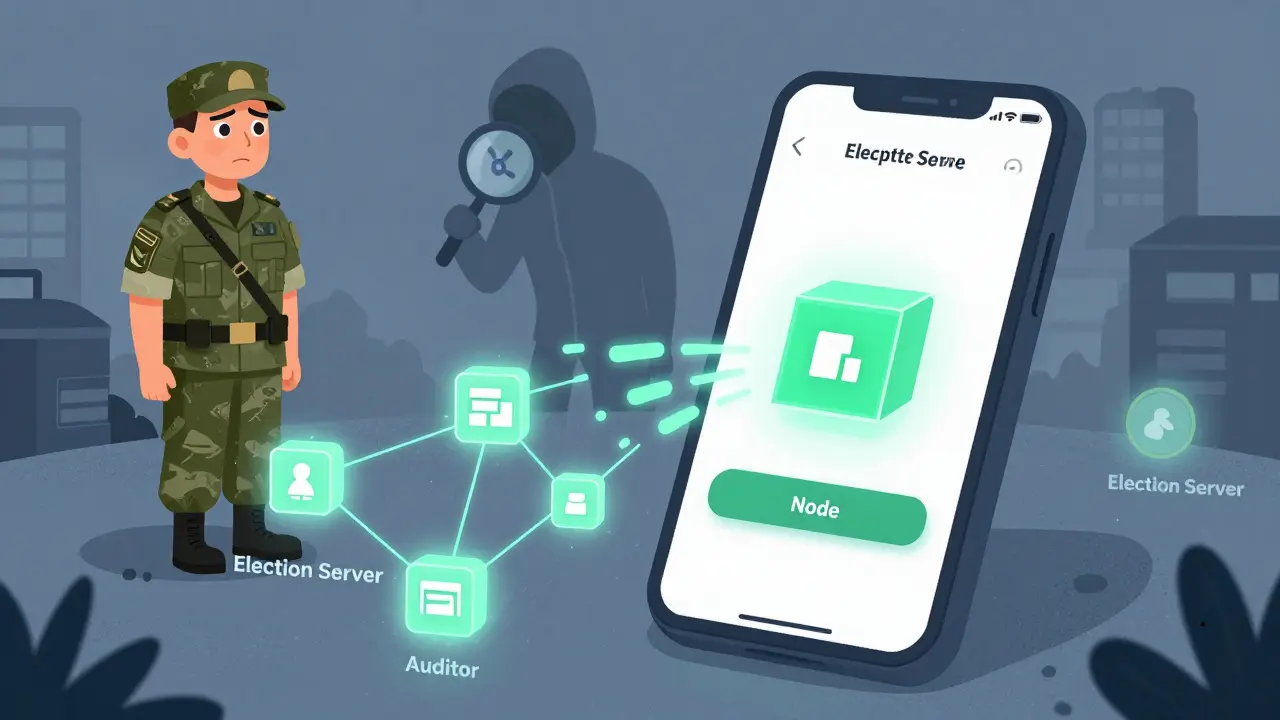
Assess whether blockchain voting would be suitable for your voting scenario based on security, accessibility, and trust factors. The tool uses insights from real-world government pilots as described in the article.
Blockchain voting sounds like a dream for democracy: votes recorded forever, no tampering, no lost ballots, and the ability for anyone to check that their vote was counted. But in practice, it’s not that simple. Since West Virginia first let overseas military voters use a mobile app to cast ballots on a blockchain in 2018, governments around the world have run dozens of pilots. None have scaled to national elections. None have become permanent. And many have been shut down after security flaws were found.
What Blockchain Voting Actually Does
At its core, blockchain voting tries to solve two big problems: trust and access. Traditional paper ballots are secure but slow. Electronic voting machines are fast but opaque. Blockchain adds a public, unchangeable ledger that records each vote after it’s encrypted. The idea is simple: you vote, your vote gets hashed and stored across multiple computers, and later, anyone can verify that the total count matches the individual votes - without seeing who voted for whom.
This isn’t science fiction. Systems like Voatz and Horizon State have been tested in real elections. In Utah County in 2019, over 1,000 voters used a blockchain-based app for municipal elections. Votes were processed in under three seconds. In West Virginia, about 150 overseas service members voted via smartphone in 2018. For them, it worked. No lost mail-in ballots. No delays. But these were tiny tests - not national elections.
Why Governments Use Permissioned Blockchains
You might think blockchain voting runs on Bitcoin-style public networks. It doesn’t. Most government pilots use permissioned blockchains. These are private networks where only approved entities - like election officials, auditors, and certified nodes - can validate transactions. Public blockchains like Ethereum are too slow and too open for voting. They’d be overwhelmed by millions of votes and expose voters to privacy risks.
Permissioned systems give governments control. They can enforce strict identity checks - digital IDs, biometrics, multi-factor authentication - before letting someone vote. They can limit who can run a node. They can audit everything. But this control comes at a cost: it’s not truly decentralized. And that’s where critics push back. If only a handful of trusted parties manage the system, is it really more secure than a well-run electronic voting system?
Where It’s Been Tried - And Where It Failed
Several places have tested blockchain voting. West Virginia’s 2018 pilot was hailed as a breakthrough. But within two years, independent researchers found critical flaws in the Voatz app. Vulnerabilities could let attackers intercept votes or manipulate the system without leaving a trace. The program was discontinued for broader use.
Utah County’s 2019 pilot worked technically - votes were tallied correctly - but security experts still flagged risks. The app relied on smartphones, which are easy to hack. If someone stole your phone or tricked you into installing malware, they could vote in your name. And because votes are tied to digital identities, there’s no way to prove you voted without revealing who you voted for.
Switzerland’s SwissPost trial was scrapped in 2021 after public outcry over transparency. Even though the system used blockchain, voters couldn’t verify their own votes without trusting the software. That’s a dealbreaker for many. Estonia’s i-Voting system gets mentioned a lot, but it’s not pure blockchain. It uses encryption and digital IDs - not a distributed ledger - and has faced repeated security warnings from researchers.
The Real Barriers: Security, Scale, and Trust
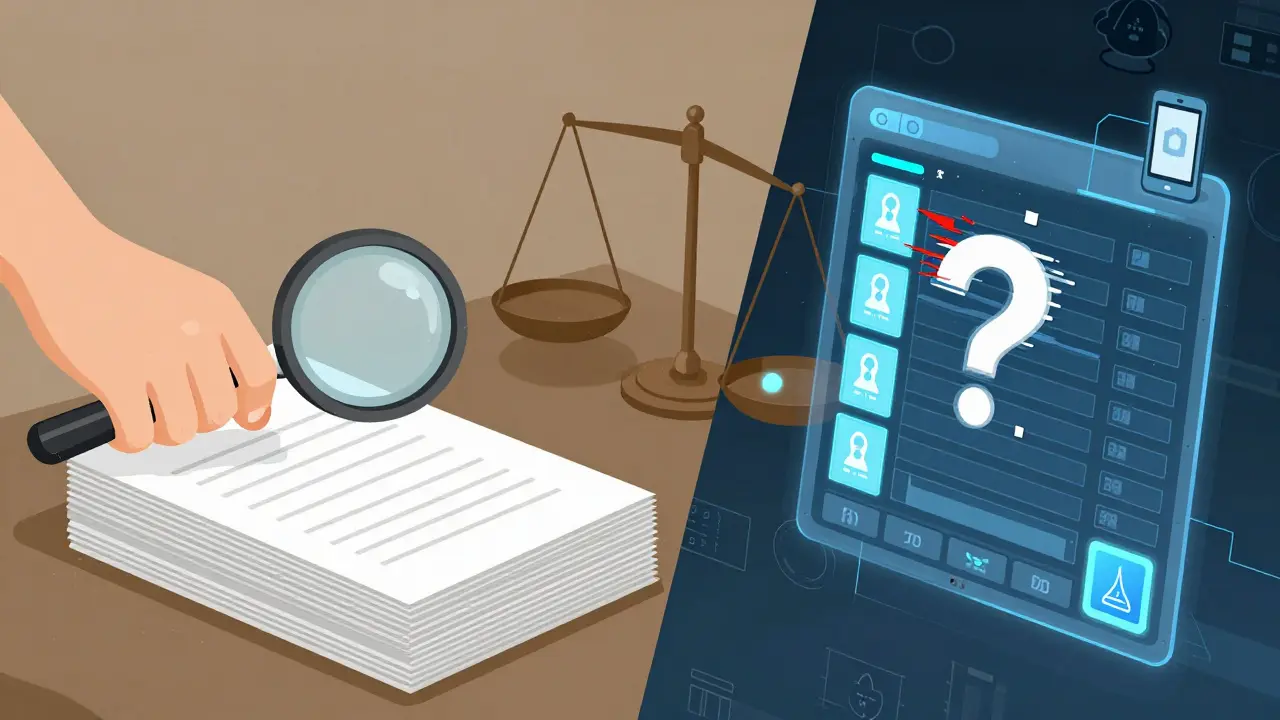
There are three big reasons blockchain voting hasn’t taken off:
- Security isn’t proven at scale. NIST has warned since 2018 that internet voting - even with blockchain - is inherently risky. No system can fully protect against malware on personal devices, network attacks, or insider manipulation. Blockchain doesn’t fix the weakest link: the voter’s phone.
- It doesn’t scale. Processing millions of votes in real time on a blockchain is computationally expensive. Even permissioned chains struggle with throughput. Estonia handles 50% of its votes electronically - but not on blockchain. No blockchain system has ever handled a national election.
- People don’t trust it. Voters, especially older ones, don’t understand how it works. Election officials fear backlash if something goes wrong. Politicians worry it could disrupt control over outcomes. A 2025 survey by CoinLaw found 84% of officials believe blockchain improves transparency - but 100% admit they’re not ready to legally mandate it.
Who Benefits? Who’s Left Behind?
Proponents say blockchain voting helps remote voters - military, expats, disabled people. That’s true. In West Virginia, 78% of participants said they liked not waiting for mail. But that’s a small group. For most voters, the current system - even with its flaws - is familiar. A paper ballot you can see and touch is easier to trust than an app you downloaded.
And what about those without smartphones? Without reliable internet? Without digital IDs? Blockchain voting could widen the gap between tech-savvy voters and everyone else. In the UK, over 5 million adults don’t use the internet regularly. In the U.S., it’s 20 million. Blockchain voting doesn’t solve access - it assumes you already have it.
The Future: Hybrid Systems, Not Full Replacements
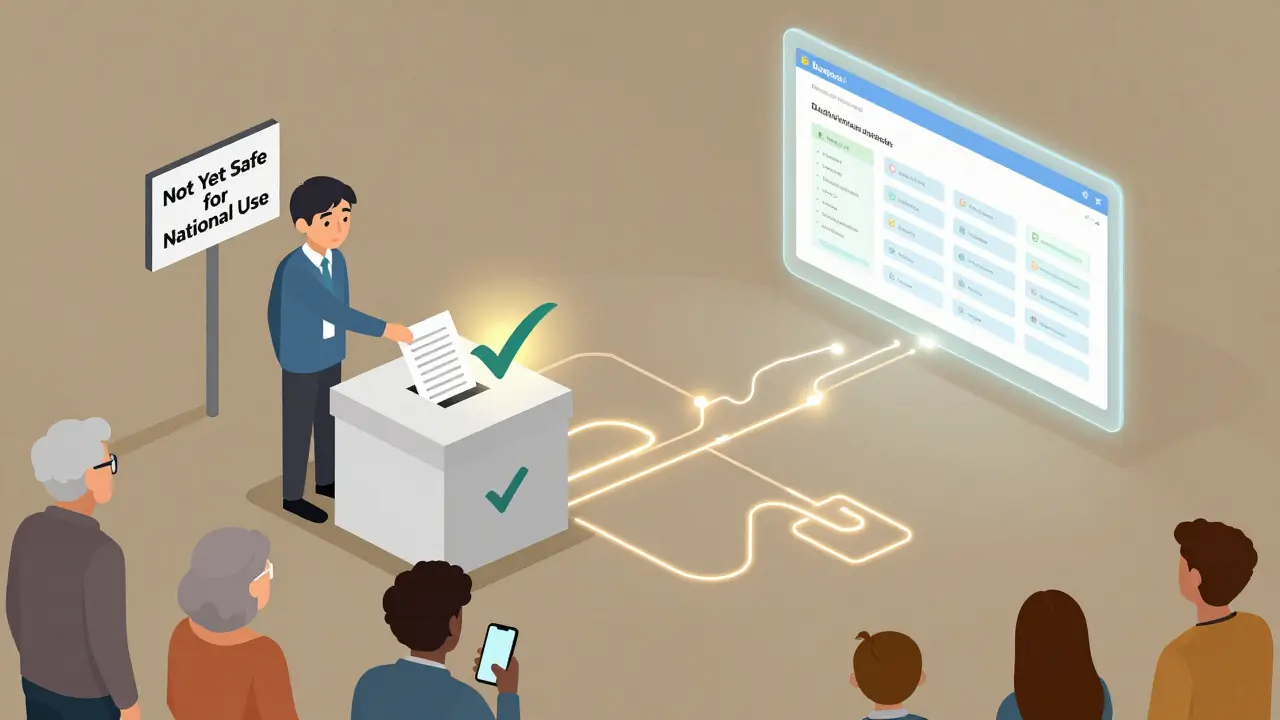
The most realistic path forward isn’t replacing all voting with blockchain. It’s using it as a backup or supplement. Think of it like a receipt system: you vote on a paper ballot or traditional machine, and your vote is also recorded on a blockchain for audit purposes. That way, you get the transparency of blockchain without the risk of online voting.
Some pilots are already moving this way. The Government Blockchain Association used Voatz to vote on its 2025 Annual Awards - a low-stakes, small-group test. It worked. But it wasn’t a national election. It was a demonstration. That’s where blockchain voting will likely stay: in small, controlled environments - corporate shareholder votes, student council elections, local referendums.
Big elections need simplicity, verifiability, and public trust. Blockchain adds complexity. And complexity is the enemy of democracy when most voters don’t understand it.
What’s Next?
Don’t expect blockchain voting to replace your local polling station anytime soon. But keep an eye on hybrid models. If a county starts using blockchain to audit paper ballots - not replace them - that’s a sign it’s becoming useful. Until then, the best tool for secure, fair elections is still a well-managed paper ballot system with independent audits.
Blockchain has value - but not as a voting machine. It’s better as a tamper-proof ledger for verifying results after the fact. That’s the real win: not voting online, but knowing your vote was counted - no matter how you cast it.
 Finance




Heath OBrien
December 12, 2025 AT 10:07Sarah Luttrell
December 14, 2025 AT 08:42Taylor Farano
December 15, 2025 AT 02:04PRECIOUS EGWABOR
December 16, 2025 AT 20:03Alex Warren
December 18, 2025 AT 16:06Scot Sorenson
December 19, 2025 AT 05:19Kathleen Sudborough
December 20, 2025 AT 23:22Kathryn Flanagan
December 21, 2025 AT 00:58Madison Surface
December 21, 2025 AT 23:49Tiffany M
December 23, 2025 AT 16:31Abhishek Bansal
December 23, 2025 AT 19:56Lois Glavin
December 23, 2025 AT 22:04Joey Cacace
December 24, 2025 AT 19:37Albert Chau
December 25, 2025 AT 14:24Patricia Whitaker
December 25, 2025 AT 14:46Jessica Eacker
December 27, 2025 AT 07:26Eunice Chook
December 29, 2025 AT 04:13amar zeid
December 30, 2025 AT 01:59Kurt Chambers
December 31, 2025 AT 17:17Kelly Burn
January 1, 2026 AT 08:58Ike McMahon
January 2, 2026 AT 21:26Jessica Petry
January 4, 2026 AT 14:33John Sebastian
January 5, 2026 AT 16:51