
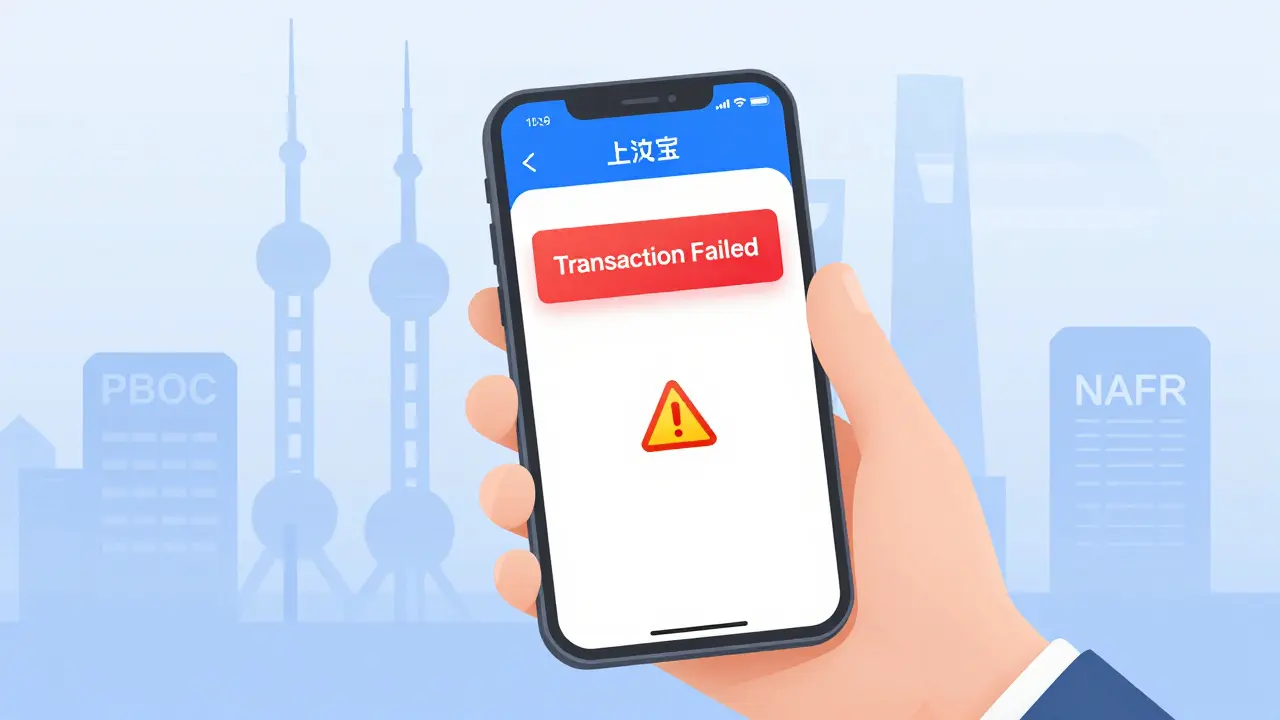
You try to send money to a Bitcoin exchange from your phone in Shanghai, and the transaction fails. You try again with a different app, and it still fails. Your account might even get flagged for review. This is not a glitch; it is by design. In mainland China, Alipay and WeChat Pay are more than just payment apps. They are the frontline enforcers of one of the strictest financial bans in the world.
Since 2021, the Chinese government has prohibited all cryptocurrency trading, mining, and initial coin offerings (ICOs). But laws on paper mean little without enforcement. That is where Ant Group’s Alipay and Tencent’s WeChat Pay come in. These two platforms handle the vast majority of digital transactions in China. By blocking crypto-related flows at the source, they effectively cut off the plumbing that would allow ordinary citizens to buy or sell digital assets.
The Regulatory Web Behind the Block
It is not just one agency telling these companies what to do. It is a coordinated effort involving multiple powerful bodies. The People's Bank of China (PBOC) sets the monetary policy tone. The National Administration of Financial Regulation (NAFR) oversees the banking sector. The Cyberspace Administration of China (CAC) monitors online behavior. And the Ministry of Public Security (MPS) handles the criminal investigations when things go wrong.
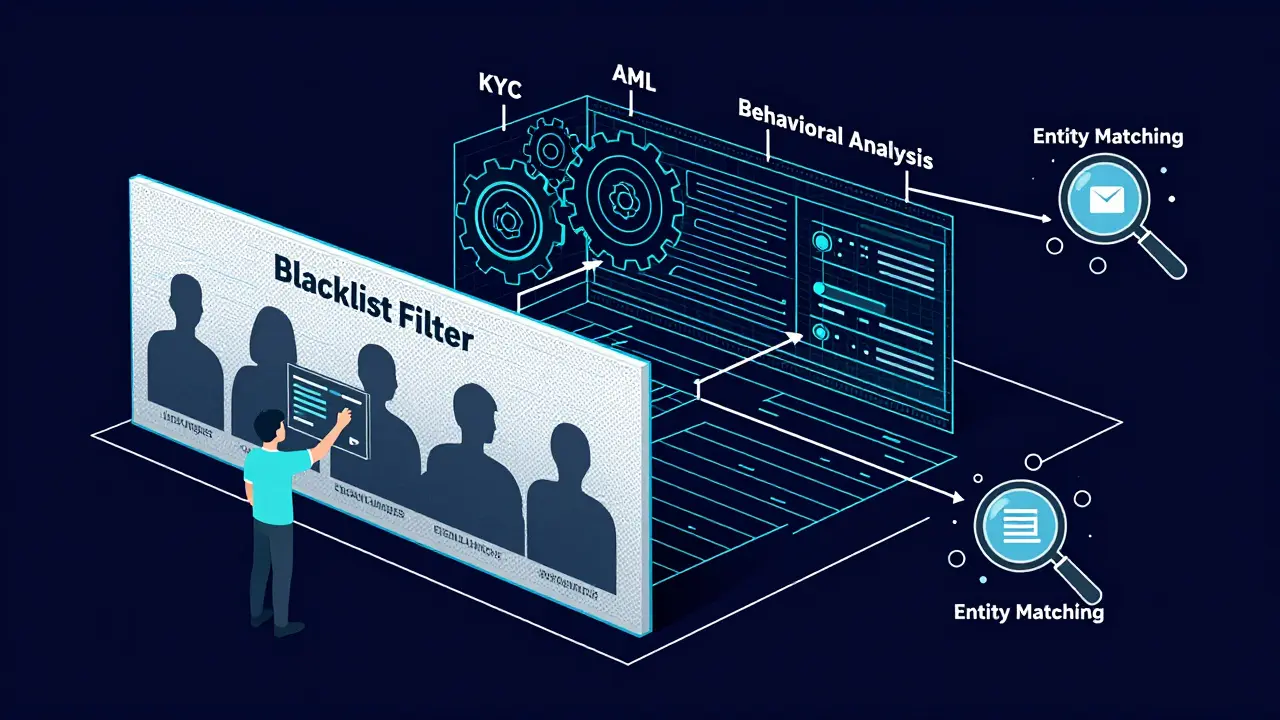
Under regulations updated through 2025, Alipay and WeChat Pay are legally required to block any financial flow linked to cryptocurrency. This goes beyond simple keyword filtering. The platforms must conduct enhanced Know Your Customer (KYC) checks and Anti-Money Laundering (AML) procedures. They scan for suspicious patterns, such as frequent small transfers to unknown recipients or large sums moving toward known offshore gateways.
If you look at this from a technical standpoint, these apps act as choke points. State-owned banks work in lockstep with Alipay and WeChat Pay. If a bank freezes an account because of suspected crypto activity, the payment apps ensure that person cannot simply switch to a digital wallet to continue. It creates a closed loop that is incredibly difficult for residents to break out of.
How the Technology Actually Works
You might wonder how an app knows you are trying to buy Bitcoin if you never mention the word "Bitcoin" in a chat. The answer lies in sophisticated transaction monitoring systems. These systems use machine learning to identify risk profiles associated with prohibited activities.
Here is what happens behind the scenes:
- Entity Matching: The platforms maintain blacklists of known cryptocurrency exchanges, mixing services, and OTC (over-the-counter) dealers. If you try to send money to a merchant ID linked to Binance or Coinbase, the payment is rejected instantly.
- Behavioral Analysis: Algorithms look for unusual spending habits. For example, if a user suddenly starts sending fixed amounts of money to dozens of different individuals every day, it triggers a flag. This pattern often indicates peer-to-peer (P2P) crypto trading.
- Cross-Border Monitoring: The State Administration of Foreign Exchange (SAFE) works with these platforms to watch for capital flight. Cryptocurrency is often used to move money out of China illegally. Any attempt to use Alipay or WeChat Pay to facilitate cross-border crypto trades is blocked and reported.
This technical enforcement is why direct trading is nearly impossible for the average user. You cannot link your card to a foreign exchange and pay via QR code. The system simply will not allow it.
The WeChat Loophole: Messaging vs. Money
WeChat Pay faces a unique challenge that Alipay does not. WeChat is not just a payment app; it is a super-app with encrypted messaging capabilities. Criminal organizations and determined traders have adapted to the payment blocks by using the messaging side of WeChat to coordinate deals while keeping the actual money movement separate or obfuscated.
Users can share cryptocurrency wallet addresses, send payment QR codes for fiat currency, and arrange meet-ups for cash trades within WeChat chats. Because WeChat uses end-to-end encryption for messages, law enforcement cannot easily read these conversations. The payment platform sees a legitimate transfer between two users, but the context-that the money was paid for Bitcoin-is hidden in the chat logs.
This creates a hybrid model of evasion. Traders use WeChat to communicate and agree on prices. Then, they might use other methods to complete the trade, or they rely on the fact that KYT (Know Your Transaction) tools struggle to trace off-chain planning. Experts note that while blockchain analysis can track coins once they move, it cannot see the handshake that happened inside an encrypted message. This has led to increased pressure on Tencent to cooperate more extensively with authorities, though the technical limitations remain.
Comparison: Mainland China vs. Asian Neighbors
To understand how strict China’s approach is, you have to look at its neighbors. The regulatory landscape in Asia is diverse, and the contrast is stark.
| Region | Regulatory Body | Crypto Trading Status | Payment Platform Role |
|---|---|---|---|
| Mainland China | PBOC, NAFR, CAC | Banned | Active Enforcement & Blocking |
| Singapore | Monetary Authority of Singapore (MAS) | Fully Regulated | Integration with Licensed Exchanges |
| Hong Kong | Securities and Futures Commission (SFC) | Licensed Retail Access | Support for Sandbox Programs |
| UAE | VARA (Virtual Assets Regulatory Authority) | Regulated Hub | Open Integration |
In Singapore, you can walk into a licensed exchange and trade Bitcoin legally. In Hong Kong, retail investors can access crypto markets under strict supervision. In mainland China, the goal is elimination, not regulation. Alipay and WeChat Pay are the tools used to achieve that elimination by ensuring no domestic financial channel supports private cryptocurrencies.
User Experience: What Happens When You Try?
If you are a compliant user who just wants to buy groceries, you notice nothing. The ban is invisible to you. But if you attempt to engage with crypto, the friction is immediate and high.
Legitimate users report that any attempt to send funds to a known exchange results in an automatic rejection. The error message is usually vague, citing "security reasons" or "system maintenance." However, repeat attempts lead to stricter consequences. Your account may be placed under enhanced monitoring, requiring additional identity verification. In severe cases, the account can be frozen entirely, cutting off your ability to pay for rent, utilities, or food.
Some users turn to over-the-counter (OTC) methods to bypass these blocks. They find buyers or sellers through social media or offline networks. While this technically avoids the payment app’s direct crypto filters, it carries massive legal risks. Participating in illegal fundraising or unauthorized capital movement can lead to criminal penalties. The Shanghai State-owned Assets Supervision and Administration Commission hinted in July 2025 that the rapid evolution of digital assets might soften some positions, but no concrete changes have been made. The risk remains extremely high.
The Future: e-CNY and Controlled Innovation
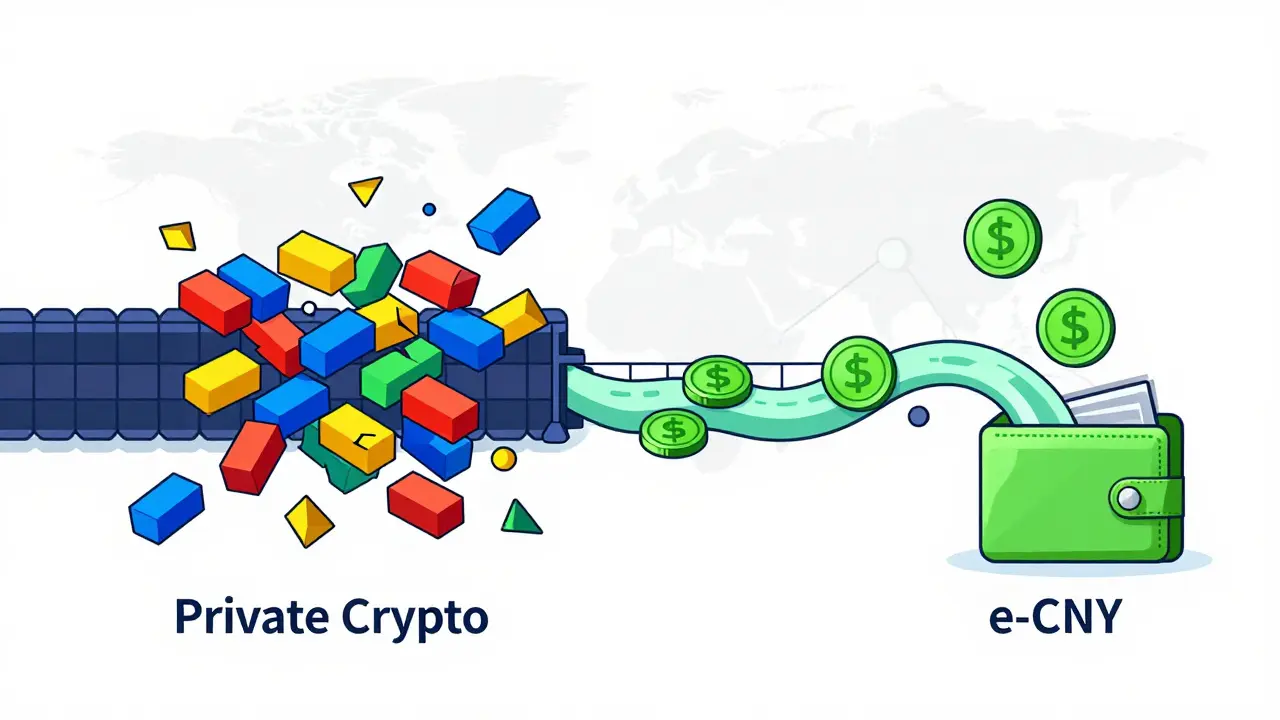
China is not against digital money; it is against private, decentralized money. The solution is the e-CNY, the Central Bank Digital Currency (CBDC) issued by the PBOC. Unlike Bitcoin or Ethereum, the e-CNY is centralized, fully controlled by the state, and operates on a permissioned ledger.
Alipay and WeChat Pay are expected to serve as distribution channels for the e-CNY. You will likely be able to load e-CNY into your Alipay wallet and spend it just like cash. This allows the government to maintain full visibility and control over all transactions. There is no anonymity, no cross-border leakage, and no speculation.
At the same time, China is exploring cross-border blockchain transactions through projects like mBridge, which involves China, Hong Kong, Thailand, and the UAE. These tests are strictly state-controlled and involve central banks, not retail users. For the average person, the prohibition on private cryptocurrencies is here to stay. The enforcement mechanisms will only become smarter, leveraging AI and big data to catch even the most subtle circumvention attempts.
Why This Matters for Global Finance
The way Alipay and WeChat Pay enforce the crypto ban offers a case study in financial sovereignty. It shows how a government can use dominant private platforms to implement macroeconomic policy. For global businesses, understanding this ecosystem is crucial. If you operate in China, you must assume that any crypto-related activity will be detected and blocked. There is no gray area.
Furthermore, the success of this enforcement highlights the importance of the financial infrastructure. In countries where cash is king or banking penetration is low, banning crypto is harder. In China, where digital payments are ubiquitous, the ban is effective because the pipes are controlled. As other nations consider their own crypto regulations, they are watching China closely to see how far platform-based enforcement can go.
Can I use Alipay to buy Bitcoin in China?
No. Alipay actively blocks transactions to known cryptocurrency exchanges and services. Attempting to do so will result in rejected payments and potential account suspension.
Is WeChat Pay safer for crypto transactions than Alipay?
Is WeChat Pay safer for crypto transactions than Alipay?
Not really. Both platforms are mandated by the same regulators to block crypto flows. While WeChat's messaging features allow for coordination, the payment function itself is equally restricted. Using either for crypto carries significant legal and financial risks.
What is the penalty for violating the crypto ban?
Penalties can range from account freezing and fines to criminal charges for illegal fundraising or capital flight. The severity depends on the scale of the transaction and whether it involves organized crime.
Will China legalize cryptocurrency in the future?
Currently, there is no indication that private cryptocurrencies like Bitcoin will be legalized. The focus is on the state-controlled e-CNY. While some officials have mentioned reviewing policies due to market changes, the fundamental stance remains prohibitive.
How does the e-CNY differ from Bitcoin?
The e-CNY is a Central Bank Digital Currency issued by the People's Bank of China. It is centralized, fully regulated, and tied to the value of the Renminbi. Bitcoin is decentralized, unregulated by any single entity, and volatile. The e-CNY is designed for everyday payments under state oversight.
Can foreigners in China use crypto via Alipay?
Foreigners are subject to the same local laws regarding crypto trading. While they may hold crypto assets purchased overseas, using Alipay or WeChat Pay to transact with crypto entities within China is prohibited and monitored.
 Finance