
Remember when Portugal was the undisputed king of crypto tax havens? For years, digital asset investors flocked to Lisbon because holding Bitcoin or Ethereum there meant zero taxes on profits. That era ended in 2023, but the story didn't stop there. If you are planning to move to Portugal, invest from abroad, or just want to understand your obligations as a resident, the rules have shifted significantly. The current framework is not about crushing the industry; it is about balancing revenue needs with maintaining Portugal’s appeal as a tech-friendly destination.
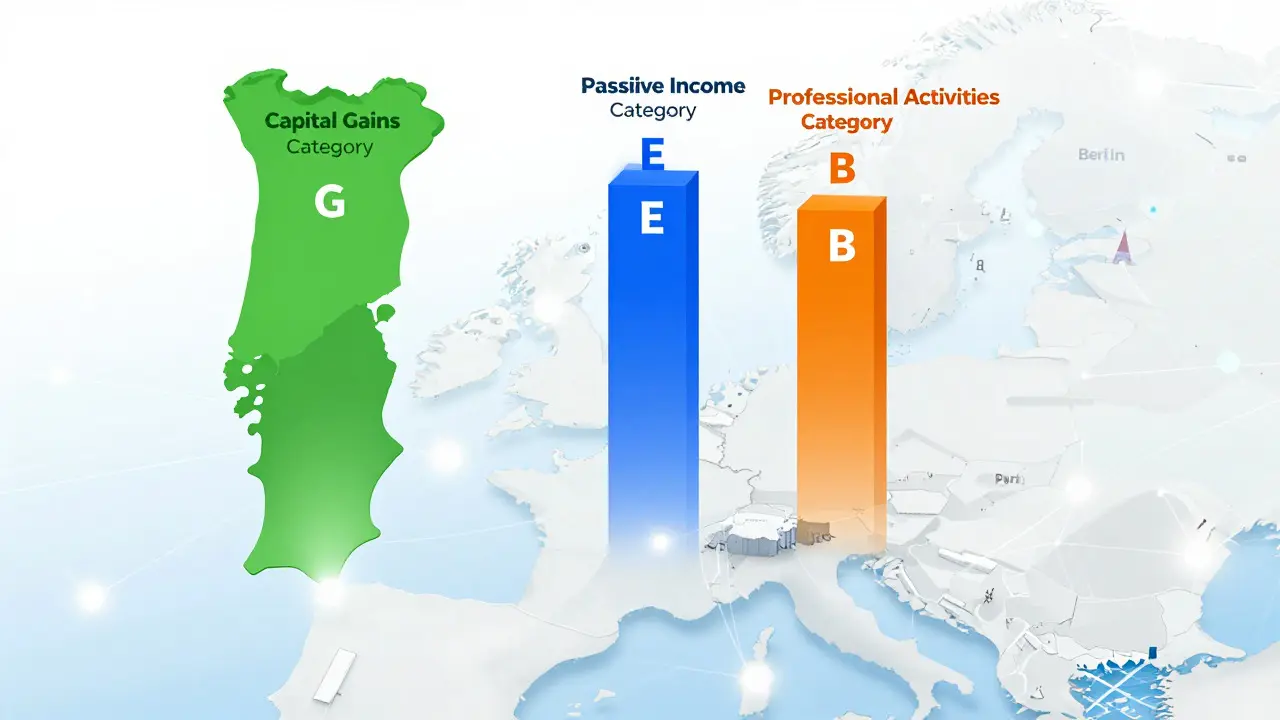
The core change introduced in the 2023 State Budget (Orçamento de Estado) replaced the blanket exemption with a structured three-tier system. This system categorizes your crypto activities into distinct buckets: professional income, passive income, and capital gains. Understanding which bucket your activity falls into is the single most important step in managing your tax liability. Let's break down exactly how this works today and what the future holds under new EU regulations.
The Three-Tier Taxation System Explained
The Portuguese Personal Income Tax Code (PIT Code) now treats cryptocurrency based on how you use it. There is no longer a one-size-fits-all rule. Instead, the Autoridade Tributária e Aduaneira (Portuguese Tax Authority) looks at the nature of your transactions to determine the tax rate.
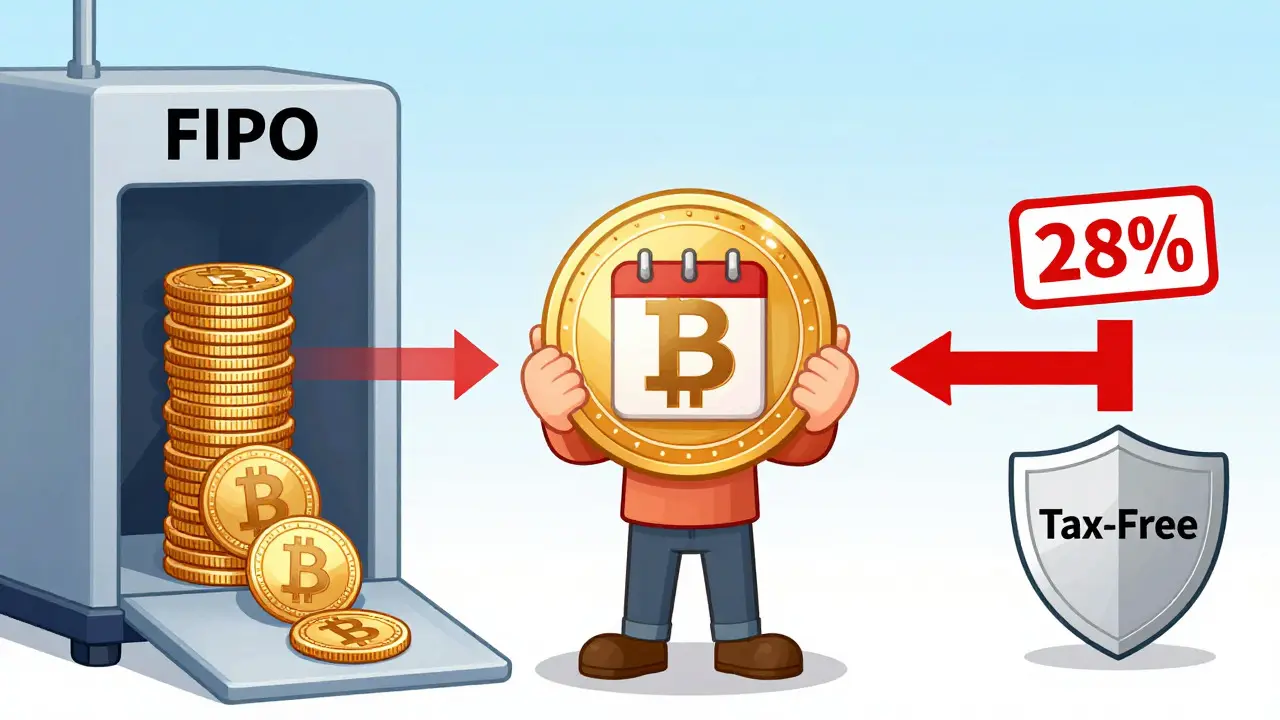
Category G: Capital Gains This is where most individual investors fit. If you buy crypto and hold it, any profit you make when selling for fiat currency is considered capital gain. The key here is time. If you hold the asset for less than 365 days, you pay a flat 28% tax on the profit. However, if you hold it for more than 12 months, that gain is completely tax-free. This long-term exemption remains Portugal’s biggest competitive advantage against other European nations.
Category E: Passive Income If you earn rewards through staking, lending, or yield farming, this is classified as passive income. These earnings are taxed at a flat 28% rate. Interestingly, you have an option here. You can choose to aggregate this income with your other sources of income, which might subject it to progressive rates ranging from 14.5% to 53%. Most people stick with the 28% flat rate unless their marginal tax bracket is lower, but it is worth calculating both scenarios during tax season.
Category B: Professional Activities Are you trading full-time? Mining? Running a validator node? If crypto is your job, your income falls under Category B. This means it is treated like salary or business income, subject to progressive tax rates from 14.5% up to 53%. There is a simplified regime for professionals earning under €200,000 annually. In this scenario, mining income is taxed on 95% of gross receipts, while other professional activities are taxed on only 15% of gross income. This distinction is crucial for miners who face high electricity costs.
How to Calculate Your Tax Liability
Calculating what you owe requires precision. The tax authority uses the First In, First Out (FIFO) method to determine your cost basis and holding period. This means the first coins you bought are the first ones considered sold when you make a transaction. You cannot cherry-pick which specific Bitcoin you sold to minimize taxes; the system assumes chronological order.
For example, if you bought Bitcoin in January and sold some in March, those are short-term gains (taxable at 28%). If you hold the rest until February of the next year, those become long-term gains (tax-free). Keeping detailed records is non-negotiable. Tools like CoinTracking or Koinly are essential for generating reports that align with FIFO requirements. Without these records, you risk audits and penalties.
One nuance to watch: taxation on staking rewards is deferred. You do not pay tax when you receive the reward in crypto. You only pay when you convert that reward into fiat currency (like Euros). This allows you to compound your rewards without immediate tax drag, provided you keep them in crypto form.
Portugal vs. Other European Jurisdictions
To see if Portugal still offers value, we need to compare it with its neighbors. The landscape varies wildly across Europe.
| Country | Short-Term Gain (<1 Year) | Long-Term Gain (>1 Year) | Staking/Yield |
|---|---|---|---|
| Portugal | 28% | Tax-Free | 28% Flat |
| Germany | Progressive (up to 45%) | Tax-Free | Progressive Income Tax |
| France | 30% Flat (including social charges) | 30% Flat | 30% Flat |
| United Kingdom | 10-20% CGT + Income Tax | 10-20% CGT | Income Tax (20-45%) |
As you can see, France imposes a heavy 30% flat rate regardless of how long you hold. Germany offers a similar long-term exemption to Portugal but has higher top marginal rates for short-term traders. The UK taxes capital gains even after long periods, though they offer an annual allowance. Portugal’s 28% short-term rate is competitive, and the complete exemption after 365 days makes it superior for buy-and-hold investors compared to the UK and France.
Future Changes: MiCAR and Regulatory Evolution
The question on everyone’s mind is: will these rules change again? The answer lies in the broader European Union regulatory framework, specifically the Markets in Cryptoassets Regulation (MiCAR). While MiCAR primarily focuses on market integrity and consumer protection rather than direct taxation, it forces member states to harmonize certain reporting standards.
Portugal has positioned itself well for this transition. By establishing clear national tax rules early, it avoids the regulatory vacuum that plagued many countries. The Bank of Portugal oversees Anti-Money Laundering (AML) and Know Your Customer (KYC) protocols, ensuring that businesses operating in the space adhere to strict government regulations. This infrastructure development suggests that tax enforcement capabilities will improve over time.
Expect increased scrutiny on undeclared holdings. The Autoridade Tributária e Aduaneira is building the technical capacity to track crypto flows more effectively. While they may not have real-time blockchain surveillance yet, data sharing agreements with exchanges and other jurisdictions are becoming standard. The assumption going forward is that tax authorities can and will track your holdings if you fail to declare them.
There are also whispers about potential adjustments to the simplified regime thresholds for professional traders. As the market matures, the government may refine the definition of "professional activity" to capture more revenue from high-frequency traders who currently operate in gray areas. However, the core structure-time-based capital gains taxation-is likely stable for the foreseeable future.
Compliance Checklist for Residents and Non-Residents
Whether you are a local resident or a digital nomad visiting for a few months, compliance starts with understanding your status. Here is what you need to do:
- Determine Tax Residency: If you spend more than 183 days in Portugal, you are a tax resident. This means your worldwide crypto income is subject to Portuguese tax rules. Non-residents are generally taxed only on Portuguese-sourced income, which rarely includes crypto held on foreign exchanges.
- Track Holding Periods: Use software to log every buy, sell, and transfer. Ensure your records clearly show dates to prove holdings exceeded 365 days for tax-free treatment.
- Separate Wallets: Consider using separate wallets for long-term HODLing versus active trading. This simplifies record-keeping and reduces the risk of accidentally triggering a taxable event on your long-term stash.
- Declare Staking Rewards: Even if you don’t convert them to fiat immediately, you must report the receipt of staking rewards in your annual declaration. Tax is due upon conversion, but the asset must be declared.
- Consult a Specialist: Crypto tax law is complex. A local accountant familiar with the 2023 reforms can save you thousands in potential errors. Do not rely on generic advice from forums.

Common Pitfalls to Avoid
Many investors make costly mistakes by assuming old rules still apply. One common error is ignoring crypto-to-crypto trades. Under FIFO, swapping Bitcoin for Ethereum is a taxable event if the Bitcoin was held for less than a year. You must calculate the gain or loss at the moment of the swap.
Another pitfall is misclassifying professional activity. If you trade daily, the tax authority may reclassify your gains from Category G (capital gains) to Category B (professional income), pushing your effective tax rate much higher. To avoid this, maintain a clear separation between personal investment accounts and business operations.
Finally, do not overlook the Double Tax Treaty implications. If you hold assets in a jurisdiction with a treaty with Portugal, ensure your long-term gains qualify for the exemption. Holdings in countries without such treaties may face different scrutiny, though the 365-day rule generally applies to all EU/EEA and treaty-partner jurisdictions.
Conclusion: Is Portugal Still Worth It?
Despite the end of the zero-tax era, Portugal remains one of the best places in Europe for crypto investors. The 28% flat rate on short-term gains is reasonable, and the complete exemption for long-term holders is unmatched by many peers. The clarity provided by the three-tier system reduces uncertainty, allowing investors to plan their strategies with confidence.
The future looks stable. With MiCAR implementation underway, Portugal’s early adoption of clear rules positions it as a compliant yet attractive hub. As long as you respect the 365-day holding period and keep meticulous records, you can continue to benefit from a favorable tax environment. The key is adaptation: treat your crypto portfolio with the same rigor as traditional investments, and the Portuguese system will work in your favor.
Is crypto tax-free in Portugal in 2026?
Crypto is not entirely tax-free in Portugal anymore. Short-term capital gains (held less than 365 days) are taxed at 28%. However, long-term capital gains (held more than 12 months) remain completely tax-free. Staking and professional trading are also subject to taxes.
What is the difference between Category B and Category G crypto tax?
Category G applies to capital gains from buying and selling crypto as an investor. It offers a 28% rate for short-term gains and 0% for long-term. Category B applies to professional activities like full-time trading, mining, or running a business. Income here is taxed at progressive rates from 14.5% to 53%, similar to salary income.
Do I pay tax on staking rewards immediately?
No, you do not pay tax immediately when you receive staking rewards in crypto. Taxation is deferred until you convert those rewards into fiat currency (like Euros). At that point, the value is taxed at a flat 28% rate under Category E, or aggregated with other income if beneficial.
How does MiCAR affect crypto taxes in Portugal?
MiCAR (Markets in Cryptoassets Regulation) primarily regulates market conduct and consumer protection, not direct tax rates. However, it enhances transparency and reporting requirements, which helps tax authorities track holdings more effectively. Portugal’s existing tax framework is compatible with MiCAR, ensuring stability for investors.
What happens if I hold crypto for exactly 365 days?
To qualify for the tax-free long-term capital gains exemption, you must hold the asset for more than 365 days. Selling on the exact 365th day typically triggers the short-term 28% tax rate. It is safest to wait until day 366 to ensure you meet the "over 12 months" requirement.
Are non-residents taxed on crypto in Portugal?
Non-residents are generally taxed only on income sourced within Portugal. Since most crypto holdings are on international exchanges, non-residents often pay no Portuguese tax on their crypto gains. However, if you spend more than 183 days in Portugal, you become a tax resident and must declare worldwide income.
Does Portugal tax crypto-to-crypto swaps?
Yes, crypto-to-crypto swaps are taxable events. Using the FIFO method, the system calculates the gain or loss based on the original purchase price of the first acquired assets. If the swapped-out asset was held for less than a year, you pay 28% tax on any profit.
 Finance