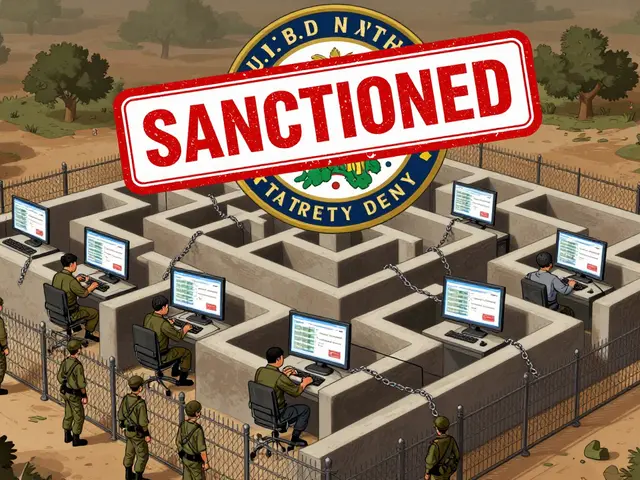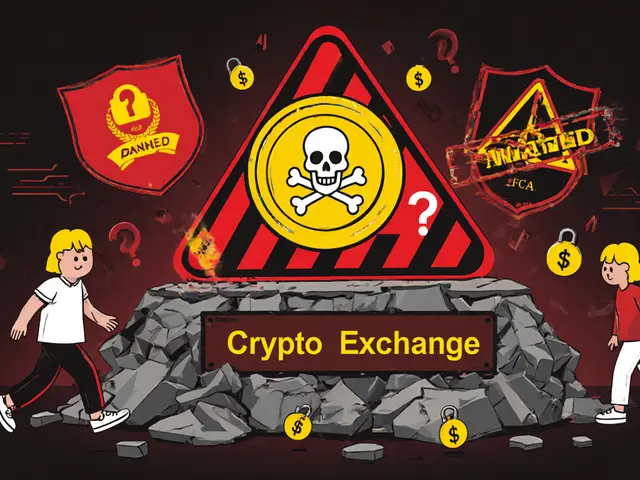


Singapore used to be the golden ticket for crypto startups. If you wanted legitimacy in Asia, you registered there. But if you are looking to launch a new digital token service provider (DTSP) in Singapore today, you need to know the hard truth: new licenses are effectively banned. The Monetary Authority of Singapore (MAS) has shifted from being a crypto-friendly hub to one of the strictest regulatory environments in the world. This isn't just a tightening of rules; it is a strategic pivot that prioritizes financial integrity over market growth.
The turning point came with the enforcement of the Financial Services and Markets Act (FSMA) 2022. While the law was passed earlier, the practical application hit its peak in mid-2025. MAS announced that it would issue licenses only in 'extremely limited circumstances.' For most businesses, this means the door is closed. The regulator cited unresolved Anti-Money Laundering (AML) and Counter-Terrorism Financing (CFT) concerns as the primary reason. They are no longer willing to risk Singapore's reputation by hosting companies that might be engaging in regulatory arbitrage.
What Changed? The Shift from Growth to Control
To understand why this happened, you have to look at what MAS calls 'regulatory arbitrage.' In simple terms, this is when a company registers in Singapore to borrow the country's strong financial reputation, but actually serves clients overseas under weaker local laws. MAS realized that many crypto firms were using Singapore as a stamp of approval while operating with minimal oversight elsewhere.
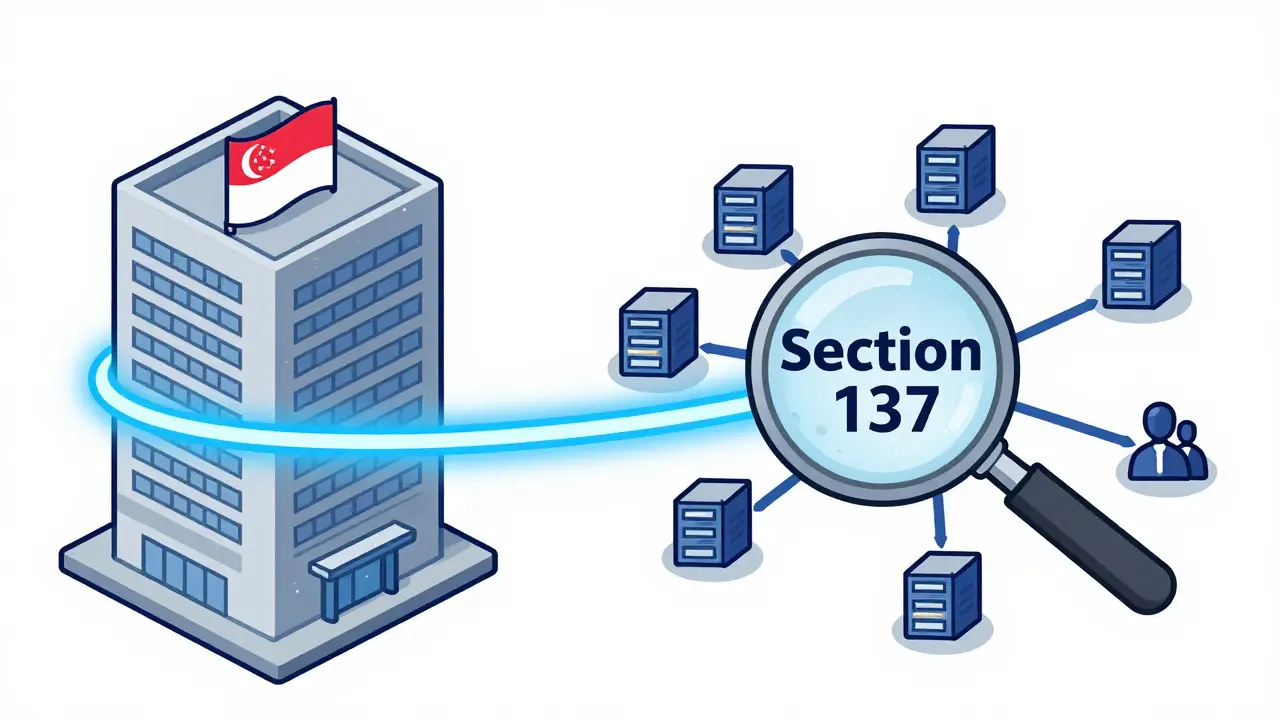
This concern led to the implementation of Section 137 of the FSMA. This section gives MAS extraterritorial reach. What does that mean for you? It means if you are a Singapore corporation or an individual operating from Singapore, you need a DTSP license-even if your users, servers, and funds are entirely outside the country. You cannot hide behind the fact that you serve only international clients. If you operate from Singapore, you fall under MAS jurisdiction.
The timeline for compliance was aggressive. MAS set a hard deadline of June 30, 2025, for full compliance with these new standards. There was no grace period. This abrupt shift forced many international crypto firms to make a quick decision: either establish substantial, compliant operations in Singapore or exit the jurisdiction entirely.
The Requirements That Kill Most Applications
If you are one of the few entities attempting to secure a license, the bar is incredibly high. MAS requires what experts call 'elite compliance infrastructure.' Here is what that looks like in practice:
- Minimum Capital Thresholds: You must hold significant capital reserves to ensure operational stability and cover potential liabilities.
- Singapore-Based Compliance Officer: You must appoint a qualified compliance officer who resides in Singapore. According to 2025 industry salary surveys, this role commands an annual salary between SGD 150,000 and SGD 250,000.
- Annual Independent Audits: Your operations must undergo rigorous yearly audits to verify adherence to all regulatory standards.
- Rigorous AML/CFT Protocols: You need sophisticated systems to detect and prevent money laundering and terrorist financing activities.
- Cybersecurity Standards: Your infrastructure must meet high-level security benchmarks to protect user data and assets.
These requirements are not just paperwork. They require deep integration into your business model. For example, the consumer protection regulations updated in September 2024 prohibit high-risk practices like allowing customers to buy cryptocurrencies directly with credit cards. You also need mandatory customer suitability assessments. This means you have to evaluate whether a client can afford the risks associated with crypto investments before letting them trade.
The Travel Rule: Tracking Every Transaction
One of the most technical hurdles is the implementation of the Travel Rule through Notice PSN02. This rule mandates that crypto platforms collect and exchange specific information about senders and receivers for transactions exceeding SGD 1,500 (approximately USD 1,100).
You need to share names, identification numbers, and account details. This requires integrating specialized software solutions capable of handling complex data exchanges across borders. According to Notabene's analysis in June 2025, implementing this technology costs between SGD 50,000 and SGD 200,000, depending on your transaction volume. On top of that, Deloitte estimated in May 2025 that navigating the interplay between MAS requirements and other jurisdictions increases overall operational costs by 25% to 40%.
| Requirement | Estimated Cost / Impact | Key Detail |
|---|---|---|
| Compliance Officer Salary | SGD 150,000 - 250,000/year | Must be based in Singapore |
| Travel Rule Software Integration | SGD 50,000 - 200,000 | One-time setup + maintenance |
| Overall Operational Cost Increase | 25% - 40% | Due to multi-jurisdictional compliance |
| Non-Compliance Fine | Up to SGD 200,000 | Plus potential imprisonment |
The Impact on the Crypto Ecosystem
The result of these strict measures has been a significant contraction in Singapore's crypto sector. Industry analysts predict that only 15 to 20 existing license holders will maintain full compliance by the June 2025 deadline. This is a sharp drop from the approximately 200 firms that had previously applied for or held provisional licenses.
The job market reflects this chill. LinkedIn workforce analytics tracked a 37% decline in crypto-related job postings in Singapore during Q1 2025 compared to Q4 2024. Companies are leaving, and those remaining are hiring fewer people because they are focusing heavily on compliance rather than expansion.
Dr. Jane Lim, Director of the Asian Fintech Institute, warned that 'overly restrictive regulation could permanently diminish Singapore's role in the global crypto ecosystem.' She argues that while safety is important, pushing out innovation hurts long-term competitiveness. Meanwhile, MAS officials maintain that 'a smaller, higher-quality industry better serves Singapore's long-term interests.'

Where Do Businesses Go Now?
If Singapore is closing its doors, where do crypto businesses go? Many are looking at jurisdictions that still offer active licensing programs. Switzerland and the United Arab Emirates (UAE) stand out as alternatives. These countries have maintained more permissive frameworks, allowing new entrants to join the market without facing the same level of scrutiny or cost as in Singapore.
This creates a competitive disadvantage for Singapore. While it retains its status as a trusted financial hub for traditional banking, it is losing ground in the digital asset space. The contrast is stark: Singapore prioritizes regulatory certainty and financial integrity, while competitors prioritize market access and innovation speed.
Future Outlook: Stablecoins and DeFi
MAS is not done regulating. Even with the de facto ban on new general DTSP licenses, the regulator continues to refine its approach for specific areas. In November 2023, MAS published a stablecoin regulatory framework to ensure 'a high degree of value stability.' In their May 15, 2025 parliamentary reply, MAS signaled that further guidance on Decentralized Finance (DeFi) protocols and stablecoin arrangements is expected in late 2025.
This suggests that while the broad door is closed, narrow windows may remain for highly regulated, low-risk products like stablecoins that adhere strictly to MAS standards. However, for speculative tokens or general exchange services, the message remains clear: if you don't already have a license, you likely won't get one.
Can I still get a crypto license in Singapore in 2026?
It is extremely difficult. MAS stated it will issue licenses only in 'extremely limited circumstances.' Unless you have elite compliance infrastructure and a very strong operational justification, you will likely be rejected. The regulator has effectively imposed a de facto ban on new licenses due to AML and CFT concerns.
Does MAS regulate crypto companies serving only overseas clients?
Yes. Under Section 137 of the Financial Services and Markets Act (FSMA) 2022, MAS has extraterritorial reach. If you are a Singapore corporation or individual operating from Singapore, you must obtain a DTSP license regardless of where your users, servers, or funds are located.
What happens if I operate without a DTSP license?
Penalties are severe. You face fines of up to SGD 200,000 (approx. USD 147,000), potential imprisonment, and mandatory cessation of operations. There is no grace period for non-compliance after the June 30, 2025 deadline.
Why did MAS change its stance on crypto?
MAS is concerned about 'regulatory arbitrage,' where companies use Singapore's reputable name while operating under weaker oversight elsewhere. To protect Singapore's standing as a trusted financial hub, MAS decided to tighten control and reduce the number of players in the market to only those with the highest compliance standards.
Are there any exceptions for stablecoins?
Stablecoins are subject to a separate regulatory framework published in November 2023, which aims to ensure high value stability. MAS indicated in May 2025 that further guidance on stablecoins and DeFi is expected, suggesting these areas may have different pathways compared to general digital token services.
 Finance