

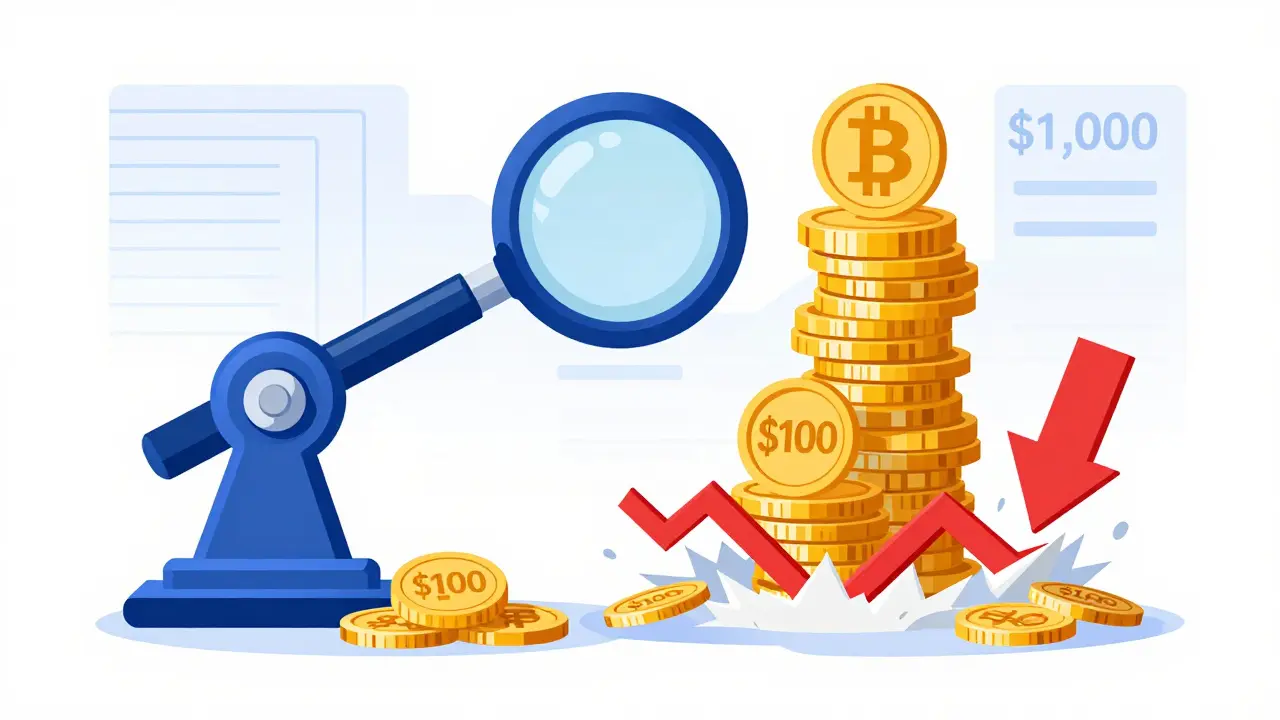
You put up $100. You leverage it 10x to control $1,000 worth of Bitcoin. The price drops just 5%. Suddenly, your account is empty. Your position is gone. This isn't a glitch. It's liquidation, the automatic safety mechanism that closes your trade when you run out of money to cover losses.
If you are trading with borrowed money-whether on centralized exchanges like Binance and Bybit or decentralized protocols like Aave-understanding liquidation is not optional. It is the difference between surviving a market dip and losing your entire principal in seconds.
The Mechanics: Why Your Position Gets Closed
Liquidation exists for one reason: to protect the lender. When you use leverage, you are borrowing funds from the exchange or other traders. If your trade goes bad, the exchange needs to ensure they get their money back. They cannot let your balance go negative.
Think of it like a house foreclosure. If you stop paying the mortgage, the bank takes the house. In crypto, if your collateral (your initial deposit) falls below a certain level, the system forcibly sells your assets to repay the loan.
This process relies on two key metrics:
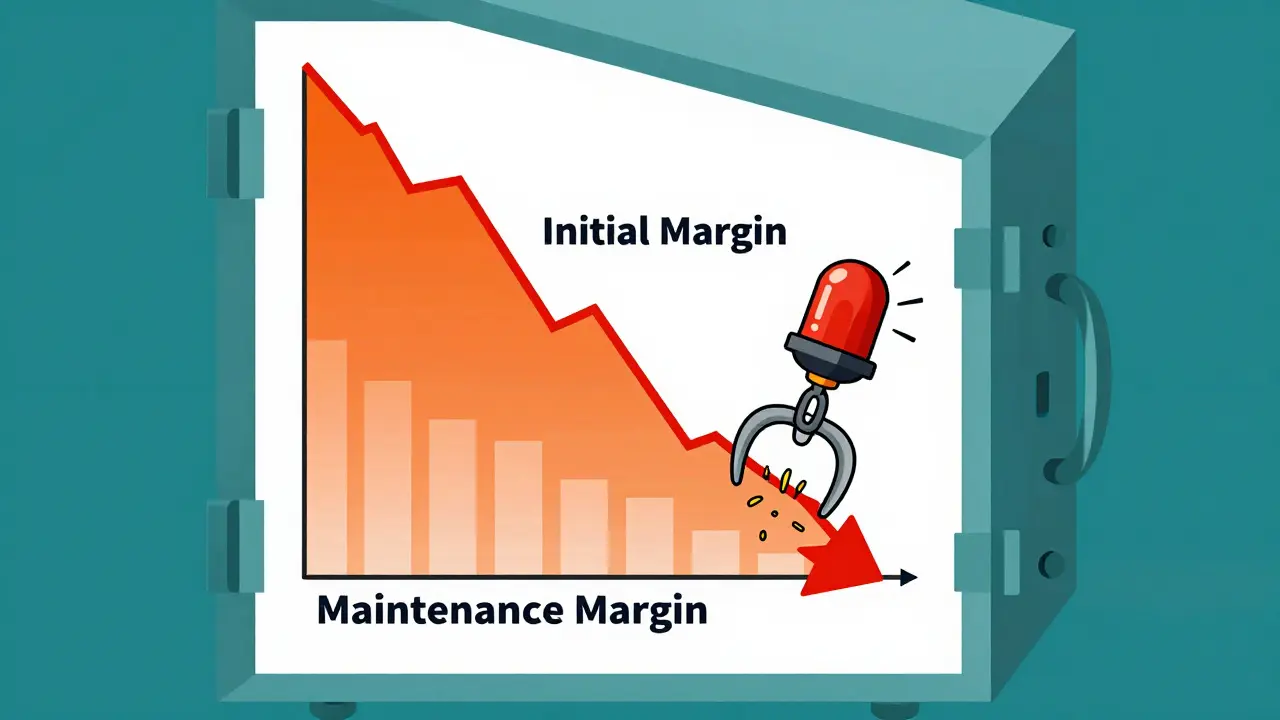
- Initial Margin: The amount of capital you deposit to open the position. For 10x leverage, this is usually 10% of the total position value.
- Maintenance Margin: The absolute minimum equity you must keep in your account to keep the position open. Most major exchanges set this between 0.5% and 1%.
When your account equity drops to the maintenance margin level, the liquidation engine triggers. It does not ask for permission. It acts instantly.
Calculating Your Liquidation Price
Every trader has a specific price point where they get wiped out. This is called the Liquidation Price. It changes dynamically based on your entry price, leverage, and current fees.
Here is how the math works for a simple long position (betting the price will go up):
Liquidation Price = Entry Price × (1 - Initial Margin Rate + Maintenance Margin Rate)
Let’s look at a concrete example. You buy Bitcoin at $60,000 using 10x leverage. Your initial margin rate is 10% (0.10). The maintenance margin is 0.5% (0.005).
Your liquidation price would be approximately: $60,000 × (1 - 0.10 + 0.005) = $54,300.
If Bitcoin drops to $54,300, you lose everything. Notice that a 10x leverage means a mere 9.5% drop wipes you out. If you used 50x leverage, a 2% drop would kill your position. Higher leverage doesn't just mean bigger profits; it shrinks your survival window drastically.
Centralized vs. Decentralized Liquidations
Not all liquidations happen the same way. The platform you choose dictates the rules of engagement.
| Feature | Centralized Exchanges (CEX) | Decentralized Finance (DeFi) |
|---|---|---|
| Executor | Exchange's automated engine | Third-party "Liquidators" (bots/users) |
| Price Source | Mark Price (index of multiple exchanges) | Chain Oracles (e.g., Chainlink) |
| Penalty/Fee | Often hidden in spread or small fee (0.05-0.5%) | Discount on collateral (5-15% off market price) |
| Speed | Milliseconds (internal matching engine) | Block time dependent (seconds to minutes) |
On platforms like Binance or Bybit, the exchange uses a "Mark Price" to determine liquidation. This prevents "wicks" (sudden, short-lived price spikes on one exchange) from unfairly triggering liquidations. However, DeFi protocols like Aave work differently. There is no central server closing your trade. Instead, anyone can trigger your liquidation by repaying part of your debt in exchange for your collateral at a discount. This creates a competitive market for liquidators, which can sometimes result in harsher penalties for the trader but ensures protocol solvency.
The Danger of Liquidation Cascades
Liquidations don't just affect you. They affect the whole market. This is known as a cascade.
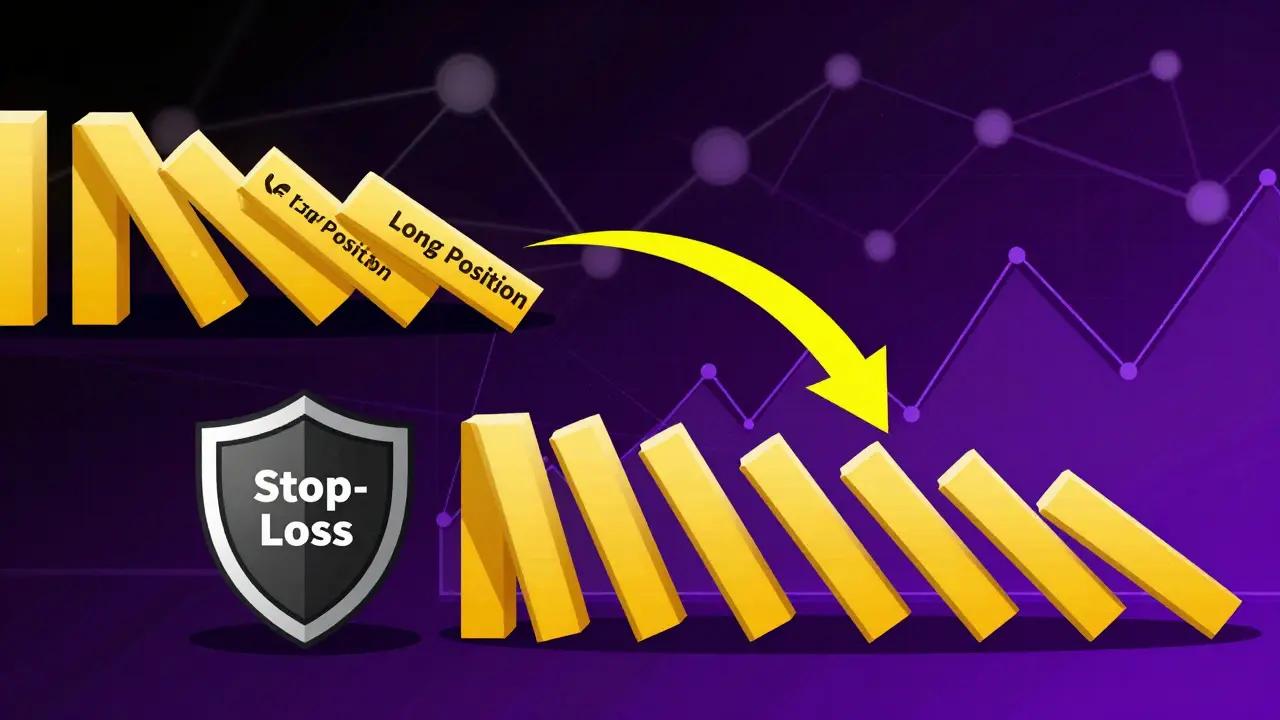
Imagine a large number of traders have long positions on Ethereum with similar liquidation prices around $3,000. If the price dips to $3,000, those positions are forced to sell. These forced sales push the price down further-to $2,950, then $2,900. This triggers more liquidations, causing more selling. The price spirals downward rapidly, often moving 5-7% beyond fundamental values in minutes.
Data from Deribit Insights (2023) shows that 78.3% of liquidations occur within 1.5% of major technical support levels. Traders like Benjamin Cowen have mapped these "liquidation clusters," showing that markets often gravitate toward areas where the most pain can be inflicted on leveraged traders.
This phenomenon was starkly visible in May 2025, when a cascade wiped out over $12 billion in positions across major exchanges. Understanding that your liquidation might contribute to a broader market crash is crucial context for risk management.
How to Avoid Getting Liquidated
You cannot stop the market from moving against you, but you can manage your exposure. Here are three practical strategies used by professional traders.
- Lower Your Leverage: Retail traders often use 10x-50x leverage. Institutions typically stick to 2x-5x. Lower leverage increases the distance between your entry price and your liquidation price, giving the trade room to breathe during normal volatility.
- Use Stop-Loss Orders: A stop-loss exits your position before you hit liquidation. Set your stop-loss at 70-80% of your liquidation distance. Yes, you will take a small loss, but you preserve the remaining capital instead of losing it all.
- Add Collateral: If your position is underwater but you believe in the thesis, you can add more funds to your margin account. This lowers your effective leverage and pushes your liquidation price further away. As noted by trader 'CryptoWolf' in late 2025, keeping 15% of your portfolio in stablecoins specifically for emergency margin top-ups can save trades during sudden dips.
Also, watch out for Funding Rates. In perpetual futures contracts, you pay or receive interest every 8 hours. If funding rates are high, they eat into your margin, effectively raising your liquidation price over time even if the market price stays flat.
Recent Changes in 2025-2026
The industry has evolved significantly following recent market crashes. In Q4 2025, major exchanges implemented new safeguards:
- Binance introduced "Dynamic Maintenance Margin," which adjusts requirements based on real-time volatility indices.
- Bybit launched "Liquidation Protection Zones" to prevent closures during brief, irrational price spikes (wicks) lasting less than 500ms.
- Deribit switched to time-weighted average prices over 30 seconds for liquidation calculations, reducing noise from single-block outliers.
Regulators are also stepping in. The U.S. CFTC issued guidance in September 2025 requiring "liquidation circuit breakers" during extreme volatility events. Meanwhile, the EU’s MiCA 2.0 draft legislation (January 2026) proposes stricter transparency rules for liquidation fees and algorithms.
What happens to my money after I am liquidated?
Your position is closed at the current market price. The proceeds are used to repay the borrowed funds and any accrued interest. Any remaining balance (if you had extra collateral) is returned to your account. If your position loses more than your collateral due to slippage, some exchanges may leave you with a zero balance, while others might charge a small fee. You do not owe the exchange money unless you have a specific margin agreement stating otherwise, but you lose your entire deposited margin.
Is there a fee for getting liquidated?
Yes, indirectly. On centralized exchanges like BitMEX, there is an explicit liquidation fee (e.g., 0.5%). On Binance or Bybit, there may not be a labeled "fee," but the exchange executes the sale at a slightly worse price than the market rate to cover costs. In DeFi, liquidators buy your collateral at a discount (often 5-15% below market), which acts as the penalty.
Can I avoid liquidation by adding more margin?
Yes, if you act quickly. Adding collateral increases your account equity, lowering your margin ratio. If you add enough funds to bring your margin ratio back above the maintenance requirement before the liquidation engine triggers, your position will remain open. However, this requires having available funds ready to deploy instantly.
Why did I get liquidated if the price didn't reach my displayed liquidation price?
This is often due to the difference between "Last Price" and "Mark Price." Exchanges use Mark Price (an index of multiple global exchanges) to calculate liquidation to prevent manipulation. If the local exchange price wicks down but the global index remains stable, you stay safe. Conversely, if the index moves against you faster than the local price, you can be liquidated even if the chart on your screen looks okay. Additionally, funding rates and transaction fees reduce your equity, shifting your actual liquidation price closer to your entry over time.
What is auto-deleveraging (ADL)?
Auto-deleveraging is a secondary safety mechanism. If a trader's position cannot be fully covered by the exchange's Insurance Fund, the system may force-close profitable positions of other traders with the opposite view to absorb the loss. This is rare but possible in extreme market conditions. It highlights the interconnected risk in leveraged markets.
 Finance



Terry Hyland
June 16, 2026 AT 01:33its just gambling with fancy words. you are betting against other people and hoping they lose so you win. it is not investing? no. its a casino run by guys in suits who want your money. i lost my savings because i thought i was smart. stupid mistake. stay away from leverage unless you like losing.
Monica Pathammavong
June 16, 2026 AT 01:50actually you dont understand the math at all. the article says mark price but u r looking at last price lol. also why would anyone use 50x leverage?? are u stupid?? maintenance margin is 0.5% not 5%. read again. ur comments show how uneducated retail traders are. typical. :)
Tim Lefebvre
June 17, 2026 AT 23:04hey there! nice point about the mark price. i think many people get confused by that too. i always tell folks to check the funding rate as well cause it eats into profits over time. hope this helps u out! let me know if u need more tips on risk management
Josh Dodson
June 18, 2026 AT 15:07you got this! start small. dont blow up your account. 2x leverage is plenty for most people. take it easy and learn the ropes first. we all started somewhere. keep going!
Annemarie Fitzgerald
June 19, 2026 AT 19:14the tragedy of modern finance is that we have reduced human endeavor to mere numbers on a screen. liquidation is not just a financial event; it is an existential crisis for the trader. when the system takes your collateral, it takes a piece of your soul. do we really want to live in a world where algorithms decide our worth? i find this deeply disturbing and yet inevitable. silence speaks volumes here.
Abby Sivertsen
June 20, 2026 AT 17:27look i know it sounds dramatic but its real pain. i watched my friend get wiped out in seconds. he was shaking. its not just money. its stress. but hey thats crypto for you. high risk high reward or just high risk. whatever floats your boat i guess. stay safe out there.
Filbert Reeves
June 21, 2026 AT 04:17they tell you its safety mechanism but its actually a trap designed to harvest liquidity. the exchanges manipulate the wicks to trigger these cascades. its all rigged. the bots know where the stop losses are. they hunt them. you think you are trading the market but the market is trading you. wake up sheeple. the whole thing is a ponzi scheme disguised as innovation. they profit when you fail. simple as that.
Nick Rice
June 23, 2026 AT 02:51I must disagree with the conspiracy angle. While manipulation exists, the mechanics described are standard financial engineering. The key is discipline. You cannot blame the tool for the misuse. If you cannot handle the volatility, you should not be in the arena. It is a test of character and capital allocation. Respect the process.
Amit Thakur
June 24, 2026 AT 20:41Let's talk delta hedging and gamma exposure here. The liquidation engine is essentially a forced deleveraging event that impacts the order book depth. When you see a cascade, it's often due to thin liquidity at key support levels. Traders need to understand implied volatility skew. Don't just look at spot price. Look at the derivatives data. That's where the alpha is.
Eric Scheinberg
June 26, 2026 AT 08:39The distinction between centralized and decentralized execution is paramount. In DeFi the lack of a central counterparty introduces unique risks such as oracle failure. However it also provides transparency. One must weigh the convenience of CEXs against the sovereignty of DeFi protocols. Both have merits depending on one's risk tolerance.
pankaj chawla
June 28, 2026 AT 01:35Great points everyone. I agree that understanding the difference between CEX and DEX is crucial. Also adding collateral is a good strategy if you believe in the long term thesis. Just make sure you have enough stablecoins ready. Let's collaborate and share more insights on risk management.
Jessica Lane
June 29, 2026 AT 22:32This is a very informative guide. I am curious about the regulatory changes mentioned. How will MiCA 2.0 affect retail traders in Europe specifically? Will it make leverage harder to access? I want to ensure I am compliant while still participating in the market. Any insights would be appreciated.
Charles Pawlikowski
July 1, 2026 AT 07:22typical EU bureaucracy trying to kill innovation. they want to protect their weak investors from themselves. in america we take risks and reap rewards. don't listen to the regulators. they are out of touch. trade what you want. just don't complain when you lose. :)
Andrea Burd
July 3, 2026 AT 02:28ugh another basic guide. anyone who reads this probably already blew up an account. the elites don't use leverage like this. they use options and structured products. this is for peasants. boring stuff. i prefer reading about art history.
Manish Prajapat
July 3, 2026 AT 05:23Trading is a reflection of inner peace. If you are anxious about liquidation, you are attached to the outcome. Detach from the PnL. Observe the market without judgment. The loss is just energy transforming. Find balance within yourself rather than in the charts. Peace.
John Doe
July 4, 2026 AT 23:10I felt that loss deep in my bones. One minute I'm up, the next I'm zero. The silence after the notification is deafening. It's not just money gone; it's trust broken. But we rise again. We adapt. We survive. The market tests us all. Stay strong.