

You just clicked "Swap" on a decentralized exchange. You expected to get 10% more tokens for your money. Instead, you got half that amount, or worse, the transaction failed and you still paid the gas fee. Who stole the difference? It wasn't a hacker in a hoodie breaking into your wallet. It was a bot. Specifically, it was an Maximal Extractable Value (MEV) extractor using a technique called front-running. This isn't a bug; it's a feature of how public blockchains work, but one that regularly drains millions from regular users.
What Actually Is MEV?
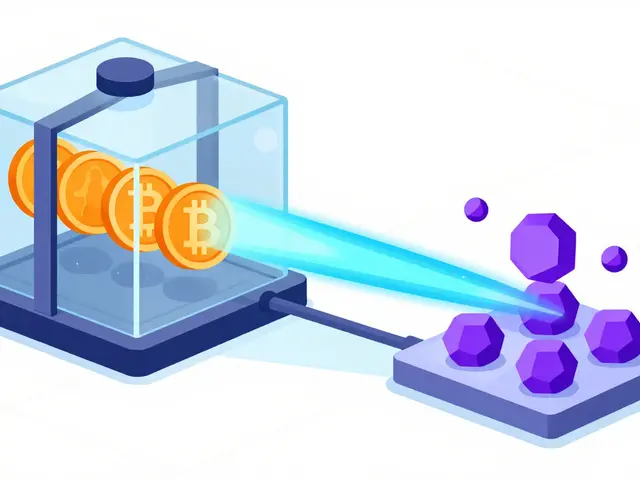
Think of MEV as the maximum profit a block producer-whether a miner or a validator-can make by changing the order of transactions in a block. They can include, exclude, or reorder transactions to their advantage. The term started as "Miner Extractable Value" during Ethereum's Proof-of-Work days, but since Ethereum moved to Proof-of-Stake, we call it Maximal Extractable Value because validators do the same thing. A seminal 2019 paper titled "Flash Boys 2.0" by Ari Juels and Lorenz Breidenbach put this on the map, showing these weren't rare glitches but systematic extractions. By late 2021, over $554 million had been extracted on Ethereum alone. Today, that number is significantly higher, with estimates exceeding $686 million cumulatively. That’s real money leaving user wallets and going into the pockets of sophisticated operators.
The Mechanics of Front-Running
Here is how front-running works in plain English. When you submit a transaction, it doesn’t go straight to the blockchain. It sits in a waiting room called the mempool, visible to everyone. Automated bots scan this mempool constantly. If they see your large buy order on an Automated Market Maker (AMM) like Uniswap, they know your trade will push the price up. So, they jump in line ahead of you. They pay a slightly higher gas fee to incentivize the validator to process their transaction first. They buy at the old, lower price, then let your transaction execute at the new, higher price. Finally, they sell immediately after you. You effectively bought high because they manipulated the market seconds before you entered. This is why your slippage tolerance matters-if it’s too high, you’re donating money to these bots.
Beyond Front-Running: Sandwich Attacks
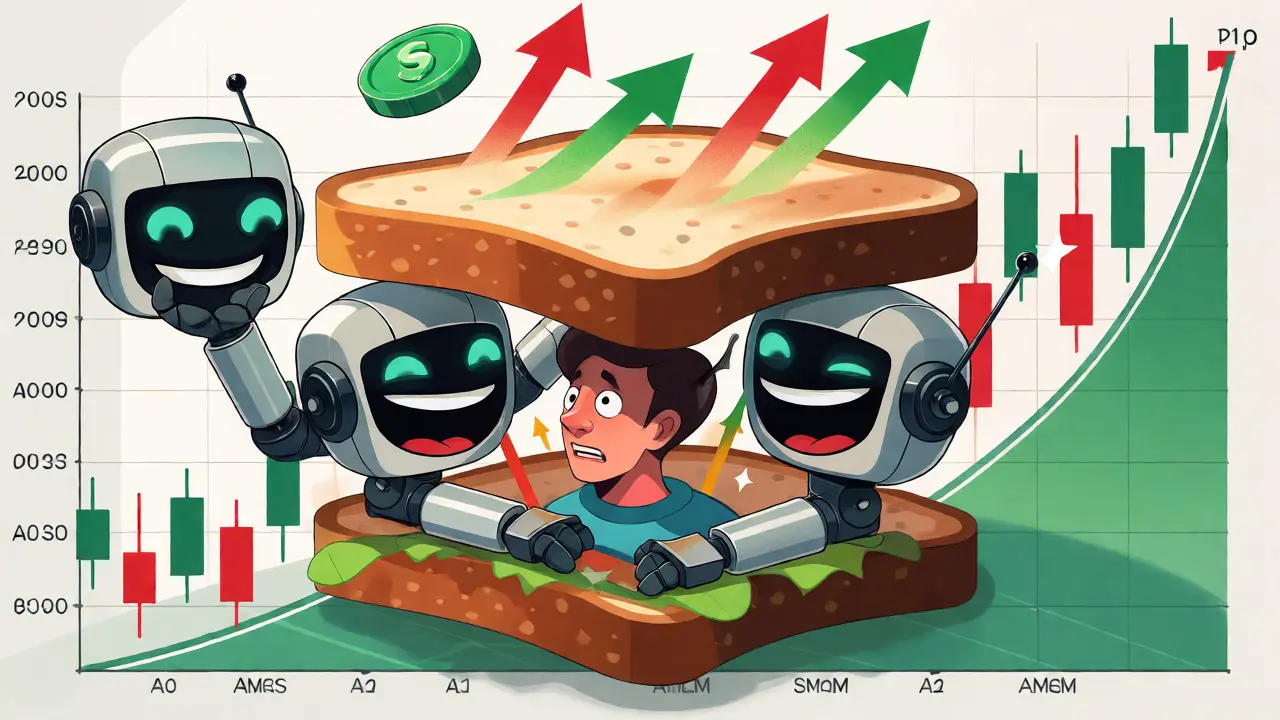
Front-running is just the appetizer. The main course is the sandwich attack. This combines front-running and back-running. Let’s say Alice wants to swap 1,000 ETH worth of tokens. A searcher bot spots this in the mempool. The bot places a buy order *before* Alice’s transaction (front-run). Then, it waits for Alice’s transaction to execute, which raises the token price due to her volume. Immediately after Alice’s trade, the bot sells its tokens (back-run). The bot profits from the price shift caused by Alice, while Alice gets a worse execution price than she would have without the bot. It’s a perfect sandwich: Buy, User Trade, Sell. The user is the filling, and the bot eats the whole thing.
| Strategy | Action | Target | Profit Source |
|---|---|---|---|
| Front-Running | Insert tx before target | Pending large trades | Price appreciation before target executes |
| Back-Running | Insert tx after target | State change from target | Arbitrage opportunity created by target |
| Sandwich Attack | Buy before, sell after target | User liquidity provision | Spread captured around user's impact |
| Liquidation MEV | Trigger liquidation | Undercollateralized loans | Liquidation bonus fees |
Why Validators Care About Order
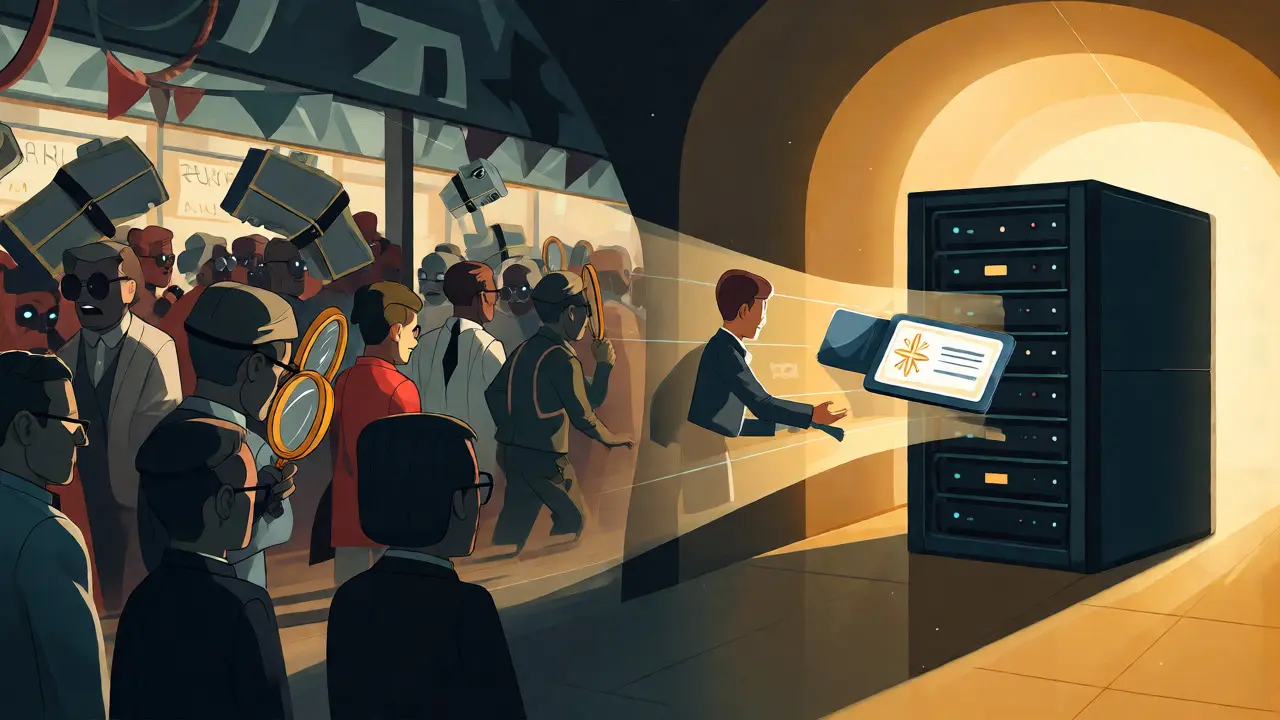
In traditional finance, exchanges match buyers and sellers based on time or price priority. On many blockchains, especially those using Proof-of-Stake like Ethereum, validators have total control over which transactions go into a block and in what order. They don't just pick the highest bidder for gas fees; they look at the potential profit within the block itself. If reordering two transactions nets them an extra $500 in arbitrage opportunities, they will do it. This power creates a competitive market among validators and specialized entities known as searchers. Searchers are the ones who find the profitable sequences, often bundling them into bundles sent to validators via private mempools like Flashbots. This means if you’re trading on a public mempool, you’re playing against pros who have direct lines to the block producers.
The Economic Impact on Regular Users
Is MEV bad? Proponents argue it’s essential for market efficiency. Arbitrageurs keep prices aligned across different decentralized exchanges. Without them, you could buy ETH cheaply on Uniswap and sell it expensively on Sushiswap indefinitely until markets correct. But the cost of this efficiency falls heavily on retail traders. When bots front-run your trade, you suffer from increased slippage and failed transactions. This is effectively a hidden tax on interacting with DeFi protocols. Critics point out that this creates a two-tier system: institutional players with low-latency infrastructure and capital reserves extract value, while everyday users pay a premium for access. The concentration of this power is worrying. A small number of professional firms dominate MEV extraction, raising questions about decentralization when the underlying tech promises permissionless access.
Mitigation: Fighting Back Against Bots
You aren’t helpless. Several tools and strategies help mitigate MEV losses. First, use private transaction relays. Services like Flashbots Protect allow you to send transactions directly to validators, bypassing the public mempool. If a bot can’t see your transaction, it can’t front-run it. Second, adjust your slippage tolerance carefully. Setting it too high invites sandwiches; setting it too low causes failures. Third, use aggregators like 1inch or CoW Protocol. These platforms batch orders and use auction mechanisms to find the best execution price, often shielding users from direct exposure to predatory ordering. Finally, some newer Layer 2 solutions and chains are experimenting with fair sequencing methods, where transactions are processed strictly in arrival order, though this can reduce overall network throughput and flexibility.
The Future of MEV Extraction
The arms race between extractors and protectors is far from over. As cross-chain bridges become more common, MEV opportunities are expanding beyond single-blockchains to multi-chain environments. A bot might spot an imbalance between Ethereum and Arbitrum and execute a complex sequence involving both networks. Regulatory bodies are also starting to take notice. While currently undefined, future laws might classify certain aggressive MEV tactics as market manipulation, similar to how front-running is regulated in stock markets. For now, understanding MEV is crucial for anyone serious about DeFi. It’s not just technical trivia; it’s a fundamental part of the economic layer that determines how much value you actually keep when you trade.
Does MEV affect Bitcoin?
Not significantly. Bitcoin lacks smart contracts and complex state changes, so there are few opportunities for arbitrage or front-running. MEV is primarily an issue on smart contract platforms like Ethereum, Solana, and Polygon.
How can I stop being sandwiched?
Use private RPC endpoints provided by services like Flashbots Protect or BloXroute. These hide your transaction details from the public mempool until it is included in a block, preventing bots from seeing and reacting to your trade.
Is MEV illegal?
Currently, no specific laws ban MEV extraction in most jurisdictions. However, regulators are monitoring it closely. Some aggressive strategies might eventually be classified under existing market manipulation laws, but enforcement is difficult due to the pseudonymous nature of blockchain actors.
Do validators always act maliciously?
No. Most validators follow standard rules. However, the incentive structure rewards those who maximize profit. Many use automated systems to optimize block construction, which naturally leads to MEV extraction even without explicit malicious intent.
What is a searcher?
A searcher is an entity (often a bot) that scans the mempool for profitable opportunities. They bundle transactions together and submit them to block builders or validators. They bear the risk of failed transactions but reap the rewards of successful extractions.
 Finance