

Imagine funding the cure for Alzheimer’s or cancer with a few clicks, bypassing traditional grant committees and venture capital gatekeepers. That is the core promise of PoSciDonDAO, a decentralized autonomous organization focused on personalized medicine research. If you have seen the ticker SCI trending in niche crypto circles, you might be wondering: what exactly does this token do, and is it worth your attention?
This isn't just another meme coin riding a hype wave. PoSciDonDAO operates within the DeSci (Decentralized Science) sector, aiming to democratize how scientific breakthroughs are funded and owned. But like any micro-cap asset, it comes with specific mechanics, risks, and a steep learning curve if you are new to Web3. Let’s break down what SCI actually is, how its dual-token system works, and whether it fits into your portfolio.
The Core Mission: Funding Personalized Medicine
Traditional biomedical research is slow. It relies heavily on government grants or private investors who often prioritize short-term returns over long-term cures. PoSciDonDAO flips this model. The DAO pools community funds to support research into life-altering diseases, specifically targeting areas like oncology and neurodegenerative conditions. The goal isn't just to fund papers; it's to create a portfolio of intellectual property (IP) that can be licensed and commercialized.
Here is where the SCI token enters the picture. It serves two main functions: governance and utility. As a holder, you don't just watch from the sidelines. You vote on which research projects get funded, elect the scientific experts who review those proposals, and decide how the resulting IP is managed. This shifts power from a centralized boardroom to the token holders.
| Attribute | Details |
|---|---|
| Network | Base Mainnet (Ethereum Layer-2) |
| Max Supply | 18,910,000 SCI |
| Launch Date | December 10, 2024 |
| Primary DEX | Uniswap (Base) |
| Token Type | Governance & Utility ERC-20 |
How the Dual-Token System Works
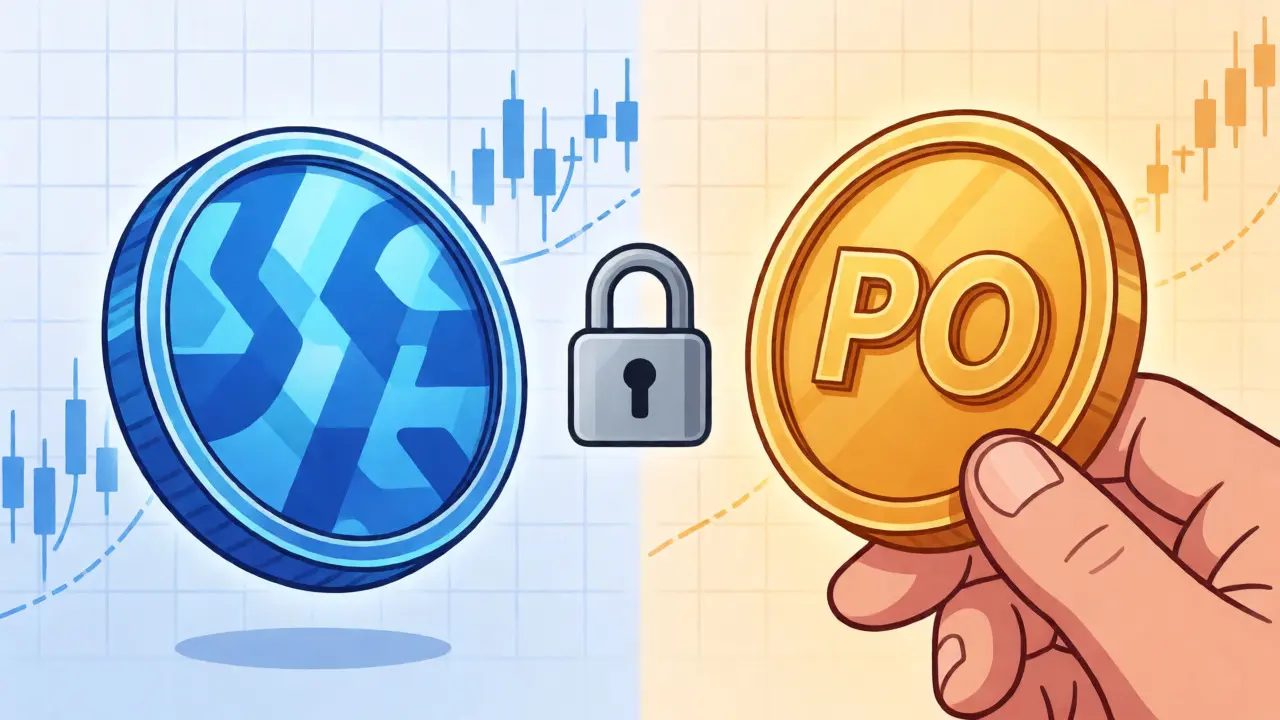
Most crypto projects use a single token for everything. PoSciDonDAO uses a more nuanced approach involving two tokens: SCI and PO. Understanding the difference is crucial because they serve different purposes in the ecosystem.
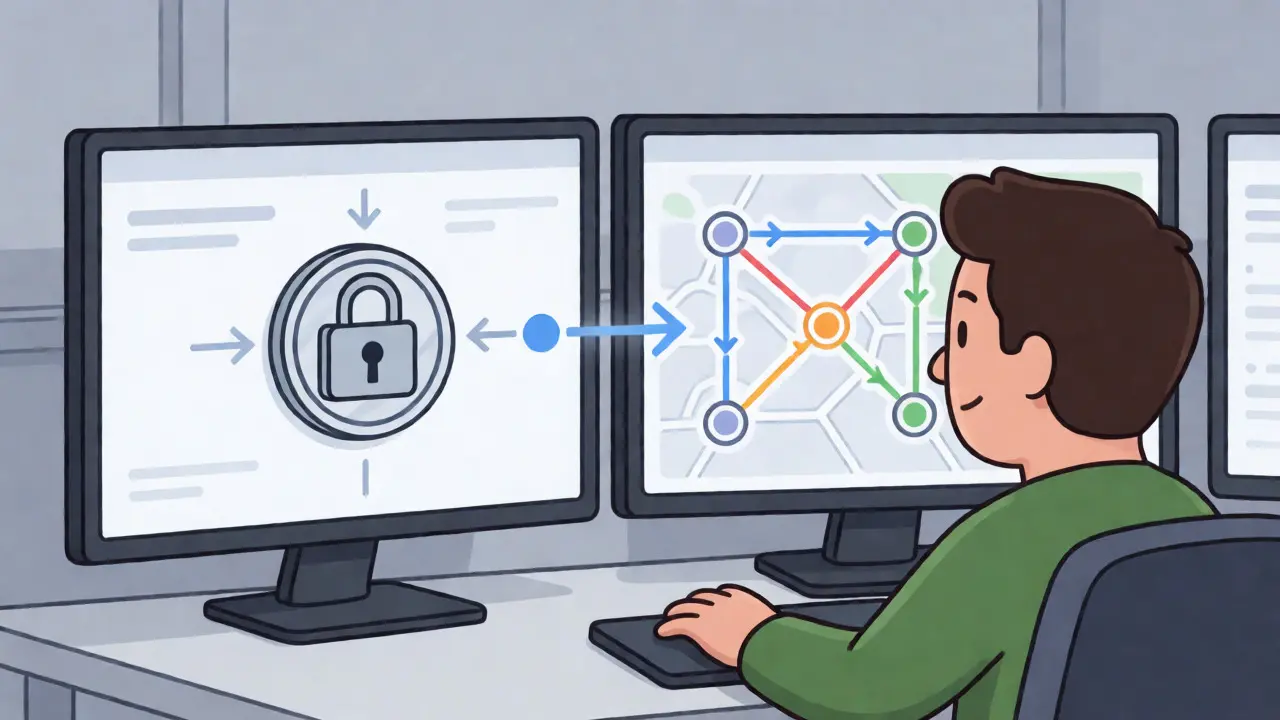
SCI is the tradable asset. You buy it on exchanges, hold it in your wallet, and trade it. It represents economic value and voting power. However, simply holding SCI doesn't give you maximum influence. To unlock full governance rights-like voting on treasury management or hiring decisions-you must lock your SCI tokens. This creates a derivative form known as loSCI (locked SCI). The longer you lock and the more you stake, the higher your voting weight tends to be.
PO, on the other hand, is non-tradable. Think of it as a "soul-bound" token or an NFT-like reward. You earn PO by participating in governance activities, such as voting on proposals or contributing to community discussions. While you can't sell PO directly, it can later be exchanged for SCI under specific rules defined in the whitepaper. This design rewards active engagement rather than just passive wealth accumulation, helping to filter out pure speculators who might dump tokens immediately after launch.
Technical Architecture and Tokenomics
PoSciDonDAO launched on the Base network, an Ethereum Layer-2 scaling solution built by Coinbase. Why Base? Because transaction fees on Ethereum mainnet can still be high for small governance actions. Base offers low-cost, fast transactions while maintaining strong security ties to Ethereum. This makes it easier for users to interact with the protocol without burning through their holdings in gas fees.
The tokenomics are strict. The maximum supply of SCI is capped at exactly 18,910,000 tokens. There is no inflationary minting beyond this cap. At launch in December 2024, only about 12.87% of this supply was circulating. The remaining tokens are allocated across various buckets:
- Community Rewards: For early adopters and ongoing incentives.
- Treasury & Research Fund: Reserved for funding scientific projects.
- Ecosystem Development: Partnerships, legal expenses, and grants.
- Liquidity Pools: Ensuring there is enough depth on Uniswap for trading.
- Team & Advisors: Vested over time to align long-term interests.
This fixed supply model contrasts with many DeFi tokens that have infinite emissions. By limiting supply, the project aims to create scarcity, assuming demand grows as the DAO successfully funds and licenses medical IP.
Market Performance and Liquidity Risks
Let’s look at the hard numbers. As of late August 2026, SCI is a micro-cap asset. Depending on the data source, its price has fluctuated significantly. Some aggregators show prices hovering around $0.05 to $0.06, while earlier snapshots from late 2025 showed highs near $0.38. This volatility is typical for small-cap tokens but requires caution.
Liquidity is another critical factor. SCI trades primarily on Uniswap via the SCI/WETH pair. Daily trading volumes can be thin, sometimes dropping below $1,000 on certain days. What does this mean for you? If you try to sell a large amount of SCI quickly, you might experience significant slippage-meaning you get a worse price than the current market rate because there aren't enough buyers on the other side. Always check the order book depth before making large moves.
It is also worth noting that SCI is not yet listed on major centralized exchanges like Binance or Coinbase (as spot trading pairs). Access remains largely decentralized. This limits exposure for traditional investors but keeps the community tight-knit and aligned with the DAO’s ethos.
How to Buy and Participate in Governance
If you want to join the experiment, here is the practical path forward. You need a compatible wallet, such as MetaMask, configured for the Base network.
- Fund Your Wallet: Send ETH or USDC to your Base-compatible wallet.
- Swap for SCI: Go to Uniswap, select the Base network, and swap your ETH/USDC for SCI using the correct contract address (
0x25E0A7767d03461EaF88b47cd9853722Fe05DFD3). - Connect to Protocol: Visit the PoSciDonDAO interface and connect your wallet.
- Lock Tokens: Navigate to the "Lock" section. Choose the amount of SCI to lock and confirm the transaction. This converts your SCI to loSCI and boosts your voting power.
- Vote: Browse active proposals and cast your votes using your governance weight.
To exit, you reverse the process. Unlock your SCI, wait for the cooldown period if applicable, and then swap back to ETH or stablecoins. Keep in mind that unlocking reduces your voting power immediately, so plan your exits around important governance cycles if you care about influence.
Risks and Considerations
No investment is risk-free, especially in DeSci. Here are the red flags to watch:
- Regulatory Uncertainty: Funding medical research via tokens touches on securities laws and healthcare regulations. Rules could change.
- Execution Risk: A DAO is only as good as its execution. Will the elected experts actually deliver viable research outcomes? So far, public case studies are limited.
- Low Liquidity: As mentioned, thin markets mean volatile prices and difficult exits for large positions.
- Transparency Gaps: Unlike some competitors, PoSciDonDAO does not prominently list individual founder names in all public snippets, focusing instead on institutional structure. Verify team credentials independently if possible.
Despite these risks, the project has maintained active documentation and regular updates through 2026. The existence of a Whitepaper 2.0 suggests iterative improvement, which is a positive sign for long-term viability.
Where can I buy SCI tokens?
Currently, SCI is primarily traded on decentralized exchanges, specifically Uniswap on the Base network. Centralized exchange listings are planned but not fully realized for most major platforms.
What is the difference between SCI and PO tokens?
SCI is the tradable governance token used for voting and licensing IP. PO is a non-tradable, soul-bound reward token earned through participation. PO can eventually be converted into SCI, rewarding active community members.
Why is locking SCI required for voting?
Locking SCI (creating loSCI) demonstrates commitment to the project. It prevents whales from buying tokens just to vote and then immediately selling, ensuring that governance decisions are made by long-term stakeholders.
Is PoSciDonDAO regulated?
The regulatory status of DeSci tokens is evolving. While the DAO structure provides some flexibility, token sales and IP licensing may face scrutiny depending on jurisdiction. Always consult local financial advice.
What diseases does PoSciDonDAO focus on?
The primary focus is on personalized medicine for life-altering diseases, with specific emphasis on cancer and Alzheimer’s disease research.
 Finance