
Imagine waking up in September 2021 to find that your government just declared a volatile digital coin equal to the US dollar. That was the reality for everyone living in El Salvador, a Central American nation that made history by becoming the first country in the world to adopt Bitcoin as legal tender. It was a bold, controversial move led by President Nayib Bukele, promising financial inclusion and cheaper remittances. But fast forward to June 2026, and the landscape looks very different. The mandatory requirement for businesses to accept Bitcoin has vanished. The experiment has shifted from a forced national mandate to a voluntary private sector option.
If you are looking at this title today, you probably want to know one thing: Can you still use Bitcoin in El Salvador? The short answer is yes, but with major caveats. The "complete guide" you need isn't about how to force a merchant to take BTC; it's about understanding the dramatic policy reversal that happened in early 2025 and what remains of the original vision. This article breaks down the timeline, the reasons behind the retreat, and the current rules governing cryptocurrency in the country.
The Bold Beginning: September 2021
To understand where things stand now, we have to look at where they started. On September 7, 2021, the Bitcoin Law took effect, making Bitcoin a legal currency alongside the US dollar. The goal was ambitious: help the unbanked population, reduce remittance costs, and attract tech investment. The government rolled out the Chivo Wallet, an official app designed to make transactions easy for citizens who might not own smartphones or have banking experience.
The launch was chaotic. Servers crashed almost immediately due to overwhelming traffic. Coinciding with the launch, Bitcoin’s price dropped, causing the government to face a $3 million paper loss on its initial holdings within hours. Despite the technical hiccups, adoption metrics looked impressive on the surface. Within a month, three million people downloaded the Chivo wallet-about 46% of the population. The government sweetened the deal by depositing $30 into every new account and offering discounts at gas stations for using the app.
However, downloads don't equal usage. While millions had the app, only 12% of consumers actually used cryptocurrency for transactions in that first month. An even starker statistic emerged: 93% of surveyed companies reported receiving zero Bitcoin payments. The gap between having access and actually wanting to use the technology was wide.
The Reality Check: Why Adoption Stalled
By 2022 and 2023, the initial hype faded into practical difficulties. The core problem wasn't technology; it was trust and stability. Most Salvadorans earn their income in US dollars and spend in US dollars. When Bitcoin’s price swings wildly, it makes terrible change for buying coffee or paying rent.
Consider the perspective of a small business owner in San Salvador. If you accept Bitcoin for goods sold today, the value of those sales could drop significantly by tomorrow. This volatility scared away merchants. By 2024, reports indicated that 92% of Salvadorans did not use Bitcoin for daily transactions. Only 5% of citizens paid taxes with it, and just 20% of large firms accepted it. The Chivo wallet also faced security issues, including hacking incidents that further eroded public confidence.
The data told a clear story: legal mandates cannot force economic behavior. You can pass a law saying something is money, but if people prefer the stability of the US dollar, they will stick with it. The infrastructure was built, but the organic demand simply wasn't there.
The Turning Point: January 2025 Policy Reversal
The most critical event in this timeline occurred on January 29, 2025. Facing severe pressure from the International Monetary Fund (IMF), a global financial institution that provides loans to countries in economic distress, El Salvador agreed to modify its Bitcoin law. The context was a $1.4 billion loan agreement essential for the country's fiscal health.
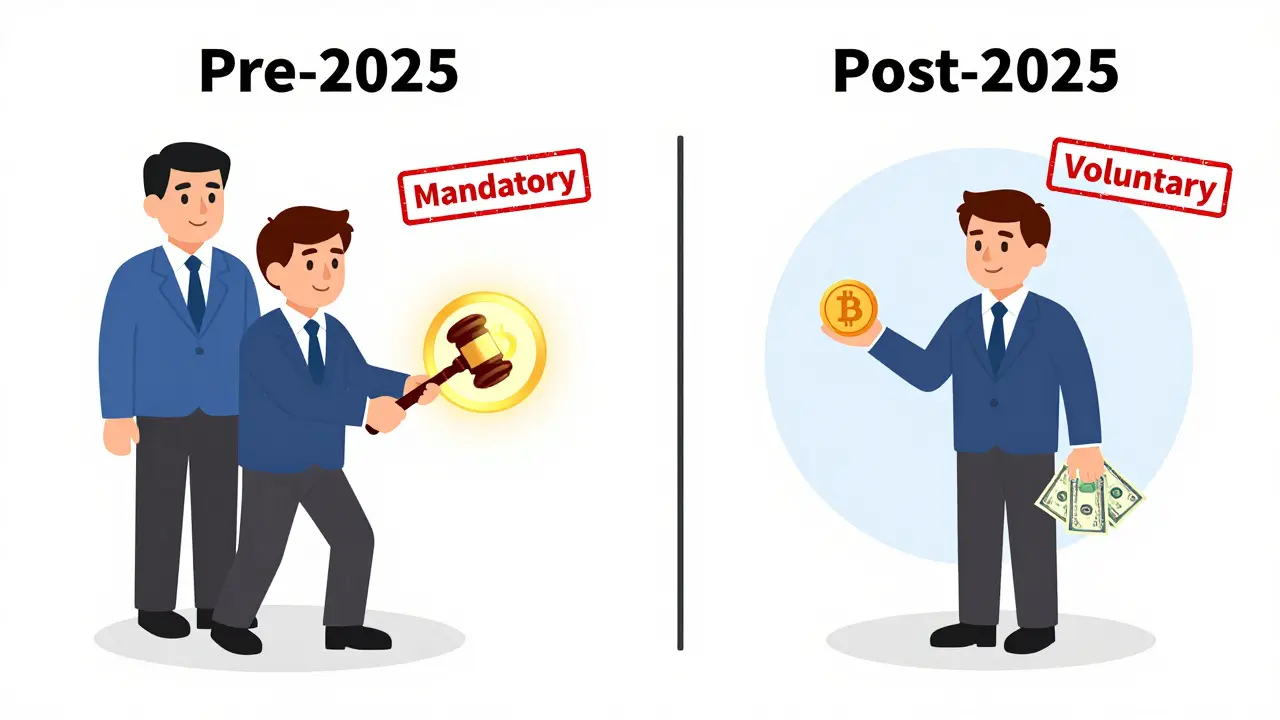
The Legislative Assembly voted 55-2 to strip Bitcoin of its mandatory legal tender status. The changes took full effect on May 1, 2025. Here is what changed:
- No Mandatory Acceptance: Businesses are no longer legally required to accept Bitcoin. They can refuse it without penalty.
- No Tax Payments: Citizens can no longer pay taxes or state bills using Bitcoin.
- Voluntary Use Only: Bitcoin transactions are now confined to the private sector, based on mutual agreement between buyer and seller.
Economist Rafael Lemus summarized the shift bluntly: "Bitcoin no longer has the strength of legal tender." Even President Bukele admitted that forcing Bitcoin as an official currency was his government's "most unpopular" measure. The reversal was a pragmatic retreat, acknowledging that the experiment had failed to deliver on its primary promises of financial inclusion and economic boost.
Current Status: What Remains in 2026?
So, is Bitcoin dead in El Salvador? Not exactly. The government stepped back from forcing citizens to use it, but it didn't abandon its belief in the asset's long-term value. As of early 2026, the distinction between "legal tender" and "strategic reserve" is crucial.
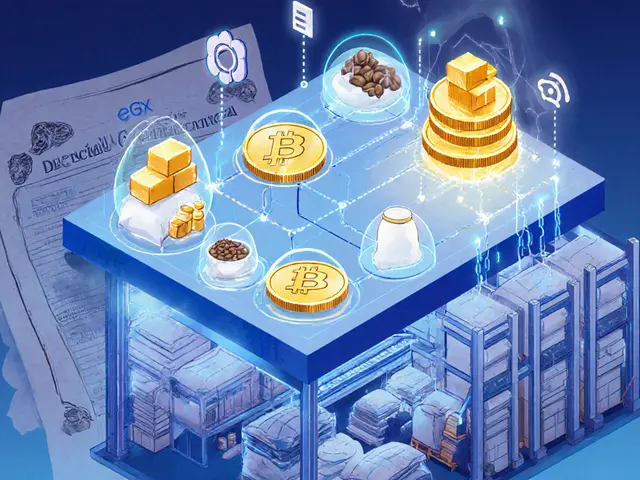
Strategic Bitcoin Reserve Fund, a government-held stockpile of cryptocurrency remains active. In fact, it has grown. By March 2025, the fund held 6,102 coins valued at approximately $500 million. This represents a significant profit for the state, turning a policy failure into a successful investment strategy. The government views Bitcoin less as everyday cash and more as a gold-like store of value.
For regular people and tourists, the environment is now purely voluntary. If you walk into a shop in San Salvador, the owner can say no to Bitcoin. However, some businesses, particularly those catering to tourists or tech-savvy expats, may still accept it voluntarily. The Chivo Wallet still exists, but it is no longer promoted aggressively by the state as the primary method of payment. Its role has diminished from a national utility to just another crypto app among many.
El Salvador continues to position itself as a crypto-friendly jurisdiction. Events like the PLANB Forum 2025 attracted thousands of attendees, signaling that the country wants to remain a hub for blockchain innovation, just not through coercion. The focus has shifted from "everyone must use Bitcoin" to "we welcome Bitcoin businesses and investors."
| Feature | Pre-May 2025 (Original Law) | Post-May 2025 (Current Status) |
|---|---|---|
| Legal Status | Mandatory legal tender | Voluntary private asset |
| Business Obligation | Required to accept | Can refuse acceptance |
| Tax Payments | Allowed | Prohibited |
| Government Promotion | Aggressive (Chivo incentives) | Minimal/None |
| State Holdings | Growing reserve | Continued strategic accumulation |
Lessons Learned for Global Crypto Adoption
The El Salvador experiment serves as a massive case study for other nations considering similar moves. The key takeaway is simple: technology cannot override human preference for stability. In developing economies, predictability is often more valuable than potential high returns. People need to know that the money they earn today will buy the same amount of bread tomorrow.
The IMF's intervention highlighted the broader skepticism of international financial institutions toward cryptocurrency as monetary policy. While they may tolerate private crypto usage, they resist state-mandated adoption that bypasses traditional regulatory frameworks. For any country thinking of following El Salvador's path, the message is clear: voluntary adoption works better than legislative force.
Furthermore, the success of the Strategic Bitcoin Reserve shows that governments can engage with crypto without making it legal tender. Treating it as a sovereign wealth asset rather than a medium of exchange allows states to benefit from price appreciation without exposing their citizens to daily volatility risks.
Practical Advice for Travelers and Investors
If you are planning to visit El Salvador in 2026, do not expect to rely solely on Bitcoin. Carry US dollars. They are the backbone of the economy. You can use Bitcoin if you find a willing merchant, but assume you won't. Digital wallets like Chivo are available, but mainstream apps like PayPal or local bank transfers are more reliable for sending money home.
For investors, the situation is nuanced. The country is still "crypto-friendly" in terms of regulation for private entities, but the consumer market is dormant. Opportunities exist in infrastructure development, mining, and fintech services, but retail payment solutions have lost their competitive edge against the dollar.
Is Bitcoin still legal tender in El Salvador in 2026?
Technically, the term "legal tender" remains in some legal texts, but its power has been stripped. Since May 2025, businesses are not required to accept Bitcoin, and it cannot be used for tax payments. It functions as a voluntary private asset rather than a mandatory currency.
Why did El Salvador change its Bitcoin law?
The change was driven by low public adoption, business resistance, and pressure from the International Monetary Fund (IMF). To secure a $1.4 billion loan, the government agreed to remove the mandatory aspects of the Bitcoin law, shifting it to a voluntary framework.
Can I still use the Chivo Wallet?
Yes, the Chivo Wallet still operates, but it is no longer the primary tool for national transactions. Usage has declined significantly as the government stopped incentivizing its use. It functions similarly to other third-party crypto wallets available globally.
Does the El Salvador government still hold Bitcoin?
Yes. Despite ending mandatory legal tender status, the government maintains a Strategic Bitcoin Reserve Fund. As of early 2025, this fund held over 6,000 coins, representing hundreds of millions of dollars in assets, which the state continues to manage as a long-term investment.
What should I use for payments in El Salvador today?
You should primarily use US dollars. Cash and debit/credit cards linked to USD accounts are widely accepted. Bitcoin can be used only if the specific merchant voluntarily agrees to accept it, which is rare for everyday transactions.
 Finance