
Imagine a cryptocurrency that doesn't just sit in your wallet but actively hunts down other coins to destroy them. That is the premise behind The Reaper, a digital asset with the ticker symbol RPR. It positions itself as a unique "market regulation" tool, designed to clean up the crypto landscape by voting on which underperforming tokens should be bought and burned.
But does this mechanism actually work, or is it just another complex experiment in a saturated market? To understand what RPR really is, we need to look past the marketing hype and examine how its economic engine operates, who is behind it, and why its price performance has been anything but stable.
The Core Concept: Death as Sanitation
The central idea behind The Reaper is a governance-based cryptocurrency that uses community voting to purchase and destroy other digital assets is simple yet aggressive. The project argues that the crypto market is cluttered with worthless tokens and failed projects. In traditional markets, bad companies go bankrupt and disappear. In crypto, dead projects often linger, trapping investors in illiquid assets.
RPR aims to act as a natural selection force. It functions as an economic engine where holders vote monthly on which cryptocurrencies to eliminate. The philosophy is that by systematically removing low-quality tokens, the overall health of the digital ecosystem improves. This concept relies heavily on the participation of its community, treating token holders not just as investors, but as stewards of market order.
How the Reaper Mechanism Works
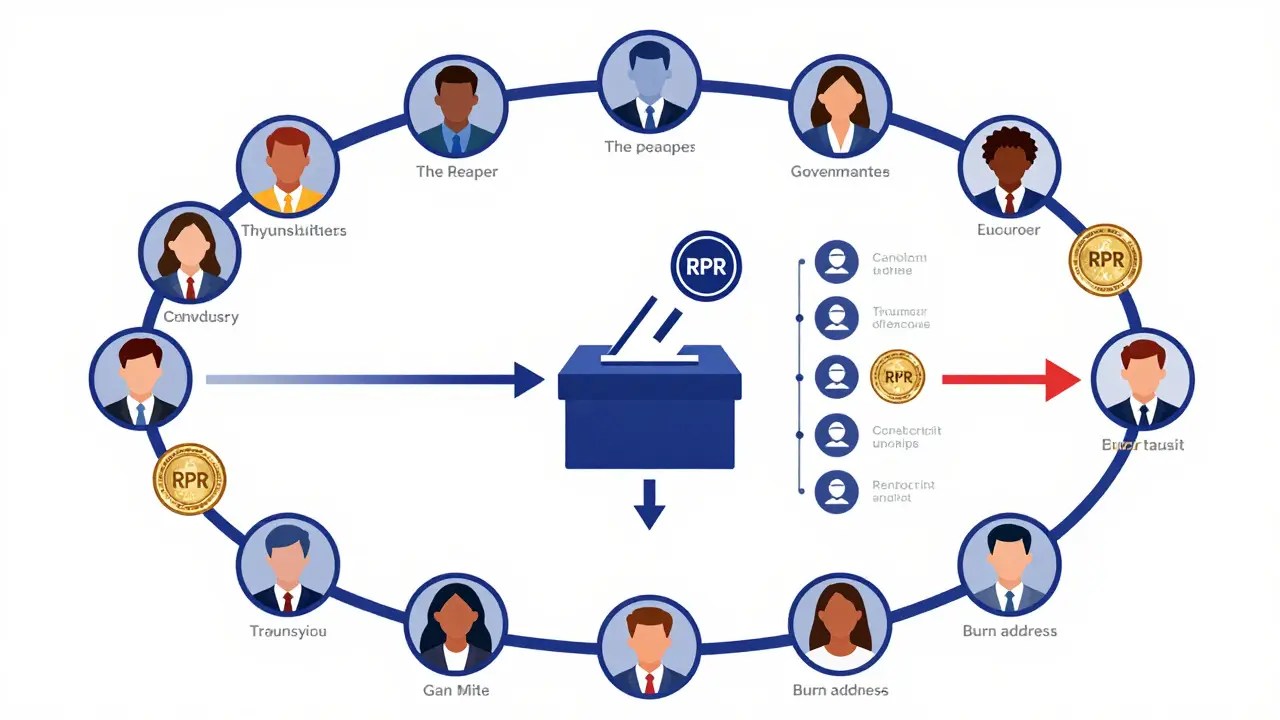
To understand if RPR is viable, you have to look at its operational mechanics. The system is built around a strict monthly cycle that drives both inflation and destruction.
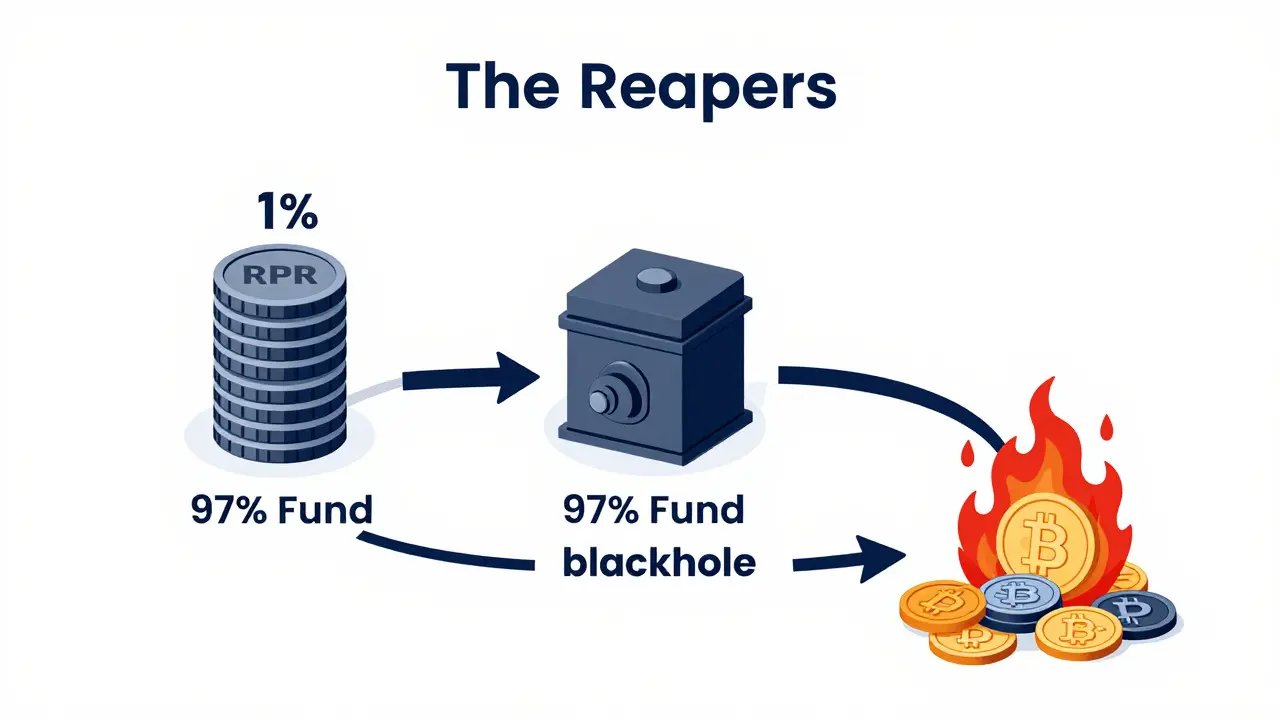
- Monthly Inflation: Every month, the total supply of RPR increases by exactly 1 percent. These newly minted tokens are not given away; they are sold at current market value.
- Fund Allocation: The proceeds from selling these new tokens are split. A massive 97 percent goes into a treasury fund dedicated to buying target cryptocurrencies. The remaining 3 percent covers operating expenses for Reaper Financial LLC.
- Voting Process: Holders use their tokens to vote. One RPR token equals one vote. The voting window closes on the last day of each month at midnight.
- Destruction Event: Once the votes are tallied, the project uses the treasury funds to buy the selected tokens on open markets. These acquired tokens are then sent to a "blackhole" address-effectively burning them forever. Proof of this destruction is published via blockchain analysis receipts.
This structure creates a predictable rhythm. If you hold RPR, you have a direct say in which altcoins get destroyed. Theoretically, this gives voters power over market supply dynamics, potentially driving up the value of surviving tokens by reducing competition.
Leadership and Origin
Every crypto project needs a face, and for The Reaper, that person is Patrick L. Riley. He serves as the Founder and Chief Executive Officer of Reaper Financial LLC. Riley launched the project in May 2022, positioning it as a response to the accumulation of "junk" tokens in the market.
Riley’s background isn’t tied to major tech giants or established financial institutions, which is common in the decentralized space. However, his role is critical because Reaper Financial retains significant control over the process. While holders vote, the company reserves the right to curate the list of eligible tokens. They can remove tokens that seem likely to be rug pulls before the voting even begins, aiming to protect users from scams that might exploit the buying pressure of the Reaper’s treasury.
Price History and Market Performance
If the mechanism sounds clever, the price action tells a different story. Since its launch, RPR has experienced severe volatility and consistent downward trends. Let’s look at the numbers to see how the market has reacted.
| Year | Start Price (USD) | End Price (USD) | Annual Change |
|---|---|---|---|
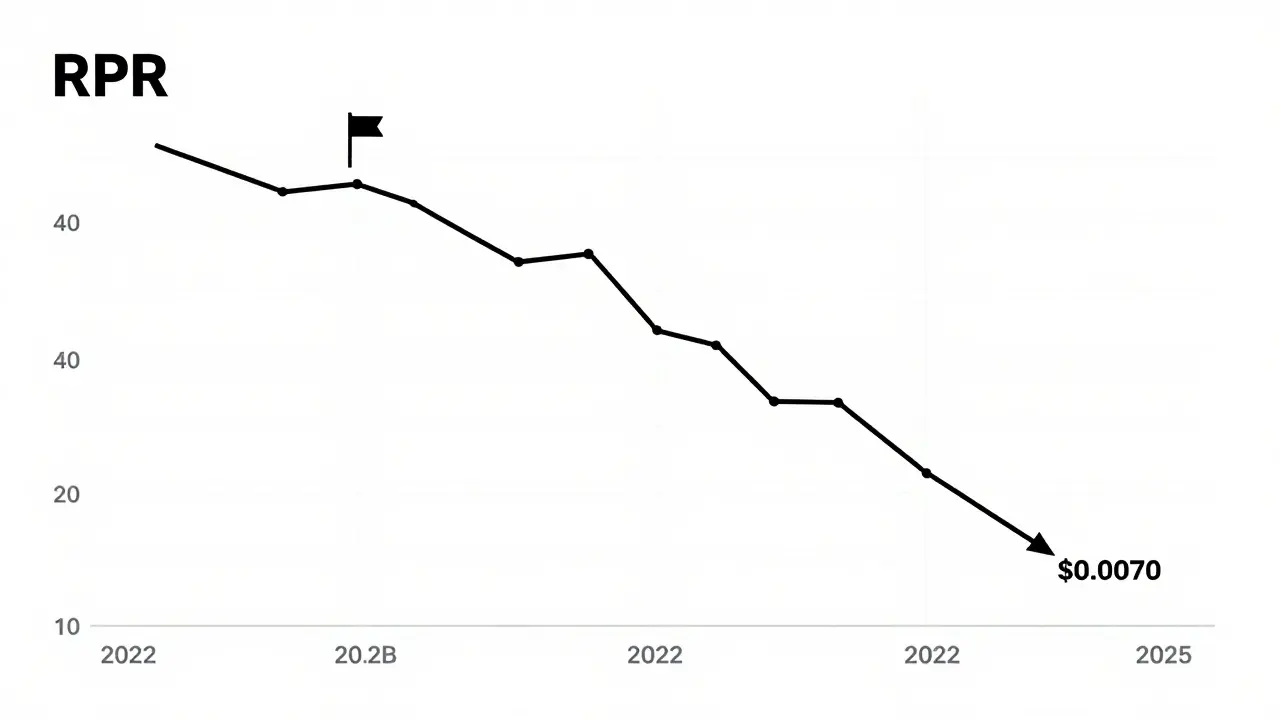
| 2022 | $0.0472 | $0.0339 | -28.18% |
| 2023 | $0.0328 | $0.0249 | -24.09% |
| 2024 | $0.0200 | $0.0162 | -19.00% |
| 2025 | $0.0162 | $0.0070 | -56.79%* |
*Note: Some data sources reported a dramatic decline exceeding 100% in nominal terms due to liquidity crunches and exchange delistings during 2025, indicating extreme distress.
The token launched at roughly $0.0473 in May 2022. It peaked briefly in November 2022 at $0.0885 before sliding back down. By August 2023, it hit a low of $0.0060. The year 2025 was particularly brutal, seeing the price collapse further to around $0.0070 by year-end. As of mid-2026, trading data shows extremely limited activity, with some platforms reporting zero volume over recent periods.
Liquidity and Trading Challenges
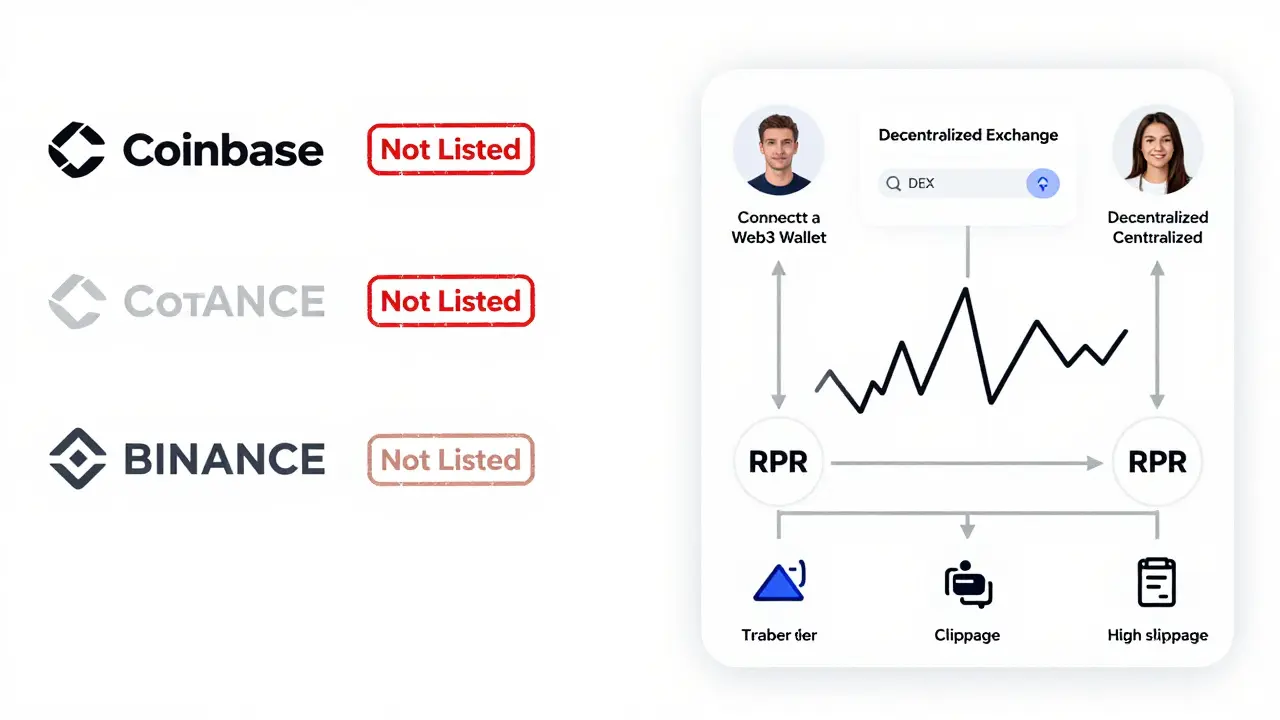
One of the biggest red flags for any investor looking at RPR today is liquidity. You won’t find The Reaper listed on major centralized exchanges like Binance, Coinbase, or Kraken. In fact, Crypto.com explicitly states that "RPR is not tradable yet" on their platform.
This lack of presence on tier-one exchanges means you can’t simply log in and buy RPR with fiat currency. Instead, you have to rely on decentralized exchanges (DEXs). Platforms like Binance offer guides on using their Web3 Wallet to connect to DEXs to purchase RPR, but this adds layers of complexity and risk for the average user.
Low liquidity leads to high slippage. If you try to sell a large amount of RPR, you might crash the price significantly because there aren’t enough buyers waiting on the other side. This makes the "monthly bull-bear trading cycle" promised by the white paper difficult to execute profitably. How do you trade a token that barely moves?
Is The Reaper a Good Investment?
The Reaper markets itself as a "Bear-Market profit-driver." The theory is that during downturns, when most coins lose value, RPR holders can profit by voting to destroy weak competitors, thereby consolidating value. Additionally, the anticipation of monthly burns could create speculative spikes in price leading up to voting deadlines.
However, several factors suggest caution:
- Consistent Depreciation: The token has lost value every single year since launch. There is no evidence of the proposed mechanism creating sustainable long-term growth.
- Centralized Control: Despite being a decentralized voting system, Reaper Financial LLC controls the eligibility of tokens and can adjust frequencies. This contradicts the ethos of pure decentralization many crypto investors seek.
- Regulatory Uncertainty: Projects that involve buying and destroying other securities-like tokens may attract regulatory scrutiny, especially in jurisdictions like the US and EU.
- Illiquidity Risk: With minimal trading volume, exiting a position quickly without significant loss is nearly impossible.
For seasoned traders who enjoy high-risk, niche experiments, RPR might offer occasional arbitrage opportunities around voting events. For the average investor seeking stability or steady returns, the risks currently outweigh the potential rewards.
Future Outlook and Safeguards
The project documentation mentions potential adjustments to keep the system relevant. For instance, if the market cap grows sufficiently, the team plans to quarter the 1 percent inflation rate to allow for weekly reaping events instead of monthly ones. This would increase the frequency of destruction events, theoretically making the token more dynamic.
They also emphasize safeguards against rug pulls. By vetting nominated tokens, they aim to prevent scenarios where scammers create a fake coin, get it voted for destruction, and then vanish before the Reaper buys it. This protective measure is crucial for maintaining trust, though its effectiveness depends entirely on the diligence of Reaper Financial’s internal team.
As we move through 2026, the broader crypto market continues to mature. Investors are increasingly demanding transparency, utility, and regulatory compliance. The Reaper’s niche approach remains unproven at scale. Whether it evolves into a vital market sanitation tool or fades into obscurity will depend on whether it can attract genuine liquidity and solve the actual problem of zombie tokens without becoming one itself.
Can I buy The Reaper (RPR) on Coinbase or Binance?
No, The Reaper is not available on major centralized exchanges like Coinbase, Binance (centralized), or Crypto.com. You must use a decentralized exchange (DEX) via a Web3 wallet to purchase RPR tokens.
Who founded The Reaper crypto project?
The Reaper was founded by Patrick L. Riley, who serves as the CEO of Reaper Financial LLC. He launched the project in May 2022.
How does the voting mechanism work for RPR?
Each RPR token grants one vote. Holders vote monthly on which cryptocurrencies to buy and burn. Voting ends on the last day of the month at midnight. The proceeds from the monthly 1% token inflation sale are used to purchase and destroy the winning tokens.
Why has the price of RPR dropped so much?
RPR has faced consistent depreciation since its 2022 launch due to low liquidity, limited adoption, and lack of listing on major exchanges. The market has not embraced the token as a viable investment vehicle, leading to annual losses every year since inception.
Is The Reaper a safe investment?
The Reaper carries high risk. It suffers from extreme illiquidity, centralized control over token eligibility, and a history of significant price declines. It is considered a speculative asset rather than a stable investment.
What happens to the tokens that are voted to be destroyed?
The selected tokens are purchased using the treasury funds generated from the monthly RPR inflation. These acquired tokens are then sent to a blackhole address, effectively burning them permanently. Blockchain receipts are published as proof.
 Finance