

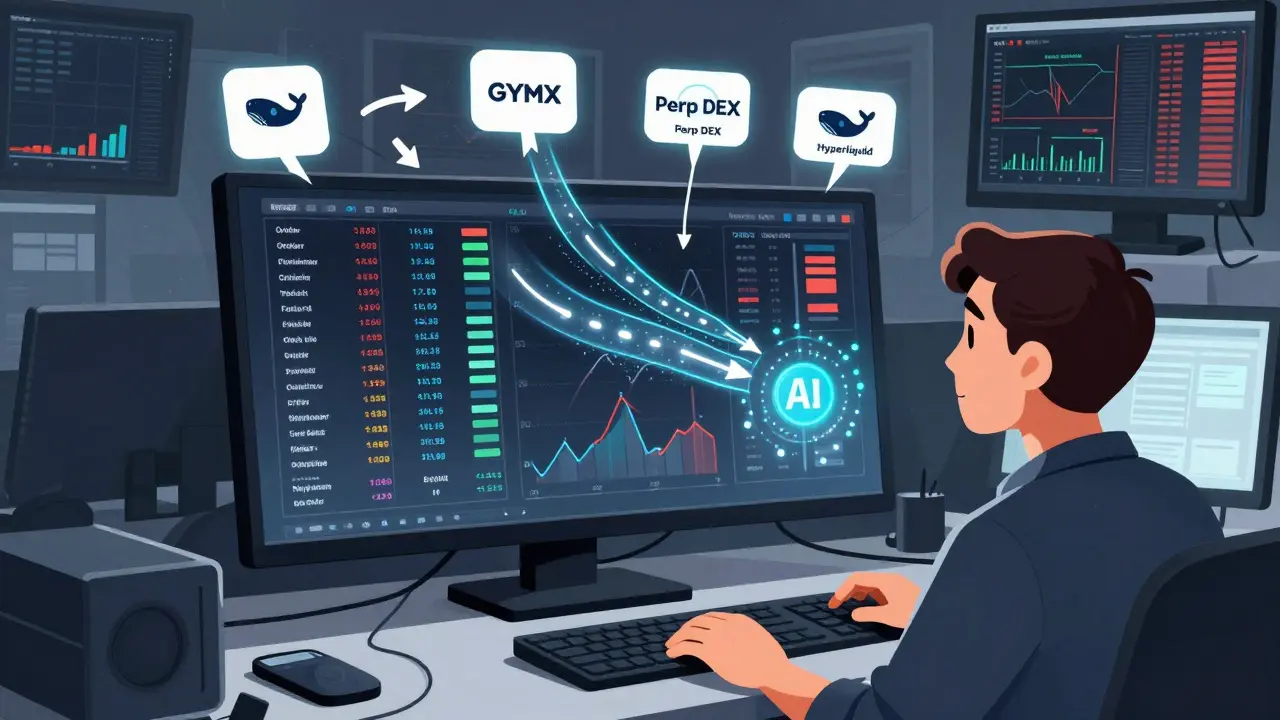
Hyperbot (BOT) isn't another meme coin or speculative token. It's a AI-powered trading terminal built for decentralized perpetual exchanges - and its entire purpose is to fix a real problem most retail traders ignore until it's too late: fragmentation.
Imagine you want to trade perpetual contracts on a decentralized exchange. You open one app - say, dYdX. Then you check another - GMX. Then maybe Perp DEX or Hyperliquid. Each one shows different prices, different liquidity, different whale movements. You’re juggling five screens, manually copying trades, missing signals because you’re human. Hyperbot cuts through all that. It connects directly to these platforms via APIs and gives you one clean interface where all the data flows together. Think of it like a Google Maps for decentralized trading - it shows you the fastest routes, the heavy traffic, and even predicts detours before they happen.
How Hyperbot Actually Works
Hyperbot doesn’t just collect data. It processes it. At its core, it’s built on three pillars:
- Data Aggregation: It pulls live order book data, trade volumes, and funding rates from multiple perp DEXs. No more switching between tabs.
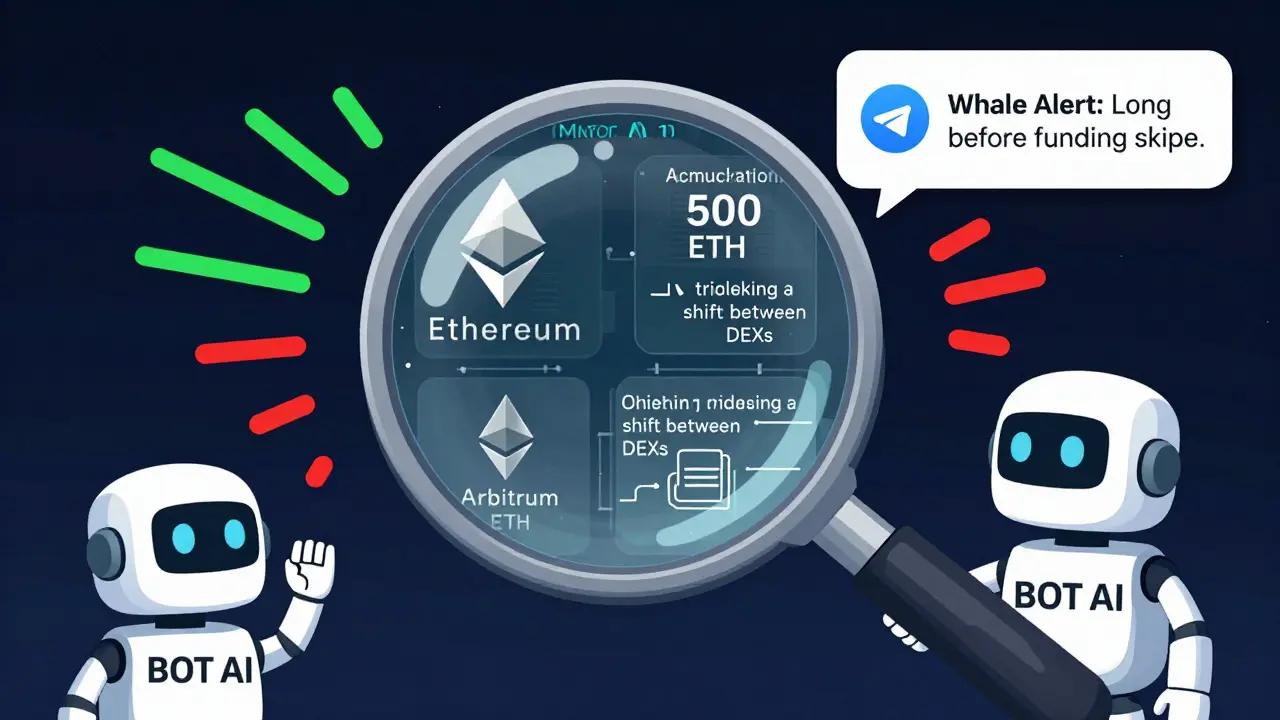
- AI Analytics: Its algorithms scan for patterns humans miss - like a wallet that quietly accumulates 500 ETH over 72 hours, or a sudden spike in open interest on a low-volume DEX. These are often early signs of big moves.
- Execution Gateway: Once you spot a signal, you can execute the trade directly through Hyperbot. It routes your order to the best available liquidity across chains, minimizing slippage and saving time.
It’s not just for experts. The interface is built for traders at any level. A beginner can use the Telegram bot to copy top-performing traders. An advanced user can tweak AI filters to hunt for specific whale behaviors - like ‘large long accumulation before funding rate spikes.’ The system learns from what you do and adapts.
What Is BOT Token Used For?
The BOT token isn’t just a currency - it’s the key to the platform. You need it to unlock features:
- Access to Premium AI Tools: Basic analytics are free. Advanced pattern detection, predictive risk scores, and real-time whale alerts require holding BOT.
- Unlimited Copy Trading: You can follow multiple traders without limits - but only if you stake or hold BOT.
- Reduced Fees: Trading fees drop the more BOT you hold. It’s a direct incentive to stay in the ecosystem.
- Governance (Future): While not fully live yet, the roadmap includes voting on new DEX integrations and AI model updates using BOT.
There are 1 billion BOT tokens total. As of early 2026, around 130-170 million are in circulation, depending on the data source. That’s a small float for a project with real utility, which can mean higher volatility - but also more upside if adoption grows.
Market Data and Tokenomics
As of February 2026, Hyperbot trades around $0.0034 per BOT. Its market cap sits near $460,000, placing it firmly in the micro-cap category. That’s tiny compared to giants like Uniswap or Arbitrum - but it’s not unheard of for niche DeFi tools. For context, a project with real utility and a small market cap can explode if it gains traction - think of early Chainlink or Polygon before they hit mainstream.
The token distribution breaks down like this:
- 40% - Treasury (for future development, liquidity, and partnerships)
- 19% - Marketing & Strategic Partnerships
- 15% - Team & Advisors (vested over time)
- 10% - Investors
- 10% - Liquidity & Market
- 4% - IDO Platform Campaigns
- 2% - IDO Public Sale
The treasury holding 40% is a red flag for some - but here’s why it makes sense: Hyperbot is still building. It needs funds to integrate more DEXs, hire engineers, and run campaigns. If the platform succeeds, the treasury will fund growth - not just pump the price.
Why Hyperbot Stands Out
There are dozens of trading terminals. Why does Hyperbot matter?
Most platforms - like TradingView or Coinigy - focus on centralized exchanges (CEXs). They don’t touch decentralized perpetual markets. Others, like DeFiLlama, track protocols - not trading behavior. Hyperbot is one of the first tools built specifically for perp DEXs. That’s a huge gap. Perp DEXs are growing fast. In 2025 alone, daily volume on these platforms jumped over 300%. But traders still use clunky, manual methods to navigate them.
Hyperbot’s AI doesn’t just show you what’s happening - it tells you why. For example:
- It flags when a whale wallet opens a massive long position on GMX while the funding rate is near zero - a classic setup for a pump.
- It detects when liquidity suddenly drains from one DEX and floods into another - signaling a shift in trader sentiment.
- It compares the same trade across platforms and recommends the one with the lowest slippage and best execution.
This isn’t guesswork. It’s data-driven. And it’s built for traders who don’t have time to monitor 10 different dashboards.
Risks and Limitations
Let’s be clear: Hyperbot isn’t a guaranteed win.
- Small Market Cap = High Volatility: With a $460k cap, a single large trade can swing the price 20% in minutes. This isn’t Bitcoin - it’s a speculative asset with utility.
- AI Isn’t Perfect: Algorithms can misread noise as signal. A sudden spike in volume might just be a bot farm, not a whale. Always verify with on-chain tools like Etherscan or Dune.
- Early Stage: The platform is still adding features. Some integrations might be buggy. The Telegram bot sometimes lags. Don’t treat it like a bank.
- Regulatory Gray Zone: AI trading tools like this operate in unregulated spaces. If regulators crack down on perp DEXs, Hyperbot could be caught in the crossfire.
Also, the 2025 registration date listed on some sites is likely a typo. The project launched in late 2023, with major development in 2024. Don’t trust outdated info.

Where to Use Hyperbot
You can access Hyperbot through:
- Web App: Full dashboard with charts, AI alerts, and trade execution.
- Telegram Bot: Get alerts, copy trades, and check whale activity on the go.
It supports multiple blockchains - Ethereum, Arbitrum, Base, and Polygon - so you can trade across chains without bridging manually. The platform is live on exchanges like WEEX, CoinEx, and Bitget. Listing on these platforms helped boost visibility, but trading volume remains low compared to major coins.
Who Is Hyperbot For?
Not everyone needs this. If you’re:
- Buying Bitcoin and HODLing - skip it.
- Trading only on Binance or Coinbase - you don’t need it.
- Uncomfortable with DeFi or smart contracts - wait until you’re ready.
But if you:
- Trade perpetual contracts on DEXs
- Feel overwhelmed by too many platforms
- Want to spot whale moves before they go public
- Think AI can help you trade smarter, not harder
Then Hyperbot is worth a look. It’s not magic. But it’s one of the few tools that actually solves a real pain point in DeFi trading.
The Bigger Picture
Hyperbot sits at the intersection of two explosive trends: decentralized finance and AI automation. As more traders move away from centralized exchanges, tools like this will become essential. The market for AI-powered trading assistants in crypto is projected to hit $2 billion by 2030. Hyperbot isn’t the only player - but it’s one of the few focused solely on perp DEXs.
Its success hinges on one thing: adoption. If 10,000 active traders start using it daily, the demand for BOT will climb. If it stays niche, the token will stay small. That’s the risk. But also the opportunity.
Is Hyperbot (BOT) a good investment?
It’s not a traditional investment - it’s a utility token tied to a niche platform. If you trade on perp DEXs and believe AI tools will dominate, holding BOT could give you access to better analytics and lower fees. But if you’re looking for quick gains, it’s too volatile and small. Only invest what you can afford to lose.
Can I use Hyperbot without buying BOT tokens?
Yes, but with limits. You can view basic data and copy trades on a limited number of accounts. To unlock advanced AI signals, unlimited copy trading, and reduced fees, you need to hold BOT tokens. The more you hold, the better your access.
Is Hyperbot safe to use?
The platform itself doesn’t hold your funds - it’s a dashboard that connects to your wallet. That means you control your assets. But the AI can make mistakes, and the platform is still new. Always test with small trades first. Never use funds you can’t afford to lose.
How does Hyperbot track whale movements?
It monitors on-chain wallets across multiple DEXs for unusual activity - like large, unannounced buys, sudden liquidity additions, or coordinated trades across chains. The AI flags wallets that have historically preceded big price moves. These aren’t public addresses - the system identifies behavior patterns, not just wallet addresses.
What blockchains does Hyperbot support?
Hyperbot currently supports Ethereum, Arbitrum, Base, and Polygon. This lets you trade across chains without manually bridging assets. The team is working on adding Solana and Optimism in 2026.
Where can I buy BOT tokens?
BOT is listed on WEEX, CoinEx, and Bitget. You can trade it against USDT, ETH, or BTC. Avoid buying from unknown DEXs - stick to centralized exchanges with better security and liquidity.
Is Hyperbot’s AI better than manual trading?
For most retail traders, yes. Humans can’t process 50+ data streams at once. Hyperbot’s AI analyzes price, volume, funding rates, whale behavior, and liquidity shifts across 10+ DEXs in seconds. It spots patterns that take days to notice manually. But it’s a tool - not a crystal ball. Always combine its signals with your own research.
 Finance



Sarah Shergold
February 20, 2026 AT 17:13kieron reid
February 22, 2026 AT 05:11Avantika Mann
February 22, 2026 AT 21:15george chehwane
February 23, 2026 AT 09:32Charrie VanVleet
February 23, 2026 AT 21:37Scott McCrossan
February 25, 2026 AT 07:44Rajib Hossaim
February 27, 2026 AT 07:40Beth Erickson
March 1, 2026 AT 02:33Jenn Estes
March 1, 2026 AT 18:26Jeremy Fisher
March 2, 2026 AT 22:34Anandaraj Br
March 4, 2026 AT 01:43AJITH AERO
March 5, 2026 AT 11:07Angela Henderson
March 6, 2026 AT 07:08Geet Kulkarni
March 7, 2026 AT 06:42Paul David Rillorta
March 7, 2026 AT 19:41andy donnachie
March 9, 2026 AT 15:14Lauren Brookes
March 11, 2026 AT 07:21sruthi magesh
March 12, 2026 AT 21:22Nova Meristiana
March 13, 2026 AT 16:34Aileen Rothstein
March 14, 2026 AT 22:56