

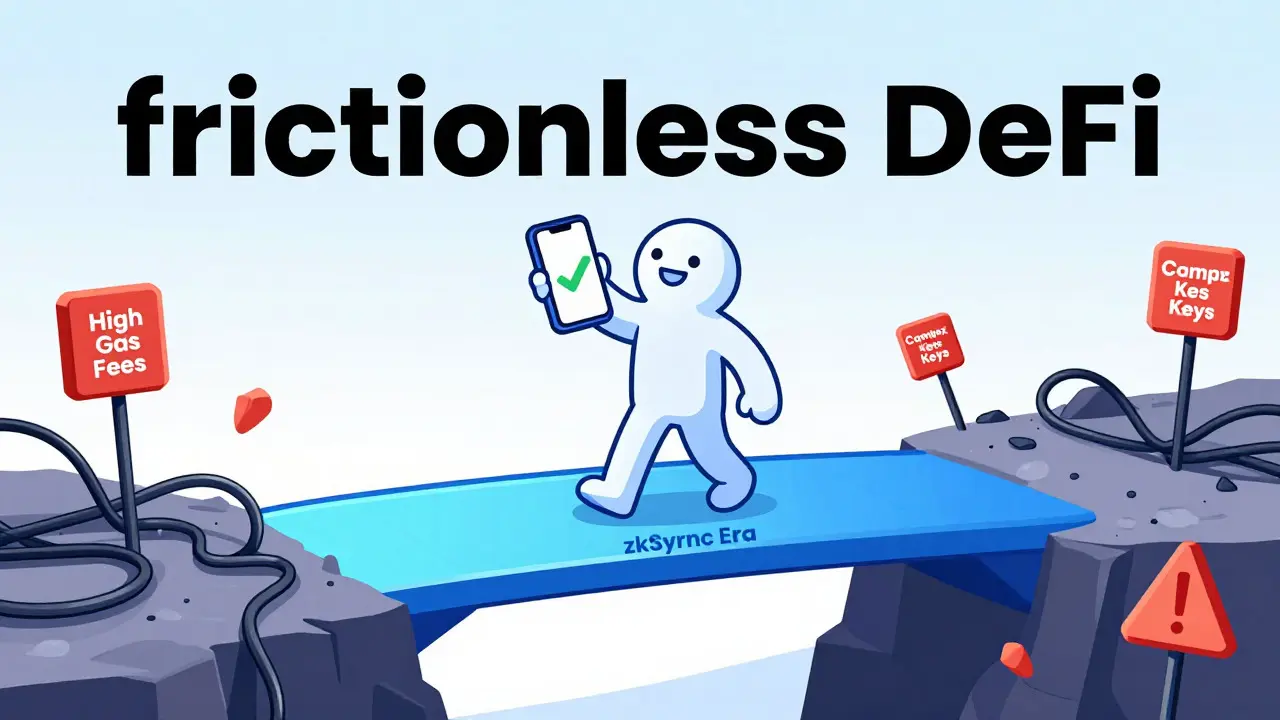
Remember when using crypto meant wrestling with seed phrases, paying $50 in gas fees for a simple swap, or staring at complex charts that looked like EKG readings? That era of friction is fading. Enter Holdstation, a platform designed to make decentralized finance feel as smooth as your favorite centralized exchange app. If you have seen the ticker symbol HOLD popping up on dashboards or heard whispers about "gasless" trading on Layer 2 networks, you are likely wondering what exactly this ecosystem offers and whether it deserves a spot in your portfolio.
Holdstation isn't just another token hoping for a viral moment. It is a comprehensive Web3 infrastructure project built on zkSync Era. Its mission is straightforward but ambitious: bridge the gap between traditional brokerage ease and true decentralized ownership. By combining a smart wallet, a high-leverage derivatives exchange, and AI-driven tools, Holdstation aims to solve the biggest pain points in DeFi today-complexity, cost, and fragmentation.
The Core Problem: Why DeFi Feels Hard
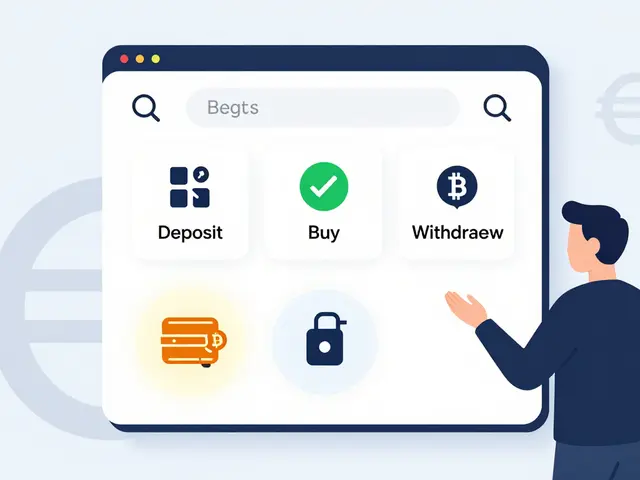
For years, the promise of decentralization came with a steep learning curve. You needed to understand private keys, manage liquidity pools manually, and accept that every transaction cost a significant chunk of your capital due to network congestion. This barrier kept mainstream users away. Holdstation addresses this by leveraging Account Abstraction technology. In simple terms, this allows the platform to handle the messy technical details behind the scenes. Users get a familiar interface where they can trade futures, swap tokens, and manage assets without worrying about native ETH gas fees or complex contract interactions.
How Holdstation Works: The Three Pillars
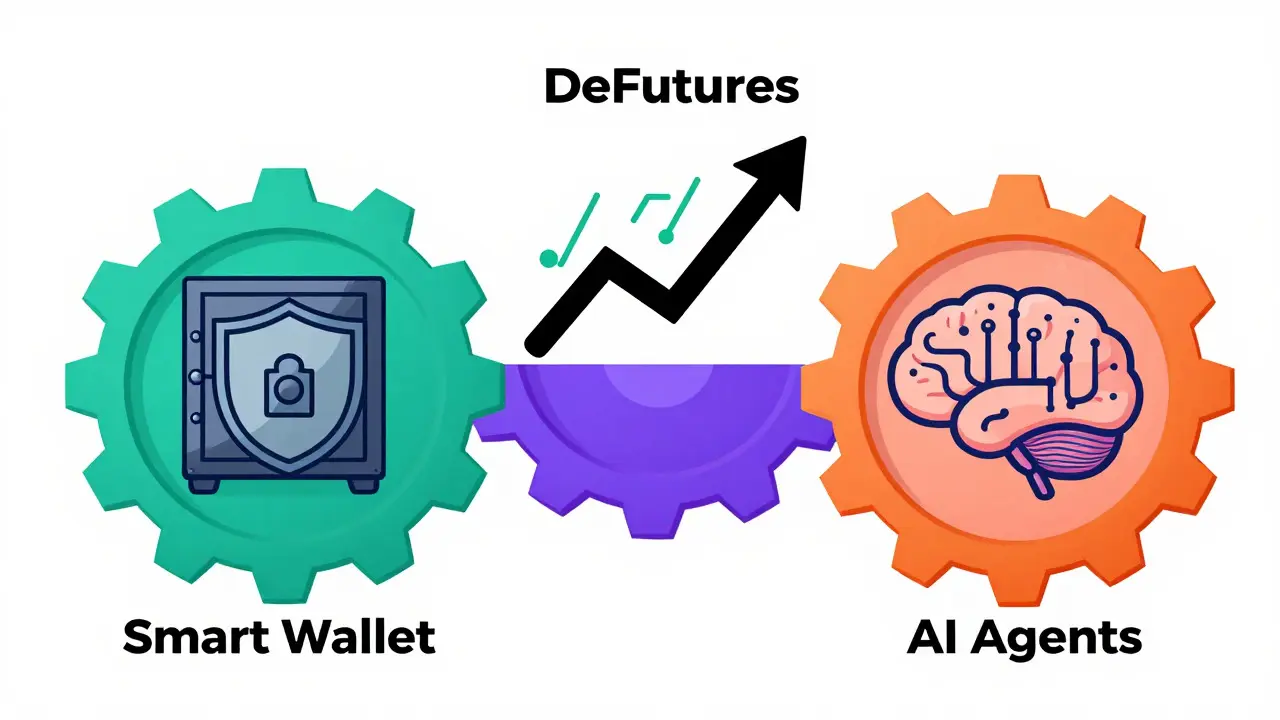
To understand the value of the HOLD token, you first need to understand the products it powers. The ecosystem rests on three main pillars:
- Holdstation Wallet: This is your entry point. Unlike traditional wallets, this is a smart contract wallet based on ERC-4337 standards. It supports multi-chain asset management, meaning you don't need separate wallets for different blockchains. Crucially, it enables "gas-free" transactions. Instead of holding ETH to pay for network fees, you can pay with stablecoins like USDC or USDT. On zkSync Era, these costs are near zero, while other EVM chains charge a minimal fee around 0.2%.
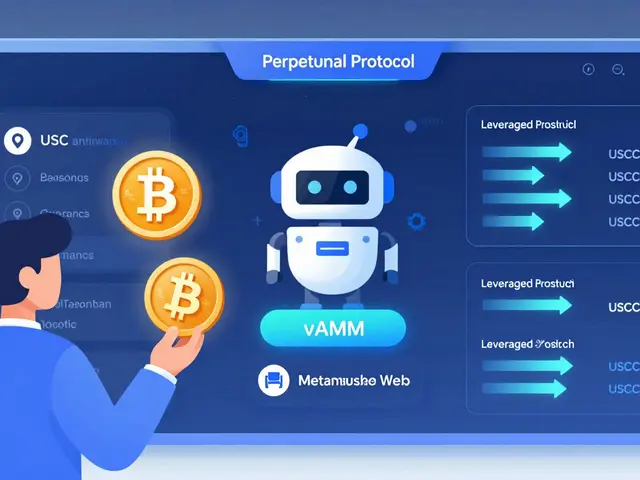
- Holdstation DeFutures: This is the flagship trading engine. It offers perpetual futures contracts with leverage up to 500x. Whether you are interested in cryptocurrencies, forex pairs, or commodities, this platform brings institutional-grade trading tools to the decentralized world. It features a Single Trading Vault and dynamic price feeds to ensure fair pricing without relying on external centralized exchanges.
- A(i)gentFi: This is the innovative edge. It’s an AI platform where users can create and own automated trading agents. These agents analyze markets and execute trades based on predefined strategies. The HOLD token is used to pay for creating and accessing these AI utilities, expanding its utility beyond simple governance.
What Is the HOLD Token?
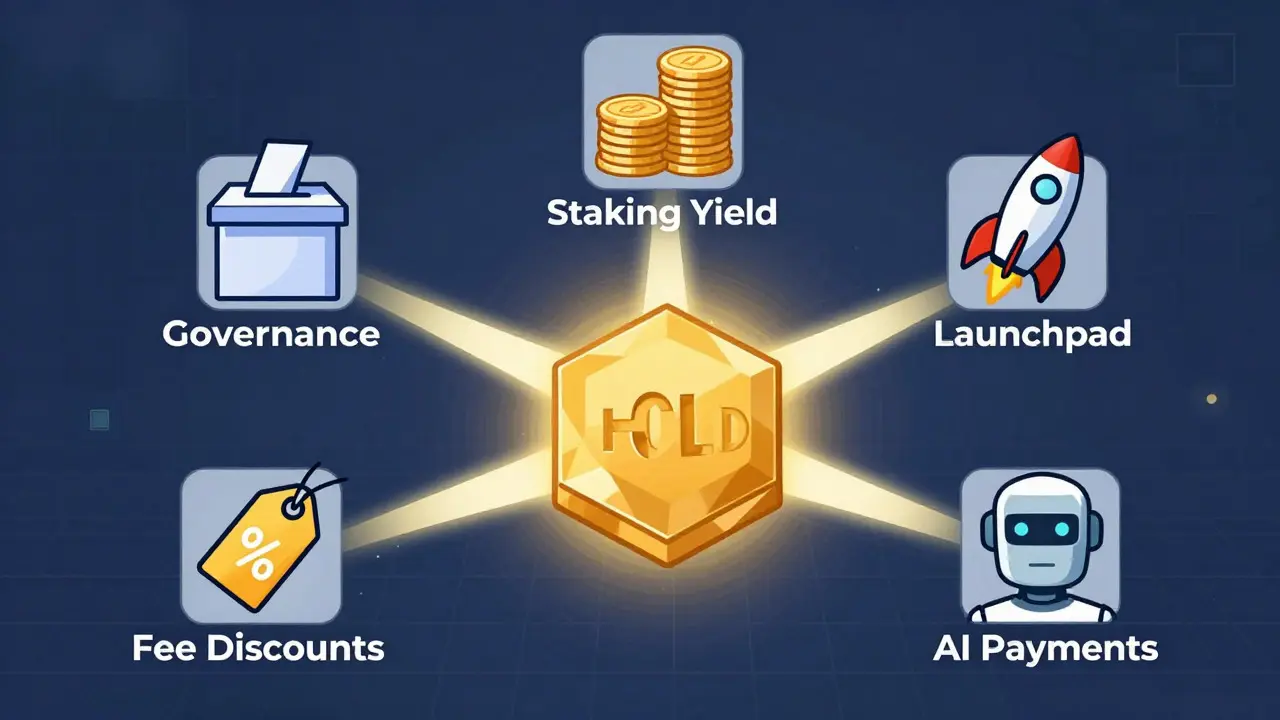
The HOLD token is the lifeblood of this ecosystem. It is not just a speculative asset; it has embedded utility across all three pillars mentioned above. Here is how you actually use it:
- Governance: Holders can vote on DAO proposals, influencing the direction of the platform, new feature additions, and parameter adjustments.
- Staking & Yield: You can stake your tokens to earn real yield from the platform's revenue. This provides passive income potential rather than just hoping for price appreciation.
- Launchpad Access: Holding HOLD grants access to zkStarter, the platform’s launchpad for new projects. This often means early access to promising tokens before they hit broader markets.
- Fee Discounts: Using HOLD to pay for transaction fees within the ecosystem typically results in discounts, making active trading more cost-effective.
- AI Agent Payments: As mentioned, interacting with the A(i)gentFi suite requires HOLD tokens, linking the token’s demand directly to the usage of advanced AI tools.
Market Context and Price History
Like any cryptocurrency, the HOLD token has experienced volatility. Understanding its history helps set realistic expectations. The token reached an all-time high of approximately $7.49 in March 2024. Since then, it has undergone a correction, which is common in the crypto market cycles. As of recent data points, prices have fluctuated significantly, reflecting both broader market sentiment and specific developments within the zkSync ecosystem.
It is crucial to look beyond the current price tag. The value proposition lies in the adoption of the underlying technology. If Holdstation successfully captures users migrating from centralized exchanges due to security concerns or fee structures, the demand for HOLD could rise independent of general market trends. Always check live aggregators like CoinGecko or CoinMarketCap for real-time pricing, as crypto markets move fast.
Security and Trust: Is It Safe?
Security is paramount in DeFi. Holdstation emphasizes non-custodial architecture, meaning you retain control of your assets. However, "non-custodial" doesn't mean risk-free. The platform employs several mechanisms to enhance safety:
- Social Recovery: If you lose access to your wallet, social recovery mechanisms allow trusted contacts to help restore access, preventing permanent loss of funds.
- Spending Limits: Users can set daily spending caps on their wallets to limit exposure in case of unauthorized access.
- Batch Transactions: This reduces the number of individual contract calls, minimizing attack surfaces.
Despite these measures, always conduct your own research. No platform is immune to smart contract bugs or external threats. Diversification remains the best defense against single-point failures.
Comparison: Holdstation vs. Traditional DeFi
| Feature | Standard DeFi (e.g., Uniswap) | Holdstation |
|---|---|---|
| Gas Fees | Paid in native token (ETH/MATIC), often high | Gasless via Account Abstraction; pay with USDC/USDT |
| User Experience | Complex, requires manual approval for each interaction | CEX-like interface, seamless swaps and trades |
| Leverage Trading | Limited availability, often fragmented across platforms | Built-in perpetuals up to 500x leverage |
| Asset Custody | Non-custodial (user holds keys) | Non-custodial (smart contract wallet) |
| AI Integration | Rarely integrated natively | Native A(i)gentFi for automated trading agents |
Who Should Use Holdstation?
This platform caters to two distinct groups. First, the retail investor who wants exposure to crypto trading without the headache of managing multiple wallets and understanding complex order books. The copy-trading feature allows beginners to mimic successful traders, lowering the entry barrier. Second, the sophisticated trader who seeks high leverage and low slippage. The ability to trade forex and commodities alongside crypto on a single decentralized platform is a unique advantage for those looking to diversify their hedging strategies.
Future Outlook and Risks
The success of Holdstation hinges on the continued growth of zkSync Era and the broader adoption of Account Abstraction. If Ethereum Layer 2 solutions become the standard for user interaction, platforms like Holdstation that prioritize UX will gain significant market share. However, regulatory scrutiny on leveraged trading and AI-driven financial tools remains a risk. Keep an eye on updates regarding compliance and partnership announcements, as these will signal long-term viability.
In summary, Holdstation represents a shift towards "invisible" blockchain technology. By removing the friction of gas fees and complex interfaces, it invites a new wave of users into DeFi. The HOLD token is the key to unlocking these benefits, offering governance, yield, and access to cutting-edge AI tools. Whether it fits your strategy depends on your appetite for innovation and your belief in the future of decentralized derivatives trading.
Is Holdstation a centralized or decentralized exchange?
Holdstation is a decentralized exchange (DEX). It operates on a non-custodial model, meaning users retain control of their funds through smart contract wallets. However, it mimics the user experience of a centralized exchange (CEX) by offering an intuitive interface and aggregated liquidity.
What blockchain does Holdstation run on?
Holdstation is primarily built on zkSync Era, a Layer 2 scaling solution for Ethereum. This choice allows for faster transactions and significantly lower fees compared to the Ethereum mainnet.
Can I trade stocks on Holdstation?
Not directly. Holdstation offers perpetual futures contracts on various assets, including commodities and forex, but these are synthetic positions traded in crypto. You do not own the underlying stock or commodity.
How do I pay for gas fees on Holdstation?
Thanks to Account Abstraction, you can pay gas fees using stablecoins like USDC or USDT instead of needing the native chain token. On zkSync Era, these fees are often negligible.
What is A(i)gentFi?
A(i)gentFi is an AI-powered platform within the Holdstation ecosystem. It allows users to deploy automated trading agents that execute strategies based on market data, enhancing efficiency for both novice and expert traders.
 Finance
Phil Babb
August 3, 2026 AT 22:01Look, I have been in this space since the early days of Bitcoin, and let me tell you something! This is exactly what we need! The friction is real, people! Gas fees were killing the vibe for everyone who wasn't a whale! Holdstation is stepping up to the plate like a true champion! They are solving the actual problems that keep normal folks out! Account Abstraction is not just buzzwords; it is the future of UX! If you can trade without worrying about ETH gas, that is huge! It opens the door for millions of new users! Don't sleep on this technology! It is smooth, it is fast, and it is necessary! Let's go!
Dominic Greco
August 4, 2026 AT 08:27Wake up sheeple!!! 🚨🚨 They want your data! AI agents? Sure, why not? Just another way for the deep state to track every single micro-transaction you make! 😡 The 'non-custodial' claim is a lie wrapped in blockchain jargon! zkSync is probably backdoored by the SEC already! 💀 Trust no one! Keep your coins offline or get rekt! The matrix wants you trading perpetuals so they can manipulate the price feed! 📉💸
Sean Rowland
August 5, 2026 AT 06:51One must question the inherent validity of such a contrived narrative. The notion that 'friction' is the primary impediment to adoption is, frankly, laughable. The impediment is human nature itself! You suggest that simplifying the interface solves the problem of greed and leverage-induced ruin? Preposterous! Furthermore, the reliance on AI agents introduces an opaque layer of algorithmic determinism that strips the user of agency entirely. It is a paradox: decentralization achieved through centralized intelligence! One wonders if the authors have considered the existential dread of surrendering financial autonomy to a black-box neural network. The jargon is thick, but the substance is thin.
Sus Sawyer
August 5, 2026 AT 11:23Hey hey! So I actually tried this out last week and wow, the UI is slick! No more staring at my wallet balance crying because I spent $40 on a swap lol. The gasless thing with USDC is a game changer for small trades. I feel like a pro trader even though I am just copying others. The AI agent part is kinda wild, feels like having a robot friend doing the work for you. Highly recommend giving it a spin if you are tired of the old clunky DeFi apps. It really does feel like a CEX but you hold the keys. Pretty cool stuff!
Aryan MISHRA
August 6, 2026 AT 11:38The utility is clear. Staking yields are real. Governance matters. Do not ignore the fundamentals. The market will correct. Always DYOR. Volatility is high. Risk management is key. The tokenomics are sound. Adoption drives value. Simple as that.
Ryan Robinson
August 7, 2026 AT 19:06i mean it looks pretty decent honestly. i was skeptical at first cause everything claims to be the next big thing. but the fact that you dont need eth for gas is nice. makes it easier for newbies. hope it doesnt rug pull tho. weve seen it all before. but yeah, good write up.
Earl Kott65
August 8, 2026 AT 06:49Oh, look at you, trying to act like a sophisticated investor now! 🙄 How adorable! But seriously, the AI integration is the real kicker here. It’s not just hype; it’s automation. I love how dramatic the potential gains are when you use the right strategies. 🎭 Just don’t cry when you get liquidated at 500x leverage, okay? 😉 That would be tragic! But hey, if you survive, you’re a legend! Keep dreaming big, buttercup! ✨
Ethan Yuwono
August 10, 2026 AT 02:14It is interesting to consider the philosophical implications of removing friction from finance. When we eliminate the pain points, do we also eliminate the caution that keeps us safe? Perhaps. Or perhaps we simply allow more people to participate in their own economic destiny. The tool is neutral. The intent matters. I see potential here for genuine empowerment if used wisely. Let us observe with open minds.
Qolbina Islami
August 11, 2026 AT 03:38This is typical Western tech arrogance! Trying to solve problems that don't exist while ignoring the real issues! Our systems are superior! Why should we trust these American-led protocols? They are unstable! They crash! They fail! We need sovereignty! Not this fragile Layer 2 nonsense! Back to basics! Gold! Cash! Real assets! Not digital vaporware controlled by Silicon Valley elites! 🇺🇸🚫
SUBHAM CHOUDHURY
August 12, 2026 AT 21:57Nice post. Good information. I think many people will benefit from this guide. The explanation of the three pillars is very helpful. I am slowly learning about DeFi and this seems like a good place to start. Thanks for sharing. Keep going. You are doing great.
Joy Kwant
August 13, 2026 AT 15:28You people are so obsessed with profit it makes me sick. Who cares about 'yield'? Who cares about 'governance'? What about the moral decay of gambling on synthetic assets? It is empty! It is hollow! You are feeding a beast that consumes your soul. I just want to sit here and watch you all chase numbers while the world burns. Pathetic. Truly pathetic.
Lorraine Surringer
August 14, 2026 AT 19:57I have been watching this space closely and honestly, the execution needs to be flawless. I am not saying it is bad, but I am saying it has to be perfect. The AI angle is risky if not transparent. I prefer to hold steady and wait for the dust to settle. My portfolio is balanced and I am happy with that. You guys run too hot. Cool down. Breathe. Think before you click buy.
Alex Di Mango
August 15, 2026 AT 00:46I think there is a lot of merit to both sides of this argument. On one hand, the convenience is undeniable. On the other, the risks are real. I find myself leaning towards optimism because innovation usually wins out in the end. If Holdstation can maintain security while offering this ease of use, it could be a major player. Let us give it a chance and see where it goes. Balance is key.
Amor Jordan
August 16, 2026 AT 10:09I hear your concerns, especially regarding security. It is scary to put money into new platforms. But I also see the excitement in the community. It feels like a movement. I am cautiously optimistic. I will start small. Maybe just a little bit of HOLD to test the waters. If it works, great. If not, I learn. That is how we grow together. Sending positive vibes to everyone here. ❤️