

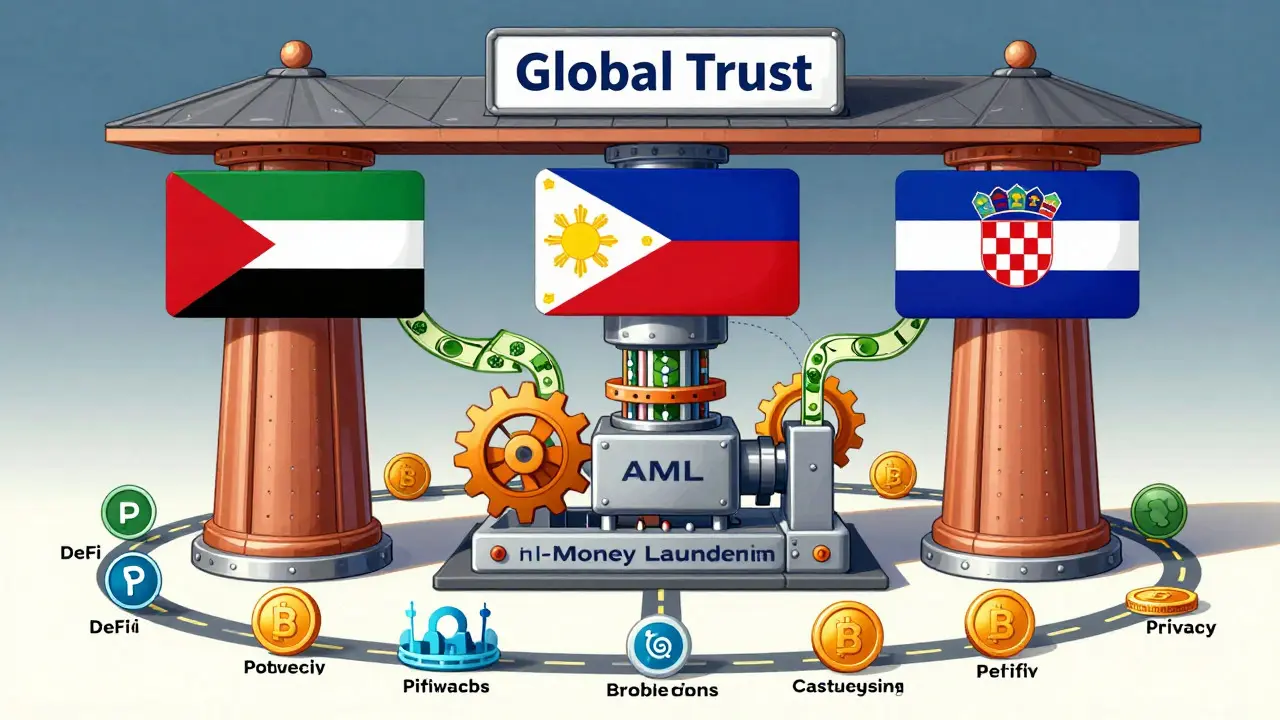
Getting kicked off the Financial Action Task Force (FATF) grey list is like passing a grueling final exam after years of remedial classes. For countries, it means regaining trust with global banks, lowering compliance costs, and opening doors for businesses-especially in the fast-moving world of cryptocurrency. In 2024 and 2025, several nations proved they could turn their financial systems around. The United Arab Emirates (UAE), the Philippines, and Croatia successfully exited the "Jurisdictions Under Increased Monitoring" list. Meanwhile, Turkey’s ongoing efforts highlight the complex reality of maintaining high standards in emerging markets.
These aren’t just bureaucratic victories. They represent massive shifts in how these countries handle money laundering, terrorist financing, and virtual assets. If you’re a business owner, investor, or policy watcher, understanding FATF grey list removal strategies offers a blueprint for what works-and what doesn’t-in modern financial regulation.
The High Stakes of the FATF Grey List
To understand why these exits matter, you first need to grasp the pressure cooker that is the FATF grey list. Officially called "Jurisdictions Under Increased Monitoring," this list isn’t as harsh as the blacklist (which currently holds only North Korea, Iran, and Myanmar as of mid-2026). But it’s still a major red flag for international banks.
When a country lands on the grey list, it signals to the global financial community that its anti-money laundering (AML) and counter-terrorist financing (CFT) frameworks have strategic deficiencies. The immediate consequence? Enhanced due diligence. Banks start asking more questions, demanding more paperwork, and often charging higher fees for transactions involving that jurisdiction. For some smaller economies, this can lead to de-risking, where major banks simply cut ties to avoid the hassle.
For crypto businesses, the impact is even sharper. Virtual Asset Service Providers (VASPs) operate across borders. If your headquarters or key users are in a grey-listed country, traditional banking partners may hesitate to serve you. This creates a bottleneck that stifles growth and innovation. That’s why removing these labels is so critical-it restores liquidity and trust.
What is the difference between the FATF grey list and blacklist?
The grey list (Jurisdictions Under Increased Monitoring) includes countries that have committed to fixing specific AML/CFT deficiencies within an agreed timeline. They are under peer monitoring but not subject to mandatory countermeasures. The blacklist consists of countries with severe strategic deficiencies that pose a threat to the global financial system; these face calls for enhanced countermeasures from other nations.
The UAE: Turning Transparency Into Trust
The United Arab Emirates’ journey off the grey list in early 2024 serves as a masterclass in rapid regulatory reform. When the UAE was placed under increased monitoring, the core issues revolved around beneficial ownership transparency and the effectiveness of its supervision mechanisms. Essentially, regulators couldn’t always see who really owned companies, making it easier for illicit funds to hide behind shell corporations.
The UAE didn’t just tweak existing laws; they overhauled them. They implemented stricter AML oversight and created robust mechanisms for tracking beneficial ownership. This was crucial because opaque corporate structures are a favorite tool for money launderers. By forcing greater transparency, the UAE made it harder for criminals to use its financial system.
Crypto played a significant role here too. As Dubai positioned itself as a global hub for digital assets through the Virtual Assets Regulatory Authority (VARA), it had to ensure its framework met international standards. The FATF’s recommendations for virtual assets require countries to regulate VASPs effectively. The UAE aligned its local crypto regulations with these global standards, ensuring that digital asset exchanges were licensed, monitored, and held accountable. This dual approach-fixing traditional corporate opacity while tightening crypto rules-convinced FATF assessors during their on-site visits that the UAE had sustained its improvements.
In July 2025, the European Parliament followed suit by removing the UAE from its own list of high-risk third countries. This synchronized move between the FATF and the EU significantly reduced the regulatory burden for firms operating in the region.
The Philippines: A Comprehensive Cleanup
The Philippines’ exit from the grey list in February 2025 was equally impressive, though it required addressing different challenges. The country’s action plan focused on strengthening the supervision of financial institutions, boosting law enforcement capabilities, and improving asset recovery mechanisms.
One of the biggest hurdles for the Philippines was the sheer volume of informal financial activities and the complexity of its archipelagic geography, which made supervision difficult. To tackle this, the government enhanced institutional capacity. This meant giving regulators better tools, more staff, and clearer mandates to monitor banks and non-bank financial institutions.
Law enforcement also saw a boost. It’s not enough to have good laws on paper; you need convictions to prove they work. The Philippines demonstrated improved effectiveness by launching more investigations and securing successful prosecutions for money laundering cases. This tangible output showed the FATF that the reforms weren’t just cosmetic.
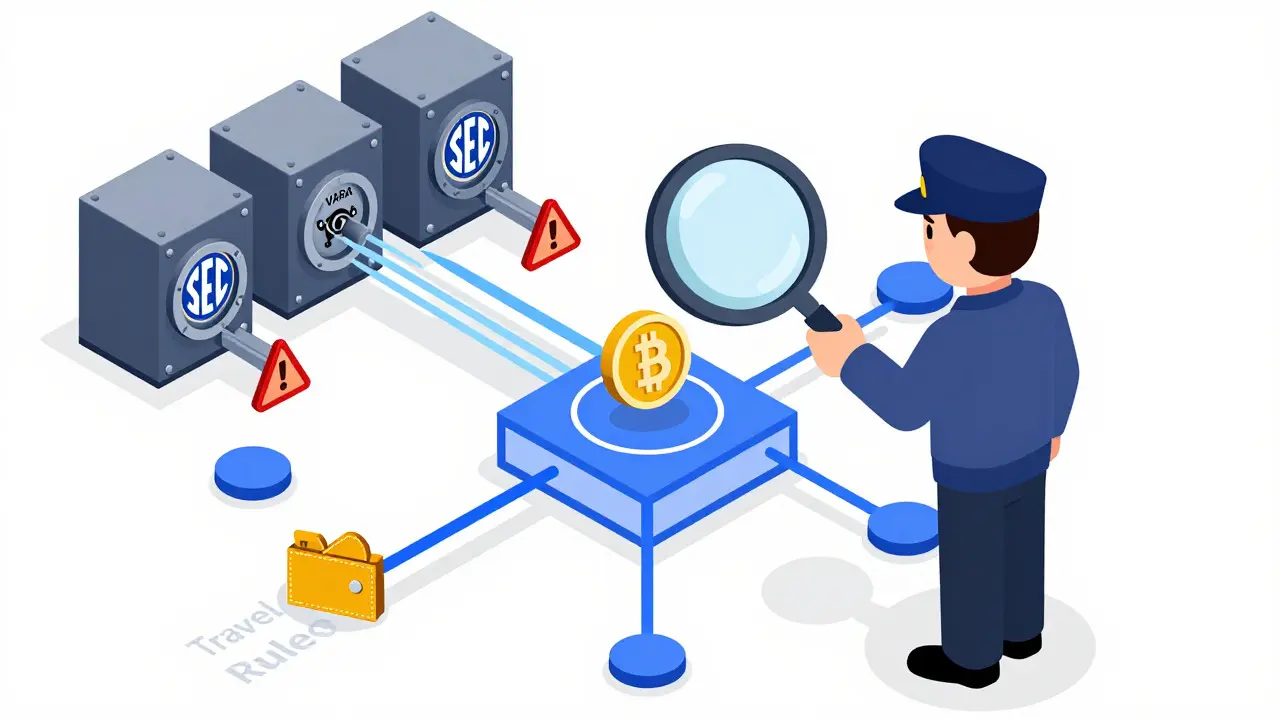
Regarding crypto, the Philippines has long been a hotspot for remittances and digital payments. The Securities and Exchange Commission (SEC) and the Bangko Sentral ng Pilipinas (BSP) worked together to clarify the regulatory landscape for VASPs. While specific details about crypto-driven reforms are less publicized than in the UAE, the broader push for financial inclusion and formalization helped bring previously unmonitored sectors into the fold. By integrating digital asset providers into the AML framework, the Philippines closed a potential loophole that criminals might have exploited.
Croatia: Legislative Precision and Institutional Strength
Croatia’s removal in June 2025 highlights the importance of legislative precision. As an EU member state, Croatia already operates within a strict regulatory environment, but gaps remained in its national implementation of AML/CFT measures. The FATF identified deficiencies in areas such as risk-based approaches and the coordination between different supervisory bodies.
Croatia addressed these gaps through targeted legislative reforms. They updated their laws to ensure that all relevant entities, including those involved in real estate and high-value goods, were subject to proper scrutiny. They also strengthened the Anti-Money Laundering Agency (FINA), giving it more authority and resources to conduct inspections and enforce penalties.
The crypto angle here is subtle but important. As part of the EU’s Markets in Crypto-Assets (MiCA) regulation rollout, Croatia had to align its national laws with upcoming EU-wide standards. By proactively updating its framework ahead of full MiCA implementation, Croatia demonstrated to the FATF that it was future-proofing its financial system. This forward-looking approach reassured assessors that Croatia wouldn’t slip back into non-compliance as new financial technologies emerged.| Country | Removal Date | Key Focus Areas | Crypto Relevance |
|---|---|---|---|
| UAE | Early 2024 | Beneficial ownership transparency, AML oversight | VARA licensing, alignment with FATF VA recs |
| Philippines | Feb 2025 | Supervision, law enforcement, asset recovery | Integration of VASPs into BSP/SEC frameworks |
| Croatia | June 2025 | Legislative reforms, institutional capacity | Preparation for EU MiCA regulation |
Turkey: The Ongoing Challenge
While the UAE, Philippines, and Croatia have celebrated their exits, Turkey’s situation remains more nuanced. Turkey has faced periodic scrutiny regarding its AML/CFT frameworks, particularly concerning cross-border capital flows and the supervision of non-bank financial institutions. Although Turkey has not been recently added to the grey list in the same manner as the others mentioned, it continues to navigate complex regulatory expectations.
Turkey’s challenge lies in balancing economic stability with stringent compliance requirements. The country has made strides in updating its legislation and enhancing cooperation with international bodies. However, the scale of its economy and the volume of its financial transactions mean that any lapse in supervision can quickly draw attention. For crypto businesses operating in Turkey, this means staying vigilant about changing regulations. The Turkish Capital Markets Board (CMB) has taken steps to regulate digital assets, but the landscape evolves rapidly.
The lesson from Turkey is that compliance is not a one-time fix. It requires continuous effort and adaptation. Even if a country isn’t on the grey list, maintaining high standards is essential to avoid future listing. This is especially true for crypto, where new products and services emerge faster than regulations can sometimes keep up.
Why Crypto Regulation Was Key to These Successes
You might wonder why we’re focusing so much on cryptocurrency when the FATF deals with all forms of financial crime. The answer is simple: crypto is the new frontier for money laundering. Before digital assets, criminals relied on cash-intensive businesses or complex corporate structures. Now, they can move billions of dollars across borders in minutes using blockchain technology.
The FATF’s Travel Rule, which requires VASPs to share sender and receiver information for transactions above a certain threshold, has become a cornerstone of global AML efforts. Countries that wanted to get off the grey list had to show they could enforce this rule. This meant:
- Licensing and registering all crypto exchanges and wallet providers.
- Giving regulators the technical expertise to monitor blockchain transactions.
- Ensuring that VASPs conduct proper customer due diligence (CDD).
The UAE, Philippines, and Croatia all invested in these areas. They recognized that ignoring crypto would leave a gaping hole in their AML defenses. By bringing VASPs into the regulatory fold, they demonstrated to the FATF that they were taking a comprehensive, risk-based approach to financial crime.
Practical Steps for Businesses and Investors
If you’re running a business or managing investments in these regions, here’s what you need to do now:
- Review Your Risk Assessments: With these countries off the grey list, your internal risk models should reflect their improved status. This might mean lowering the risk rating for clients based in the UAE, Philippines, or Croatia, which can streamline onboarding processes.
- Verify Licensing: Ensure that any crypto partners or service providers you work with hold valid licenses from local regulators (like VARA in the UAE or SEC/BSP in the Philippines). Unlicensed entities remain a liability regardless of the country’s FATF status.
- Monitor EU Designations: Keep an eye on the EU’s list of high-risk third countries. While the FATF and EU lists often align, they don’t always move in perfect sync. The EU removed the Philippines and UAE in July 2025, but other jurisdictions may lag behind.
- Stay Updated on Local Laws: Regulatory landscapes continue to evolve. For example, Croatia’s alignment with MiCA will bring new reporting requirements. Subscribe to updates from local financial intelligence units (FIUs) to stay ahead of changes.
Looking Ahead: The Future of FATF Compliance
The removal of these countries shows that the FATF’s action plan approach works. When countries commit to genuine reform-with political will at the highest levels-they can turn things around. However, the bar is rising. The FATF is increasingly focusing on effectiveness rather than just having laws on paper. They want to see convictions, seized assets, and disrupted criminal networks.
For crypto, this means tighter scrutiny is coming. As digital assets become more mainstream, the FATF will likely update its recommendations to address new risks like decentralized finance (DeFi) and privacy coins. Countries that want to maintain their clean bill of health will need to adapt quickly.
The successes of the UAE, Philippines, and Croatia offer a roadmap. It starts with transparency, moves through strong supervision, and ends with effective enforcement. For businesses, it means partnering with jurisdictions that take compliance seriously. In the end, being off the grey list isn’t just about avoiding stigma-it’s about building a resilient, trustworthy financial ecosystem that attracts legitimate investment and fosters innovation.
How long does it typically take to get off the FATF grey list?
The timeline varies significantly depending on the severity of deficiencies and the speed of implementation. Some countries, like Ghana, took about two years. Others, like the UAE, moved relatively quickly once political commitment was secured. The process involves completing an action plan, undergoing on-site assessments, and demonstrating sustained results before the next plenary meeting.
Does being removed from the FATF grey list guarantee no future listing?
No. Removal indicates that current deficiencies have been addressed. However, countries are subject to ongoing mutual evaluations. If new weaknesses emerge or enforcement slackens, a country can be re-listed. Continuous compliance is essential.
What specific crypto regulations did the UAE implement to satisfy FATF?
The UAE established the Virtual Assets Regulatory Authority (VARA) to oversee digital assets. They implemented strict licensing requirements for VASPs, enforced the Travel Rule for transaction reporting, and integrated crypto entities into the broader AML/CFT supervision framework managed by the Federal Competent Department.
How does the EU's high-risk third country list relate to the FATF grey list?
The EU list is separate but closely aligned with FATF decisions. The EU uses FATF assessments as a primary input for its own designations. When a country is removed from the FATF grey list, the EU often follows suit, as seen with the UAE and Philippines in 2025, though the EU has its own legal procedures and timelines.
What happens to businesses if a country is added to the FATF grey list?
Businesses face enhanced due diligence requirements from international partners. Banks may charge higher fees or delay transactions. Crypto businesses might struggle to secure banking relationships or expand globally. Insurance and trade finance can also become more expensive or difficult to obtain.
 Finance