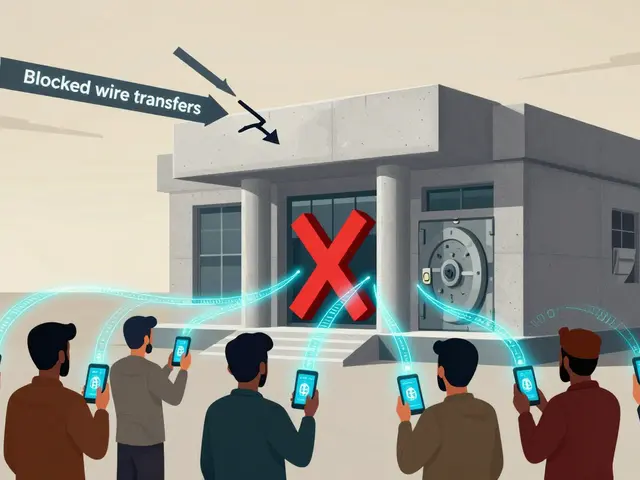

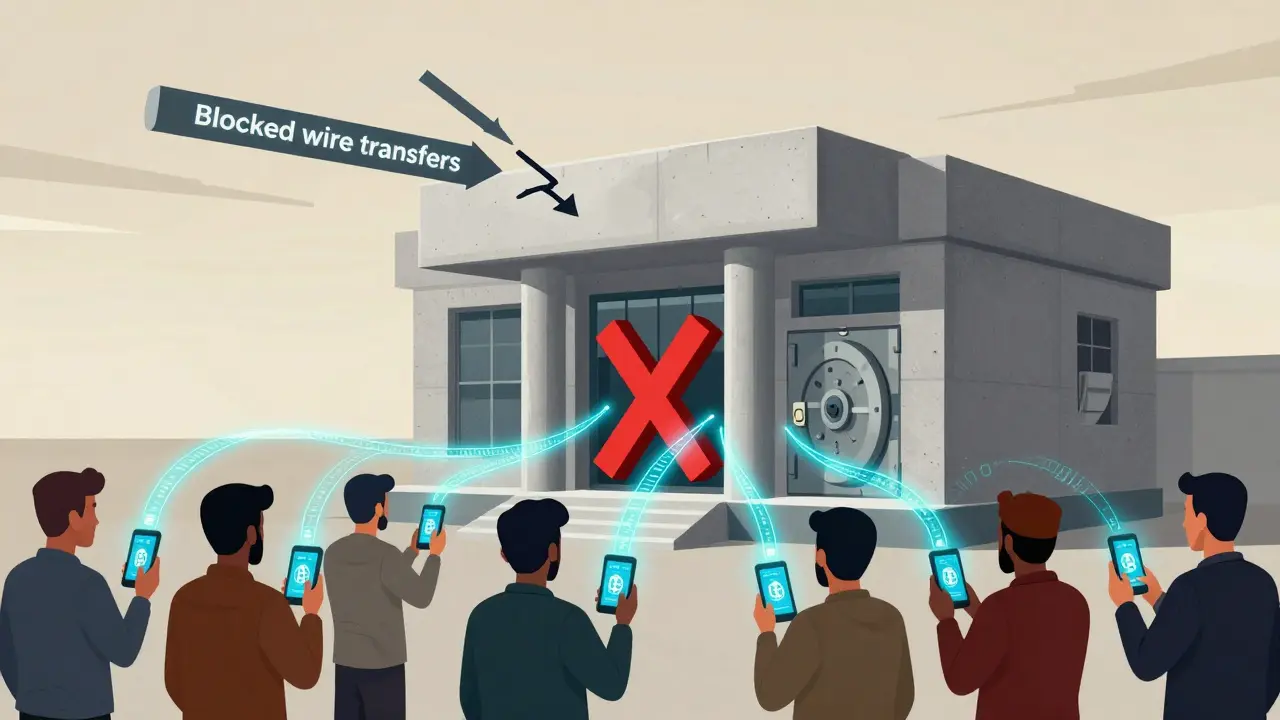
Imagine trying to send money to your family, only to find that every bank account is frozen and every wire transfer blocked. Now imagine that the one tool left to you-a digital wallet on your phone-gets you arrested. This isn’t a dystopian novel; it is the daily reality for many people living under the Taliban regime in Afghanistan following their takeover in August 2021. While the world watches from afar, a quiet but aggressive war on cryptocurrency is unfolding within the country’s borders.
The story of cryptocurrency in Afghanistan is a tale of rapid adoption followed by severe state-enforced suppression. It began with desperation and ended with handcuffs. To understand why the authorities are cracking down so hard, we have to look at how this market exploded, why it was banned, and what happens when the law catches up with survival.
From Desperation to Adoption: Why Crypto Took Off
When the Taliban took control of Kabul in August 2021, the immediate aftermath was chaos. International sanctions froze billions of dollars in Afghan assets. Traditional banking channels collapsed overnight. For millions of Afghans, the formal economy simply stopped working.
In this vacuum, Bitcoin and USDT (Tether) became lifelines. People didn't adopt crypto because they were tech enthusiasts or believed in decentralization ideology. They adopted it because it was the only way to move money across borders. Remittances-money sent home by relatives abroad-became the primary source of income for many families.
Data from Chainalysis highlights just how massive this shift was. In their 2021 Global Crypto Adoption Index, Afghanistan ranked 20th globally. Between July 2020 and June 2021, on-chain transaction values exceeded $962 million. This wasn't speculative trading; it was peer-to-peer survival. Local exchanges sprang up in cities like Herat and Kabul, offering services that banks could no longer provide.
The Ban: Religious Rulings and Economic Control
The authorities did not take kindly to this shadow economy. By June 2022, the Da Afghanistan Bank (the central bank) issued a formal ban on cryptocurrency trading. The justification was twofold: religious doctrine and economic control.
Religiously, the ban leans on the concept of gharar, or excessive uncertainty, which is prohibited in Islamic finance. A spokesman for the central bank told Bloomberg that there is "no instruction in Islamic law to approve it," labeling online foreign exchange trading as "illegal and fraudulent." However, this interpretation is not universal among Islamic scholars, suggesting that religion may be a convenient cover for deeper political motives.
Economically, the ban makes more sense from the regime's perspective. Cryptocurrency allows citizens to bypass government controls and international sanctions. When money moves through blockchain networks rather than traditional banking systems, the state loses visibility and control over capital flows. For a regime struggling with legitimacy and financial isolation, an unregulated currency is a threat.
| Date | Action Taken | Impact |
|---|---|---|
| August 2021 | Taliban takeover; banking collapse | Surge in grassroots crypto adoption for remittances |
| June 2022 | Central Bank bans crypto trading | Legal ambiguity; initial confusion among traders |
| May 2023 | Arrests in Herat province | 8 traders detained for 28 days; warnings of 6-month sentences |
| September 2023 | Shutdown of 16 exchanges in Herat | Mass closures; staff arrested; significant market contraction |
The Crackdown: Arrests and Closures
Paper bans are easy; enforcement is hard. But the Taliban has moved quickly to enforce its will, particularly in Herat province, a major trading hub near the Iranian border.
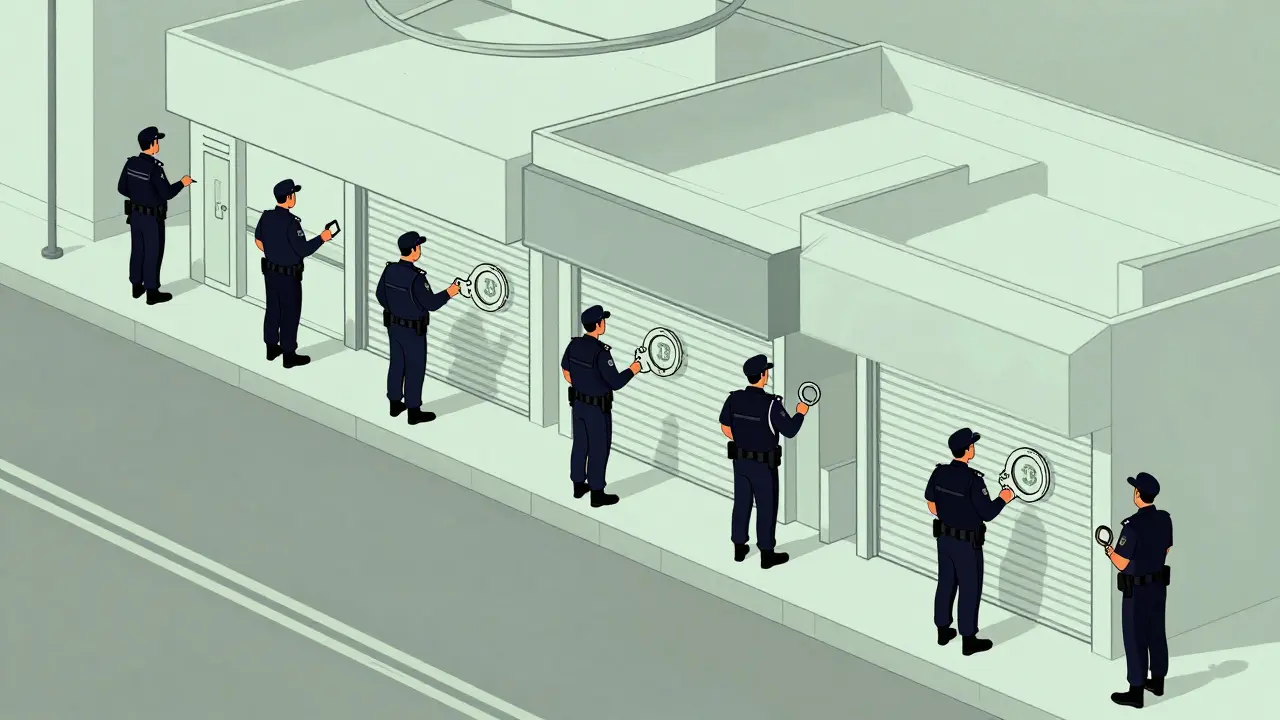
In May 2023, police arrested eight cryptocurrency traders in Herat. These weren't high-level executives; they were ordinary men running small businesses. They were detained in Herat's central prison for 28 days. Authorities indicated that continued violations could lead to sentences of up to six months. Later that year, in September 2023, police shut down 16 cryptocurrency exchanges in the same province. Sayed Shah Sa'adat, head of the police's counter-crime unit in Herat, publicly confirmed these closures.
The scale of the crackdown is significant. By August 2022, more than 20 crypto-related businesses had been shut down in Herat alone. This represents a massive contraction from late 2021, when estimates suggested 40 to 50 active exchanges were operating across the country. The message was clear: if you are caught facilitating crypto transactions, you will lose your business, and likely your freedom.
The Human Cost: Survival vs. Law
Behind the statistics and legal rulings are real people facing impossible choices. For many Afghans, cryptocurrency is not an investment; it is food on the table. One trader reported to Coinspeaker that he previously earned a modest 1-2% margin from USDT transactions. After the ban, he lost his livelihood entirely, stating he "could no longer afford to feed his family."
Another citizen explained that his family's survival depended on Bitcoin and USDT remittances from his brother in the United States. "There's no other way," he said, acknowledging the personal risk involved. With the World Bank reporting in April 2023 that 97% of Afghans live below the poverty line, the stakes couldn't be higher. UNICEF noted that over one million children were at risk of severe malnutrition in 2023. Cutting off remittance channels exacerbates this humanitarian crisis.
The irony is palpable. The very financial isolation caused by international sanctions drove people to crypto. Now, the regime is punishing them for using the only tool that works in a broken system.
Terrorism Concerns and Counter-Narratives
Proponents of the ban often cite security concerns. There is legitimate fear that cryptocurrencies can be used to fund illicit activities. Reports indicate that Islamic State Khorasan Province (ISKP) has attempted to use crypto for fundraising. TRM Labs' 2025 Crypto Crime Report highlighted hundreds of transactions linked to the group, ranging from $100 to $15,000. These funds were allegedly used to partially finance attacks, including one in Moscow in March 2024.
However, critics argue that the Taliban's approach is a blunt instrument. Instead of targeting specific terrorist financing networks, the regime has criminalized all crypto usage. This broad brush affects ordinary citizens far more than sophisticated criminal organizations, which often adapt quickly to new regulations or use privacy-enhancing technologies that remain accessible underground.

The Underground Shift: Can You Stop Innovation?
Banning cryptocurrency does not eliminate the demand for it; it drives it underground. Experts from Chainalysis and TRM Labs suggest that the crackdown has shifted activity toward more discreet peer-to-peer transactions. Traders now operate with greater secrecy, using encrypted messaging apps and private wallets to avoid detection.
This shift creates new risks. Without regulated exchanges, users are more vulnerable to fraud, scams, and theft. The lack of oversight means there is no recourse if a transaction goes wrong. Furthermore, driving the market underground makes it harder for humanitarian organizations to distribute aid effectively. Previously, groups like the Women's Entrepreneurship Day Organization (WEDO) partnered with Opengrants.io to send weekly food payments to 100,000 women via cryptocurrency. Such initiatives face immense hurdles now.
What Does the Future Hold?
The long-term viability of the ban remains questionable. As long as Afghanistan remains financially isolated, the incentive to use alternative currencies will persist. The economic pressure is too great, and the need for cross-border transfers is too urgent. The Taliban faces a paradox: enforcing the ban hurts the population it claims to protect, while ignoring it undermines its authority.
For now, the situation remains tense. Citizens walk a tightrope between survival and imprisonment. The global crypto community watches with concern, recognizing that Afghanistan’s experience serves as a stark warning about the intersection of technology, politics, and human rights. Until a broader political resolution emerges, the crypto underground in Afghanistan will continue to grow, hidden but alive.
Is cryptocurrency illegal in Afghanistan?
Yes. Since June 2022, the Da Afghanistan Bank has officially banned cryptocurrency trading. The Taliban regime enforces this ban through police raids, business closures, and arrests of individuals involved in crypto transactions.
Why did the Taliban ban cryptocurrency?
The ban is justified by two main reasons: religious grounds, citing prohibitions against uncertainty (gharar) in Islamic law, and economic control, aiming to prevent capital flight and maintain oversight of financial transactions amidst international sanctions.
How many people have been arrested for crypto trading?
While exact national numbers are unclear due to limited reporting, documented cases include eight traders arrested in Herat in May 2023 and multiple staff members detained during the shutdown of 16 exchanges in September 2023. Sentences can range from bail release to up to six months in prison.
Do Afghans still use cryptocurrency despite the ban?
Yes. Due to the collapse of the traditional banking system and heavy poverty, many Afghans rely on crypto for remittances. Usage has shifted to discreet peer-to-peer transactions to avoid detection by authorities.
What is the impact of the ban on humanitarian aid?
The ban complicates aid distribution. Organizations like WEDO previously used crypto to send direct payments to women. With increased enforcement, such efficient and transparent methods are hindered, potentially worsening the humanitarian crisis affecting millions of children and families.
 Finance