

![What is [Fake] Test (TST) Coin? Warning and Analysis](/uploads/2026/04/what-is-fake-test-tst-coin-warning-and-analysis.webp)
If you've spotted a coin called [Fake] Test (TST) is a token on the Ethereum blockchain that claims to be for testing purposes but shows up on price trackers with confusing data. and wondered if it's a hidden gem, stop right there. The most important thing to realize is that the word "Fake" isn't just a quirky name-it's a literal warning. This isn't a legitimate investment, and attempting to buy it is a fast track to losing your money.
The Math Doesn't Add Up
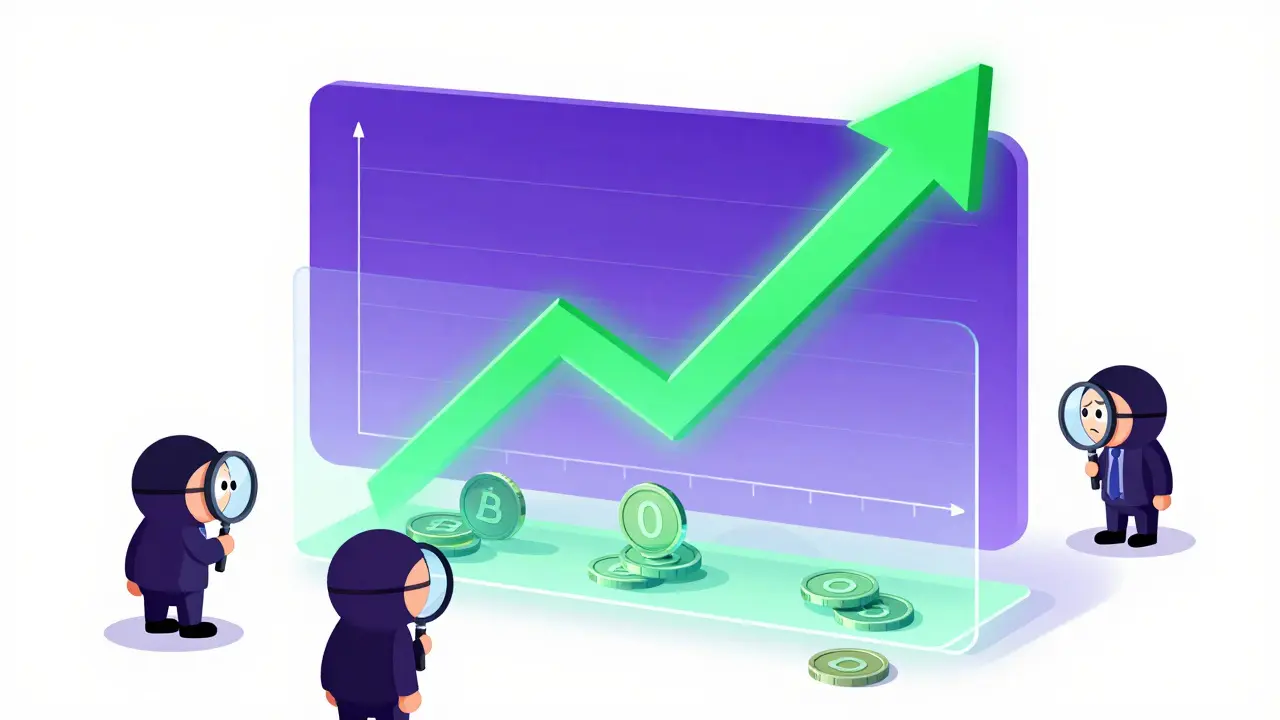
In the world of crypto, basic economics usually apply. You have a supply of coins, and people trade them, which creates a price. However, TST is a mathematical anomaly. While some platforms list a total supply of 100 billion tokens, they simultaneously report that 0 tokens are actually in circulation. Think about that: how can there be millions of dollars in trading volume if nobody actually holds any of the coins?
This is a massive red flag. When you see CoinMarketCap or other trackers showing price swings of 200% or more for a coin with zero circulation, you aren't looking at a volatile market; you're looking at fabricated data. These numbers are essentially "ghost' metrics' that don't reflect real human trading activity.
Test Tokens vs. Investment Tokens
To understand why TST is dangerous, you need to know the difference between a real test token and a tradeable asset. Developers use Ethereum testnets-like Sepolia or Goerli-to try out new code without spending real money. These test tokens are free and have zero market value. They never appear on commercial exchanges because they aren't meant to be sold.
TST tries to play both sides. It claims to be a simulation tool for educational use, yet it appears on price tracking sites, tempting inexperienced investors into thinking they've found a cheap entry point into a new project. Real test tokens don't have a "price" in USD, and they certainly don't promise massive gains.
| Feature | [Fake] Test (TST) | Legit Coins (e.g., DOGE, SHIB) |
|---|---|---|
| Circulating Supply | 0 (Impossible) | Verifiable and Transparent |
| Exchange Status | Not listed on major exchanges | Listed on Binance, Coinbase, etc. |
| Market Cap | $0 USD | Based on real circulation x price |
| Purpose | Simulation / Potential Scam | Payment, Utility, or Community |
Red Flags and Expert Warnings
If you're still on the fence, look at who is warning against this. Binance has explicitly stated that this coin is not listed for trading or services on their platform. When one of the largest exchanges in the world tells you a coin isn't there, believe them. Furthermore, security firms like CertiK have ranked this token as an "extreme risk" due to the blatant inconsistencies in its supply and naming.
Blockchain researchers, including those from MIT's Digital Currency Initiative, have pointed out that tokens with "Fake" in the name that still show trading volume are almost always designed to trigger FOMO (Fear Of Missing Out). By showing a price jump of 210%, scammers trick people into buying the token on decentralized exchanges where they can't sell it back-a classic "honeypot" scam.
Real-World Horror Stories
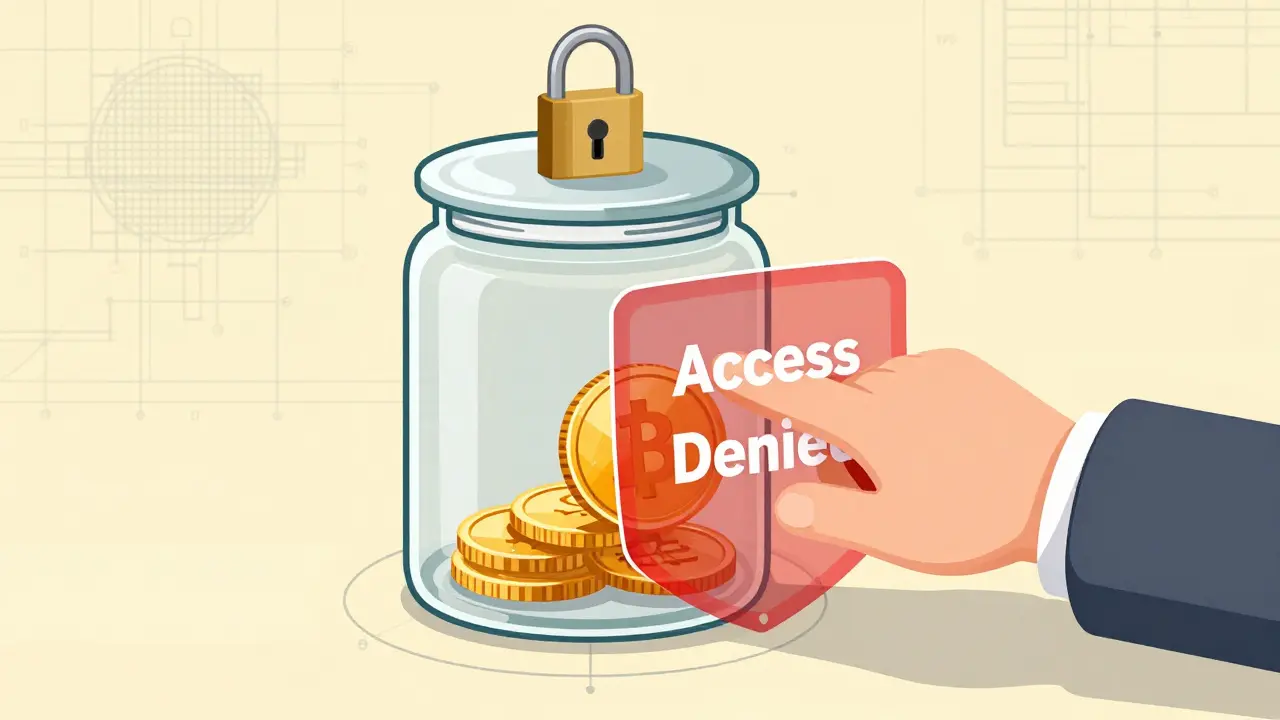
The internet is full of people who ignored these warnings. On Reddit and Trustpilot, users have reported losing money trying to swap their real ETH for TST. One common experience is the "impossible price swing": a user sees the price skyrocketing, buys in, and then discovers the "sell" button simply doesn't work or the liquidity is gone. This is why TokenSniffer has flagged numerous reports of TST-related scams, with victims losing an average of $87 per incident.
The lack of a real ecosystem is the final nail in the coffin. There is no whitepaper, no active development team, and no community goals. There is only a contract address (0x034e...CB1EF6) that shows almost no legitimate activity on Etherscan, despite what the tracking sites claim. If a project has no documentation but somehow has "trading volume," it's a ghost project.
How to Protect Your Wallet
Avoiding scams like TST comes down to a few simple rules of thumb. First, always check the circulating supply. If a coin has a high trading volume but zero coins in circulation, it's a fake. Second, check the name. If it says "Test," "Fake," or "Demo," it is not an investment. Third, verify the listing. Don't trust a price tracker alone; check if the coin is actually tradeable on a reputable, centralized exchange.
If you're looking to learn about blockchain, use official faucets on the Sepolia testnet. It's free, it's safe, and it doesn't require you to risk your hard-earned money on tokens that are designed to disappear.
Can I make money by investing in TST?
No. TST is explicitly labeled as "Fake" and has zero circulating supply. Any reported price gains are fabricated data errors or deliberate traps to lure investors into scams. There is no legitimate market for this token.
Why does TST show up on CoinMarketCap or Crypto.com?
Many tracking sites use automated bots to pull data from the blockchain. If a scammer creates a token and manipulates a small pool of liquidity, the bots might pick up the "price" and "volume" even if the token is useless. These platforms are working on better validation to remove these erroneous listings.
Is TST a meme coin like Dogecoin?
Absolutely not. While Dogecoin and Shiba Inu started as jokes, they have transparent supplies, massive real-world liquidity, and are listed on every major exchange. TST lacks all these fundamental characteristics and is essentially a data anomaly or a scam.
What should I do if I already bought TST?
Try to sell it immediately on the decentralized exchange where you bought it. However, be aware that many such tokens are "honeypots," meaning the contract is written to prevent selling. If you cannot sell, do not send more money to "unlock" your funds, as this is a common secondary scam.
Where can I find real test tokens for developers?
Legitimate developers use official testnets like Sepolia or Goerli. You can get these tokens for free from "faucets," which are websites that distribute small amounts of test ETH to developers. You should never pay real money for a test token.
 Finance

Aaron Zeiler
April 28, 2026 AT 16:43totally a honeypot just look at the contract code if you know how to read it the sell function is literally disabled for everyone but the owner
Noel Mandotah
April 29, 2026 AT 16:10Imagine actually thinking a coin named "Fake" is a good investment. Absolute genius move. 🙄
Jimmy vasquez
April 30, 2026 AT 07:13Just a heads up for anyone new to this, always check the liquidity locks on DEXTools before swapping anything. If the liquidity isn't locked, the devs can pull the rug in a heartbeat!
Brendan Thraxton
April 30, 2026 AT 23:30good reminder that basic research saves your wallet just keep learning and stay safe out there everyone
Andrew Todd
May 1, 2026 AT 19:06Only idiots fall for this. This is why most of these coins are trash and only a few real projects matter. Pathetic.
Sri Astuti
May 3, 2026 AT 02:14It is honestly just laughable how some people still get tricked by these basic schemes in 2024, especially when the name is literally a warning, but then again the greed of the retail investor is a bottomless pit that no amount of logic can ever seem to fill 🙄🙄🙄
edie rosa
May 3, 2026 AT 08:51The greed in this space is disgusting. People deserve to lose their money if they are this lazy to do five minutes of research. It is a moral failing of the modern investor.
Gabrielle Danis
May 4, 2026 AT 22:41The discrepancy between the total supply and the circulating supply is the most definitive evidence of fraud in this specific case.
Kathleen Warren
May 6, 2026 AT 07:30It's okay if you got tricked, just learn from it and don't beat yourself up too much. We all start somewhere!
Livvy Cooper
May 6, 2026 AT 16:39Why do we need another warning? Everyone knows crypto is a gamble anyway. Who cares if one coin is fake.
Elle Kharitou
May 7, 2026 AT 17:22This serves as such a poignant reminder that the digital realm is often a mirror of our own desires and blind spots 🌌. We see what we want to see-like a moonshot-rather than the reality of the code, but that's how we grow and evolve as a collective consciousness in the Web3 space! 🌿✨💫
Nitin Gupta
May 9, 2026 AT 13:43I agree with the points mentioned here, the use of automated bots on tracking sites definitely adds a layer of confusion for beginners.
Janis Naglis
May 11, 2026 AT 07:43The slippage settings on these DEXes can be so deceptive!!! It's just a classic liquidity trap, but we can all get through this by focusing on high-conviction plays and actual utility-driven tokens!!!
Wayne Gillis
May 11, 2026 AT 23:58Did anyone actually make money on this before it crashed? 😂 I bet some lucky soul did! 🚀
Michael Repak
May 12, 2026 AT 03:19That's a great point!! Keep your head up and just stay diligent with your checks!!
Rachel S
May 12, 2026 AT 03:27This is an absolute catastrophe for new investors! 😱 One must exercise extreme caution when navigating these treacherous waters, as the predatory nature of these contracts is truly alarming! 🛑
Lynne Teperman
May 14, 2026 AT 01:43wild west vibes for sure