
You might have seen Bedrock (ROCK) flash across your feed or a price tracker and wondered: what is this thing, and does it actually work? It’s not Bitcoin, and it’s certainly not Ethereum. It’s a niche player in the decentralized finance world, specifically targeting the messy middle ground between project funding and yield farming. If you’re looking for a simple answer, here it is: ROCK is a utility token on the BNB Smart Chain designed to power a peer-to-peer crowdfunding platform. But as with most things in crypto, the devil-and the danger-is in the details.
The Core Concept: Removing the Middleman from Funding
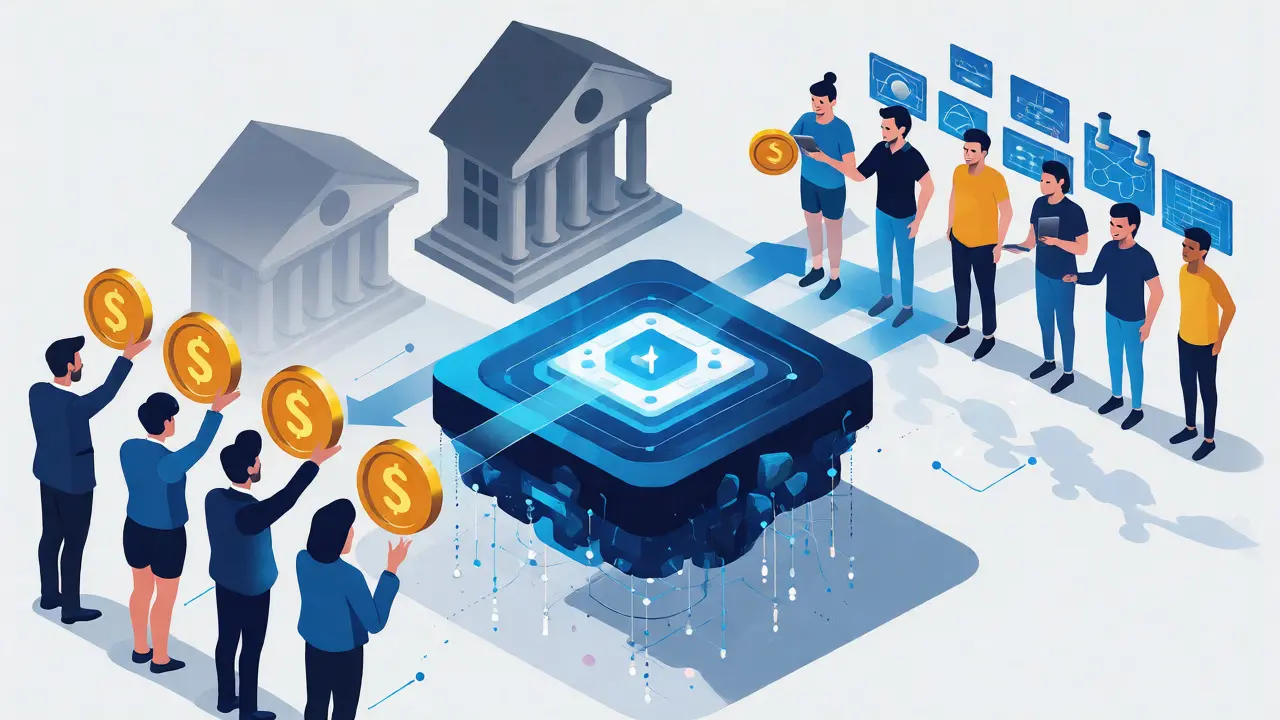
Traditional crowdfunding platforms like Kickstarter take a cut of every dollar raised and often act as gatekeepers. Bedrock attempts to bypass this entirely. The platform functions as a decentralized application where users can fund projects directly without an intermediary taking a percentage fee. The ROCK token serves three critical roles here: it acts as collateral for investors, the primary currency for funding projects, and the asset used for staking within the ecosystem.
Think of it this way: instead of just donating money to a project hoping they deliver, you lock up ROCK tokens. These tokens secure the investment. If the project succeeds, you potentially earn rewards. If it fails, the mechanism aims to protect the investor, though the specifics depend on the smart contract logic at any given time. This "Proof of Stake" internal mechanism is meant to align incentives between backers and builders.
Tokenomics: Supply, Staking, and Burn Mechanics
Data aggregators are notoriously inconsistent when it comes to small-cap tokens, and Bedrock is no exception. However, one number remains constant across sources: the maximum supply of 500,000,000 ROCK. What varies wildly is how many of those tokens are actually circulating.
| Metric | Value / Status | Source Context |
|---|---|---|
| Maximum Supply | 500,000,000 ROCK | Consistent across all trackers |
| Circulating Supply | ~102.7 Million (CoinPaprika) vs 0 (Yahoo/Binance snapshots) | High discrepancy due to liquidity issues |
| Current Price | ~$0.00011 USD | Micro-cap valuation |
| Staked Amount | ~31.8 Million ROCK | Indicates active user engagement |
| Burned Tokens | ~192,000 ROCK | Deflationary pressure is minimal so far |
The discrepancy in circulating supply matters. Some platforms report zero circulation because trading volume is so thin that their algorithms don't pick up enough activity to classify tokens as "active." Others show over 100 million in circulation. For you, this means relying on a single price ticker is risky. You need to look at on-chain data if possible. The fact that nearly 32 million tokens are currently staked suggests that despite low trading volume, there is a core group of users locking up assets to earn yields.
How to Buy and Use ROCK: The Practical Reality
If you decide to jump in, don’t expect to buy ROCK with a credit card on Coinbase or Binance’s main spot market. As of late 2026, Bedrock is not listed for direct fiat-on-ramp purchases on major centralized exchanges. Instead, you’ll need to use a Web3 wallet approach.
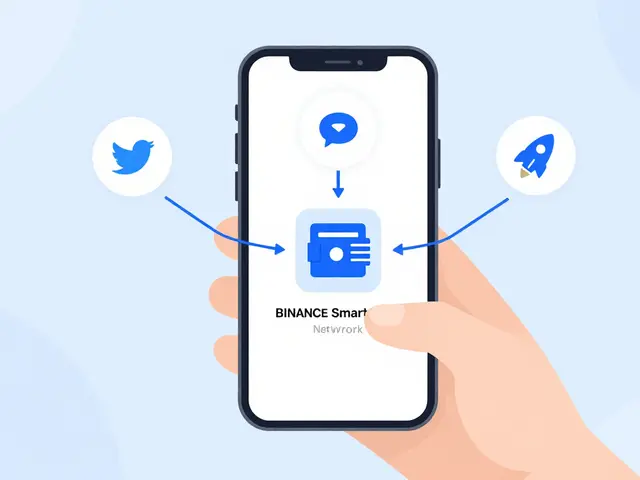
- Get a Compatible Wallet: You’ll need a wallet that supports the BNB Smart Chain, such as MetaMask or the Binance Web3 Wallet.
- Fund Your Wallet: Deposit BNB (Binance Coin) into your wallet. This will serve as both your trading pair and gas fees.
- Connect to a DEX: Go to PancakeSwap or BedrockSwap. Connect your wallet.
- Swap for ROCK: Select BNB as the input and ROCK as the output. Be careful with slippage settings; low liquidity means high slippage.
- Verify the Contract: Always double-check the token contract address to avoid fake copies.
Once you hold ROCK, the real game begins. The platform promotes high-yield staking, advertising up to 50% APY on BedrockSwap. But here’s the catch: these rewards are often paid in BTCB (Bitcoin on the BNB Chain), not more ROCK. This creates a unique dynamic where you stake a micro-cap altcoin to earn exposure to Bitcoin. It’s an attractive proposition for yield farmers, but remember that high APY usually correlates with high risk or inflationary token emissions.

Risk Factors: Liquidity, Data Confusion, and Project Viability
Let’s be honest about the risks. Bedrock is a micro-cap token with extremely low liquidity. On some days, the 24-hour trading volume drops below $40. That’s not a typo. Forty dollars. This has two immediate consequences for you as an investor:
- Slippage: Trying to sell even a modest amount of ROCK could crash the price temporarily because there aren’t enough buyers on the other side.
- Exit Difficulty: Getting out of a position quickly during a market downturn might be impossible without accepting a significant loss.
Furthermore, there is confusion regarding the project’s history. Some sources claim a launch in August 2021, while others point to a 2023 relaunch focused on cross-chain interoperability. There’s also chatter about a separate "Bedrock" protocol involving liquid restaking under the symbol BR. While likely distinct, this naming overlap adds noise to the signal. When you research Bedrock (ROCK), ensure you are looking at the correct contract address on the BNB Smart Chain.
The project claims a 100% successful completion rate for funded projects. While promising, this metric lacks independent verification. In the volatile world of DeFi, past performance rarely guarantees future results, especially when the sample size of completed projects is relatively small compared to giants like Uniswap or Aave.
Who Is This For? Identifying the Right User Profile
Bedrock isn’t for everyone. It’s definitely not for the passive investor who wants to buy Bitcoin and forget about it for ten years. It’s also probably too complex for someone who gets frustrated by gas fees and wallet approvals.
This token suits the DeFi Enthusiast who already understands how automated market makers (AMMs) work. You should be comfortable interacting with smart contracts, managing private keys, and understanding the difference between nominal APY and real yield. If you’re chasing high percentages and believe in the model of peer-to-peer crowdfunding without intermediaries, ROCK offers a specific utility play. However, you must treat it as a speculative venture, not a safe haven.
Is Bedrock (ROCK) available on Coinbase or Binance?
No, Bedrock (ROCK) is generally not listed for direct spot trading on major centralized exchanges like Coinbase or the main Binance exchange. You typically need to purchase it through decentralized exchanges (DEXs) like PancakeSwap or BedrockSwap using a Web3 wallet and BNB.
What is the maximum supply of ROCK tokens?
The maximum supply of Bedrock (ROCK) is fixed at 500,000,000 tokens. However, the circulating supply varies significantly depending on the data source and the date, ranging from near-zero reported by some aggregators to approximately 102 million by others.
How do I earn rewards with ROCK?
You can earn rewards by staking ROCK tokens on the BedrockSwap platform. The platform advertises high Annual Percentage Yields (APY), sometimes up to 50%, with rewards often distributed in BTCB (Bitcoin on the BNB Chain) rather than additional ROCK tokens.
Why is the trading volume for ROCK so low?
Low trading volume is common for micro-cap DeFi tokens. It indicates limited liquidity and fewer active traders. This can lead to high slippage when buying or selling large amounts, meaning the price moves significantly against you during the transaction.
Is Bedrock a scam?
There is no definitive evidence labeling Bedrock as a scam, but it carries high risk typical of small-cap altcoins. Discrepancies in data, low liquidity, and conflicting information about its launch history warrant caution. Always verify contract addresses and do your own research before investing.
 Finance