
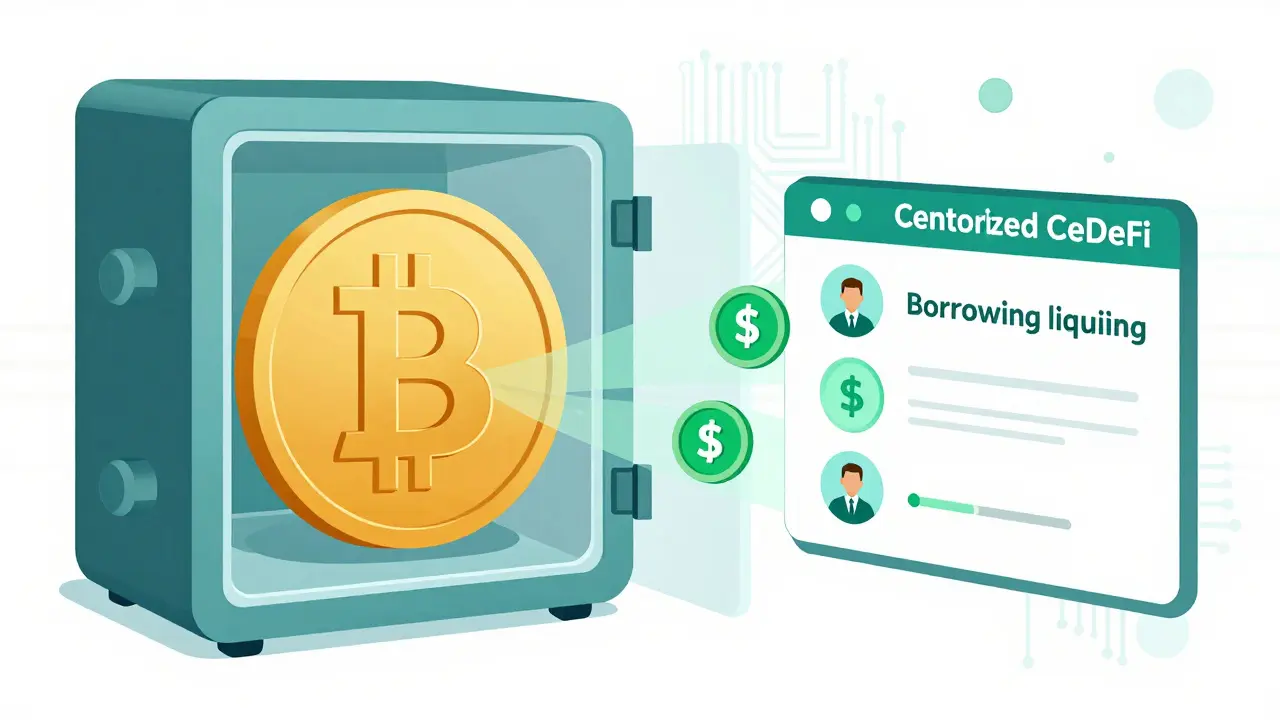
Bitcoin is often called digital gold. For years, that meant holding it tight and waiting for the price to go up. But what if you could use your Bitcoin to borrow cash, earn yield, or buy groceries without selling a single satoshi? That is exactly the problem Avalon Labs is trying to solve. Avalon Labs is a financial platform that lets Bitcoin holders unlock the value of their coins through lending, stablecoins, and credit products. At the center of this ecosystem sits the AVL token. If you have seen AVL popping up on charts or heard whispers about "CeDeFi," you are probably wondering: What is this coin actually doing? And more importantly, is it worth your attention? This guide breaks down what Avalon Labs is, how the AVL token works, and whether this small-cap project has legs in the current market. We will look at the numbers, the technology, and the risks so you can make a smart decision.
The Quick Summary: Key Takeaways
- AVL is a governance token: It gives holders a say in the future of the Avalon Labs protocol, not a direct share of profits.
- Focus on Bitcoin Credit: The platform specializes in letting users borrow against Bitcoin using a hybrid Centralized-Decentralized Finance (CeDeFi) model.
- High Volatility: AVL has dropped over 97% from its all-time high, making it a high-risk, high-reward asset typical of small-cap DeFi tokens.
- Niche Technology: It uses isolated lending pools and atomic settlement to manage risk better than many generic lending protocols.
- Data Discrepancies Exist: Market cap and supply figures vary wildly between tracking sites, so always double-check your data source.
What Exactly Is Avalon Labs?
To understand AVL, you first need to understand the platform it governs. Avalon Labs describes itself as an on-chain financial center focused on Bitcoin. While most DeFi projects started on Ethereum, Avalon built its identity around being the "world’s largest issuer of Bitcoin-backed collateralized debt positions (CDPs)." In plain English, this means they allow people to lock up their Bitcoin as collateral to borrow other assets, like stablecoins. Think of it like a home equity loan, but instead of your house, you are using BTC, and instead of a bank branch, you are using smart contracts. However, Avalon isn't just a simple lending bot. They position themselves as a CeDeFi (Centralized-Decentralized Finance) hub, blending the user-friendly liquidity of centralized exchanges with the transparency of blockchain code. The goal? To turn Bitcoin from a static store of value into a dynamic economic asset. You don't have to sell your BTC to pay rent or start a business; you can borrow against it. Avalon offers fixed-rate borrowing, yield-generating accounts, and even plans for a Bitcoin-backed credit card. This makes it attractive to institutional players who want exposure to Bitcoin yields without taking on the wild swings of spot trading.
The Role of the AVL Token
So, what do you get when you buy AVL? Unlike some tokens that promise revenue sharing or automatic staking rewards, AVL is primarily a governance token. When you hold AVL, you are buying a voice in the company's direction. Holders can vote on critical decisions, such as:
- Adjusting interest rates for borrowers.
- Approving new types of collateral (like new Bitcoin derivatives).
- Upgrading the security parameters of the lending pools.
Tokenomics and Supply: Why Do Numbers Vary?
If you check different crypto trackers, you might see conflicting data. This is common in the crypto world, but it is especially confusing with AVL. Here is why:
| Metric | CoinMarketCap | CoinGecko | CryptoRank |
|---|---|---|---|
| Circulating Supply | ~161.7 Million | ~180 Million | ~311.7 Million |
| Market Cap | ~$5.34 Million | ~$6.05 Million* | ~$11.36 Million |
| Max Supply | 1 Billion | 1 Billion | 1 Billion |
How the Technology Works: CeDeFi and Isolated Pools
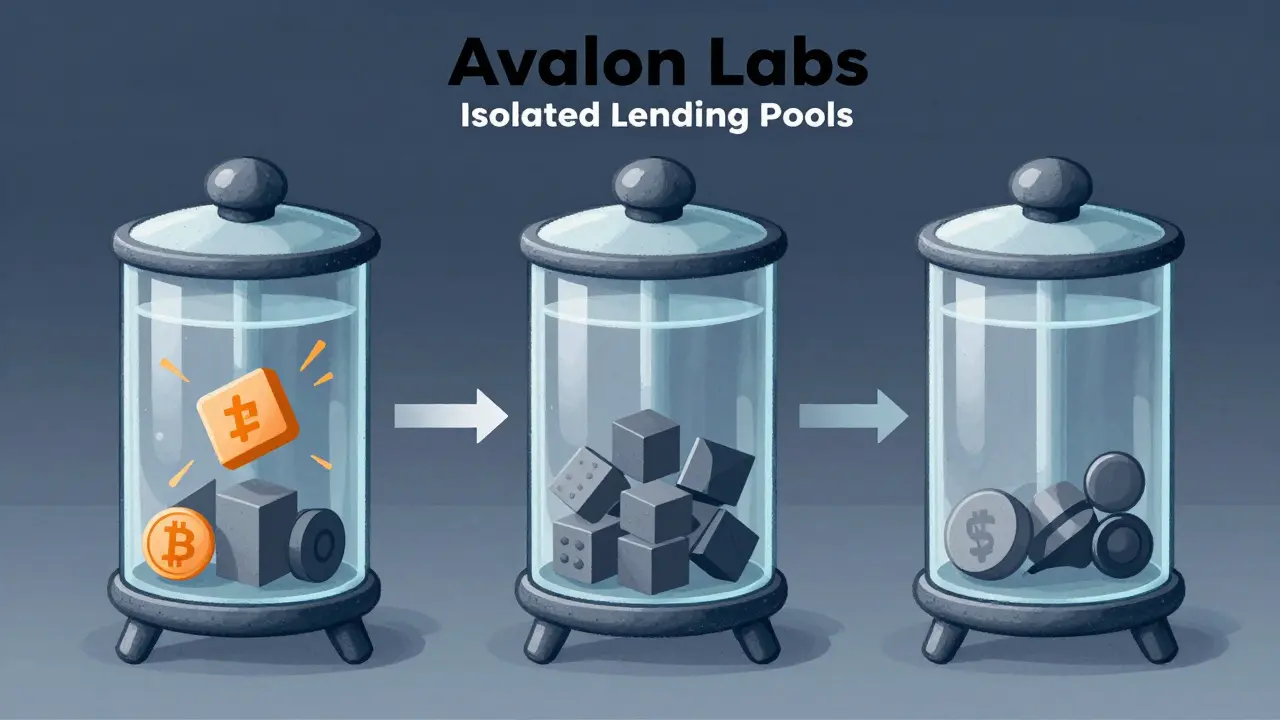
Avalon Labs doesn't rely on standard DeFi models. They use a hybrid approach called CeDeFi. Pure DeFi protocols are fully decentralized but can suffer from low liquidity and high gas fees. Pure CeFi (like traditional exchanges) is fast but opaque and risky if the company goes bankrupt. Avalon tries to hit the middle ground. They use centralized exchanges for deep liquidity sourcing but keep the core lending logic on-chain for transparency. This allows them to offer fixed borrowing rates, which is rare in DeFi where rates usually float based on supply and demand algorithms. Another key feature is their isolated lending pool mechanism. In many lending platforms, all assets sit in one big bucket. If one asset crashes, it can drag down the health of the entire pool. Avalon separates collateral assets into distinct risk categories. If a specific Bitcoin derivative becomes volatile, it does not automatically contaminate the liquidity of other, safer pools. This is a sophisticated risk management tool designed to protect both lenders and borrowers from systemic contagion. They also utilize atomic settlement. This means transactions happen instantly and irrevocably on the blockchain. Either the loan is created and the collateral is locked simultaneously, or nothing happens. This eliminates settlement risk-the fear that one party will fulfill their end of the deal while the other defaults mid-transaction.
Market Performance and Price History
Let's talk numbers, because past performance is the best indicator of volatility. AVL had a massive run-up in early 2025. On February 12, 2025, it hit an all-time high (ATH) of $1.36. As of June 2026, the token trades in the $0.032 - $0.036 range. That represents a drawdown of approximately 97.3%. Is this bad news? Not necessarily. Many DeFi tokens experience boom-and-bust cycles during bull markets. The initial hype drove the price up, and after the bubble burst, the price settled into a consolidation phase. Currently, AVL is considered a small-cap token with a market cap under $12 million. Small caps are highly sensitive to liquidity changes. A single large buy order can spike the price, while a large sell-off can crash it. Technical indicators paint a mixed picture. Tools like CoinCodex show the Relative Strength Index (RSI) hovering around 48, which is neutral. However, algorithmic sentiment models often label the medium-term outlook as bearish, predicting potential dips toward $0.025 by the end of 2026. On the flip side, long-term projections suggest a possible recovery to $0.15 by 2031 if the platform gains significant traction. These are just models, not guarantees, but they highlight the speculative nature of the asset.
Risks and Considerations Before Buying
Before you throw money at AVL, consider these real-world risks:
- Liquidity Risk: With daily volumes fluctuating between $650k and $10M, slippage can be an issue. If you try to sell a large amount quickly, you might get a worse price than expected.
- Smart Contract Risk: Like all DeFi protocols, Avalon relies on code. Bugs or exploits can lead to loss of funds. While they claim advanced security, no system is immune.
- Regulatory Uncertainty: CeDeFi operates in a gray area. As governments tighten rules on crypto lending and securities, platforms like Avalon may face compliance hurdles that could impact operations.
- Concentration Risk: With only ~51,000 holder addresses reported, the token distribution may be concentrated among a few whales. If major holders decide to exit, the price could plummet.
Who Is AVL For?
AVL is not for everyone. It suits investors who:
- Believe in the long-term thesis of Bitcoin becoming a productive asset (not just held, but used).
- Understand CeDeFi mechanics and are comfortable with hybrid financial systems.
- Can tolerate extreme volatility and are looking for high-growth, high-risk opportunities.
- Want to participate in the governance of a niche, specialized protocol rather than a general-purpose chain.
Is AVL a good investment in 2026?
Whether AVL is a "good" investment depends entirely on your risk tolerance. It is a high-risk, small-cap token that has already crashed 97% from its peak. It offers high upside potential if Avalon Labs captures a significant share of the Bitcoin lending market, but it carries substantial downside risk due to low liquidity and regulatory uncertainties. Only invest what you can afford to lose.
What is the difference between CeDeFi and pure DeFi?
Pure DeFi is fully decentralized, transparent, and non-custodial, but often suffers from low liquidity and complexity. CeDeFi (Centralized-Decentralized Finance) combines the best of both worlds: it uses centralized entities for liquidity and user experience while keeping core operations on-chain for transparency and security. Avalon Labs uses CeDeFi to offer fixed-rate loans, which are hard to achieve in pure DeFi.
Does AVL provide staking rewards?
Based on current public documentation, AVL is primarily a governance token. There is no explicit mention of automatic staking rewards or revenue sharing for holders. Its value is derived from its utility in voting on protocol upgrades and parameter adjustments, not from passive income generation.
Why do market cap figures for AVL vary so much?
Market cap is calculated by multiplying the current price by the circulating supply. Different data aggregators (like CoinMarketCap vs. CryptoRank) use different methodologies to define "circulating supply." Some include tokens in exchange wallets or smart contracts, while others exclude them. This leads to discrepancies in reported market cap, ranging from $5M to $11M.
What is an isolated lending pool?
An isolated lending pool is a risk management technique where different collateral assets are kept in separate buckets. If one asset class (e.g., a volatile Bitcoin derivative) crashes, it does not affect the solvency of other pools (e.g., stablecoin pools). This protects the overall health of the lending platform from systemic contagion.
 Finance