
You see a notification about the TheForce.Trade a decentralized trading platform on the Binance Smart Chain that issued the FOC utility token. airdrop. Maybe it’s a pop-up in your browser, a message from someone claiming to be an admin, or a post on social media promising free tokens. Before you click anything or connect your wallet, stop. The world of crypto giveaways is filled with traps designed to drain your funds, not reward them.
Getting free tokens sounds great until you realize most "airdrops" for smaller projects like TheForce Trade are either scams, highly restricted loyalty rewards, or simply too small to matter after gas fees. This guide cuts through the noise. We’ll look at what TheForce Trade actually is, how real airdrops work on the Binance Smart Chain, and exactly how to verify if this offer is legitimate before you risk a single satoshi.
What Is TheForce Trade (FOC)?
To understand the airdrop, you first need to understand the asset. FOC is the native utility token of TheForce Trade ecosystem, operating on the BNB Chain network. Unlike Bitcoin or Ethereum, which have massive brand recognition, FOC is a micro-cap token. It launched back in May 2021 during a period when thousands of similar projects popped up overnight.
Here is the reality check: FOC has struggled with liquidity and visibility since its inception. Data from mid-2025 shows the token trading at fractions of a cent, often below $0.001. The market capitalization hovers around $40,000 USD. For context, that’s less than the cost of a decent gaming laptop. When a project has a market cap this low, the number of active users is tiny. If there are few users, who is funding a massive airdrop?
The project raised roughly $3.59 million across several funding rounds early on. That money was used for development and initial marketing. Today, the primary trading activity happens on PancakeSwap a leading decentralized exchange built on the BNB Chain where users trade tokens without intermediaries., specifically in pairs like FOC/WBNB. The daily volume is often just a few dollars. This lack of activity means that any "reward" program is likely not funded by massive venture capital but perhaps by a small reserve or a community incentive to boost trading volume temporarily.
How Real Crypto Airdrops Work vs. Scams
Not all free tokens are created equal. There are two types of airdrops you will encounter:
- Retroactive Airdrops: These are given to early users of a protocol. If you traded on a specific DEX or used a bridge before a certain date, you get tokens. Examples include Uniswap or Arbitrum. These require no action other than having been there.
- Incentive Airdrops: These require you to do tasks. Follow Twitter, join Discord, swap tokens, or refer friends. Projects use these to build hype.
Scammers mimic both. They create fake websites that look identical to TheForce.Trade. They send DMs saying "You qualified for 10,000 FOC! Claim here." The link leads to a phishing site. Once you connect your wallet to "claim," they execute a transaction that drains your ETH, BNB, or other assets instead of sending you worthless FOC tokens.
The key difference? Legitimate projects never DM you first. They never ask for your private key. And they rarely promise life-changing amounts of money for clicking a button. If the offer seems too good to be true, it is absolutely a scam.
Verifying TheForce.Trade Airdrop Legitimacy
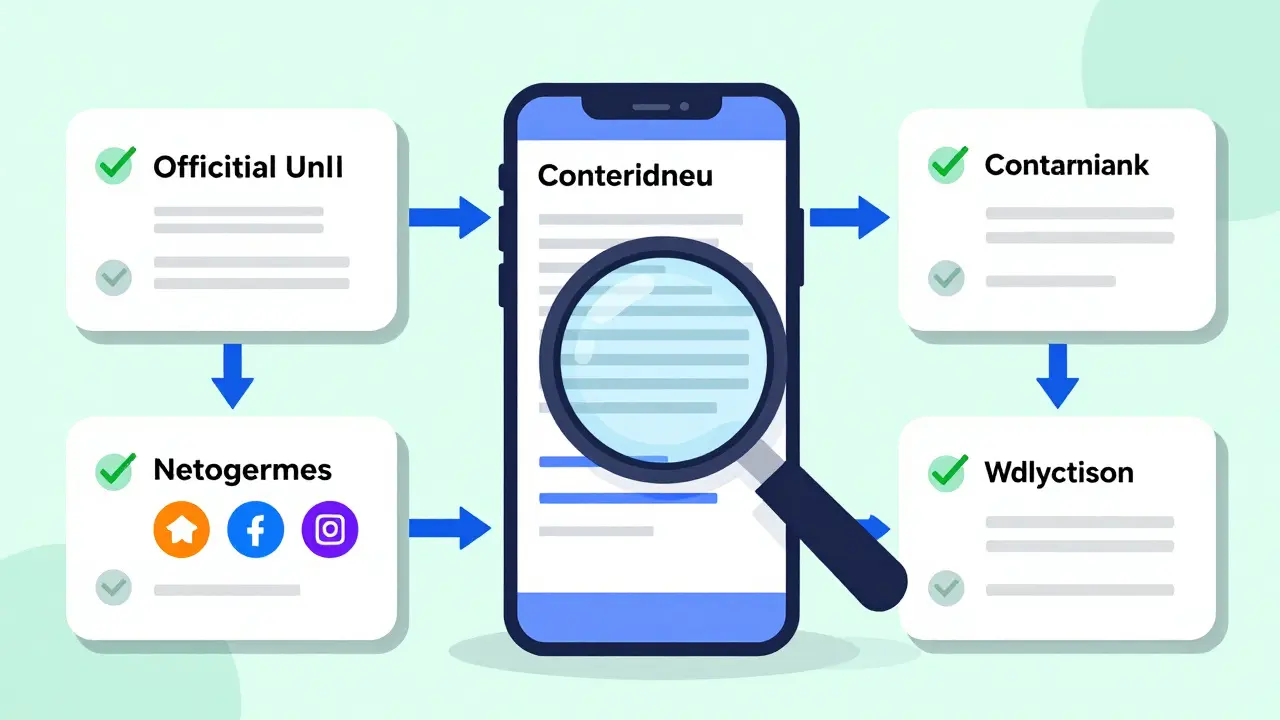
If you believe you might be eligible for a genuine TheForce Trade promotion, follow this strict verification process. Do not skip steps.
- Check Official Channels Only: Go directly to the official TheForce.Trade website. Do not click links in emails, Telegram messages, or Discord DMs. Look for announcements in their verified blog or newsletter.
- Verify Social Media Handles: Check their official Twitter/X account. Look for blue checkmarks or high follower counts consistent with their age. Read recent tweets. Are they talking about the airdrop? If only one bot-like account mentions it, ignore it.
- Examine the Contract Address: Every token on the Binance Smart Chain has a unique contract address. Find the official FOC contract address on CoinMarketCap a global cryptocurrency data aggregator that provides prices, market caps, and trading volumes for digital assets. or CoinGecko an independent cryptocurrency data platform known for rigorous listing criteria and accurate market information.. Compare this address with the one provided in the airdrop claim. If they differ even by one character, it is a fake token.
- Look for Snapshot Dates: Real airdrops have clear rules. "Users who held X tokens on Date Y." If the requirements are vague or constantly changing, walk away.
As of late 2025 and into 2026, there is no widespread, officially documented major airdrop campaign for FOC that requires complex participation. Most references to "Trade to Earn" programs are internal incentives within their own platform, meaning you must actively trade on their interface to earn small amounts of FOC over time. This is not a "free money" drop; it is a loyalty rebate.
The Cost of "Free": Gas Fees and Liquidity
Let’s say you find a legitimate way to claim some FOC tokens. You connect your wallet, sign the transaction, and receive 1,000 FOC. Congratulations. Now what?
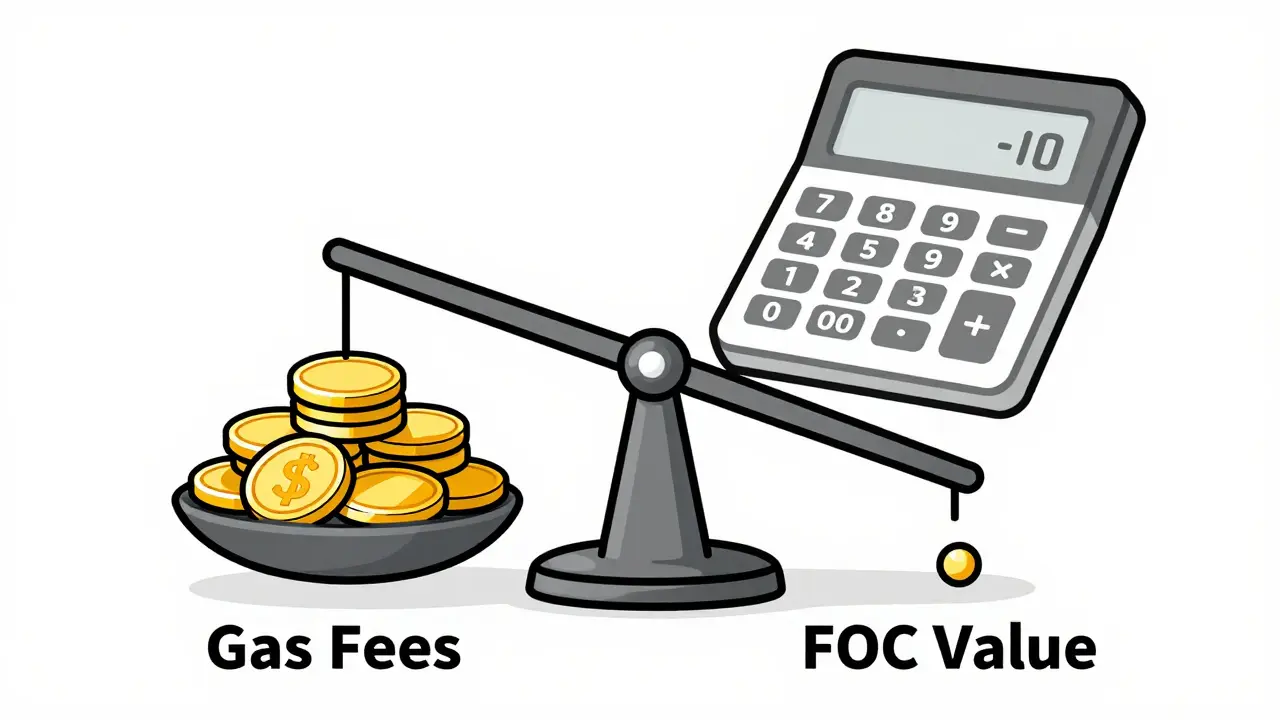
To sell those tokens, you need to swap them on PancakeSwap. To do that, you need BNB the native currency of the BNB Chain, used to pay for transaction fees and computational services. to pay for gas fees. On the Binance Smart Chain, gas fees are usually low, often under $1. But here is the trap: the value of 1,000 FOC tokens might be less than $0.50. You spend $1 to sell $0.50 worth of assets. You lose money.
This is common with micro-cap tokens. The liquidity is so thin that even if you could sell, you might face high slippage. Slippage is the difference between the expected price and the actual price you get. In low-volume pools, selling a large amount can crash the price instantly, leaving you with pennies.
Always calculate the potential value against the cost of interaction. If the math doesn’t work, don’t bother claiming it.
Safety Checklist for Participating in Any Airdrop
Whether it’s FOC or another token, protect yourself with these habits:
- Use a Burner Wallet: Never connect your main wallet holding significant assets to unknown dApps. Use a separate wallet with only the minimum BNB needed for gas. If it gets drained, your main savings are safe.
- Revoke Permissions: After interacting with any new contract, go to a tool like Revoke.cash and remove access. Malicious contracts can sometimes hold permission to spend your tokens later.
- Ignore Urgency: Scammers use timers: "Claim ends in 1 hour!" Real projects give you weeks or months to claim. Pressure is a red flag.
- Beware of "Approval" Transactions: If a transaction asks you to approve unlimited spending of your USDT or BNB, reject it. Legitimate claims only ask for minimal permissions.
Is TheForce Trade Worth Your Time?
From an investment perspective, FOC is a high-risk, speculative asset. The project has seen significant depreciation from its initial funding rounds. While the team may still be developing features, the market interest appears low based on trading volumes and search trends.
If you are already using TheForce.Trade for trading and enjoy the platform, earning small amounts of FOC through their "Trade to Earn" mechanisms might be a nice bonus. Treat it as a discount on your trading fees rather than a profit opportunity.
If you are looking for a quick windfall, look elsewhere. Major Layer 1 networks or established DeFi protocols occasionally offer substantial retroactive airdrops because they have the treasury size to support them. Micro-caps like FOC generally do not. Focus your energy on learning about broader market trends, understanding wallet security, and participating in ecosystems with proven track records.
Is the TheForce.Trade FOC airdrop legit?
There is no evidence of a large-scale, public airdrop for FOC tokens as of 2026. Most offers circulating online are likely scams. The project does have internal "Trade to Earn" incentives, but these require active trading on their platform and yield very small returns relative to effort and risk.
How do I claim FOC tokens safely?
Never click links from unsolicited messages. Always navigate to the official TheForce.Trade website manually. Verify the token contract address on CoinMarketCap or CoinGecko before connecting your wallet. Use a burner wallet with minimal funds to avoid losing significant assets if the site is malicious.
What is the current value of FOC token?
FOC trades at a fraction of a cent, typically below $0.001. The market capitalization is approximately $40,000 USD. Due to low liquidity on exchanges like PancakeSwap, selling large amounts may result in high slippage and losses.
Why did my wallet get drained after claiming an airdrop?
You likely connected your wallet to a phishing site disguised as an airdrop claim page. These sites trick you into signing a transaction that grants the attacker permission to transfer your assets. Always verify URLs and use a separate wallet for unknown interactions.
Can I buy FOC tokens on Binance?
No. Binance explicitly states that FOC is not listed for trade on their platform. Trading occurs primarily on decentralized exchanges like PancakeSwap via pairs such as FOC/WBNB or FOC/BUSD.
 Finance