

Liquidity Pools Explained: How They Work and Why They Matter in Crypto
When you trade crypto on a decentralized exchange like Uniswap or Minswap, you’re not buying from another person—you’re trading against a liquidity pool, a smart contract that holds paired tokens to enable instant trades without order books. Also known as automated market maker (AMM), it’s the engine behind every DeFi trade you make. Unlike traditional exchanges where buyers and sellers match orders, liquidity pools use math—specifically, constant product formulas—to set prices automatically. This means you can swap tokens 24/7, even if no one else is trading at that exact moment.
But here’s the catch: liquidity pools aren’t free money. They’re built by users like you who deposit equal values of two tokens—say, ETH and USDC—into a pool. In return, you get liquidity provider (LP) tokens that represent your share. You earn trading fees every time someone uses that pool. But you also face something called impermanent loss, a temporary drop in value when the price of your deposited tokens moves sharply apart. If ETH spikes while USDC stays flat, your share of the pool gets diluted. It’s not a real loss until you withdraw, but it’s real enough to cost people thousands.
Liquidity pools also connect to other key parts of crypto. DeFi platforms, like Flamingo Finance and THENA FUSION, rely on these pools to offer swaps, lending, and leverage. Without them, there’s no trading, no yield farming, no synthetic assets. That’s why scams often fake liquidity—projects like Sypool and CZF had pools with almost no real funds, making their tokens worthless. And when exchanges like Bitfinex or BTCC offer deep liquidity, they’re not just using pools—they’re using institutional capital to keep prices stable.
Today’s crypto market runs on liquidity. Whether you’re swapping tokens on Cardano’s Minswap, chasing airdrops tied to DeFi protocols, or avoiding dead pools like Sypool, understanding how liquidity works keeps you from losing money. You don’t need to be a coder to use it—but you do need to know what’s behind the button that says "Add Liquidity." The posts below break down real examples: which platforms have real liquidity, which ones are empty shells, and how to spot the difference before you deposit your crypto.
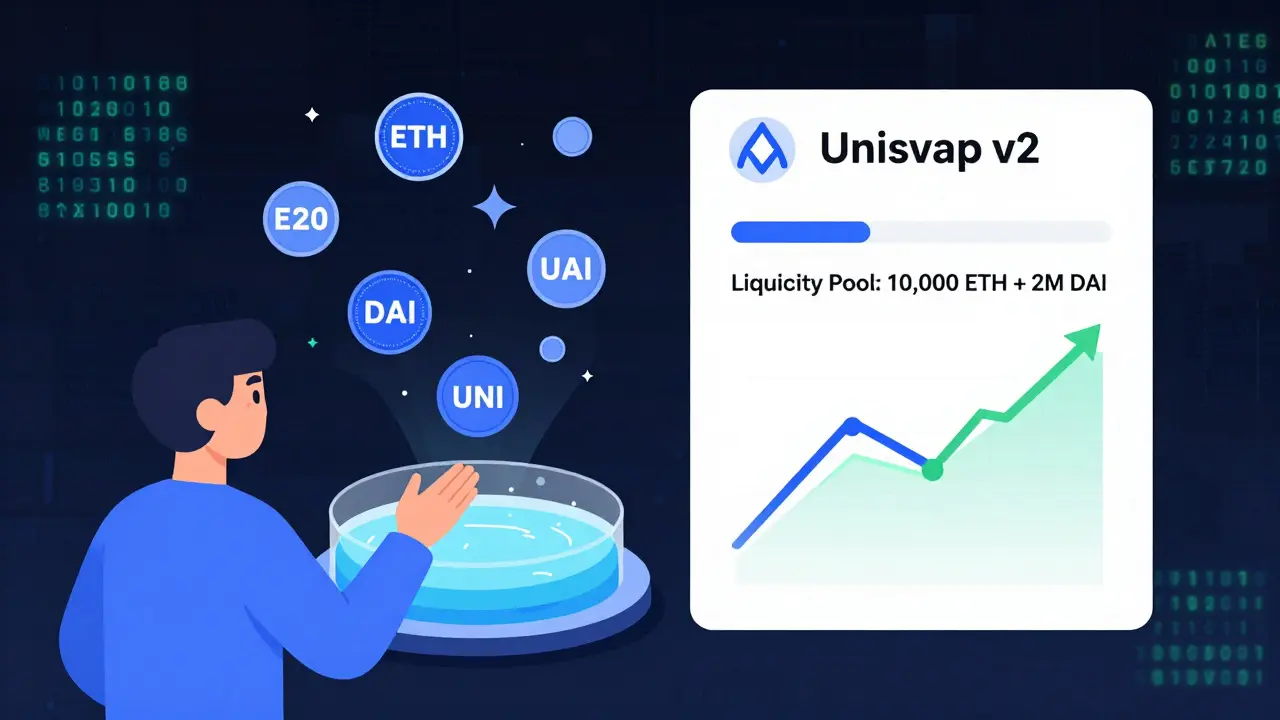
Uniswap v2 is a leading decentralized exchange for swapping Ethereum tokens, while Plasma is a separate blockchain built only for free USDT transfers. Learn how they work, why they’re not the same, and which one to use.
Categories
 Finance
Archives
Recent-posts
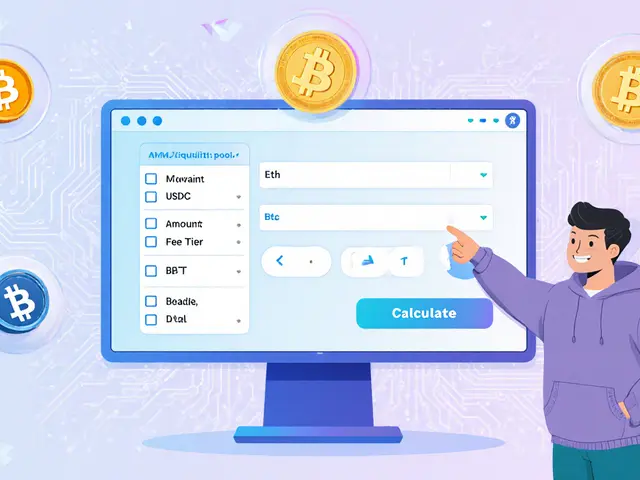
Practical Guide to Providing Liquidity to AMM Pools
Mar, 2 2025

What is Hyperbot (BOT) Crypto Coin? The AI-Powered Trading Terminal Explained
Feb, 19 2026

VCHAT Token (VCT) Explained: What It Is, Market Data, and Risks
Jul, 27 2025

Halving Supply Shock Theory: How Bitcoin's Programmed Scarcity Drives Price Action
Mar, 10 2026

Kraken Crypto Exchange Review 2025: Fees, Security, and How It Stacks Up
Dec, 30 2024