

Germany Crypto Tax Exemption: What You Can Skip and What Still Costs You
When you hold Germany crypto tax exemption, a rule that lets German residents sell crypto without paying capital gains tax after holding it for more than one year. Also known as crypto tax-free holding period, it’s one of the most investor-friendly policies in the EU. Unlike the U.S. or U.K., where every trade can trigger a tax event, Germany treats crypto like private money—so if you buy Bitcoin in January 2024 and sell it in February 2025, you owe nothing. But here’s the catch: this only applies if you don’t trade it in between. If you swap Bitcoin for Ethereum, even once, that’s a taxable event. The clock resets.
The exemption only covers personal use and long-term holds. If you’re day trading, staking for rewards, or earning crypto through work, those are crypto capital gains Germany, taxable income from selling, trading, or earning cryptocurrency within the one-year holding window. The German tax office (Finanzamt) doesn’t care if you made $50 or $50,000—you still report it. And yes, they know. Exchanges operating in Germany report to authorities. Even if you use a non-German exchange like Binance or Kraken, your transaction history can be traced through bank transfers and KYC records.
There’s also a crypto tax free Germany, the €600 annual tax-free allowance for crypto sales, regardless of holding period. Also known as private sale exemption, it’s a separate rule that applies to all crypto disposals, even short-term ones. So if you sell $500 worth of Solana after holding it for two weeks, you pay zero tax. But if you sell $700, you only pay tax on the extra $100. This allowance stacks with the one-year exemption—so you can use both.
But don’t assume everything’s free. Mining rewards, airdrops, and staking income are treated as regular income and taxed at your personal rate. If you earn 0.5 ETH from staking in April and sell it in May, you’re taxed on the euro value at the time you received it—not when you sold it. Same goes for NFTs. If you buy an NFT in March and flip it in June, that’s a capital gain. If you hold it for 12 months, you’re exempt. But if you sell it to buy another NFT? That’s a trade. Taxable.
Germany’s system rewards patience, not activity. The best strategy? Buy and hold. Avoid swapping. Track your purchase dates. Use a simple spreadsheet or free crypto tax tool to log every acquisition. You don’t need to file unless you sell above €600 or trade within the year. But if you do, keep receipts—literally. Save your wallet addresses, transaction IDs, and exchange confirmations. The Finanzamt doesn’t ask for them upfront, but they will if you’re audited.
What you’ll find in the posts below are real cases: how people avoided taxes by waiting, how others got caught by trading too fast, and what happens when you mix crypto with fiat. You’ll see reviews of exchanges that work best under German law, breakdowns of tax-free strategies, and warnings about fake platforms that pretend to offer tax loopholes. No fluff. No theory. Just what actually works—and what gets you flagged by the tax office.
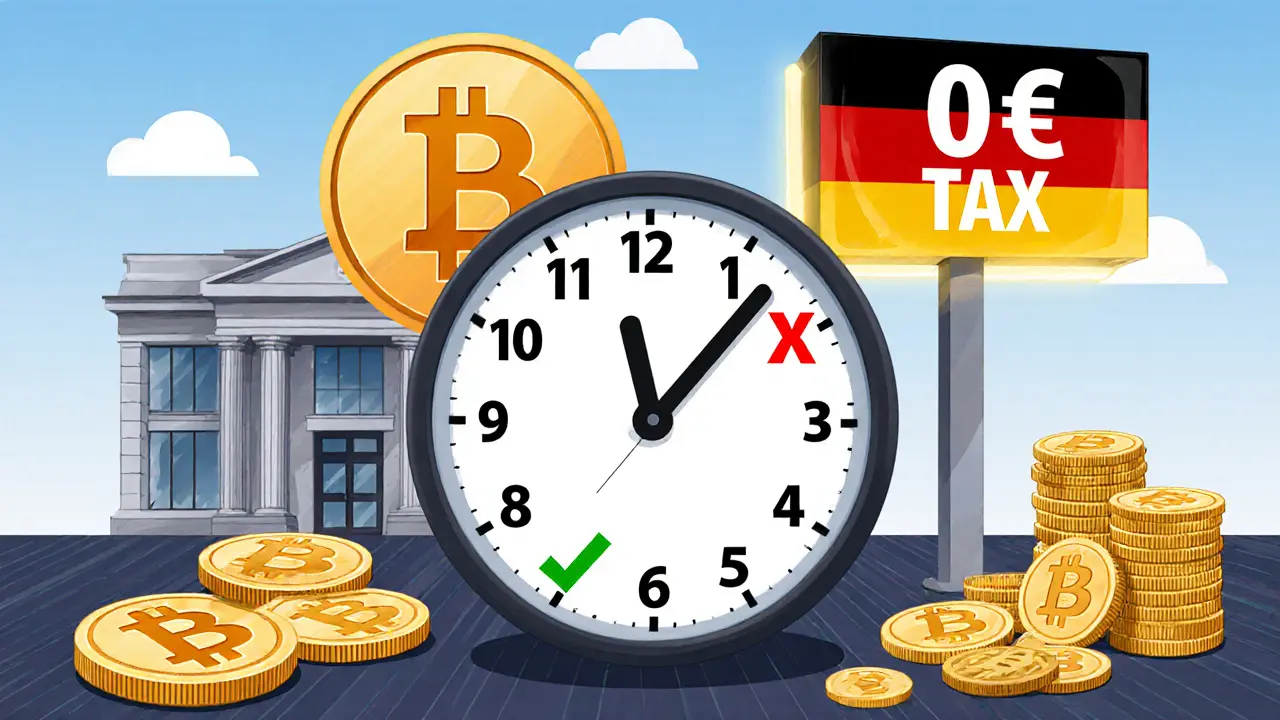
Germany offers a 12-month crypto tax exemption for Bitcoin and other digital assets, making it one of Europe’s most favorable tax environments for long-term holders. Learn how it works, who it benefits, and what risks remain.
Categories
 Finance
Archives
Recent-posts
Indian Crypto Exchanges to Avoid in 2025
Oct, 9 2024
Shiba Inu TREAT (TREAT) Token Explained - Price, Purpose & Risks
Jul, 17 2025
What is Sypool (SYP) crypto coin? Explained in plain terms
Dec, 4 2025

Malta Blockchain Island Strategy: A Practical Guide for Crypto Businesses
Oct, 15 2025

State Control of Crypto Mining in Venezuela: How the Government Manages and Restricts Digital Mining
Jan, 30 2026