
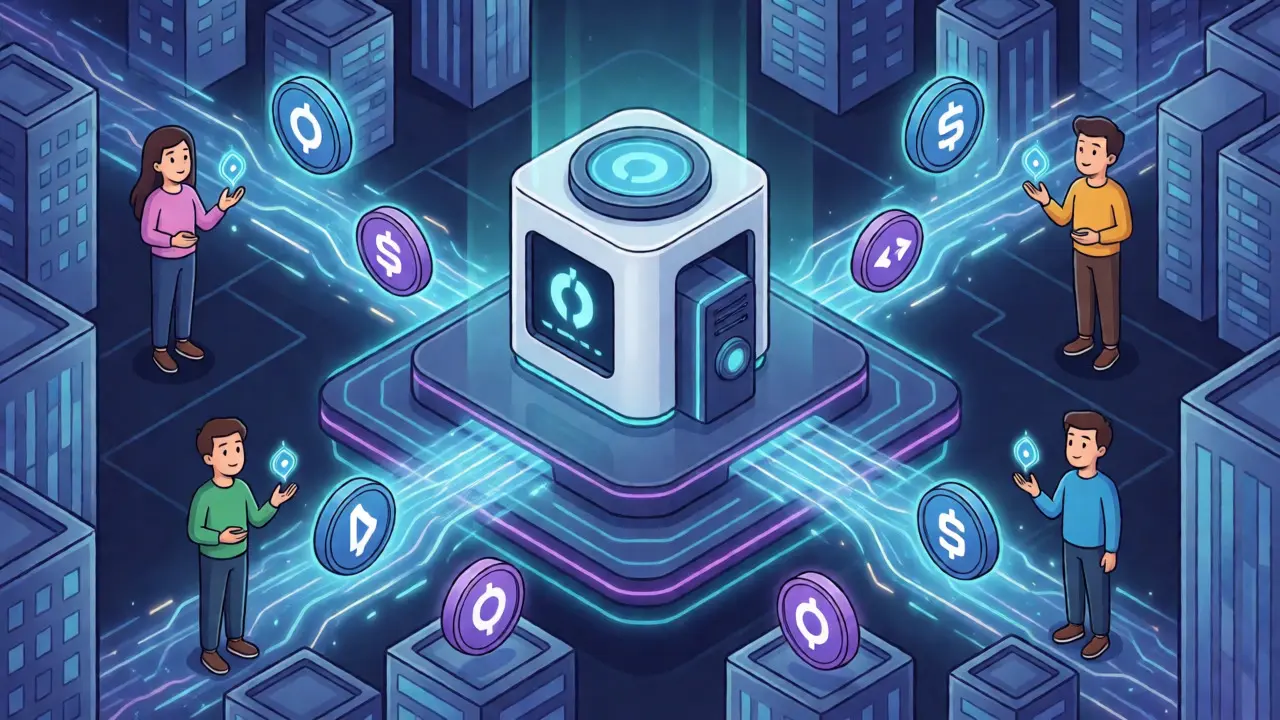
Imagine swapping tokens on the TON Blockchain without ever handing your private keys to a middleman. That is the core promise of STON.fi. If you have been hunting for a way to trade assets within the Telegram ecosystem without the headaches of centralized exchanges, this platform might be exactly what you need. But does it actually deliver on speed and security, or is it just another hype train? Let’s cut through the noise and look at how this automated market maker works in practice.
What Exactly Is STON.fi?
STON.fi is a decentralized automated market maker (AMM) protocol built specifically for the TON blockchain. Unlike traditional exchanges where you trust a company with your funds, STON.fi uses smart contracts to facilitate trades directly between users. Founded in 2022, it operates as a non-custodial platform, meaning you retain full control of your assets at all times. The system relies on liquidity pools rather than an order book, allowing for instant swaps through a Request for Quote (RFQ) model. Think of it as a high-tech vending machine for tokens that never closes.
The technical backbone here is interesting. It utilizes Hash Time Locked Contracts (HTLC) to ensure secure transactions, particularly for cross-chain operations. This means you can move assets between different blockchains without needing complex bridging services that often slow down DeFi interactions. Because it runs on TON, it benefits from the network’s sharding capabilities, which help process transactions asynchronously. For regular users, this translates to faster confirmations and lower network congestion compared to older networks like Ethereum.
How Trading Works on the Platform
You do not need to create an account with an email and password. Instead, you connect a compatible TON wallet, such as Tonkeeper or MyTonWallet, directly to the web interface. Once connected, you select the token pair you want to trade, enter the amount, and confirm the transaction. The entire process happens on-chain. There are no deposits in the traditional sense; you simply use the cryptocurrency already sitting in your wallet.
The fee structure is straightforward. STON.fi charges a standard 0.3% commission on swaps. Here is how that breaks down: 0.2% goes to the liquidity providers who supply the tokens, and 0.1% stays with the protocol to keep the lights on. While some sources mention zero fees, that usually refers to basic access, not the actual trading cost. Compared to centralized exchanges that might charge higher withdrawal fees or hidden spreads, this flat rate is transparent. You see exactly what you pay before you click confirm.
| Feature | STON.fi (DEX) | Centralized Exchange (CEX) |
|---|---|---|
| Custody of Funds | User-controlled (Non-custodial) | Exchange-held (Custodial) |
| KYC Requirement | None | Mandatory for most features |
| Trading Fees | 0.3% fixed swap fee | Variable (Maker/Taker models) |
| Leverage/Margin | No (Spot only) | Yes (Up to 100x+) |
| Asset Control | Full ownership via wallet | IOU on exchange ledger |
Security and Smart Contract Risks
Security is always the elephant in the room when discussing DeFi. STON.fi addresses this by undergoing audits from reputable third-party firms. These audits check the code for vulnerabilities that hackers could exploit. Since the platform is fully decentralized, no single entity can manipulate the pool funds or steal them arbitrarily. The smart contracts execute exactly as written.
However, "audited" does not mean "risk-free." Smart contract bugs are rare but possible. Additionally, because there is no customer support team to call if you send funds to the wrong address, user error is a significant risk factor. The platform does not store your IP address or personal data, which enhances privacy but also means there is no recovery mechanism if you lose your wallet seed phrase. Always double-check addresses and start with small test transactions if you are new to the ecosystem.
Earning More: Liquidity and Staking
Trading is just one part of the experience. You can also earn passive income by providing liquidity. When you add your tokens to a pool, you earn a portion of the trading fees generated by that pool. The APR rates vary based on trading volume and pool size, so they fluctuate daily. It is not a guaranteed fixed return, but active markets tend to offer better yields.
Beyond liquidity provision, STON.fi has introduced a staking mechanism for holders of its native token, STON. By staking your tokens for periods ranging from 3 to 24 months, you receive ARKENSTON governance tokens and GEMSTON rewards. The ARKENSTON tokens are soulbound NFTs, meaning they cannot be transferred or sold. They serve primarily as voting rights in the upcoming DAO (Decentralized Autonomous Organization). This gives long-term holders a say in the protocol's future direction, aligning incentives between users and developers.
User Experience and Interface
The interface is clean and minimalistic, designed for speed. You do not get overwhelmed with charts and indicators unless you dig deeper. Most users spend about 90 seconds per visit, which suggests the tasks-swapping, checking balances, or adding liquidity-are quick and intuitive. The documentation is comprehensive, offering tutorials for those unfamiliar with DeFi concepts.
Traffic data shows around 211,000 organic monthly visits, indicating a growing but niche community. The bounce rate is relatively low at 42%, suggesting people find what they are looking for. However, community support channels are less robust than on major platforms like Uniswap. If you run into a technical issue, you might rely more on reading documentation than chatting with support agents. This fits the DeFi ethos of self-reliance but can be frustrating for beginners.

Pros and Cons at a Glance
- Pros:
- Fully non-custodial: You own your keys.
- No KYC required: Trade anonymously.
- Fast execution: Leverages TON’s speed.
- Cross-chain swaps: No wrapping needed.
- Transparent fees: Flat 0.3% rate.
- Cons:
- No leverage trading: Spot only.
- Limited asset list: Focused on TON ecosystem.
- User responsibility: No password recovery.
- Smaller community: Less social proof than giants.
Final Verdict: Who Should Use STON.fi?
If you are already deep in the Telegram and TON ecosystem, STON.fi is arguably the best place to trade. It removes friction, protects your privacy, and keeps costs predictable. It is not for traders who need 50x leverage or want to buy obscure altcoins that haven't launched on TON yet. For those seeking a secure, fast, and simple way to swap TON-native assets, it delivers solidly. Just remember: with great power comes great responsibility. Secure your wallet, understand the risks, and start small.
Is STON.fi safe to use?
Yes, STON.fi undergoes regular smart contract audits by third-party security firms. As a non-custodial platform, your funds remain in your own wallet, reducing the risk of exchange hacks. However, standard DeFi risks like smart contract bugs still apply.
Do I need to complete KYC verification?
No, STON.fi does not require Know Your Customer (KYC) verification. You can connect your wallet and start trading immediately without submitting personal identification documents.
What are the fees on STON.fi?
The standard swap fee is 0.3%. Of this, 0.2% is distributed to liquidity providers, and 0.1% is retained by the STON.fi protocol. Network gas fees are paid separately in TON.
Can I trade fiat currency on STON.fi?
Direct fiat trading is limited. STON.fi is primarily a crypto-to-crypto exchange. To buy crypto with fiat, you typically need to use an on-ramp service or a centralized exchange first, then transfer assets to your TON wallet.
Does STON.fi offer leverage trading?
No, STON.fi currently supports spot trading only. It does not offer margin or futures trading with leverage, focusing instead on simple token swaps and liquidity provision.
 Finance