

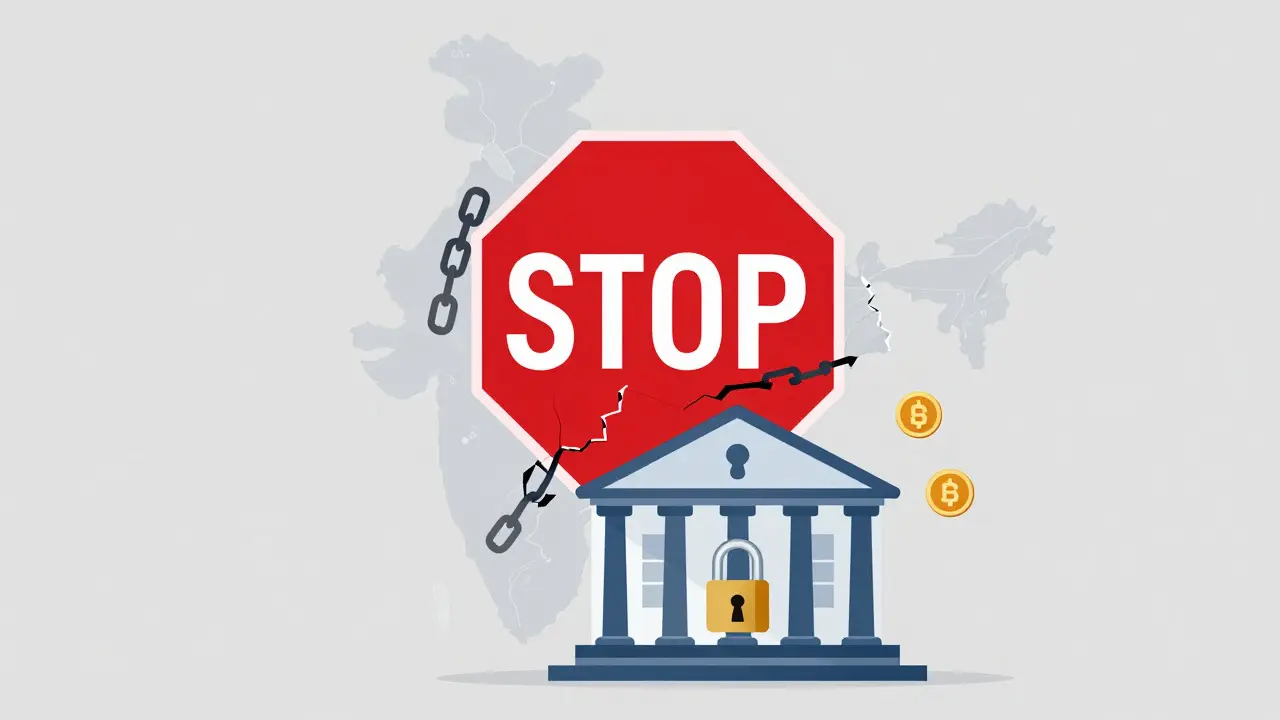
For three years, if you wanted to buy Bitcoin in India, you had a problem. The money was there, but the banks wouldn't let it move. On April 6, 2018, the Reserve Bank of India (RBI) issued a circular that effectively froze the country's cryptocurrency ecosystem. It didn't ban trading directly, but it banned banks from serving anyone who traded. That meant exchanges couldn't process deposits or withdrawals. For many users, this felt like a total ban. But then, something shifted. A legal battle reached the highest court in the land, and on March 4, 2020, the verdict came down. The ban was overturned. Since then, the landscape has changed again with taxes and new rules. If you are looking at crypto in India today, understanding this history is not just academic-it explains why the market looks the way it does right now.
The 2018 Circular: Cutting Off the Oxygen
To understand why the reversal was such a big deal, you have to look at what happened before. In 2013, the RBI started issuing warnings. They were worried about Bitcoin's volatility and security risks. But by 2018, they decided warnings weren't enough. The central bank sent a directive to all entities regulated by them-nationalized banks, cooperative banks, non-banking financial companies (NBFCs), and payment system operators. The instruction was clear: stop dealing with any person or entity dealing in virtual currencies.
This wasn't a subtle nudge. It was a chokehold. Cryptocurrency exchanges rely on traditional banking rails to function. You can't run an exchange without being able to accept INR deposits from users. Without banking services, Indian exchanges faced two choices: shut down or move their operations offshore. Many chose the latter. Platforms like Zebpay and Unocoin had to suspend INR trading. Peer-to-peer (P2P) trading became the only real option for many Indians, which was riskier and less efficient. The innovation sector took a hit too. Fintech startups working on blockchain technology found themselves unable to open bank accounts because investors feared association with "crypto" would trigger regulatory scrutiny. The entire digital asset space went into survival mode.
The Supreme Court Verdict: Why the Ban Failed
The industry didn't just sit back and take it. The Internet and Mobile Association of India (IMAI), along with several crypto exchanges, filed a petition challenging the RBI's circular. They argued that the ban violated fundamental rights. The case, known as Internet and Mobile Association of India v. Reserve Bank of India, made its way to the Supreme Court of India.
On March 4, 2020, the Supreme Court delivered a landmark judgment. They struck down the RBI's 2018 circular entirely. The core of the Court's reasoning rested on Article 19(1)(g) of the Constitution, which guarantees citizens the right to practice any profession, trade, or business. The judges ruled that while the RBI had legitimate concerns about protecting financial institutions, the method they chose-a blanket ban-was disproportionate.
Justice Rohinton Fali Nariman, writing for the bench, highlighted a critical gap in the RBI's argument: evidence. The RBI claimed that banks suffered damage from dealing with crypto exchanges. However, the Court noted that the RBI failed to demonstrate any measurable damage to the financial system. No major bank had collapsed due to crypto exposure. The Court emphasized the "test of proportionality." If a regulator wants to restrict a fundamental right, they must use the least intrusive measure available. Instead of exploring targeted regulations or warnings, the RBI implemented an outright ban. This, the Court decided, was an overreach. The ruling reinstated banking access for crypto businesses overnight. Exchanges that had paused INR trading resumed operations within days. Trading volumes spiked, and user registrations surged as confidence returned to the market.

The Aftermath: From Bans to Taxes
You might think that after the Supreme Court victory, things settled into a smooth routine. They didn't. While the banking ban was gone, the regulatory uncertainty remained. The government began drafting new legislation. In 2021, reports surfaced about a proposed bill called the Cryptocurrency and Regulation of Official Digital Currency Bill. This draft aimed to ban private cryptocurrencies while paving the way for a Central Bank Digital Currency (CBDC). Although this specific bill never saw the light of day in Parliament, it signaled the government's intent to regulate rather than just ban.
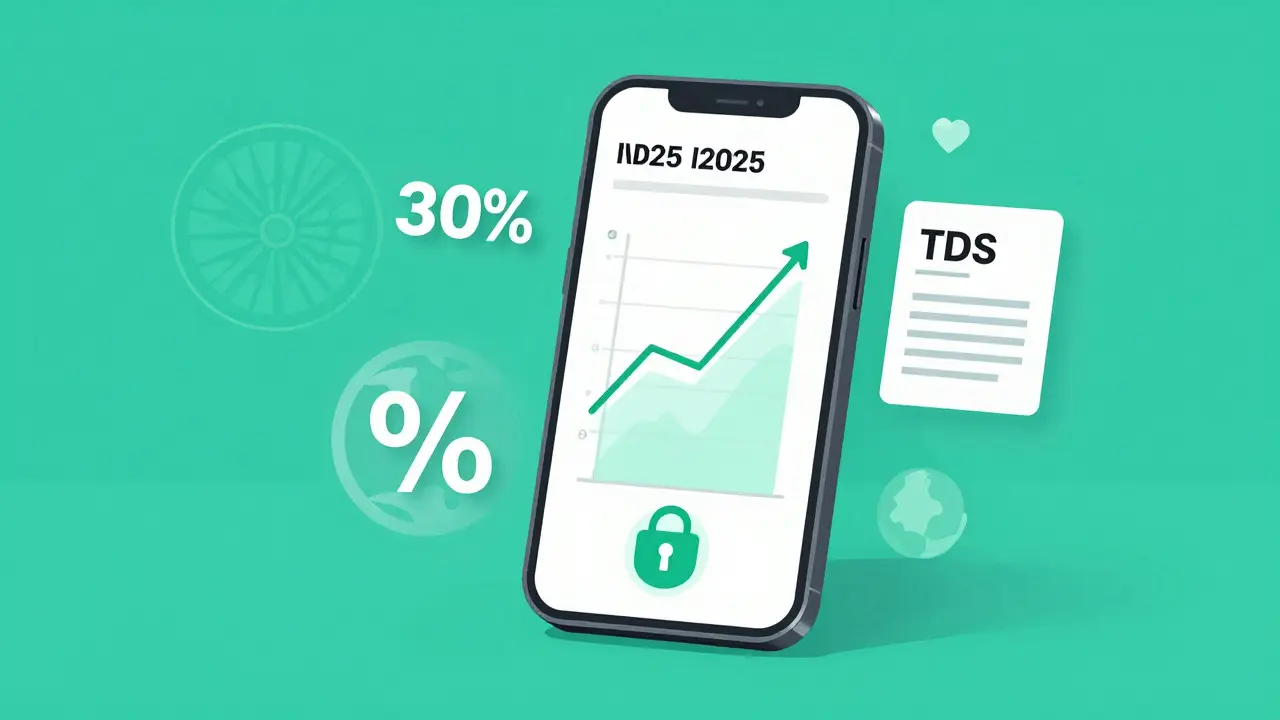
Then came the Union Budget of 2022. Finance Minister Nirmala Sitharaman announced a new tax regime for Virtual Digital Assets (VDAs). This was a game-changer. Instead of banning crypto, the government decided to tax it heavily. Here is how it works:
- 30% Tax Rate: Any income earned from the transfer of VDAs is taxed at a flat rate of 30%. There are no slab benefits here; whether you earn ₹1 lakh or ₹1 crore, the rate stays the same.
- No Deductions: Unlike other investments where you can offset losses against gains, crypto profits don't allow for deductions. Even administrative expenses cannot be deducted.
- 1% TDS: A Tax Deducted at Source (TDS) of 1% is applied to transactions above certain thresholds. This creates a paper trail for the Income Tax Department to track high-volume traders.
This approach brought clarity. Crypto wasn't illegal, but it was expensive to trade profitably. The heavy tax burden cooled off speculative frenzy, but it also legitimized the asset class. Banks knew exactly what they were doing when they served crypto clients: facilitating taxable economic activity.
Current Status: Legal but Restricted
As of 2025, the situation is stable but complex. Cryptocurrency is legal in India. You can buy, sell, hold, and invest in Bitcoin, Ethereum, and other altcoins. Banks are required to provide services to registered exchanges and wallet providers, provided they follow Know Your Customer (KYC) norms. However, there is a crucial distinction: crypto is not legal tender. You cannot walk into a store in Mumbai and pay for groceries with Bitcoin. It remains an investment asset, not a currency.
The RBI still maintains a cautious stance. Former Governor Shaktikanta Das has repeatedly expressed concerns about monetary sovereignty. The central bank worries that widespread adoption could disrupt the rupee's stability or lead to capital flight. Despite these concerns, the RBI acknowledges the Supreme Court's precedent. They cannot simply ban banking access again without facing another legal challenge-and likely losing.
So, what does this mean for you? If you are an investor, you have access to global markets through Indian exchanges. You need to keep meticulous records for your tax filings. The 30% tax rate means short-term trading is less profitable unless you account for it in your strategy. Long-term holding might be more appealing if you believe in the underlying technology, though capital gains tax still applies upon sale.
| Period | Status | Banking Access | Taxation |
|---|---|---|---|
| Pre-2018 | Unregulated | Available | Standard Income Tax Slabs |
| 2018-2020 | Banned (De Facto) | Blocked | N/A (Trading Suspended) |
| 2020-2022 | Legal (Post-Court Ruling) | Restored | Unclear/Grey Area |
| 2022-Present | Regulated & Taxed | Available (with KYC) | 30% Flat + 1% TDS |
What Changed for Everyday Users?
The most immediate change for regular people is convenience. Before 2020, buying crypto involved using peer-to-peer platforms, sending cash to strangers, or using obscure payment methods. Now, you can link your UPI or bank account to a major exchange like CoinDCX, WazirX, or Zebpay. The process is seamless. You deposit INR, buy assets, and withdraw later. The friction is gone.
However, the psychological shift is significant. In 2018, many Indians viewed crypto as a risky, potentially illegal hobby. Today, it is seen as a volatile but legitimate investment option. Mainstream media covers price movements regularly. Financial advisors discuss portfolio allocation strategies involving small percentages of crypto. The stigma has faded, replaced by caution driven by tax implications rather than fear of arrest.
For businesses, the impact is mixed. Blockchain startups can now raise funds and operate normally. They can hire developers and build products without worrying about their bank accounts being frozen. This has led to a resurgence in Web3 development hubs in cities like Bangalore and Gurgaon. Yet, consumer-facing applications remain limited because crypto isn't used for daily payments. Most utility comes from decentralized finance (DeFi) protocols or non-fungible tokens (NFTs), which are still niche markets.
Looking Ahead: CBDC and Future Regulations
While private crypto faces high taxes, the RBI is actively pursuing its own digital currency. The Digital Rupee (e₹) pilot program has expanded to various sectors. This Central Bank Digital Currency (CBDC) aims to offer the efficiency of crypto with the stability of fiat. For the average user, the e₹ will likely feel like a faster version of existing digital payments, not a revolutionary new asset class. It doesn't compete directly with Bitcoin in terms of investment potential, but it does address the RBI's concern about monetary control.
Will the rules change again? Possibly. The government has indicated interest in creating a comprehensive framework for VDAs. This could involve clearer definitions of what constitutes a VDA, better reporting mechanisms for exchanges, and perhaps adjustments to the tax structure if current rates are deemed too restrictive. But one thing seems certain: the era of blanket bans is over. The Supreme Court set a high bar for future restrictions, requiring regulators to prove necessity and proportionality. Until then, Indian crypto users can trade with relative peace of mind, knowing their banking access is protected by law.
Is cryptocurrency legal in India in 2025?
Yes, cryptocurrency is legal in India. The Supreme Court overturned the RBI's 2018 banking ban in 2020. While it is not recognized as legal tender (you can't use it to buy goods directly), you can legally buy, sell, hold, and invest in digital assets.
Why did the Supreme Court overturn the RBI ban?
The Court ruled that the ban violated Article 19(1)(g) of the Constitution, which protects the right to carry on any trade or business. The RBI failed to prove that banks suffered actual damage from dealing with crypto exchanges, making the ban disproportionate and unnecessary.
How much tax do I pay on crypto profits in India?
You pay a flat 30% tax on any income from transferring Virtual Digital Assets (VDAs). Additionally, there is a 1% Tax Deducted at Source (TDS) on transactions above specified limits. No deductions for losses or expenses are allowed.
Can banks refuse to serve crypto customers?
Generally, no. Following the Supreme Court judgment, banks must provide services to crypto businesses and individuals, provided they adhere to standard KYC (Know Your Customer) and anti-money laundering guidelines. However, individual bank policies may vary in strictness.
What is the Digital Rupee (e₹)?
The Digital Rupee is India's Central Bank Digital Currency (CBDC) issued by the RBI. Unlike private cryptocurrencies, it is backed by the government and holds the same value as physical rupees. It is designed for secure, instant digital payments, not for speculative investment.
 Finance