

Blockchain Resilience Calculator
The blockchain network remains functional if at least 51% of nodes are operational. This calculator shows the minimum nodes required for different failure scenarios.
How This Works
With 100 nodes, your network can withstand up to 49 failures and still function
One failed server = complete network outage
Results
Enter values to see calculations
What’s the difference between P2P and client-server?
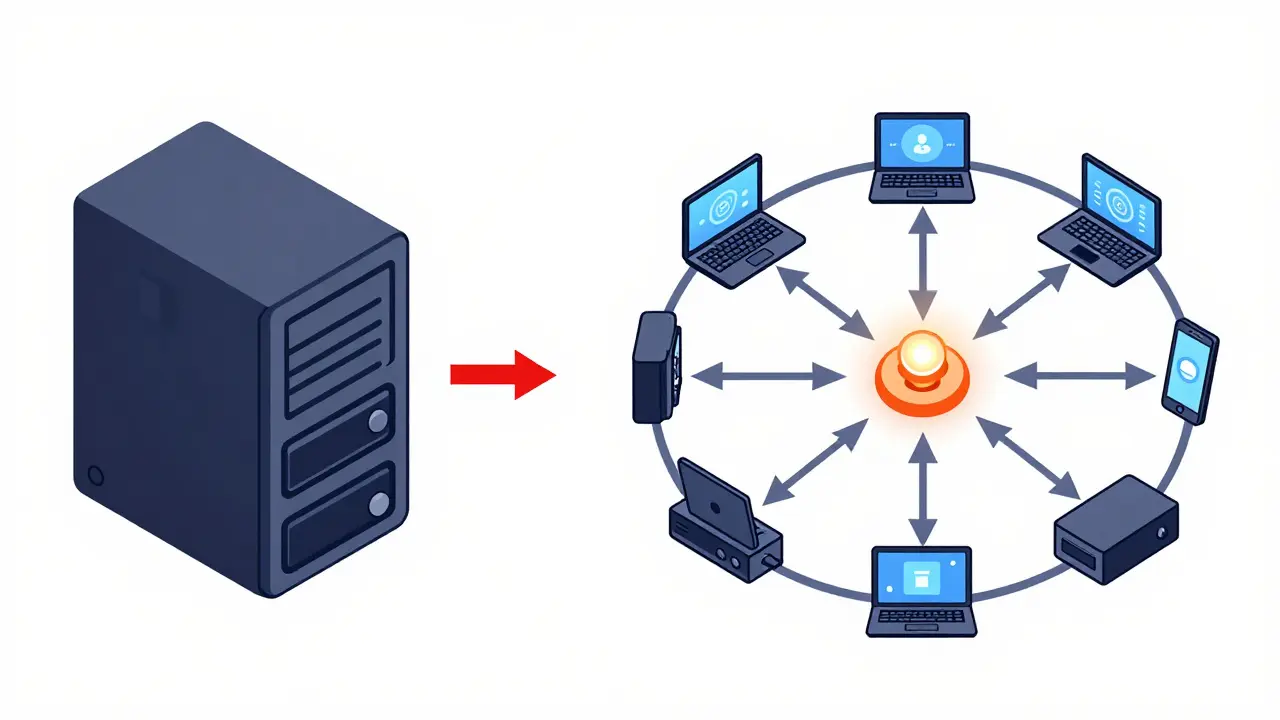
Imagine you’re sharing a movie with a friend. In a client-server setup, you upload the file to a central server-like Dropbox or Google Drive-and your friend downloads it from there. The server is the middleman. It controls everything: who gets access, when, and how much bandwidth is used. If the server goes down? The movie disappears.
In a peer-to-peer (P2P) system, you and your friend share the file directly. No middleman. You both have copies. If your friend’s computer is off, you can still share with someone else. And if you shut down? Others still have the file. That’s the core difference: one is centralized, the other is distributed.
Why does blockchain need P2P?
Blockchain isn’t just a database. It’s a shared ledger that no single person or company owns. Bitcoin, Ethereum, and others rely on thousands of computers around the world keeping identical copies of every transaction ever made. If one computer fails, the network keeps going. If a government tries to shut it down? It’s like trying to delete the internet by turning off one router.
That’s only possible with P2P. In a client-server model, you’d need one central authority to validate transactions-like a bank. But blockchain was built to remove that. It doesn’t trust banks. It doesn’t trust governments. It trusts math, code, and collective agreement.
How P2P makes blockchain resilient
Think about what happens when a server crashes. Websites go offline. Apps stop working. Payments fail. That’s a single point of failure-and it’s the biggest weakness of client-server systems.
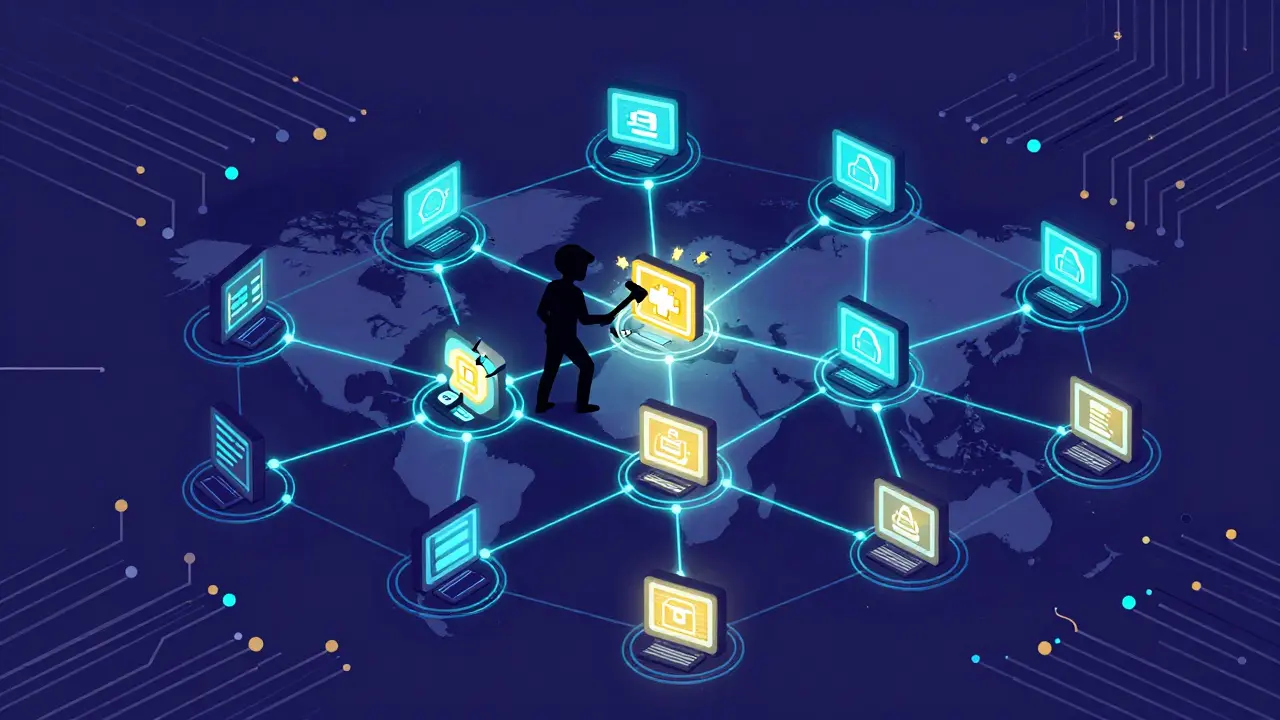
Blockchain fixes that by spreading the load. Every node in the network stores the full blockchain. Every node can verify transactions. Every node can broadcast new blocks. If 10,000 nodes are running, and 1,000 go offline? The network keeps ticking. It’s not just backup-it’s redundancy built into the design.
Bitcoin has been running since 2009. Not because it’s perfect. But because it doesn’t rely on any one machine. No single data center. No central office. Just millions of devices-phones, laptops, servers-working together.
Cost and control: Why P2P wins for blockchain
Running a client-server network costs money. You need powerful servers. Cooling systems. IT staff. Bandwidth upgrades. Companies like PayPal or Visa spend billions maintaining their centralized systems.
Blockchain flips that. The cost is shared. Every participant contributes storage, bandwidth, and computing power. There’s no company paying the bills. No CEO deciding who gets to transact. That’s why you can run a Bitcoin node on a Raspberry Pi for under $50. You don’t need to be a tech giant to join.
And control? In client-server, the server owner controls access. They can freeze accounts. Block transactions. Delete data. In P2P blockchain, no one has that power. Transactions are validated by rules written in code-not by a manager’s approval.
How blockchain P2P is different from BitTorrent
You might think, “Isn’t that just like BitTorrent?” Not quite.
BitTorrent shares files. Blockchain shares state. Every peer doesn’t just store data-it must agree on what’s true. If someone tries to send fake coins, the network checks it against the rules. Proof of Work or Proof of Stake ensures that only valid changes get added.
BitTorrent doesn’t care if you download a pirated movie. Blockchain cares if you double-spend a dollar. That’s why blockchain P2P needs consensus algorithms. It’s not just about sharing-it’s about agreeing.
Bitcoin’s network, for example, uses Proof of Work. Miners compete to solve puzzles. The first to solve it gets to add the next block. Others verify it. If 51% of the network agrees, the block is final. That’s not possible in a simple file-sharing P2P system.
What happens if someone tries to attack a P2P blockchain?
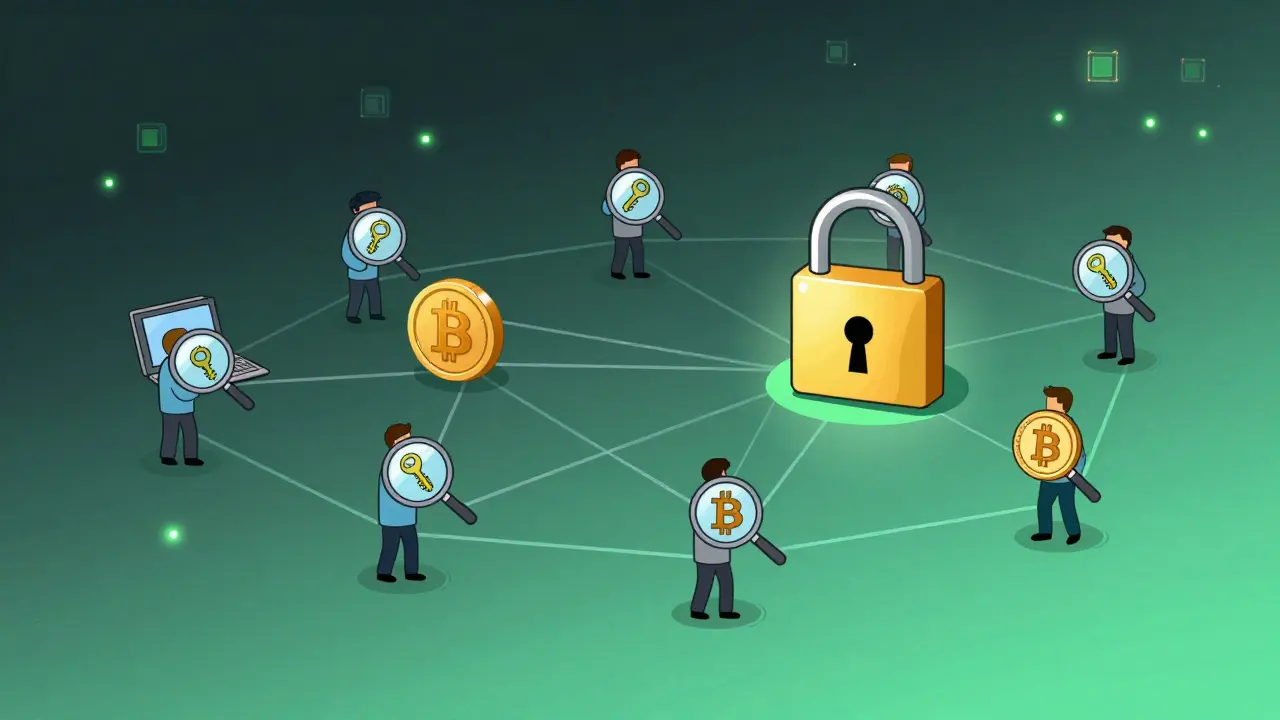
Yes, P2P networks have vulnerabilities. Attackers can try to flood the network with fake nodes (Sybil attacks). Or isolate a node from the rest (eclipse attacks). Or split the network into two versions (partition attacks).
But blockchain layers on cryptography and economics to fight back. Each transaction is signed with a private key. Fake transactions get rejected. Attackers need to control 51% of the network’s computing power to rewrite history-and that costs billions in electricity and hardware.
For Bitcoin, that’s nearly impossible. The network’s hashrate is over 800 exahashes per second. To attack it, you’d need more computing power than most countries. And even if you did, the community could hard-fork the chain and render your attack useless.
Why client-server still exists-and why blockchain won’t replace it
Don’t get it wrong: client-server isn’t dead. Your bank, your email, your Netflix account-they all run on client-server. Why? Because it’s fast, simple, and predictable. For a company that needs to serve millions of users with consistent speed, centralized control is easier.
Blockchain isn’t better at everything. It’s slower. It uses more energy. It’s harder to build. But it’s better at one thing: trustless operation. When you don’t want to rely on a single authority, P2P is the only option.
That’s why you’ll see blockchain in places where control matters: voting systems, supply chains, digital identity, and decentralized finance. Not for streaming videos. Not for online shopping. But for systems where the middleman is the problem.
What’s next for P2P in blockchain?
Scalability is still the biggest challenge. Bitcoin handles about 7 transactions per second. Visa handles 24,000. That’s why new solutions are emerging.
Layer-2 networks like the Lightning Network let users open payment channels off-chain, settling only the final balance on the main blockchain. Sharding splits the blockchain into smaller pieces so nodes don’t have to store everything. Proof of Stake cuts energy use by replacing mining with staking.
These aren’t abandoning P2P. They’re enhancing it. The core idea stays: no central point of control. No single server to break. Just a network of peers, working together, enforcing rules through code.
The future of blockchain isn’t about replacing the internet. It’s about adding a new layer-one where trust isn’t given by institutions, but proven by mathematics.
Can blockchain work without P2P?
No. Without P2P, blockchain loses its decentralization. A blockchain that runs on a single server or a few controlled nodes is just a database with extra steps. It’s not trustless. It’s not censorship-resistant. It doesn’t have the security or resilience that makes blockchain valuable. P2P is what turns a ledger into a network.
Why not use a hybrid model with some central servers?
Hybrid models exist-for example, some enterprise blockchains use central servers for node discovery. But the core validation and data storage still happen peer-to-peer. If you rely on central servers to validate transactions, you’re back to trusting a single entity. That defeats the purpose of blockchain. True decentralization means no server has final authority.
Is P2P slower than client-server?
Yes, in some ways. Finding peers, syncing data across thousands of nodes, and reaching consensus takes time. That’s why Bitcoin confirms a transaction in 10 minutes, while a credit card processes in seconds. But speed isn’t the goal. Trust and resilience are. For applications where you can’t afford fraud or censorship, the trade-off is worth it.
Can governments shut down a P2P blockchain?
Not easily. You can block access to known nodes or ban cryptocurrency exchanges in your country. But you can’t shut down a network that runs on millions of devices worldwide, many of them hidden behind home routers or mobile phones. Bitcoin has survived bans in China, Russia, and elsewhere. As long as someone has an internet connection and a device, the network lives.
Do I need to run a node to use blockchain?
No. Most users interact with blockchain through wallets and apps that connect to public nodes. But if you want true independence-no third-party access to your data, no account freezes-you can run your own node. It’s free, open-source, and doesn’t require fancy hardware. Running a node is how you prove you trust the system, not the middleman.
 Finance
Kathy Wood
December 15, 2025 AT 20:25Rakesh Bhamu
December 17, 2025 AT 16:44Hari Sarasan
December 17, 2025 AT 18:43Lynne Kuper
December 18, 2025 AT 00:48Lloyd Cooke
December 19, 2025 AT 09:58Jessica Eacker
December 21, 2025 AT 06:26Andy Walton
December 21, 2025 AT 22:29Candace Murangi
December 23, 2025 AT 21:00Albert Chau
December 24, 2025 AT 00:59Madison Surface
December 25, 2025 AT 03:04Tiffany M
December 25, 2025 AT 18:35Eunice Chook
December 26, 2025 AT 20:25Jessica Petry
December 28, 2025 AT 08:43Scot Sorenson
December 29, 2025 AT 23:17Patricia Whitaker
December 30, 2025 AT 00:39PRECIOUS EGWABOR
December 31, 2025 AT 10:22Caroline Fletcher
January 1, 2026 AT 20:45Heath OBrien
January 3, 2026 AT 13:37Taylor Farano
January 3, 2026 AT 22:22Kathryn Flanagan
January 4, 2026 AT 19:15Ian Norton
January 5, 2026 AT 10:43Nicholas Ethan
January 5, 2026 AT 16:27Stanley Machuki
January 7, 2026 AT 01:29Kathy Wood
January 7, 2026 AT 21:22