

Imagine trying to build a house where the blueprint changes every time you lay a brick. That is roughly what it feels like for financial technology companies operating in Mexico right now. On one hand, you have a robust, pioneering legal framework for digital payments and crowdfunding. On the other, you face a regulatory wall when it comes to cryptocurrencydigital currencies like Bitcoin or Ethereum that operate outside traditional banking systems. The rules are strict, the oversight is intense, and if you miss a step, the consequences can be severe.
For years, Mexico has been a beacon for innovation in Latin America. It was the first country in the region to pass a dedicated fintech law back in 2018. But as we move through 2026, the landscape has shifted. The excitement of early adoption has cooled into a hard reality of compliance costs and operational hurdles. If you are looking to enter this market, or if you are already here trying to navigate the red tape, understanding the distinction between what is allowed and what is restricted is not just helpful-it is survival.
The Backbone: Mexico’s 2018 Fintech Law
To understand where things stand today, you have to look at the foundation. The Law to Regulate Financial Technology InstitutionsKnown locally as Ley Fintech, this legislation established the first specific legal framework for fintech companies in Latin America, enacted in 2018, changed everything. Before this, fintechs operated in a gray zone. After this, they had a license to exist, but also a heavy set of rules to follow.
This law created three main categories for fintech institutions:
- Crowdfunding institutions: Platforms that connect borrowers with investors.
- Electronic payment funds institutions (IFPE): Companies that hold user funds for electronic transactions.
- Regulatory sandbox participants: Startups testing new products under supervised conditions.
The primary regulators here are the National Banking and Securities Commission (CNBV)The government agency responsible for regulating banks and securities markets in Mexico and the Bank of Mexico (Banxico)Mexico's central bank, which controls monetary policy and regulates foreign exchange. As Jesús de la Fuente, President of CNBV, noted, "As fintech adoption grows, so does the need for a strong regulatory framework to maintain trust and stability." Stability is the keyword here. The goal isn't just to let apps launch; it's to ensure they don't collapse and take consumer money with them.
The Crypto Catch-22: Legal for You, Restricted for Banks
Here is where it gets tricky. Is cryptocurrency legal in Mexico? Yes. Can you buy Bitcoin at a café using your phone? Technically, yes, as long as the transaction doesn't involve a regulated financial institution acting as an intermediary in a prohibited way. But for businesses? It is a minefield.
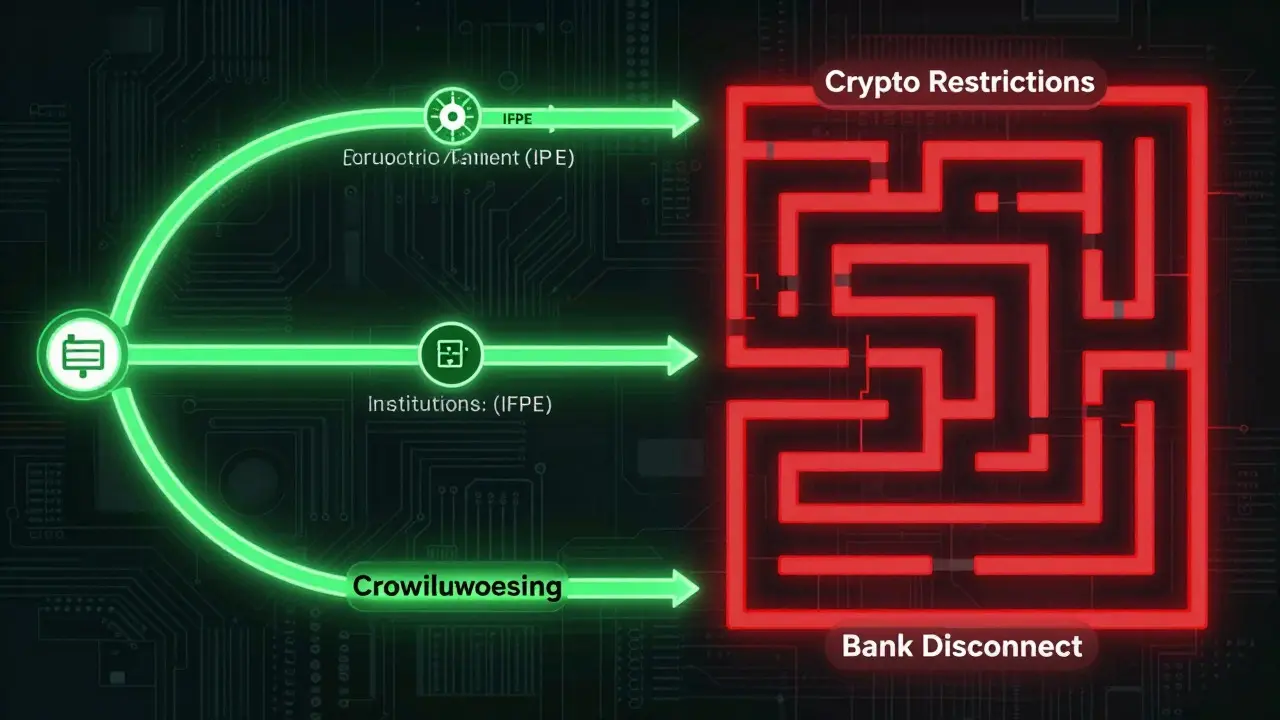
Financial institutions in Mexico face strict restrictions on virtual asset operations. While individuals can hold crypto, banks and traditional lenders are largely kept at arm's length from directly trading or holding these assets. This creates a disconnect. You might want to use stablecoins for faster cross-border payments, but getting your local bank to play nice with a crypto wallet is nearly impossible due to risk aversion and regulatory ambiguity.
If your business handles cryptocurrencies, you fall under the anti-money laundering (AML) net. This means you must implement comprehensive Customer Due Diligence (KYC)Know Your Customer policies required to verify the identity of clients to prevent fraud and money laundering policies. We are talking about verifying identities through official documents, assessing the nature of the business relationship, and identifying ultimate beneficial owners. For higher-risk clients, such as Politically Exposed Persons (PEPs), Enhanced Due Diligence becomes mandatory.
| Requirement | Detail | Enforcement Body |
|---|---|---|
| Identity Verification | Mandatory ID checks via official documents | CNBV / FIU |
| Transaction Monitoring | Report suspicious/unusual activities immediately | Financial Intelligence Unit (FIU) |
| Record Keeping | Secure maintenance of records for minimum 5 years | CNBV |
| Officer Appointment | Must hire a Compliance Officer and CISO | CNBV |
The High Cost of Compliance
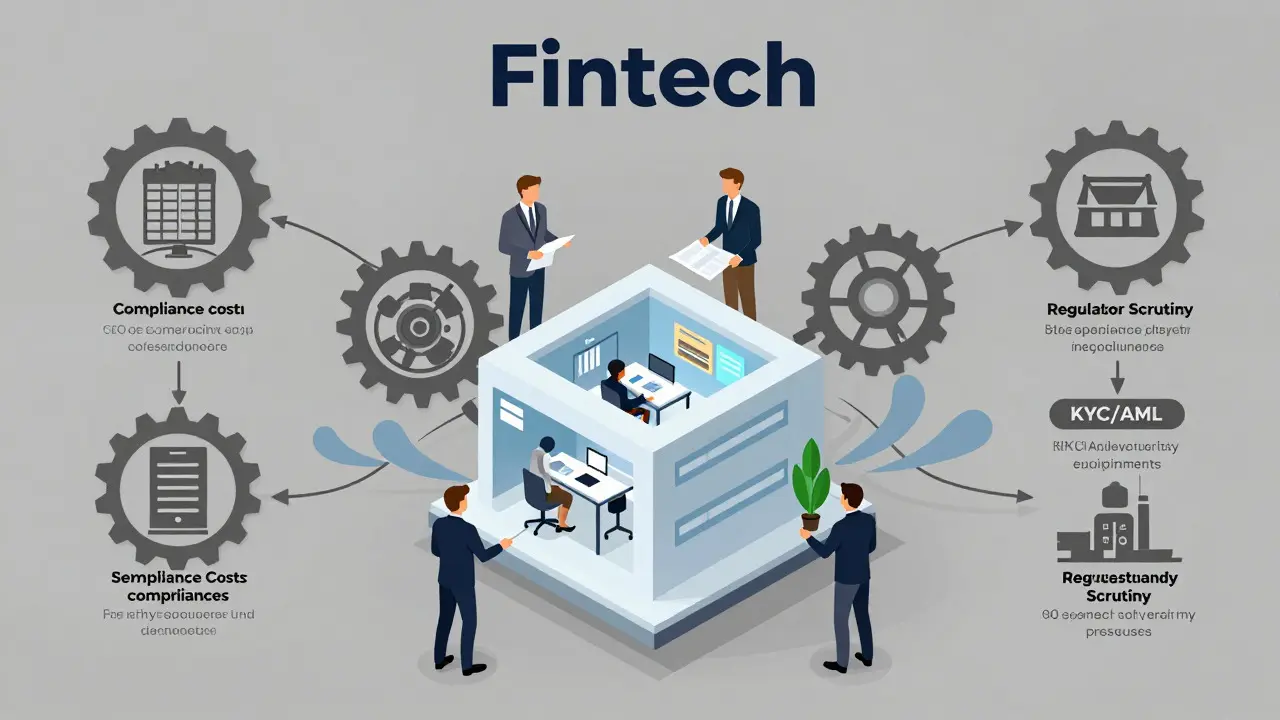
Let’s talk about money-specifically, how much it costs to stay out of trouble. The regulatory framework mandates specific reporting obligations and comprehensive information disclosure regarding corporate structure. But beyond paperwork, there are structural requirements that hit your bottom line hard.
You must appoint two key roles: a compliance officer and a chief information security officer (CISO). For a small startup, hiring two specialized executives is a massive overhead. These aren't part-time gigs; they require deep expertise in Mexican financial law and cybersecurity standards. Additionally, if you use non-Mexican Software-as-a-Service (SaaS) vendors, you often need to implement backup cloud services located within Mexico to ensure data sovereignty and continuity.
CONDUSEF, the National Commission for the Protection and Defense of Financial Service Users, adds another layer. They enforce transparency obligations. If your app crashes, or if fees change, you better have communicated it clearly to users. Failure to do so invites scrutiny and fines. The learning curve for new market entrants typically spans 6 to 12 months just to establish basic compliance. During that time, you are burning cash without necessarily scaling your product.
Why Mexico Lags Behind in Open Finance
Despite being a pioneer in 2018, Mexico is currently facing criticism for moving too slowly on Open FinanceA system allowing consumers to share their financial data securely with third-party providers to create new services. Countries like Brazil and Colombia have implemented agile open finance systems that allow for greater competition and innovation. In Mexico, the current framework limits how easily fintechs can access bank data to offer competitive products.
Ramiro Nández, Commercial Director at Mercado Pago, pointed out that while Mexico was a regulation pioneer, other regional countries moved faster on open finance. This speed allows competitors elsewhere to offer more attractive loans, lower fees, and better user experiences. Romina Benvenuti, General Counsel at Nu Mexico, emphasizes that regulation must evolve with the sector. Without updates, Mexican fintechs struggle to compete globally because their domestic tools are restricted by older laws.
The Push for Fintech Law 2.0
The industry is screaming for an update. The concept of "Fintech Law 2.0" has emerged as a necessary evolution. The 2018 law was designed for a younger, simpler version of the industry. Today, companies like Nu, Mercado Pago, and Stori offer complex digital banking services that blur the lines between traditional banking and tech platforms.
Recent amendments to the Securities Market Law in 2025 have tried to bridge some gaps. These reforms aim to enhance capital market accessibility for businesses, streamlining public offering processes. This is good news for lending fintechs. SMEs in Mexico still struggle with limited credit access, and warehouse financing has provided some relief. However, the core issue remains: the regulatory agility needed for cross-border operations and emerging business models is still missing.
In 2025, the focus shifted heavily toward cross-border foreign exchange operations. Fintechs facilitating international payments found themselves navigating increasingly complex compliance requirements across multiple regulatory bodies. Each sector regulation establishes distinct internal controls, meaning a company doing both lending and payments needs two different compliance strategies. This fragmentation increases costs and slows down innovation.
What This Means for Your Business Strategy
If you are planning to launch or expand in Mexico, here is the practical takeaway. Do not underestimate the compliance burden. Budget for high initial infrastructure costs. Hire local legal experts who specialize in CNBV regulations, not just general corporate law. Build your technology stack with data residency in mind from day one.
Also, keep an eye on the consolidation trends. The market is maturing. Smaller players with shallow pockets will likely exit or be acquired by larger entities that can absorb the compliance costs. The winners will be those who treat regulation not as a hurdle, but as a moat. If you can navigate the KYC, AML, and reporting requirements efficiently, you gain a significant advantage over competitors who cut corners.
Finally, engage with the community. User feedback indicates mixed perspectives on regulatory clarity. Some appreciate the stability; others feel stifled. By listening to these voices and adapting your customer service and transparency practices, you can build trust even in a restrictive environment. The goal is to balance innovation with adherence, proving that you are a safe harbor for user funds in a volatile digital world.
Is cryptocurrency legal in Mexico?
Yes, cryptocurrency is legal for individuals and non-financial entities to hold and trade. However, financial institutions face strict restrictions on operating with virtual assets. Businesses handling crypto must adhere to rigorous Anti-Money Laundering (AML) and Know Your Customer (KYC) regulations enforced by the CNBV and Banxico.
Who regulates fintech companies in Mexico?
The primary regulators are the National Banking and Securities Commission (CNBV) and the Bank of Mexico (Banxico). Additionally, CONDUSEF protects financial service users, and the Financial Intelligence Unit (FIU) monitors for money laundering activities.
What are the main challenges for fintechs in Mexico?
High compliance costs, the need for specialized officers (Compliance and CISO), data localization requirements, and a lack of open finance infrastructure compared to neighboring countries like Brazil. The regulatory framework is also seen as slow to adapt to new business models.
What is Fintech Law 2.0?
Fintech Law 2.0 refers to the proposed updates to the original 2018 Fintech Law. Industry experts advocate for these changes to address modern challenges like open finance, cross-border payments, and the integration of more complex digital banking services offered by large players like Nu and Mercado Pago.
How long does it take to comply with Mexican fintech regulations?
Establishing basic compliance typically takes 6 to 12 months for new market entrants. This includes setting up internal controls, hiring required officers, implementing IT security measures, and obtaining necessary authorizations from the CNBV.
 Finance