


Since January 1, 2026, crypto transactions in Nigeria aren’t just legal-they’re taxable. The Nigeria Tax Act 2025 (NTA 2025) changed everything. Before this, owning Bitcoin or Ethereum was fine, but the government turned a blind eye to taxes. Now, if you trade, sell, or earn crypto, you owe taxes. No exceptions. The rules are clear, the enforcement is real, and ignoring them could cost you more than you made.
What’s Taxable Now?
The NTA 2025 doesn’t just cover Bitcoin. It includes every digital asset: Ethereum, Solana, stablecoins, tokens, NFTs, even mining rewards. Any time you dispose of crypto-selling it for Naira, trading it for another coin, or using it to buy goods-you trigger a taxable event. The tax isn’t on the amount you bought, but on the profit you made. That’s capital gains tax.
Example: You bought 0.5 BTC for ₦2.5 million in 2024. In March 2026, you sell it for ₦4 million. Your gain is ₦1.5 million. That’s taxable. If you mined 0.1 ETH and later sold it for ₦800,000, the value when you received it (say, ₦600,000) becomes your cost basis. The ₦200,000 profit is taxed.
Even crypto salaries count. If your employer pays you in USDT or ADA, that’s income. The value on the day you receive it is your taxable income, just like a regular paycheck. No more hiding behind "it’s just digital."
Who Regulates It?
The Securities and Exchange Commission (SEC) is now in charge. Under the Investments and Securities Act (ISA) 2025, crypto assets are legally classified as securities. That means every exchange, wallet provider, or trading platform operating in Nigeria must be licensed as a Virtual Asset Service Provider (VASP). Unlicensed platforms? They’re illegal. The SEC has shut down dozens since 2025.
The Central Bank of Nigeria (CBN) supports this by allowing banks to open accounts for licensed VASPs. This was a game-changer. In 2021, banks were told to cut off crypto firms. Now, they’re required to track transactions. Every transfer between a bank account and a licensed exchange leaves a paper trail. That’s how the taxman finds you.
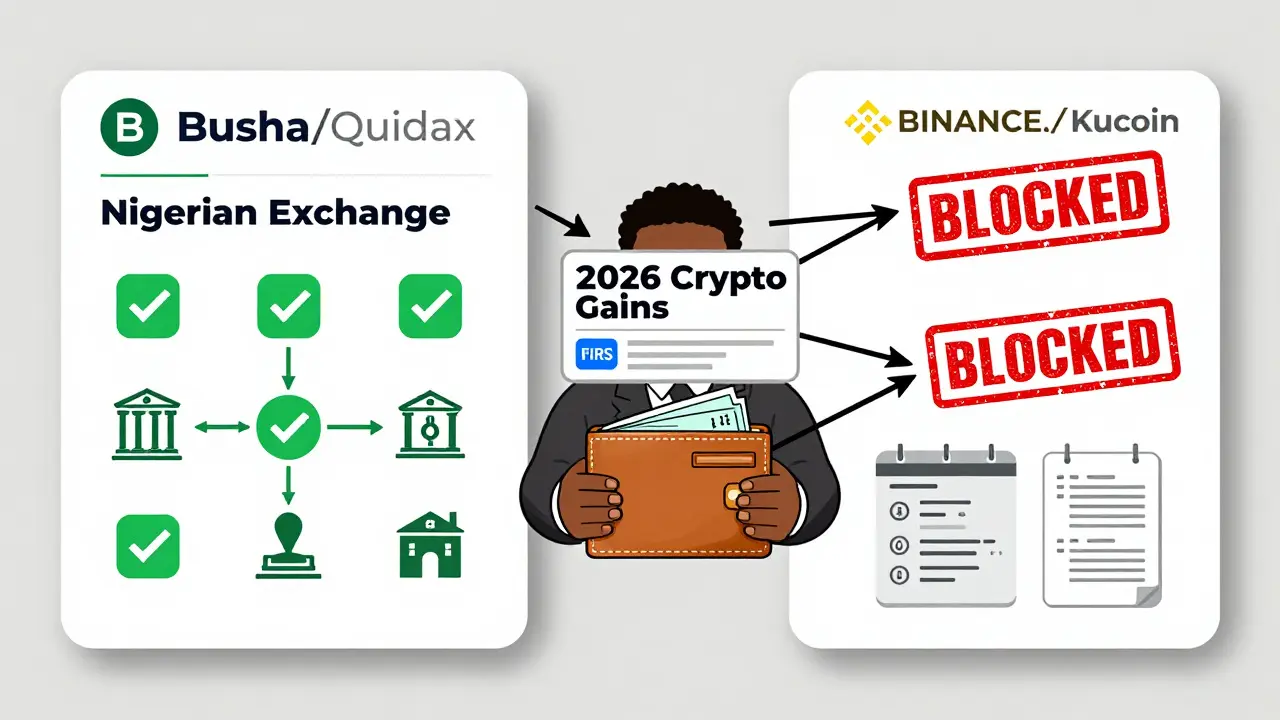
Local platforms like Busha and Quidax are fully licensed. Offshore platforms like Binance and KuCoin? They’re blocked from Nigerian bank transfers. If you use them, you’re on your own-and you’re risking penalties.
How Do You Report Crypto?
You file crypto taxes the same way you file income tax: through the Federal Inland Revenue Service (FIRS) online portal. But here’s the catch-you need records. Every trade, every deposit, every withdrawal. You need dates, amounts, values in Naira at the time of transaction, and proof of cost basis.
Most people don’t have this. That’s why the government is pushing crypto businesses to integrate accounting software that auto-logs transactions. If you run a business that accepts crypto, your accounting system must track it. Payroll in crypto? You need to record the Naira value on payday. Paying suppliers in Dogecoin? That’s a taxable disposal.
There’s no grace period. The 2026 tax year started on January 1. If you made gains in 2025 and didn’t report them, you’re behind. The FIRS has access to bank records, exchange data, and blockchain analytics tools. They’re not guessing. They’re matching transactions.
What Happens If You Don’t Pay?
Fines start at 150% of the unpaid tax. That’s not a typo. If you owe ₦500,000 and don’t pay, you’ll be charged ₦1.25 million. Repeat offenders can face asset freezes, blocked bank accounts, or even criminal prosecution under the NTA 2025.
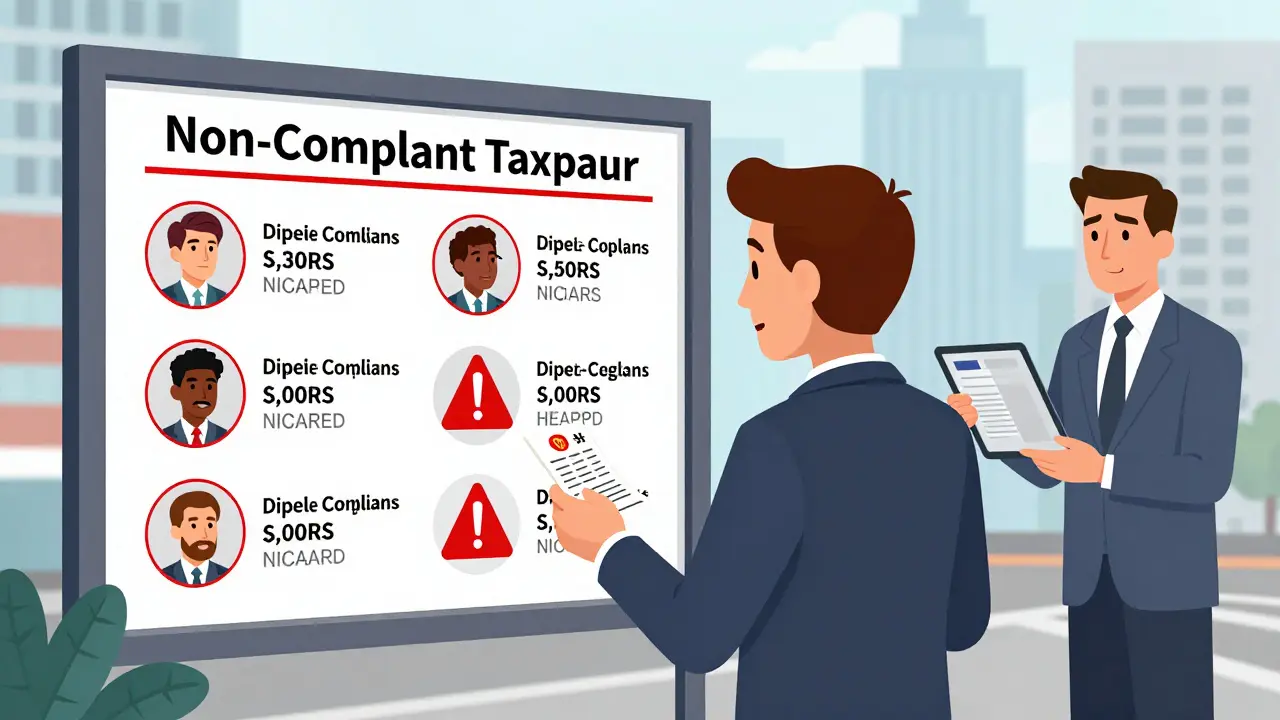
There’s also a public list of non-compliant taxpayers. Names, amounts owed, and crypto addresses are published. It’s not just about money-it’s about reputation. If you’re a business owner, being on that list kills trust with partners and clients.
Voluntary disclosure is still possible. If you come forward before being audited, you can pay the tax plus a 10% penalty instead of the full 150%. But once the FIRS sends a notice, that option disappears.
What Should You Do?
Step one: Track everything. Use a crypto tax tool like Koinly or CoinTracker (they support Nigerian Naira). Export your history from every exchange you’ve used. Include wallets you’ve sent to or from. Don’t forget staking rewards, airdrops, or hard forks-those are taxable too.
Step two: Get help. The NTA 2025 is complex. Tax advisors who understand crypto are rare in Nigeria, but they exist. Look for firms registered with the Nigerian Institute of Chartered Tax Practitioners (NICTP) that list digital assets as a specialty. Don’t rely on a general accountant. Crypto isn’t like stocks-it’s not just buy and sell. It’s staking, lending, DeFi, and more.
Step three: Use licensed platforms. If you’re trading, use Busha, Quidax, or other SEC-approved exchanges. They report directly to the FIRS. That means you don’t have to manually submit every transaction. It’s easier, safer, and less risky.
Step four: File early. The tax deadline is March 31, 2027, for the 2026 tax year. But don’t wait. The system is already overloaded. The earlier you file, the less stress you’ll have.
Why This Matters
Nigeria isn’t trying to crush crypto. It’s trying to bring it into the light. The old days of cash-only, untraceable crypto deals are over. The government sees crypto as a real part of the economy-worth ₦1.2 trillion in annual activity in 2025. They want their share. And they’ve built the tools to get it.
This isn’t just about taxes. It’s about legitimacy. When crypto is regulated and taxed, it attracts real businesses, institutional investors, and foreign capital. Nigeria’s move puts it ahead of most African countries. It’s not about control-it’s about inclusion.
If you’re holding crypto in Nigeria, you’re not breaking the law. But if you’re ignoring the tax, you’re playing a dangerous game. The rules are out. The system is live. The clock is ticking.
 Finance



Elizabeth Smith
March 1, 2026 AT 19:16and don't even get me started on how they're using blockchain analytics like some sci-fi cop show. who authorized this? who voted? i didn't vote for this.
Robert Kromberg
March 3, 2026 AT 03:25Daisy Boliaan
March 4, 2026 AT 16:16my bestie who runs a crypto bakery in lagos just got audited. she made 3000 banana breads in 2025 and paid everyone in shiba. now the firs is asking for receipts. like... what even is a receipt for a banana bread paid in meme coins??
i'm crying. i'm screaming. i'm deleting my wallets. i'm moving to portugal. who's coming with me??
Nicki Casey
March 6, 2026 AT 15:58Jessica Carvajal montiel
March 7, 2026 AT 18:00maya keta
March 9, 2026 AT 07:47also, if you’re still using binance, you’re not a rebel-you’re just bad at math. the cbn’s bank block is a feature, not a bug. it’s protecting you from your own dumb self. stay licensed. stay safe. stay sane.
Curtis Dunnett-Jones
March 9, 2026 AT 19:48Sean Logue
March 10, 2026 AT 02:47lori sims
March 11, 2026 AT 15:56Reggie Fifty
March 13, 2026 AT 01:23Kristi Emens
March 14, 2026 AT 06:57Deborah Robinson
March 15, 2026 AT 23:19Michelle Mitchell
March 17, 2026 AT 16:51Jeremy buttoncollector
March 19, 2026 AT 00:37Michelle Xu
March 20, 2026 AT 17:55Ryan Burk
March 22, 2026 AT 00:22