

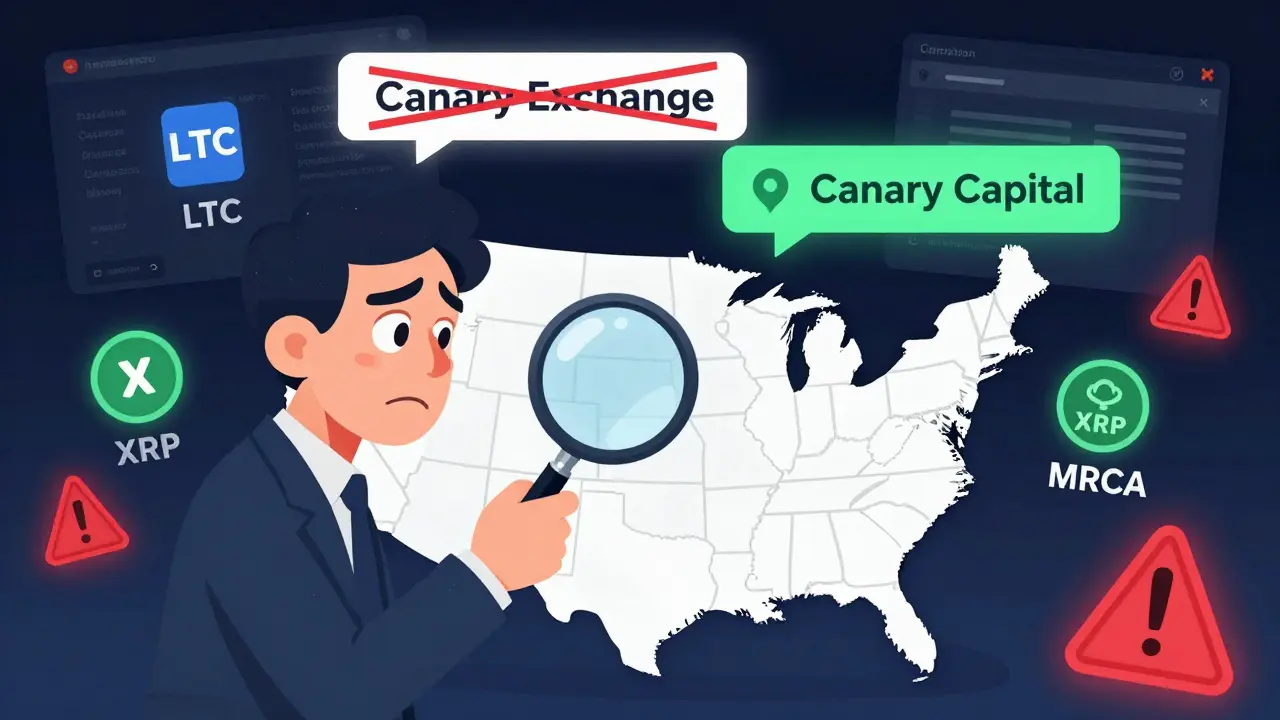
There’s no such thing as Canary Exchange as a cryptocurrency trading platform. If you’re searching for a crypto exchange called Canary Exchange, you’re likely mixing it up with Canary Capital - a completely different company that doesn’t run an exchange at all. This confusion is common, and it’s costing people time, trust, and sometimes money. Let’s clear this up once and for all.
What Canary Capital Actually Does
Canary Capital isn’t a place where you buy Bitcoin, trade Solana, or swap Ethereum. It’s a U.S.-based digital asset investment firm that filed applications for cryptocurrency exchange-traded funds (ETFs). Founded in October 2024 by Steven McClurg - former CEO of Valkyrie Investments - the firm’s entire strategy is built around getting crypto ETFs approved by the SEC. They don’t hold your coins. They don’t offer wallets. They don’t let you trade.
Instead, they’re pushing for ETFs that track assets like Litecoin, XRP, Solana, and even a new "American-Made Crypto ETF" (ticker: MRCA). This fund would include only tokens developed or mined in the U.S., such as XRP, Dogecoin, Solana, Chainlink, and Stellar. The idea? Avoid stablecoins, memecoins, and foreign-based tokens. They want clean, transparent exposure to crypto with U.S. roots.
Why the Confusion Exists
Many people hear "Canary" and assume it’s a trading platform. After all, names like Binance, Coinbase, and Kraken are everywhere. But Canary Capital doesn’t operate like them. It’s more like BlackRock or Fidelity trying to get a Bitcoin ETF approved - except it’s focused on altcoins.
The name "Canary" also sounds like it could be a crypto exchange. It’s short, memorable, and has a techy ring to it. Combine that with the fact that crypto names often follow trends - "Coin," "Bit," "Chain," "Exchange" - and it’s easy to assume Canary Exchange is real. But it’s not.
Google searches for "Canary Exchange" return nothing about trading platforms. All results point to Canary Capital and its ETF filings. If you tried to sign up for Canary Exchange, you’d hit a dead end. Or worse, you might land on a phishing site pretending to be one.
The Real Products: ETFs, Not Exchanges
Canary Capital has filed for several key ETFs:
- Litecoin (LTC) Spot ETF - Filed January 29, 2025. First non-Bitcoin, non-Ethereum crypto to get formal SEC review.
- XRP ETF - McClurg predicts $5 billion in inflows during the first month. Why? Ripple’s lawsuit is over, and institutional demand is rising.
- Solana (SOL) ETF - Originally denied in 2024, resubmitted after Trump’s inauguration. Cboe BZX is pushing for approval under new regulatory leadership.
- Canary American-Made Crypto ETF (MRCA) - Tracks tokens with U.S. origins. Excludes stablecoins and memecoins. Uses proprietary indices instead of CME benchmarks.
- Trump Coin ETF - Filed in early 2025, tracking the memecoin launched by Donald Trump ahead of his presidential inauguration.
These aren’t just random filings. Each one is strategically timed. McClurg says the assassination attempt on Trump in July 2024 changed everything. Markets surged. Political momentum shifted. And he saw an opening: a new administration that might be friendlier to crypto.

How These ETFs Work (If Approved)
If the SEC approves any of these, here’s what happens:
- You buy shares of the ETF on Cboe BZX - just like you’d buy Apple or Tesla stock.
- The ETF holds actual crypto in cold storage through a South Dakota-chartered trust company.
- Proof-of-stake assets like Solana and Cardano are staked through third-party providers, earning rewards that boost the fund’s value.
- The portfolio rebalances quarterly, removing underperforming tokens and adding new ones based on U.S. origin and market cap.
This means you get exposure to crypto without needing a wallet, private keys, or understanding blockchain. It’s like buying a mutual fund - but for digital assets.
What’s Not Approved - And Why
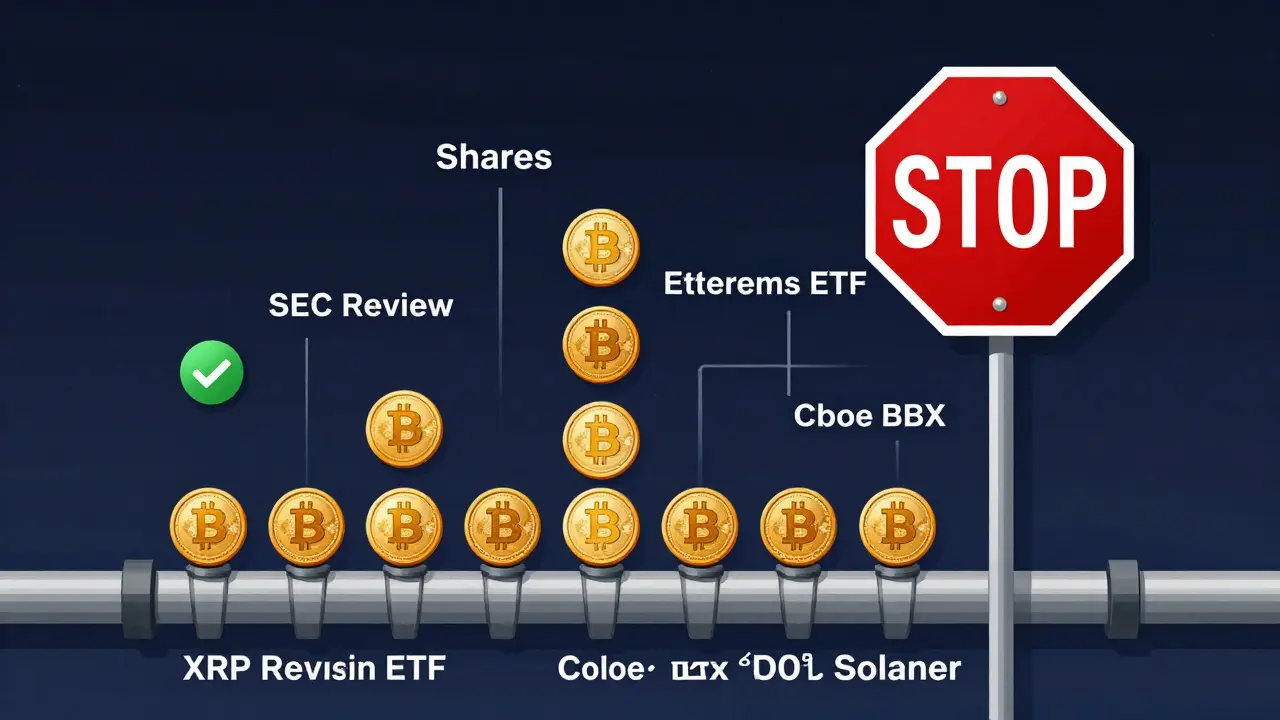
As of March 2026, none of Canary Capital’s ETFs have been approved. The SEC has either denied them, delayed them, or simply not responded. The 240-day review clock for the Litecoin ETF is still running. The Solana filings are stuck in limbo.
Why? Because the SEC still doesn’t have clear rules for altcoin ETFs. Bitcoin and Ethereum ETFs got through because they’re big, established, and have clear market data. But for tokens like XRP or Sui, regulators are still unsure if they’re securities. That’s the core legal hurdle.
Canary Capital’s strategy of using proprietary indices instead of CME benchmarks is also new territory. The SEC isn’t used to this. It’s not a bad idea - it’s more accurate for crypto markets - but it’s unfamiliar. That slows approval.
What You Should Do Instead
If you’re looking to trade crypto, don’t waste time searching for Canary Exchange. It doesn’t exist. Instead, use real exchanges:
- Coinbase - Best for beginners, strong security, U.S.-regulated.
- Binance.US - Low fees, wide selection of altcoins (but fewer than global Binance).
- Kraken - Strong for advanced traders, supports staking, and has good compliance.
- Bybit - Popular for derivatives and futures trading.
If you want ETF exposure, wait for SEC approval. Until then, you can invest in crypto through platforms like Grayscale’s Bitcoin Trust (GBTC) or ProShares Bitcoin Strategy ETF (BITO). These are approved and traded on major U.S. stock exchanges.
Red Flags to Watch For
Scammers know people are confused. If you see a website called "Canary Exchange," check these red flags:
- It asks you to deposit crypto to "activate your account."
- It has no physical address, no regulatory license, and no team bios.
- It uses stock photos of people in suits holding phones.
- Its domain isn’t registered to Canary Capital or any known entity.
- It promises "guaranteed returns" or "limited-time access."
Real crypto exchanges don’t ask you to deposit funds before you’ve verified your identity. They also don’t operate in secrecy.
The Bigger Picture
Canary Capital’s story shows how crypto is changing. The old model - "build an exchange, get users, make fees" - is being replaced by a new one: "get regulators to approve products, then let Wall Street handle the rest."
Bitcoin ETFs opened the door. Now, companies are racing to get altcoin ETFs approved. If one of Canary Capital’s filings clears the SEC, it could trigger a wave of similar applications. That’s the real story here - not a fake exchange, but a shift in how crypto enters mainstream finance.
For now, Canary Exchange doesn’t exist. But the movement behind it might change how you invest in crypto forever.
Is Canary Exchange a real crypto exchange?
No, Canary Exchange does not exist. The name is often confused with Canary Capital, which is an investment firm that files for cryptocurrency ETFs. It does not operate a trading platform, wallet, or exchange service. Any website claiming to be "Canary Exchange" is either a scam or a misunderstanding.
What is Canary Capital?
Canary Capital is a U.S. digital asset investment firm founded in October 2024 by Steven McClurg. It specializes in filing applications for cryptocurrency ETFs with the SEC, including products tied to Litecoin, XRP, Solana, and a proposed "American-Made Crypto ETF." It does not trade crypto, hold user funds, or operate an exchange.
Are Canary Capital’s ETFs approved yet?
As of March 2026, none of Canary Capital’s ETF applications have been approved by the SEC. The Litecoin ETF application is under formal 240-day review. Solana and XRP filings are still pending. The SEC has not yet granted approval for any altcoin ETF outside of Bitcoin and Ethereum.
Can I invest in Canary Capital?
You cannot invest directly in Canary Capital because it is not a publicly traded company. It is a private investment firm. However, if any of its ETFs are approved, you will be able to buy shares of those ETFs on major U.S. stock exchanges like Cboe BZX, just like you would buy Apple or Tesla stock.
Why does the SEC delay crypto ETF approvals?
The SEC delays approvals because it still classifies many altcoins as securities, which means they fall under stricter rules than commodities like Bitcoin. The agency also lacks clear guidelines for how to regulate non-Bitcoin and non-Ethereum crypto assets. Additionally, the use of proprietary indices (instead of CME benchmarks) by firms like Canary Capital adds regulatory uncertainty.
What’s the difference between a crypto exchange and a crypto ETF?
A crypto exchange - like Coinbase or Binance - lets you buy, sell, and store digital currencies directly. A crypto ETF - like what Canary Capital is trying to launch - is a fund traded on stock exchanges that holds crypto assets. You buy shares of the ETF, not the crypto itself. ETFs are easier for traditional investors but offer less control over the underlying assets.
Is the "American-Made Crypto ETF" a real product?
Yes, it’s a real filing. The "Canary American-Made Crypto ETF" (MRCA) is a proposed ETF that would track U.S.-developed cryptocurrencies like XRP, Solana, Dogecoin, Chainlink, and Stellar. It excludes stablecoins, memecoins, and foreign-based tokens. It has been submitted to the SEC but is not yet approved or available to the public.
Can I trade XRP on Canary Capital?
No, you cannot trade XRP on Canary Capital. It is not a trading platform. However, if its XRP ETF is approved, you will be able to buy shares of that ETF on a stock exchange like Cboe BZX. That would give you exposure to XRP’s price movements without owning the actual token.
 Finance




manoj kumar
March 23, 2026 AT 06:17JOHN NGEH
March 24, 2026 AT 10:26Dominic Taylor
March 25, 2026 AT 03:13Neil MacLeod
March 25, 2026 AT 15:00Misty Williams
March 27, 2026 AT 07:37Sarah Terry
March 27, 2026 AT 20:46Shayne Cokerdem
March 29, 2026 AT 21:28John Alde
March 31, 2026 AT 08:18vu phung
April 2, 2026 AT 02:42Lorna Gornik
April 3, 2026 AT 05:51Andrew Midwood
April 4, 2026 AT 04:45Kayla Thompson
April 5, 2026 AT 16:43Brijendra Kumar
April 7, 2026 AT 16:29Ananya Sharma
April 8, 2026 AT 09:18Kevion Daley
April 9, 2026 AT 01:56Tammy Stevens
April 10, 2026 AT 15:28Justin Credible
April 11, 2026 AT 04:44Dheeraj Singh
April 11, 2026 AT 19:23Jeannie LaCroix
April 12, 2026 AT 09:32